 flip
flipForecastle Broth (Split Pea and Salt Pork Soup)
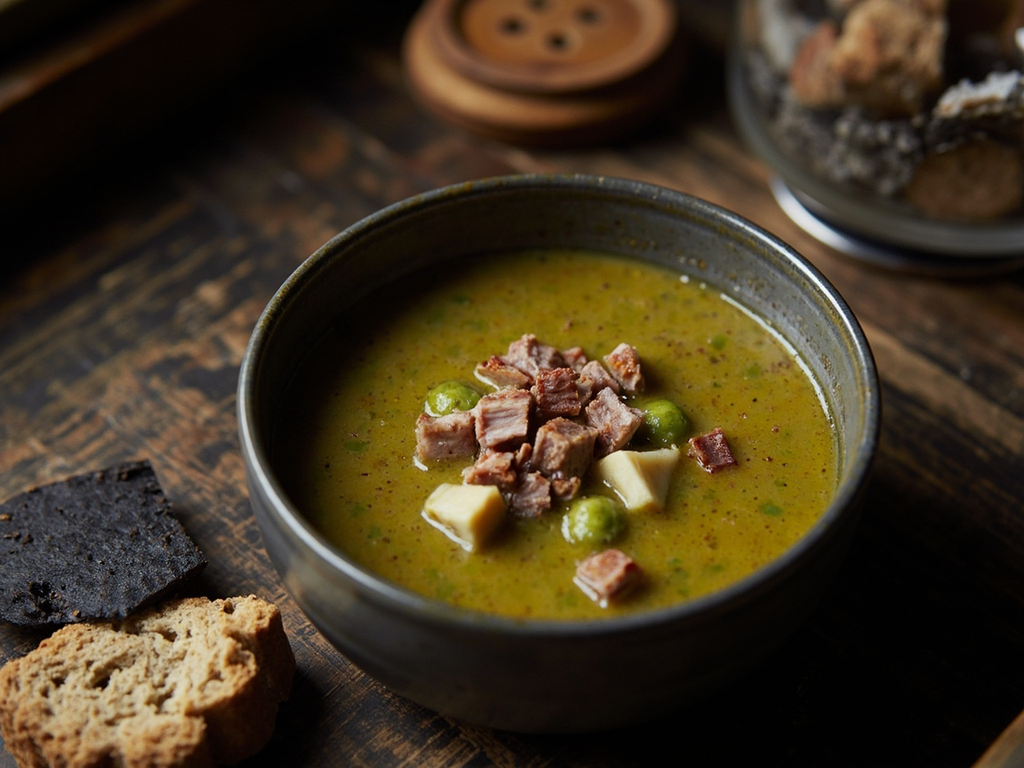
Forecastle Broth (Split Pea and Salt Pork Soup)
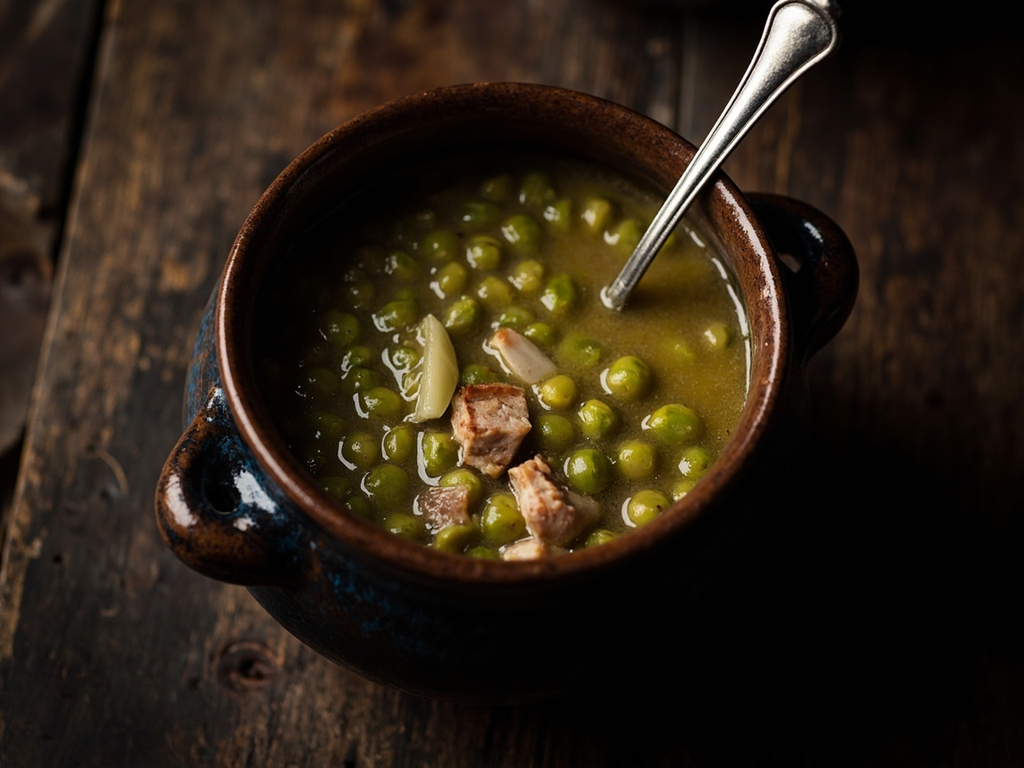
Why this dish? This was the mainstay of d'Entrecasteaux's crew: dried legumes (peas, beans, lentils) kept for months in barrels and, simmered with salt pork from the brine, made the daily soup served in messes of seven men at the sound of the bell.
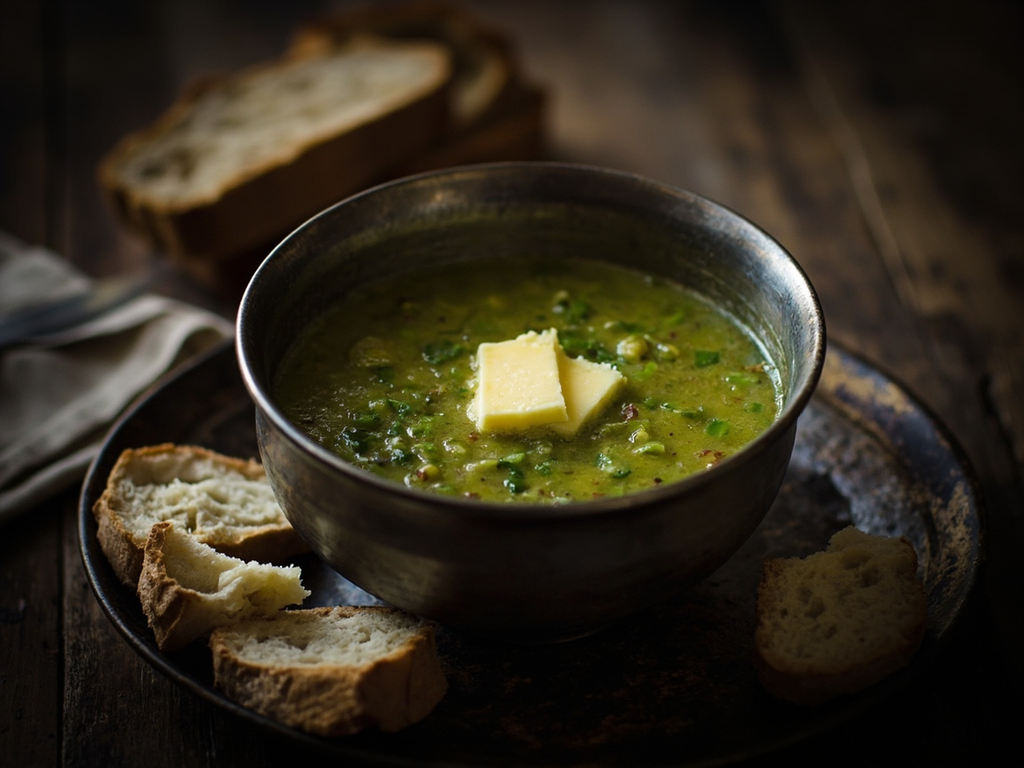
A thick purée-soup of split peas bound with the fat of long-desalted salt pork, flavored with onion and a hint of vinegar. Hearty, cheap, it stuck to the ribs during long watches.
Sir, do not disdain this humble soup: it is what carries my crews from one end of the world to the other. The peas are soaked the night before, thrown into the cauldron with a piece of pork from the barrel, and the fire is kept up until everything dissolves into a thick porridge. I have seen sailors, with scurvy at their gums, take heart again from this steaming broth in heavy weather. Eat it with your biscuit, and you will understand what a King's sailor's table is.
- •Split peas (or dried broad beans) — a good bowl per man (nourishing base, storable in barrels)
- •Barrel-salted pork — one piece (fat and salt, umami flavor)
- •Onion — a few (flavor)
- •Water (fresh, from the casks) — to cover generously (cooking liquid)
- •Vinegar — a dash (brightens and sanitizes)
Forecastle Broth (Split Pea and Salt Pork Soup)
A thick purée-soup of split peas bound with the fat of long-desalted salt pork, flavored with onion and a hint of vinegar. Hearty, cheap, it stuck to the ribs during long watches.
Why this dish? This was the mainstay of d'Entrecasteaux's crew: dried legumes (peas, beans, lentils) kept for months in barrels and, simmered with salt pork from the brine, made the daily soup served in messes of seven men at the sound of the bell.
Sir, do not disdain this humble soup: it is what carries my crews from one end of the world to the other. The peas are soaked the night before, thrown into the cauldron with a piece of pork from the barrel, and the fire is kept up until everything dissolves into a thick porridge. I have seen sailors, with scurvy at their gums, take heart again from this steaming broth in heavy weather. Eat it with your biscuit, and you will understand what a King's sailor's table is.
Ingredients (period version)
- Split peas (or dried broad beans) — a good bowl per man (nourishing base, storable in barrels)
- Barrel-salted pork — one piece (fat and salt, umami flavor)
- Onion — a few (flavor)
- Water (fresh, from the casks) — to cover generously (cooking liquid)
- Vinegar — a dash (brightens and sanitizes)
Ingredients
- Split peas — 300 g (soup base)
- Half-salt pork belly or smoked lardons — 200 g (fat and salty umami)
- Onion — 2 (aromatic)
- Carrot — 1 (optional) (sweetness)
- Water — 1.2 L (cooking liquid)
- Red wine vinegar — 1 teaspoon (touch of acidity)
- Pepper — to taste (seasoning)
Method
- Soak the split peas for a few hours (or rinse them well if you're in a hurry).
- If the pork is very salty, desalt it for 10 minutes in water, then cut it into lardons.
- Sweat the onion (and carrot) with the pork in a pot.
- Add the drained peas and water, bring to a boil, then simmer for 45 min to 1 hour until the peas break down.
- Blend partially to keep some texture, season with pepper, add the dash of vinegar just before serving.
- Serve very hot, with hard bread dipped in as biscuit.
How it was made : On board, the cook (the 'coq') prepared a single large cauldron for the whole crew. Dried legumes were the ultimate preserved food: they would not rot like fresh meat. The pork and beef came from brine barrels; they were desalted in nets towed in the sea before cooking.
The contemporary twist : Serve it in a stoneware bowl on a wooden board, topped with a few crispy pork rinds, and call it 'Broth of the Antipodes' in homage to the Tasmania route.
Sources : Christian Buchet, La mer, le monde et les hommes (XVIᵉ–XXᵉ siècle) · Études sur l'alimentation des marins de la marine royale française au XVIIIᵉ siècle
d'Entrecasteaux · Charactorium