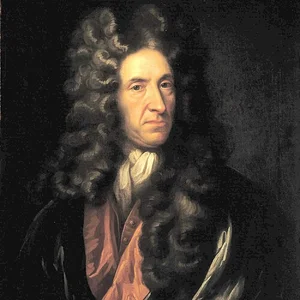

Daniel Defoe was an English writer and journalist, considered one of the founders of the modern novel in the English language. He is famous for *Robinson Crusoe* (1719), a tale of adventure and survival on a desert island.
Daniel Defoe(1660 — 1731)
Daniel Defoe
royaume de Grande-Bretagne, royaume d'Angleterre
6 min read
Frequently asked questions
Key Facts
- Born around 1660 in London and died there in 1731.
- Published *Robinson Crusoe* in 1719, often regarded as one of the first English novels.
- Author of *Moll Flanders* (1722), a picaresque novel about the fate of a woman.
- A prolific pamphleteer, he was imprisoned in 1703 for his satirical writings about the Church of England.
- A pioneer of modern journalism with his periodical *The Review* (1704-1713).
Works & Achievements
Satirical pamphlet defending religious tolerance, which earned him the pillory and prison.
Opinion periodical written almost single-handedly, regarded as a major milestone in the birth of journalism.
Survival story of a castaway on a deserted island, often regarded as the first modern novel in the English language.
Adventure novel following a pirate and explorer across Africa and the seas of the world.
Picaresque novel recounting the life of a woman who rises from theft to respectability, a realistic portrait of society.
Striking reconstruction of the 1665 Great Plague of London, on the borderline between novel and historical reportage.
Novel recounting the rise and moral downfall of a courtesan, a study of the female ambitions of the age.
Sweeping geographical and economic description of Great Britain, a valuable account of the country in the early eighteenth century.
Anecdotes
Daniel Defoe drew inspiration from the true story of Alexander Selkirk, a Scottish sailor marooned for more than four years on a deserted Pacific island off the coast of Chile. The account of his rescue in 1709 caused a great stir in England and fed Defoe's imagination for *Robinson Crusoe*.
Before becoming a novelist, Defoe was a prolific journalist: he founded and wrote almost single-handedly a periodical, *The Review*, three times a week for nearly nine years. He is regarded as one of the inventors of modern journalism.
In 1703, Defoe was sentenced to the pillory for a satirical pamphlet that had angered the authorities. According to tradition, instead of pelting him with refuse, the crowd is said to have cheered him and showered him with flowers, turning his punishment into a kind of triumph.
Defoe wrote prodigiously under many pseudonyms and often switched political sides as circumstances changed. He is even said to have worked as a secret agent for the government, gathering intelligence across England and Scotland.
An unlucky businessman, Defoe experienced bankruptcy and debtors' prison. He ventured into trading hosiery, tiles, and wine, but his enterprises failed, leaving him burdened with debt for much of his life.
Primary Sources
I was born in the year 1632, in the city of York, of a good family, though not of that country, my father being a foreigner of Bremen, who settled first at Hull.
An anonymous pamphlet in which Defoe parodies the uncompromising enemies of the Protestant dissenters by ironically calling for their extermination, which earned him the pillory and prison.
A narrative in the form of an eyewitness account relating the Great Plague of London of 1665, presented as the recollections of a resident who lived through the epidemic.
A novel told in the first person about the eventful life of a woman born in prison, who becomes a thief and adventuress in seventeenth-century England.
Key Places
District of London where Daniel Defoe was born around 1660 into a family of Protestant dissenters. The city was the backdrop for his entire career as a journalist and merchant.
Village near London where Defoe studied at an academy for dissenters, since he was barred from entering the universities of Oxford or Cambridge, which were reserved for Anglicans.
Famous London prison where Defoe was incarcerated in 1703 after being sentenced to the pillory. He also drew on it for stories in his novels, such as Moll Flanders.
Pacific archipelago where the sailor Alexander Selkirk was marooned, inspiring the setting of Robinson Crusoe. The main island has since been renamed after Defoe's hero.
Cemetery for Protestant dissenters where Defoe was buried after his death in 1731. A monument there commemorates his memory.
Typical Objects

The writer and journalist's everyday writing tool: a cut quill dipped in ink. Defoe produced thousands of pages, articles, and pamphlets with this instrument.

A wooden machine for reproducing texts and newspapers in series. At the heart of the rise of the printed press, it spread Defoe's pamphlets and periodicals.

A wooden frame in a public square where the condemned were exposed to shame. Defoe was placed in one in 1703 for writings deemed seditious.

An opinion journal founded and written almost entirely by Defoe, appearing several times a week. A pioneer of journalism and the press of ideas.

A three-cornered hat typical of men in the early 18th century. Defoe wore one like most of London's middle-class men and merchants.

A ledger where the tradesman recorded his debts, sales, and purchases. Defoe, a merchant often in debt, kept them for his businesses in hosiery, tiles, and wine.
School Curriculum
Vocabulary & Tags
Key Vocabulary
Tags
Daily Life
Morning
Defoe rose early to write, taking advantage of the morning quiet to draft articles, pamphlets, or chapters of novels with his quill. Part of the morning could be devoted to his business affairs and correspondence.
Afternoon
In the afternoon, he roamed the streets of **London**, frequented the coffee houses where news and political rumours were exchanged, and met with printers, merchants, or informants. These places were at the heart of public and journalistic life.
Evening
In the evening, by candlelight, he continued his reading and writing, or settled his accounts, which were often complicated by debts. The evening meals sometimes brought together his large family.
Food
People ate bread, roasted or boiled meat, fish, and seasonal vegetables, washed down with beer or wine. Tea and coffee, then in fashion, were drunk in the **London** coffee houses frequented by men of letters.
Clothing
Like the middle-class men of his time, Defoe wore a long coat, a waistcoat, a shirt with a frilled jabot, and breeches that stopped at the knee, with stockings and buckled shoes. A tricorne hat and sometimes a wig completed his outfit.
Housing
He lived in brick town houses in the **London** rebuilt after the Great Fire, sometimes comfortable when his business prospered, more modest during his bankruptcies. The rooms were heated by fireplaces and lit by candlelight.
Historical Timeline
Period Vocabulary
Liens externes & ressources
Références
Œuvres
The Shortest Way with the Dissenters
1702
The Review
1704-1713
Robinson Crusoé
1719
Capitaine Singleton
1720
Moll Flanders
1722
A Journal of the Plague Year
1722