 flip
flipOpson of Grilled Tuna with Thyme and Honey
Opson of Grilled Tuna with Thyme and Honey
Why this dish? A lavish governor of Athens, Demetrius was famous for his sumptuous lifestyle and banquets; fish, the ultimate luxury opson, crowned the table of the powerful when meat remained a matter of sacrifice.
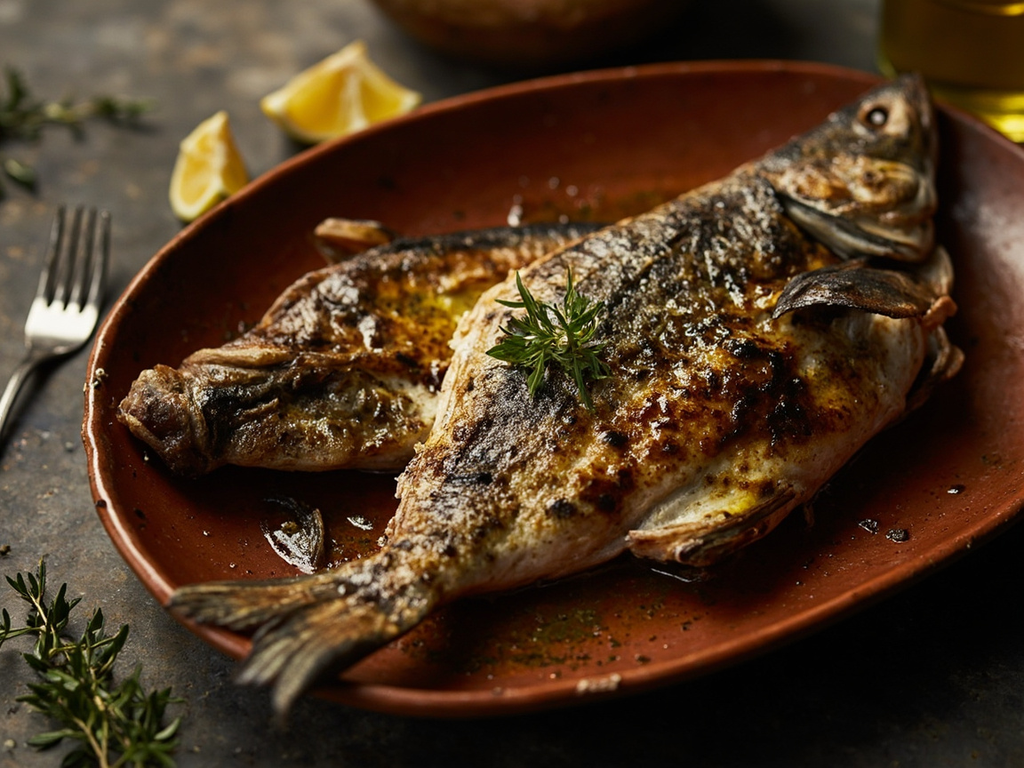
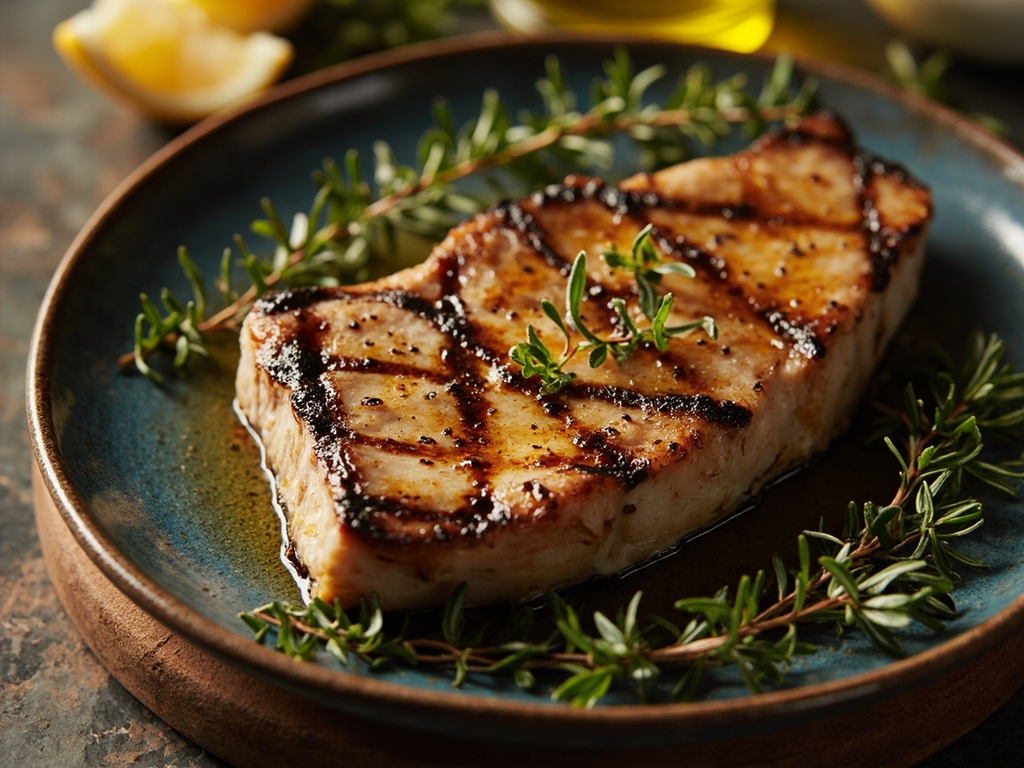
A fine piece of tuna seared on the embers, glazed with oil, vinegar, and a touch of Hymettus honey, perfumed with thyme and oregano. Tender flesh, caramelized skin: the dish that made a generous host proud.
Many have mocked my opulence, and I admit it without blushing: a man who governs must honor his guests. Tuna, my friends, is no shepherd's meat — it is Poseidon's gift, seized alive on the embers so the flesh stays tender at heart. Rub it with oil and thyme, glaze it with a dash of Hymettus honey at the last moment, and serve it before the wine is mixed: thus opson calls for the cup, and the cup for fine conversation.
- •Tuna steak — one fine piece (main opson)
- •Olive oil — generous (fat)
- •Hymettus honey — a dash (glaze / signature)
- •Wine vinegar — a drizzle (acidity)
- •Fresh thyme and oregano — a handful (herbs)
- •Sea salt — to taste (seasoning)
Opson of Grilled Tuna with Thyme and Honey
A fine piece of tuna seared on the embers, glazed with oil, vinegar, and a touch of Hymettus honey, perfumed with thyme and oregano. Tender flesh, caramelized skin: the dish that made a generous host proud.
Why this dish? A lavish governor of Athens, Demetrius was famous for his sumptuous lifestyle and banquets; fish, the ultimate luxury opson, crowned the table of the powerful when meat remained a matter of sacrifice.
Many have mocked my opulence, and I admit it without blushing: a man who governs must honor his guests. Tuna, my friends, is no shepherd's meat — it is Poseidon's gift, seized alive on the embers so the flesh stays tender at heart. Rub it with oil and thyme, glaze it with a dash of Hymettus honey at the last moment, and serve it before the wine is mixed: thus opson calls for the cup, and the cup for fine conversation.
Ingredients (period version)
- Tuna steak — one fine piece (main opson)
- Olive oil — generous (fat)
- Hymettus honey — a dash (glaze / signature)
- Wine vinegar — a drizzle (acidity)
- Fresh thyme and oregano — a handful (herbs)
- Sea salt — to taste (seasoning)
Ingredients
- Tuna steaks (or mackerel) — 4 (about 150 g each) (main opson)
- Extra virgin olive oil — 4 tbsp (fat)
- Thyme honey — 1 tbsp (glaze / signature)
- Red wine vinegar — 1 tbsp (acidity)
- Fresh thyme and oregano — 2 tbsp chopped (herbs)
- Salt and cracked pepper — to taste (seasoning)
Method
- Mix oil, vinegar, thyme, and oregano; marinate the tuna for 20 minutes.
- Heat a grill or cast-iron pan very hot.
- Sear the steaks 2–3 minutes per side for a pink center (tuna dries quickly if overcooked).
- At the end of cooking, brush with a little honey to glaze the surface for 30 seconds.
- Salt, sprinkle with fresh herbs, and serve immediately with maza for dipping.
How it was made : The Greeks grilled or roasted fish on the embers and often seasoned it sweet-and-sour: vinegar, honey, and herbs. Seasonal tuna, salted or fresh, was among the most sought-after opsa in the markets of Athens and Piraeus.
The contemporary twist : Slice and arrange on a fig leaf, shiny honey-thyme glaze and fleur de sel: a nod to the Greek orchard where figs and bees coexisted.
Sources : Archestratus of Gela, Hedypatheia (fragments quoted by Athenaeus) · Andrew Dalby, Food in the Ancient World from A to Z
Demetrius of Phalerum · Charactorium