 flip
flipSesame, Sesame and Honey Cake
Sesame, Sesame and Honey Cake
Why this dish? Sesame and honey cakes sealed marriages and adorned the altars of the gods; inspired by these offerings, this dish recalls that an Athenian statesman like Demetrius also presided over the festivals and rites of the city.
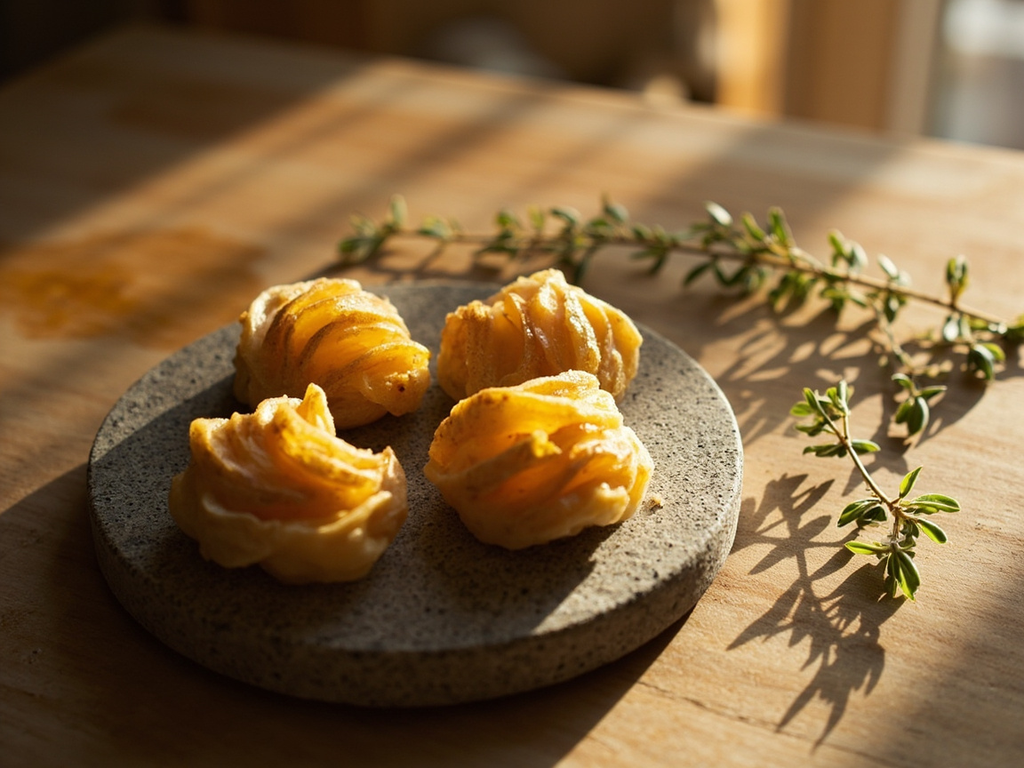
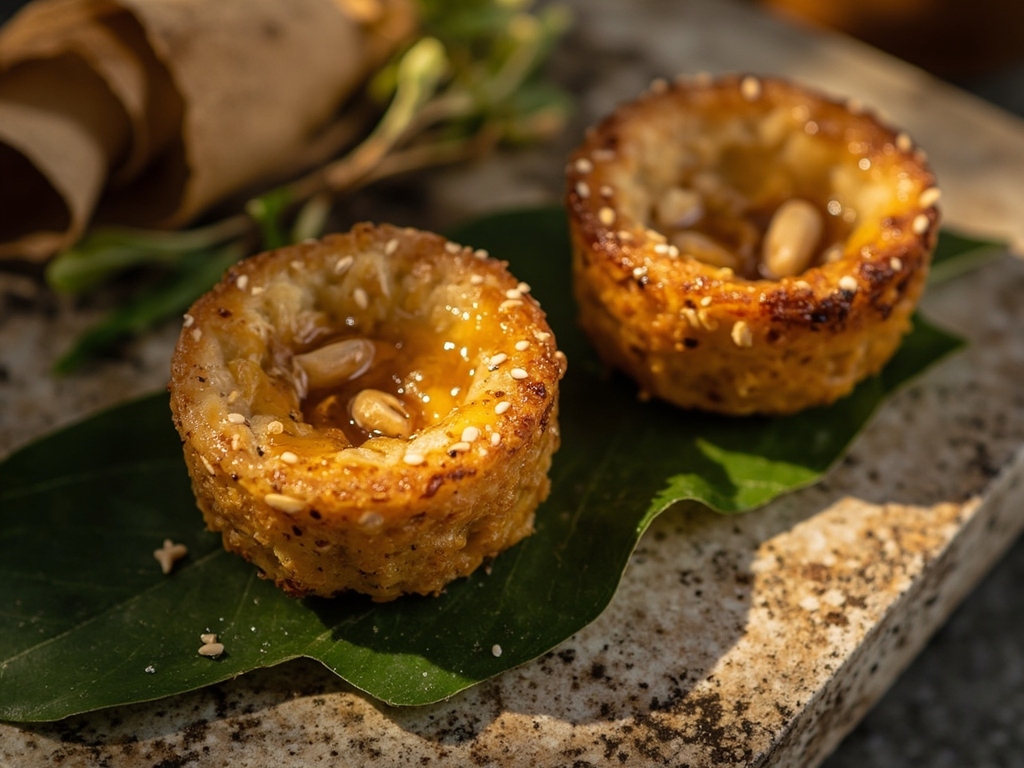
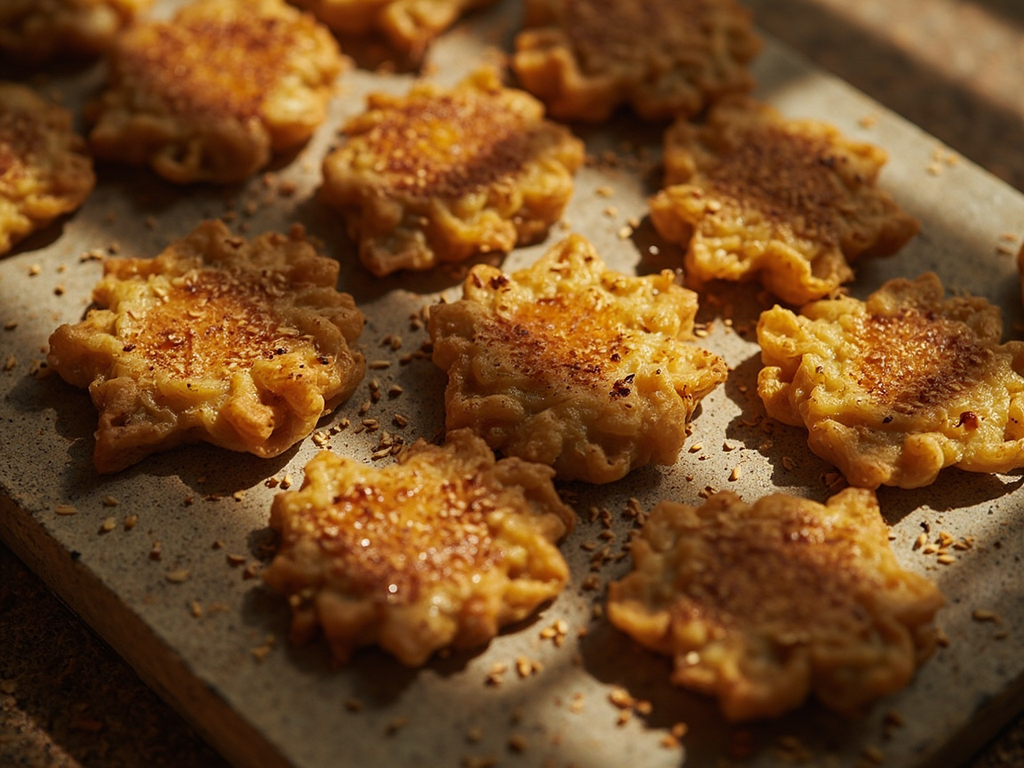
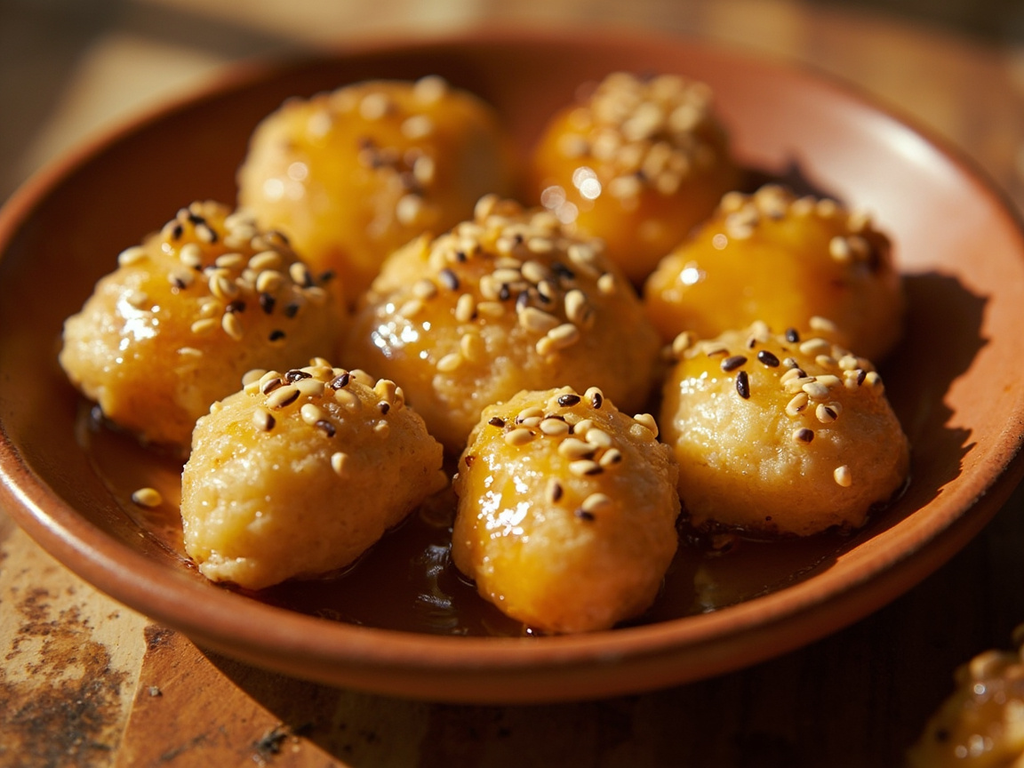
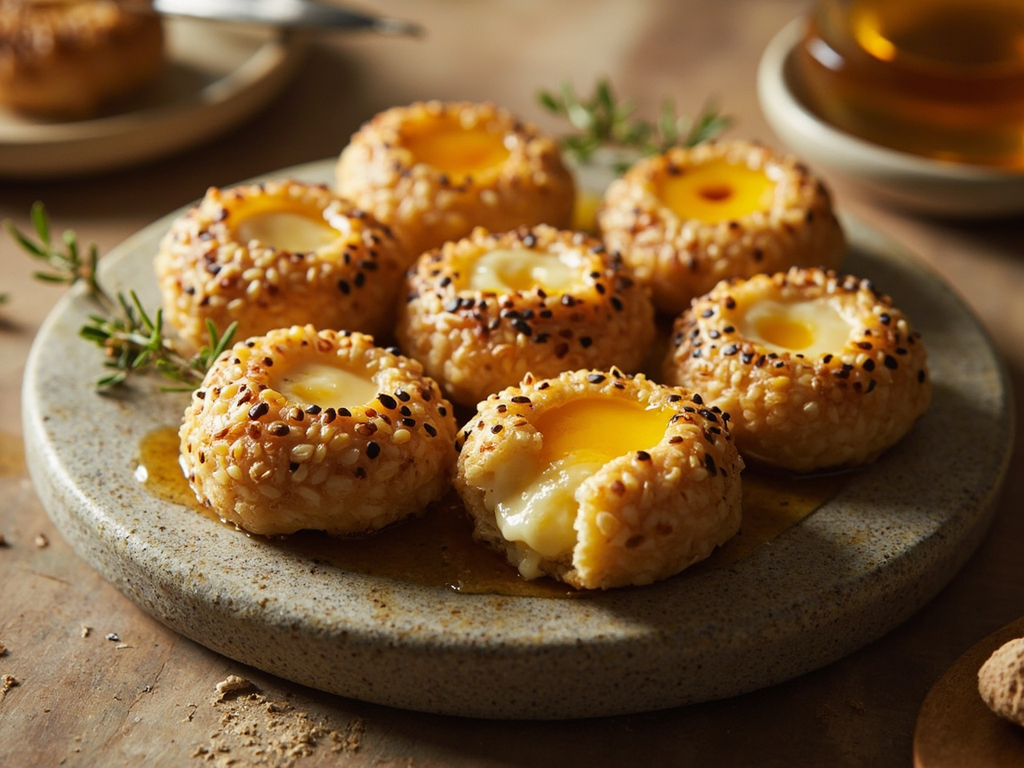
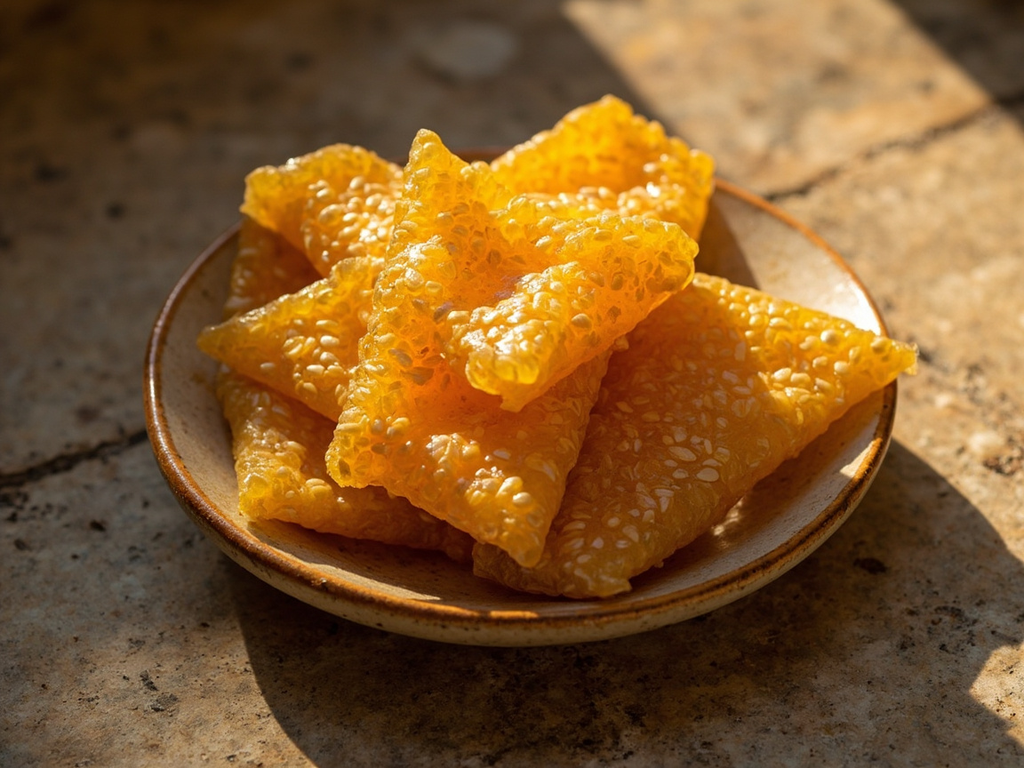
Thin flatcakes of toasted sesame bound in hot honey, crunchy then melting, offered at weddings and to divinities. Deeply sweet and roasted: Greek sweetness par excellence.
At weddings and city festivals alike, it is the sesame cake that announces joy. First make the sesame seeds sing on the fire until they turn golden and fragrant, then bind them with the most fragrant honey you can find — that of Hymettus, if the gods favor you. Spread, let set, break into pieces: they were placed on altars as tribute, and shared with the newlyweds to wish them a life as sweet and fruitful as these thousand tiny seeds.
- •Sesame seeds — two handfuls (base)
- •Hymettus honey — generous (binder / signature)
- •Olive oil — a touch (non-stick)
Sesame, Sesame and Honey Cake
Thin flatcakes of toasted sesame bound in hot honey, crunchy then melting, offered at weddings and to divinities. Deeply sweet and roasted: Greek sweetness par excellence.
Why this dish? Sesame and honey cakes sealed marriages and adorned the altars of the gods; inspired by these offerings, this dish recalls that an Athenian statesman like Demetrius also presided over the festivals and rites of the city.
At weddings and city festivals alike, it is the sesame cake that announces joy. First make the sesame seeds sing on the fire until they turn golden and fragrant, then bind them with the most fragrant honey you can find — that of Hymettus, if the gods favor you. Spread, let set, break into pieces: they were placed on altars as tribute, and shared with the newlyweds to wish them a life as sweet and fruitful as these thousand tiny seeds.
Ingredients (period version)
- Sesame seeds — two handfuls (base)
- Hymettus honey — generous (binder / signature)
- Olive oil — a touch (non-stick)
Ingredients
- Sesame seeds — 200 g (base)
- Thyme honey — 150 g (binder / signature)
- Olive oil — a little, for the surface (non-stick)
Method
- Toast the sesame dry in a pan over medium heat, stirring until golden and fragrant (3–4 minutes).
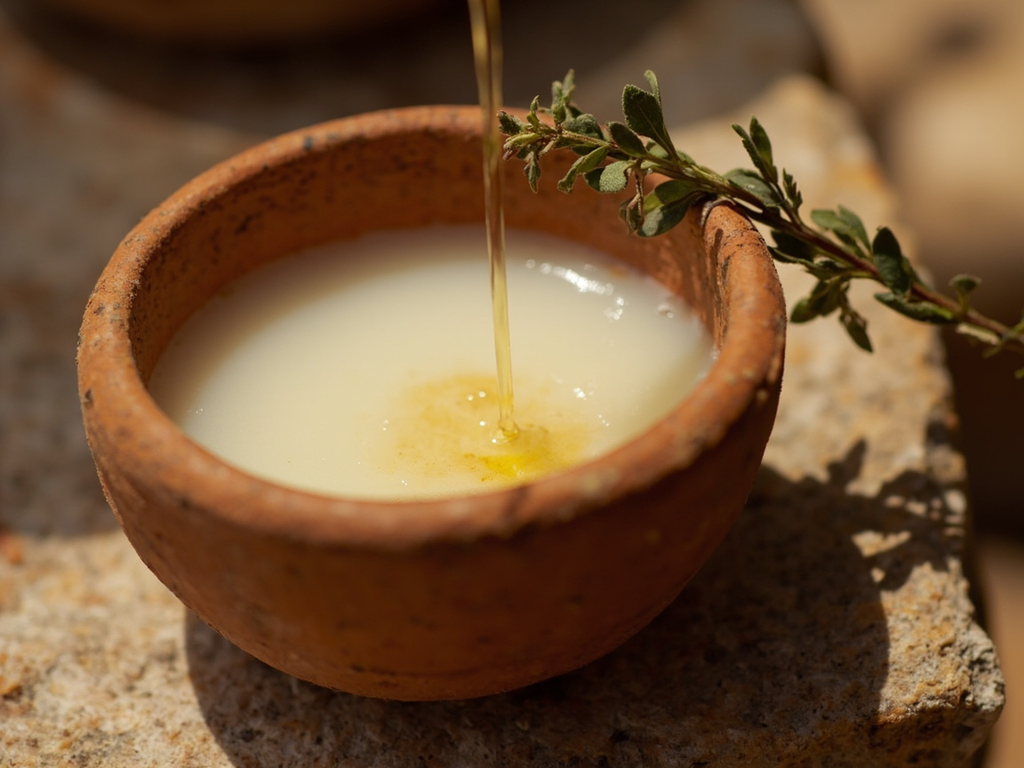
- Gently heat the honey in a saucepan until it just simmers.
- Pour the hot sesame into the honey and mix to coat well.
- Spread the mixture on an oiled surface (or parchment paper) to 1 cm thick, smooth with the back of an oiled spoon.
- Let cool for 10 minutes, then cut into diamonds before it hardens completely (it hardens afterward).
- Detach and store in an airtight container.
How it was made : Sesamai, sesame and honey cakes, are attested since the Classical period, especially at weddings where they were distributed as a symbol of fertility. Honey, the only sweetener known to the Greeks, was used at table, in worship, and for preservation.
The contemporary twist : It is the direct ancestor of modern Greek pasteli: add a few fennel seeds or a grating of orange zest (post-1492) for a contemporary festive touch.
Sources : Athenaeus of Naucratis, The Deipnosophists (cakes and pemmata) · Andrew Dalby, Siren Feasts
Demetrius of Phalerum · Charactorium