 flip
flipTutu de feijão
Tutu de feijão
Why this dish? Originally from Minas Gerais, Dilma grew up in a kitchen where simmered black beans were the foundation of every meal. Tutu — crushed beans bound with cassava flour, served with pork and collard greens — is the everyday dish of Mineira families, the one eaten 'without ostentation.'
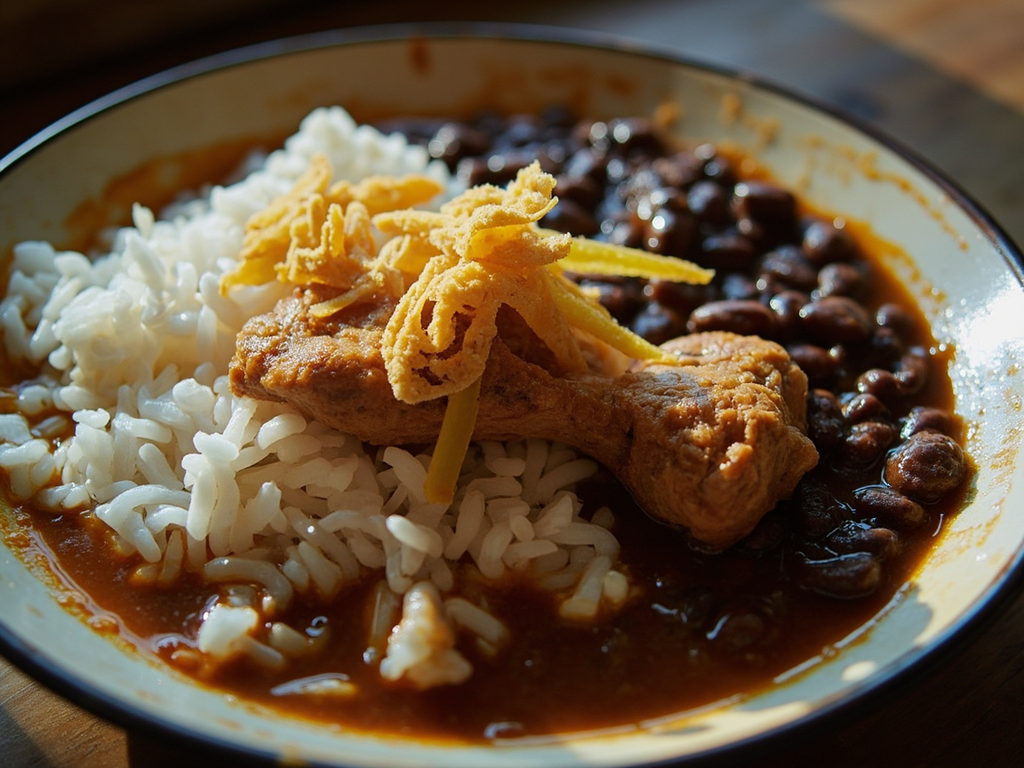
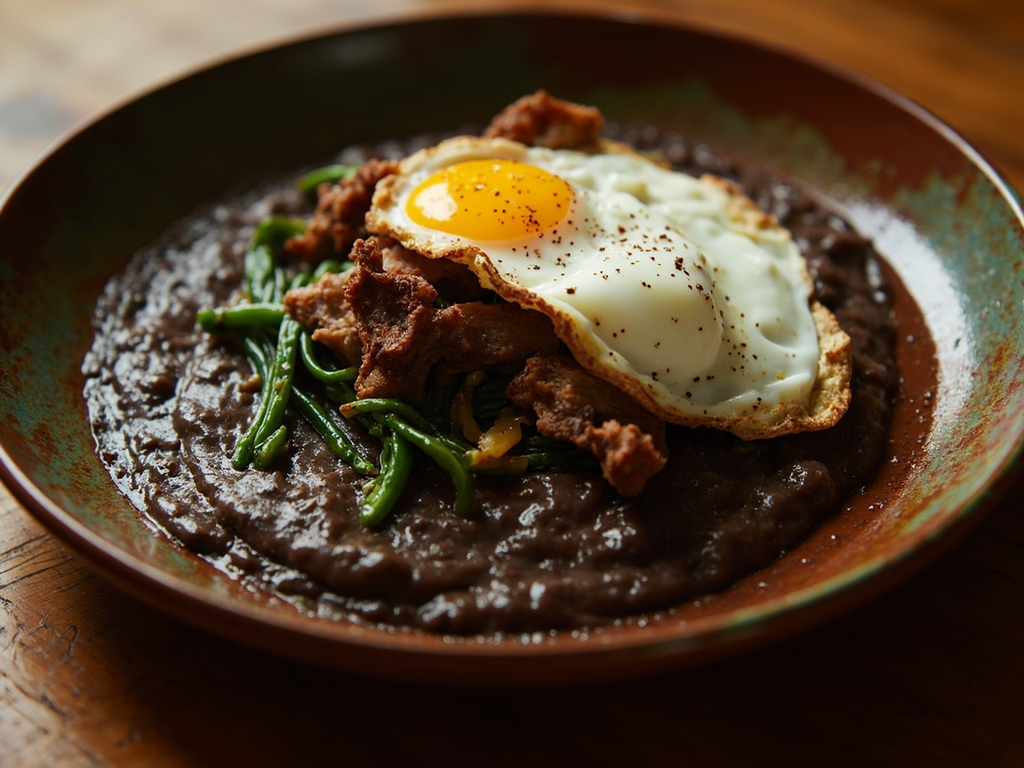
A purée of black beans thickened with cassava flour, studded with smoked pork, served with sautéed collard greens and an egg. Nourishing, economical, deeply rooted in the mountains of Minas.
Back home in Belo Horizonte, beans were never a fancy thing: they were the base, the daily work, like a budget you patiently balance. You let the beans cook for a long time, without rushing, then you mash them and bind them with farinha until it holds. My mother used to say a good tutu is recognized by not running on the plate. You add the pork, the bright green collard greens, and everyone serves themselves at the center of the table — no one is served here, we share.
- •Black beans — a good bowlful (base of the dish)
- •Cassava flour (farinha de mandioca) — as needed for binding (thickener)
- •Lard and smoked pork pieces — as desired (fat and umami)
- •Collard greens (couve) — one bunch (green accompaniment)
- •Garlic, onion — as needed (aromatics)
Tutu de feijão
A purée of black beans thickened with cassava flour, studded with smoked pork, served with sautéed collard greens and an egg. Nourishing, economical, deeply rooted in the mountains of Minas.
Why this dish? Originally from Minas Gerais, Dilma grew up in a kitchen where simmered black beans were the foundation of every meal. Tutu — crushed beans bound with cassava flour, served with pork and collard greens — is the everyday dish of Mineira families, the one eaten 'without ostentation.'
Back home in Belo Horizonte, beans were never a fancy thing: they were the base, the daily work, like a budget you patiently balance. You let the beans cook for a long time, without rushing, then you mash them and bind them with farinha until it holds. My mother used to say a good tutu is recognized by not running on the plate. You add the pork, the bright green collard greens, and everyone serves themselves at the center of the table — no one is served here, we share.
Ingredients (period version)
- Black beans — a good bowlful (base of the dish)
- Cassava flour (farinha de mandioca) — as needed for binding (thickener)
- Lard and smoked pork pieces — as desired (fat and umami)
- Collard greens (couve) — one bunch (green accompaniment)
- Garlic, onion — as needed (aromatics)
Ingredients
- Dried black beans — 400 g (soaked overnight) (base of the dish)
- Toasted cassava flour — about 150 g (thickener)
- Smoked bacon + 100 g pork belly — 200 g (fat and umami)
- Collard greens or kale — 1 bunch (green accompaniment)
- Garlic — 3 cloves (aromatic)
- Onion — 1 (aromatic)
- Eggs — 2 (fried) (garnish)
Method
- Cook the soaked black beans in plenty of water until very tender (1 h 30 on the stove, 30 min in a pressure cooker).
- Blend or mash a good portion of the beans with a little of their cooking water to obtain a thick purée.
- Sauté bacon, onion and garlic in oil, add the bean purée.
- Sprinkle in the cassava flour while stirring constantly until a bound texture that does not run.
- Slice the collard greens very finely and sauté quickly with garlic, still crunchy and green.
- Serve the tutu with collard greens, pork, and fried eggs on top.
How it was made : Tutu dates back to the kitchens of fazendas and the tropeiros (muleteers) who crossed Minas in the 18th-19th centuries. Cassava flour, an indigenous heritage, was used to stretch and make rustic food more filling. It was the dish of slaves, peasants, and then all of Mineira society.
The contemporary twist : Served as quenelles with crispy fried collard green chips and a 63°C egg, tutu de feijão can hold its own on a modern bistro table.
Dilma Rousseff · Charactorium