 flip
flipShat — honey, date and fig cakes
Shat — honey, date and fig cakes
Why this dish? Djoser's complex at Saqqarah includes a serdab housing his statue, intended to receive offerings. Egyptian offering lists everywhere mention "shat," honey cakes placed to feed the ka of the deceased and honor the gods of Heliopolis — a gesture at the heart of this builder-pharaoh's spirituality.
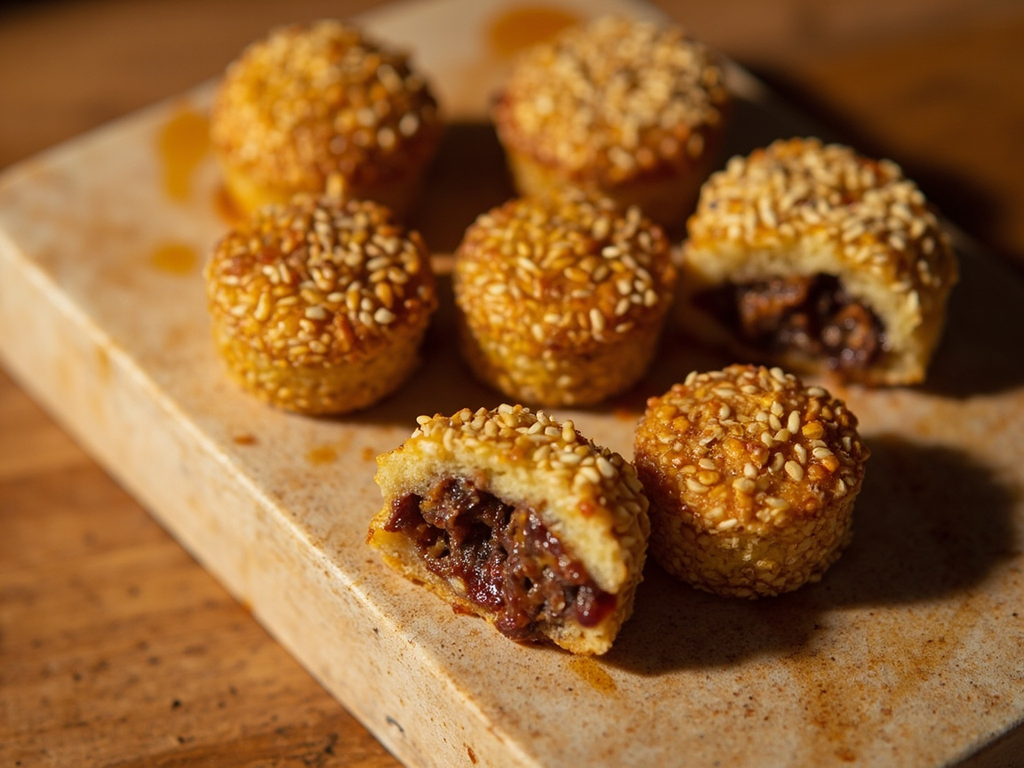
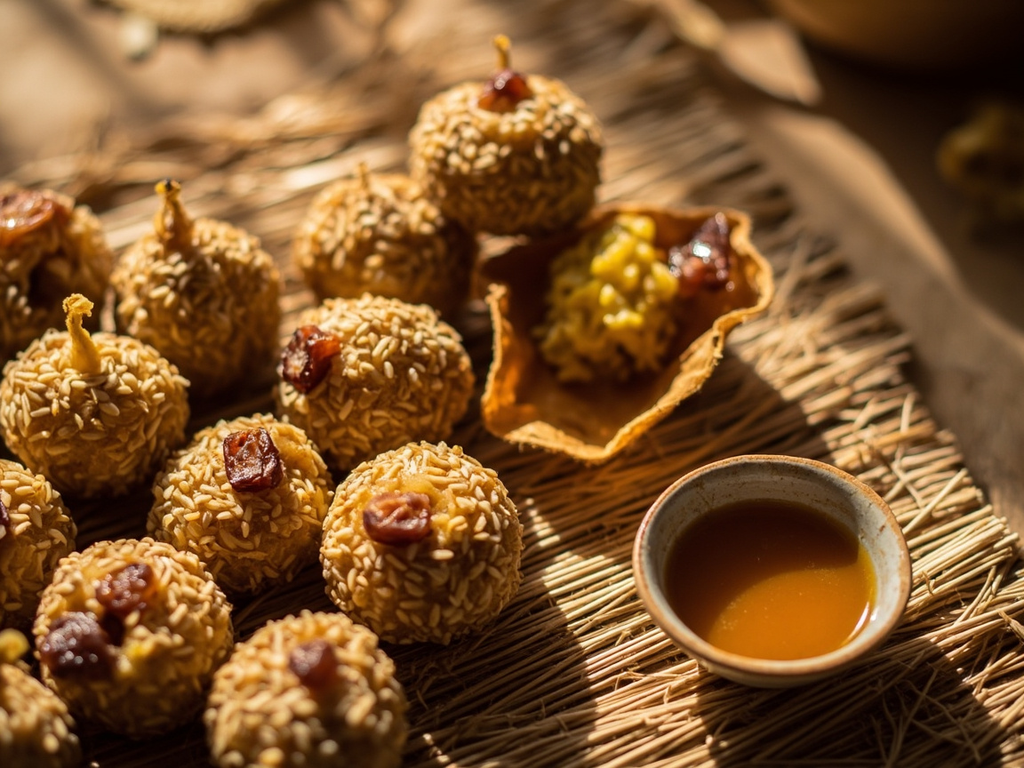
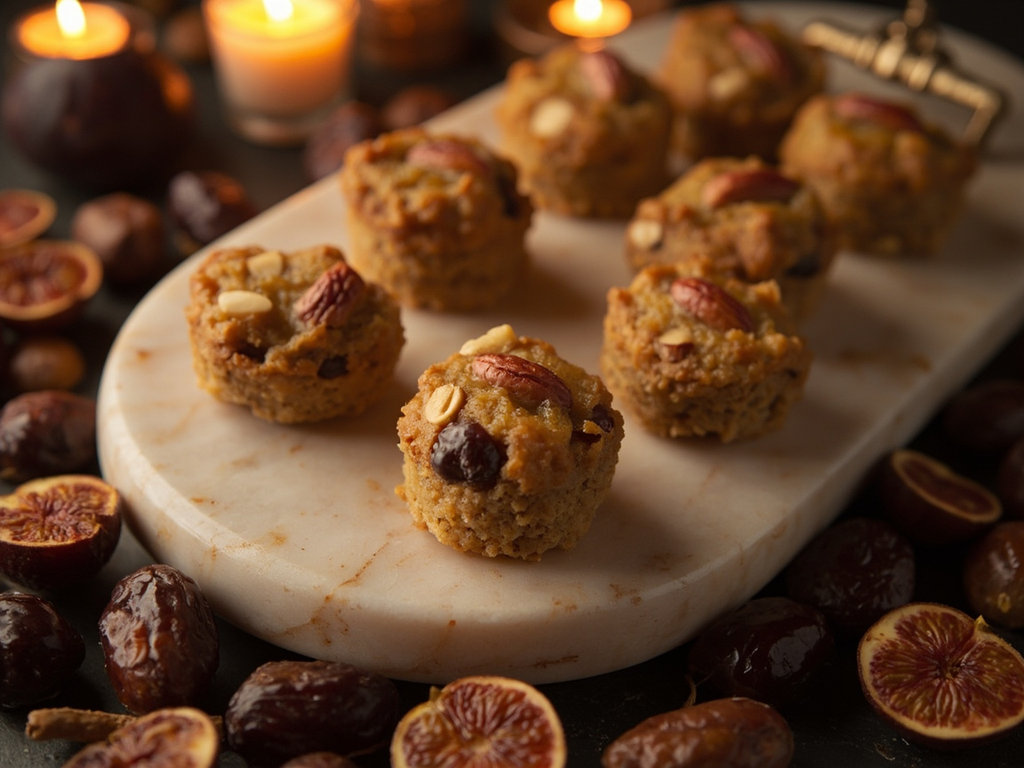
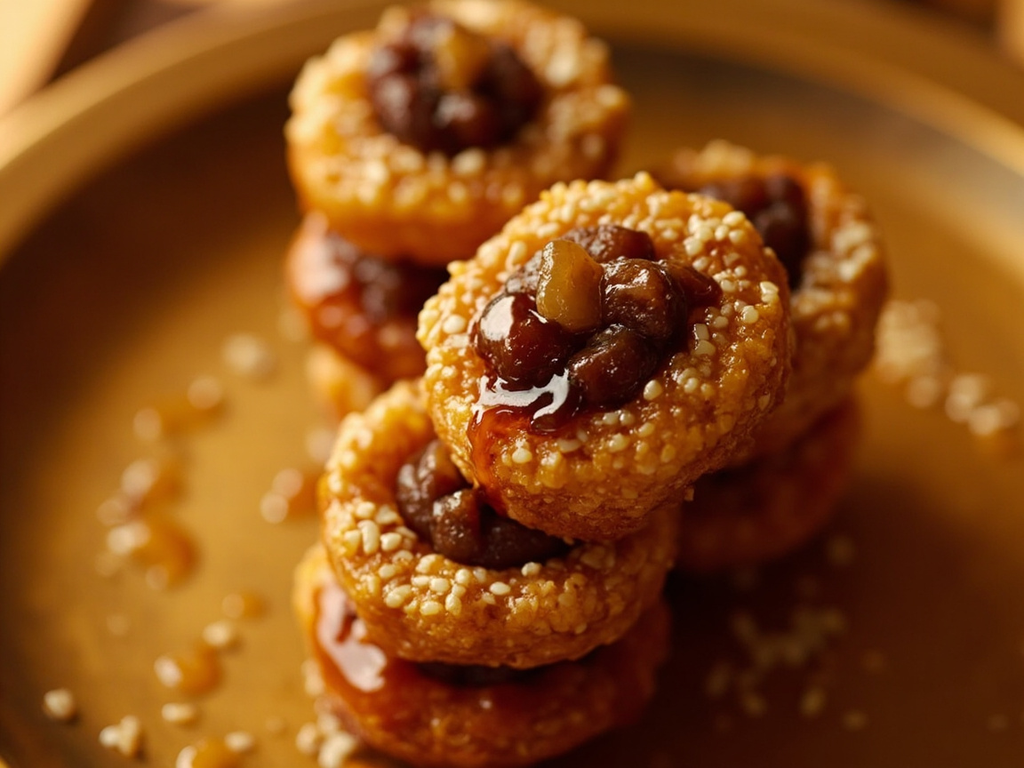
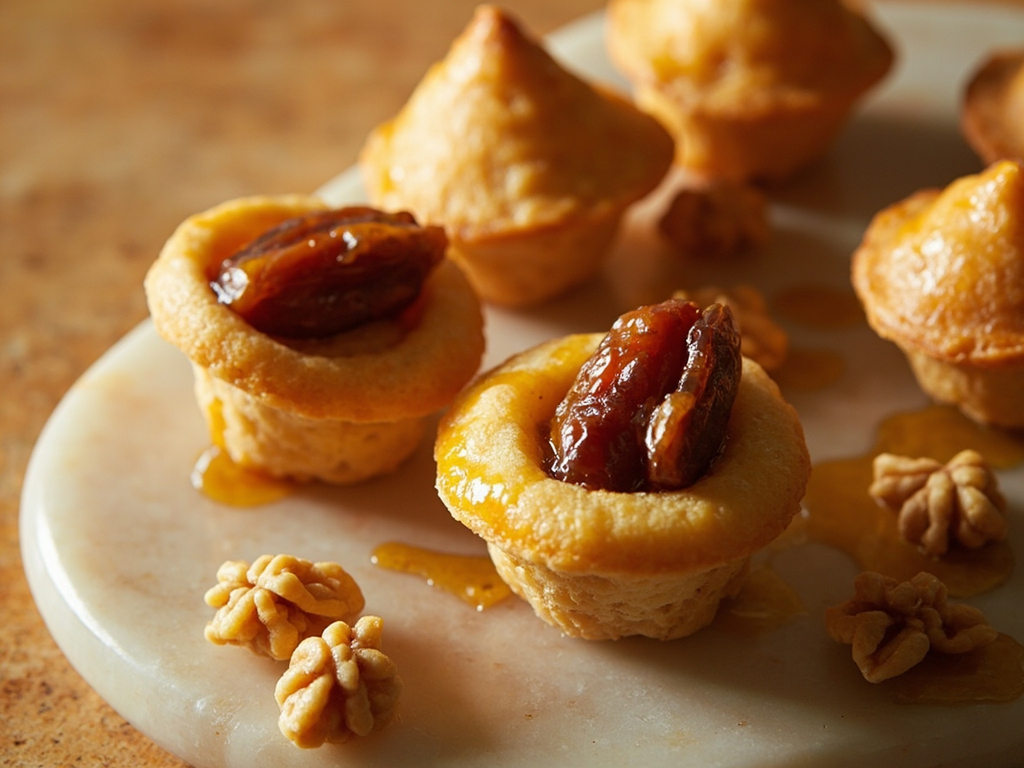
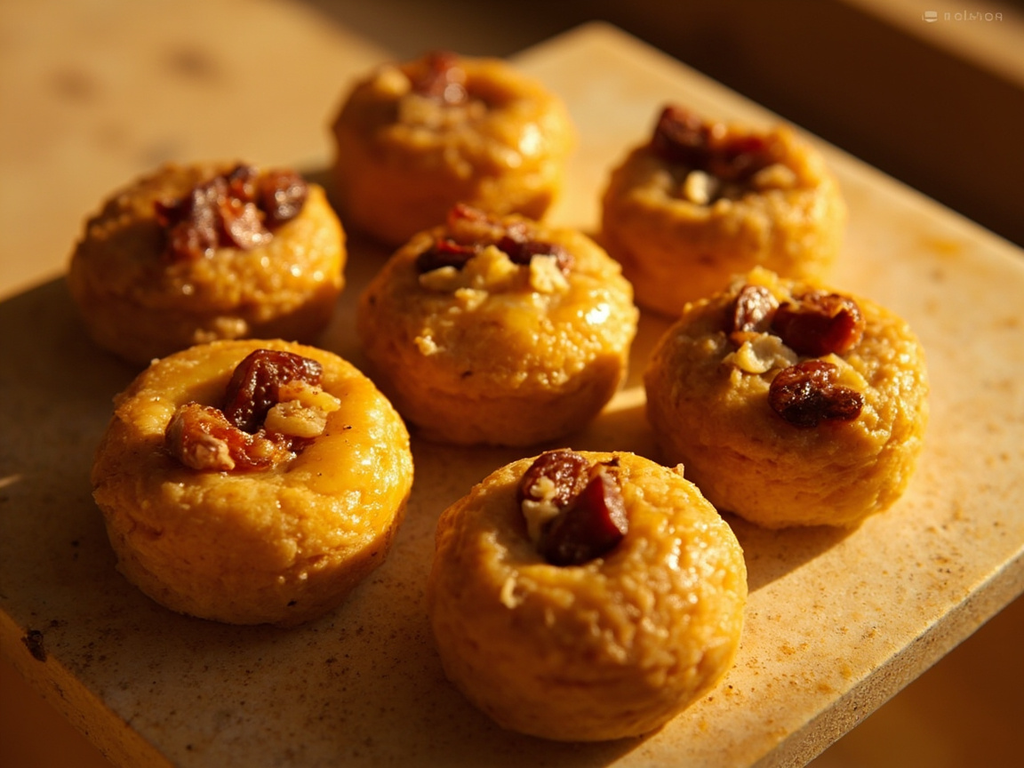
Small soft cakes bound with honey, studded with chopped dates and figs, scented with cinnamon (an imported spice from the East). Tender, deeply sweet, made to be offered before being shared.
When my statue rests in the serdab, its face turned toward the imperishable stars, it is by these cakes that my ka will be nourished. Knead the fine flour with the clearest honey, slip in dates and figs, and shape small round loaves like the disk of Ra. Place them on the altar without claiming credit: the offering honors the gods first. What they leave, the king's house eats with joy.
- •Emmer flour — a measure (base)
- •Honey — generously (sweet binder)
- •Dates and figs — a handful, chopped (fruity garnish)
- •Cinnamon (imported) — a pinch (precious flavor)
Shat — honey, date and fig cakes
Small soft cakes bound with honey, studded with chopped dates and figs, scented with cinnamon (an imported spice from the East). Tender, deeply sweet, made to be offered before being shared.
Why this dish? Djoser's complex at Saqqarah includes a serdab housing his statue, intended to receive offerings. Egyptian offering lists everywhere mention "shat," honey cakes placed to feed the ka of the deceased and honor the gods of Heliopolis — a gesture at the heart of this builder-pharaoh's spirituality.
When my statue rests in the serdab, its face turned toward the imperishable stars, it is by these cakes that my ka will be nourished. Knead the fine flour with the clearest honey, slip in dates and figs, and shape small round loaves like the disk of Ra. Place them on the altar without claiming credit: the offering honors the gods first. What they leave, the king's house eats with joy.
Ingredients (period version)
- Emmer flour — a measure (base)
- Honey — generously (sweet binder)
- Dates and figs — a handful, chopped (fruity garnish)
- Cinnamon (imported) — a pinch (precious flavor)
Ingredients
- Spelt flour — 250 g (base)
- Honey — 6 tbsp (binder and sugar)
- Pitted dates — 120 g, chopped (garnish)
- Dried figs — 80 g, chopped (garnish)
- Ground cinnamon — 1/2 tsp (flavor)
- Oil (or clarified butter) — 3 tbsp (softness)
- Water — a little, to bind (binder)
Method
- Mix flour and cinnamon, add honey and oil, then enough water to form a soft dough.
- Fold in chopped dates and figs.
- Shape small round, flat cakes with the palm of your hand.
- Bake at 170 °C for 18 to 20 minutes, until golden and soft.
- Brush with warm honey as they come out of the oven and let cool before serving (or "offering").
How it was made : Dozens of forms of bread and honey-sweetened cakes were made — honey being the only sweetener — often depicted in tomb offering lists. Without refined sugar or butter as today, honey and dried fruits provided all the sweetness.
The contemporary twist : Stamp each cake with a step-pyramid-shaped seal (cookie cutter) before baking — an edible "Djoser" signature.
Sources : Pierre Tallet, Histoire de la cuisine et de la gastronomie égyptiennes (PUF) · William J. Darby, Paul Ghalioungui & Louis Grivetti, Food: The Gift of Osiris (Academic Press, 1977)
Djoser · Charactorium