 flip
flipHoney, Date, and Nut Cakes – the Sweet Offering of the Temples
Honey, Date, and Nut Cakes – the Sweet Offering of the Temples
Why this dish? Horemheb devoted his reign to restoring cults and refilling the altars of temples that Akhenaten had neglected. Among the traditional offerings were honey-sweetened cakes, placed before divine statues before being shared by the priests. Inspired by these offering pastries, these little cakes evoke the restorative piety of the pharaoh.
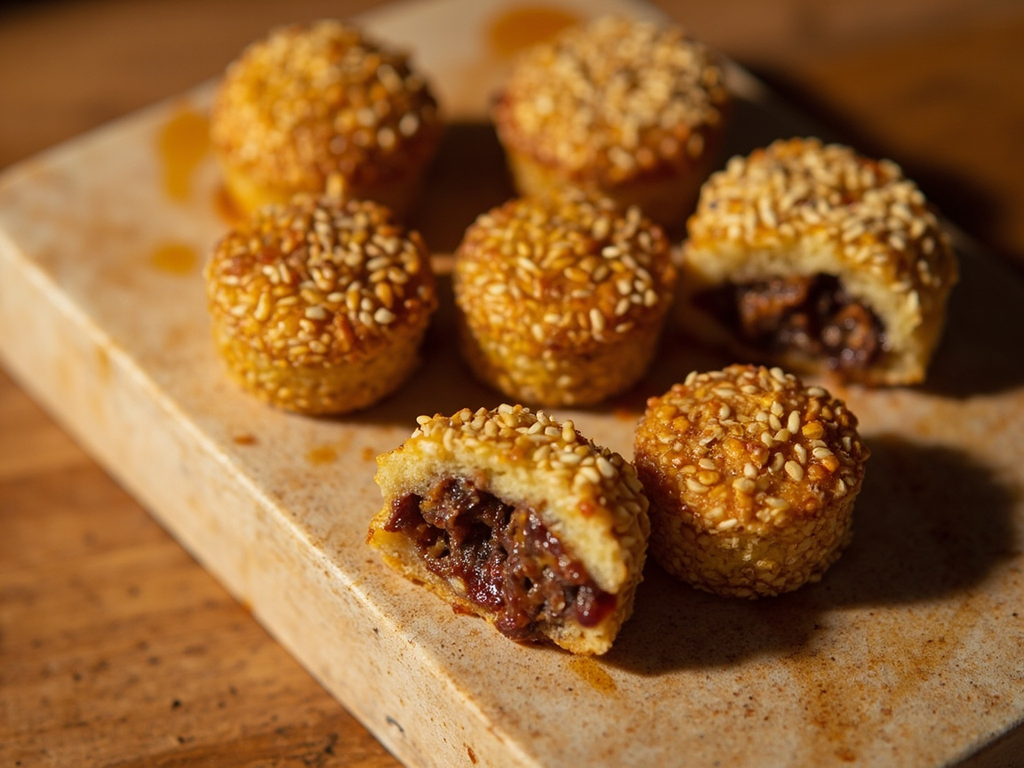
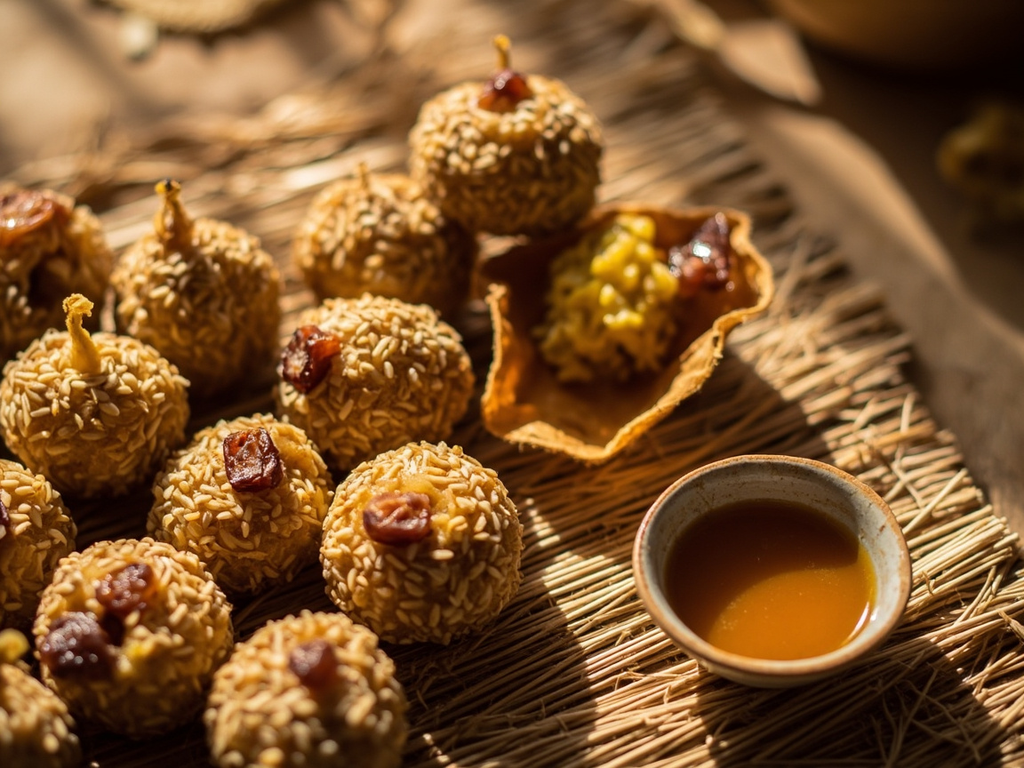
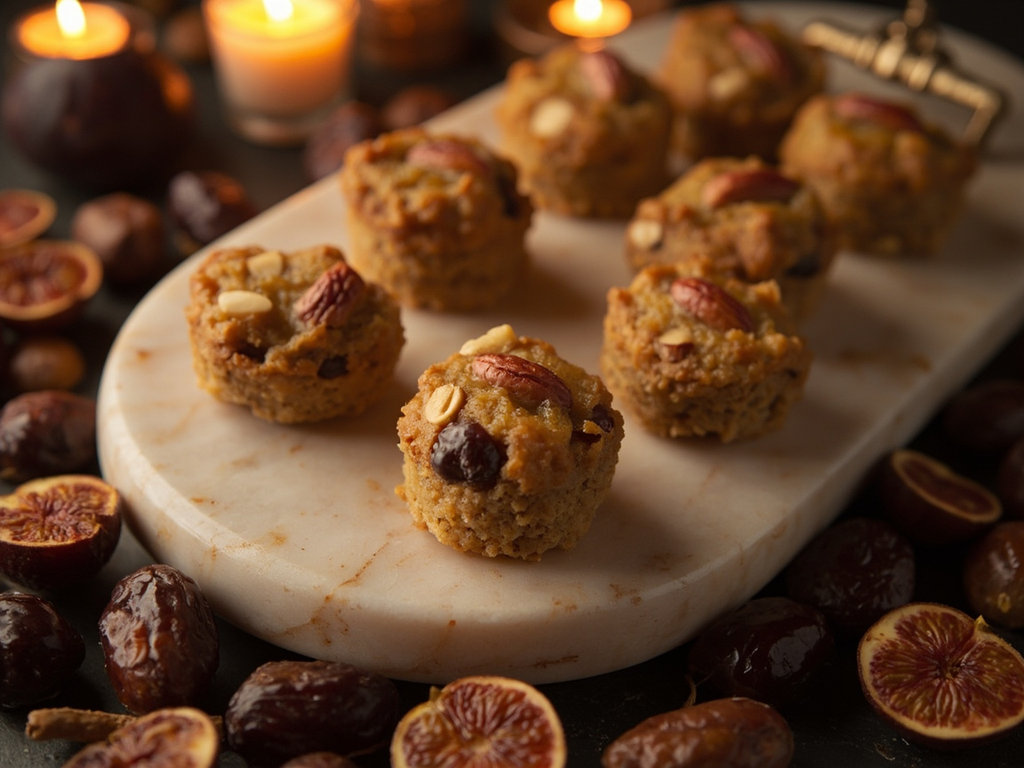
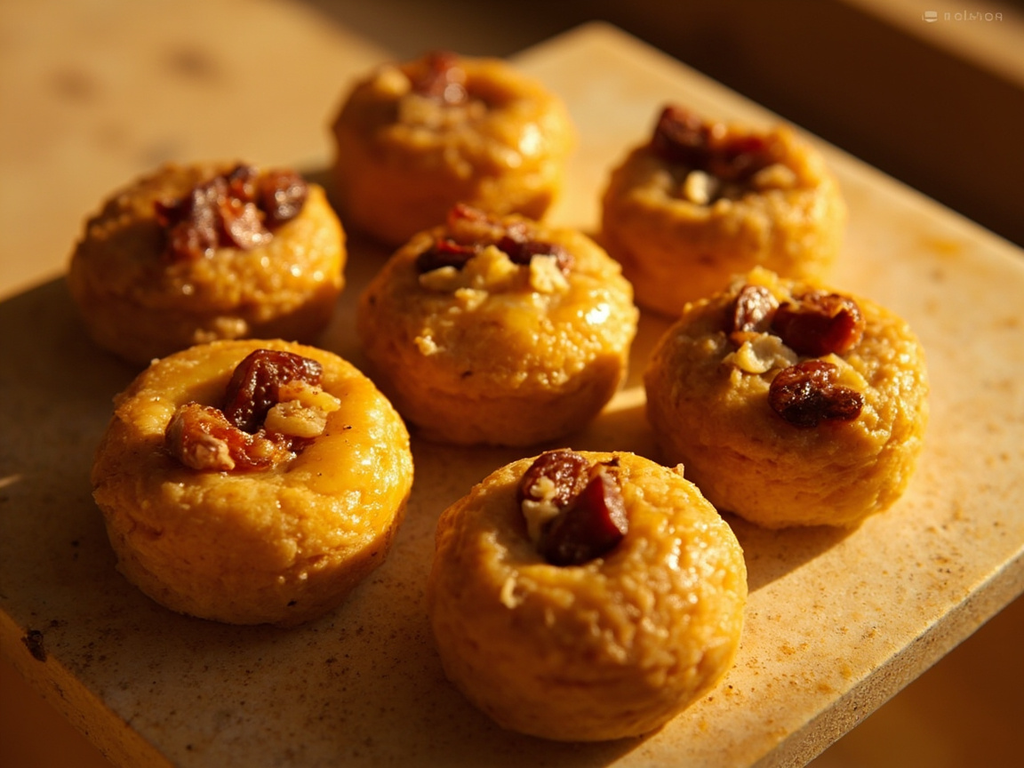
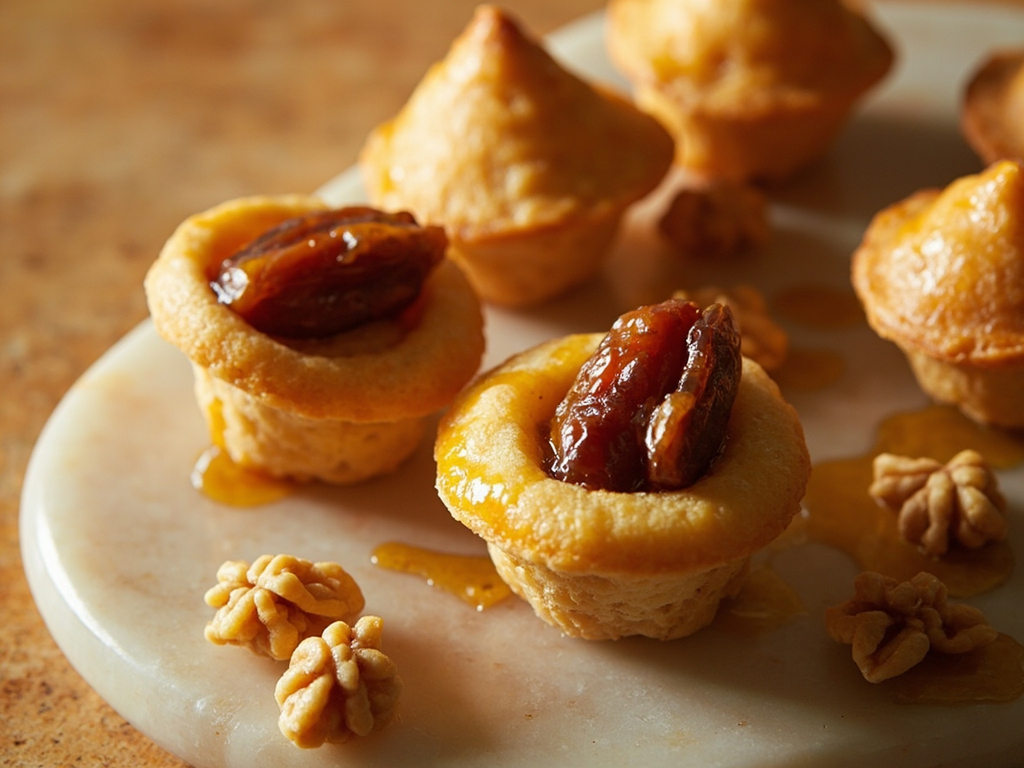
Small soft cakes made from emmer flour, bound with honey and filled with dates and nuts, sometimes rolled into spirals or shaped into cones like the offering breads painted on temple walls.
These cakes are not for my mouth alone, stranger: they are first placed before the god, on the stone altar, in thanks for the order I restored to the Black Land. Honey flows, dates melt, nuts crack—what the gods have blessed, the priests then share. Shape them like the sacred breads, pointed toward the sky, and think as you eat of all that I raised from what had fallen.
- •Emmer flour — a measure (base)
- •Honey — generously (sweetener and binder)
- •Chopped dates — a handful (filling)
- •Pounded nuts or almonds — a handful (filling)
- •Oriental cinnamon (cassia) — a pinch (flavoring)
- •Fat or oil — a little (softness)
Honey, Date, and Nut Cakes – the Sweet Offering of the Temples
Small soft cakes made from emmer flour, bound with honey and filled with dates and nuts, sometimes rolled into spirals or shaped into cones like the offering breads painted on temple walls.
Why this dish? Horemheb devoted his reign to restoring cults and refilling the altars of temples that Akhenaten had neglected. Among the traditional offerings were honey-sweetened cakes, placed before divine statues before being shared by the priests. Inspired by these offering pastries, these little cakes evoke the restorative piety of the pharaoh.
These cakes are not for my mouth alone, stranger: they are first placed before the god, on the stone altar, in thanks for the order I restored to the Black Land. Honey flows, dates melt, nuts crack—what the gods have blessed, the priests then share. Shape them like the sacred breads, pointed toward the sky, and think as you eat of all that I raised from what had fallen.
Ingredients (period version)
- Emmer flour — a measure (base)
- Honey — generously (sweetener and binder)
- Chopped dates — a handful (filling)
- Pounded nuts or almonds — a handful (filling)
- Oriental cinnamon (cassia) — a pinch (flavoring)
- Fat or oil — a little (softness)
Ingredients
- Spelt flour — 200 g (base)
- Honey — 120 g (sweetener and binder)
- Chopped pitted dates — 100 g (filling)
- Chopped walnuts or almonds — 60 g (filling)
- Cinnamon — 1/2 tsp (flavoring)
- Neutral oil or melted butter — 50 g (softness)
- Egg (optional modern binder) — 1 (binder)
Method
- Mix flour and cinnamon, then incorporate honey, oil, and egg until a soft dough forms.
- Add chopped dates and chopped nuts.
- Shape into small cones or flattened balls (a nod to offering breads).
- Bake at 170°C for 15–18 minutes, until a nice golden color.
- Upon leaving the oven, brush with a little warm honey to make them shine.
How it was made : Egyptians did not know sugar: all pastry relied on honey and dried fruits (dates, figs, raisins). Offering lists and temple scenes show many cakes of various shapes. Cocoa, vanilla, and refined cane sugar are absent: these sweets played on honey, nuts, and imported spices like cinnamon/cassia.
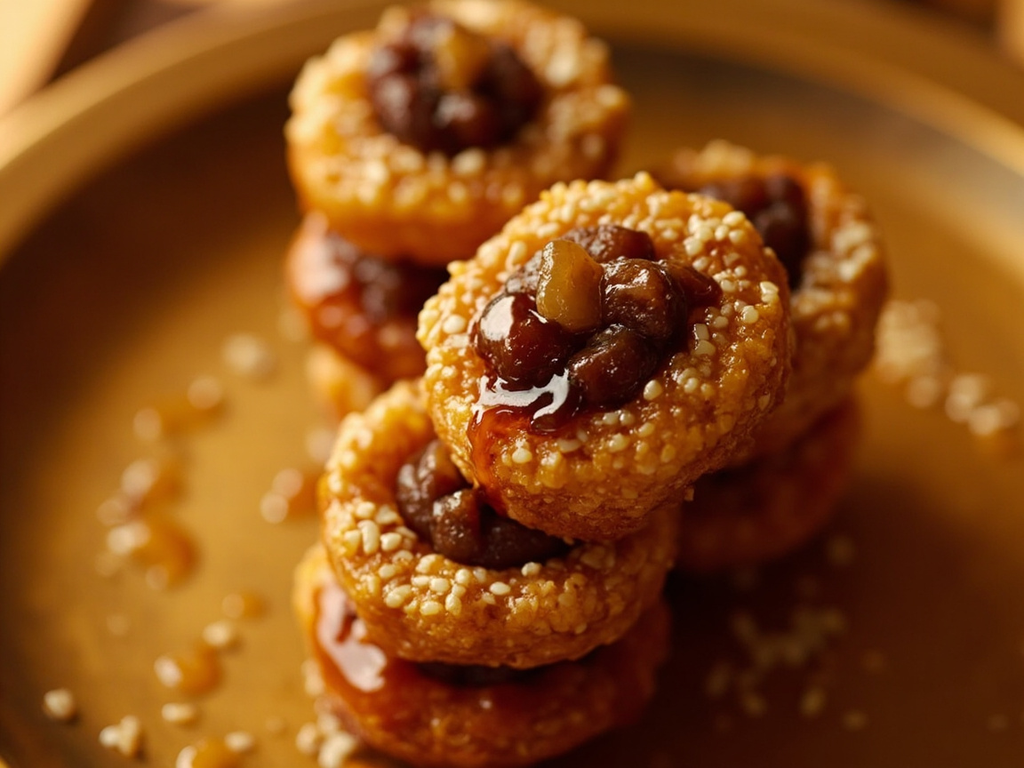
The contemporary twist : Rolled into snails and sprinkled with a touch of toasted sesame seeds, they hold their own on a contemporary teatime table.
Sources : William J. Darby, Paul Ghalioungui & Louis Grivetti, Food: The Gift of Osiris (1977) · Pierre Tallet, Histoire de la cuisine et de la gastronomie égyptiennes
Horemheb · Charactorium