 flip
flipOkayu — morning rice porridge
Okayu — morning rice porridge
Why this dish? Dōgen devotes pages of his Tenzo Kyōkun (Instructions for the Zen Cook) to the care the tenzo must put into washing the rice and watching over the morning porridge: a humble but sacred act. It is the very first dish of his monastic day.
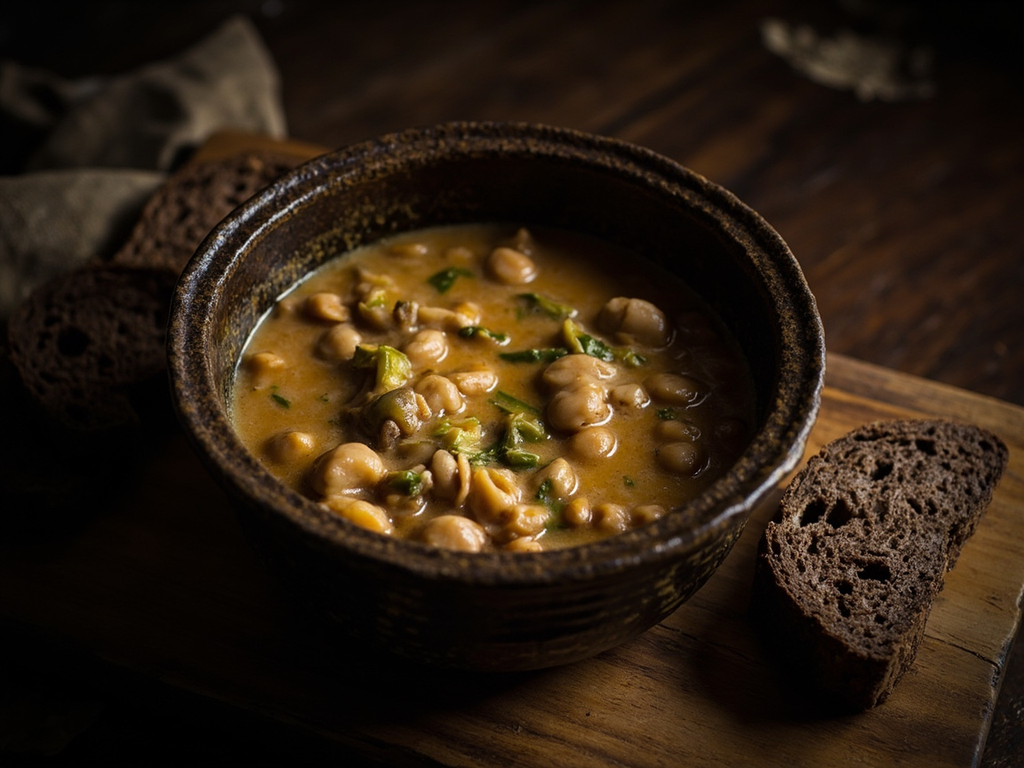
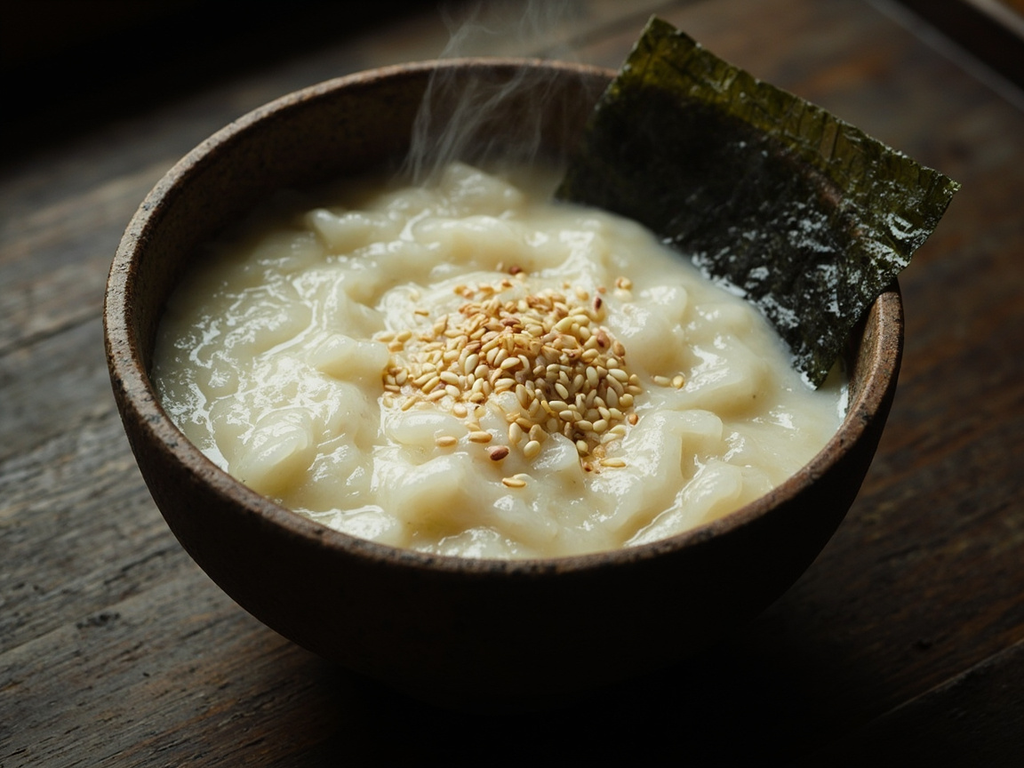
A rice porridge long-simmered in kombu seaweed broth, soft and comforting, seasoned with a pinch of salt and a few sesame seeds. The simplest dish in the monastery — and the one Dōgen deemed worthy of total attention.
Listen well, you who pass by: do not think that washing the morning rice is a lowly task. When I watched over the pot, I held my own life in my hands, for the boiled grain is what sustains the body seated in zazen. Pour in the seaweed water, let it simmer without haste, do not take your eyes off the flame — your mind in the pot, and the pot in your mind. A single pinch of salt is enough; the rest is seasoned by attention.
- •White rice — a handful per monk (nourishing base)
- •Dried kombu seaweed — a hand-sized piece (umami of the broth)
- •Spring water — in abundance (slow cooking)
- •Salt — a pinch (discreet seasoning)
- •Toasted sesame seeds — a few (garnish)
Okayu — morning rice porridge
A rice porridge long-simmered in kombu seaweed broth, soft and comforting, seasoned with a pinch of salt and a few sesame seeds. The simplest dish in the monastery — and the one Dōgen deemed worthy of total attention.
Why this dish? Dōgen devotes pages of his Tenzo Kyōkun (Instructions for the Zen Cook) to the care the tenzo must put into washing the rice and watching over the morning porridge: a humble but sacred act. It is the very first dish of his monastic day.
Listen well, you who pass by: do not think that washing the morning rice is a lowly task. When I watched over the pot, I held my own life in my hands, for the boiled grain is what sustains the body seated in zazen. Pour in the seaweed water, let it simmer without haste, do not take your eyes off the flame — your mind in the pot, and the pot in your mind. A single pinch of salt is enough; the rest is seasoned by attention.
Ingredients (period version)
- White rice — a handful per monk (nourishing base)
- Dried kombu seaweed — a hand-sized piece (umami of the broth)
- Spring water — in abundance (slow cooking)
- Salt — a pinch (discreet seasoning)
- Toasted sesame seeds — a few (garnish)
Ingredients
- Short-grain rice (japonica type) — 120 g (base)
- Kombu — 1 square 10 cm (umami)
- Water — 1.2 L (cooking)
- Fine salt — 1 small pinch (seasoning)
- Toasted sesame seeds — 1 tsp (garnish)
Method
- Wipe the kombu, plunge it into cold water and let soak for 30 minutes.
- Rinse the rice in clear water until it runs no longer milky.
- Gently bring the kombu water to a simmer, remove the seaweed just before boiling.
- Add the rice, lower the heat to the minimum and let simmer for 40–50 minutes, stirring occasionally, without covering fully.
- When the grains have burst into a silky porridge, season with a pinch of salt.
- Serve piping hot in a bowl, sprinkle with sesame seeds.
How it was made : At the monastery, okayu was eaten at dawn after the first meditation, from the main bowl of the ōryōki. The bowl was then cleaned with a little hot water and a piece of vegetable, and that water was drunk so as not to waste anything.
The contemporary twist : Served in a rough stoneware bowl with a drizzle of sesame oil and a few slivers of confit shiitake: a “zen porridge” that reconciles rushed mornings with silence.
Sources : Dōgen, Tenzo Kyōkun (Instructions for the Zen Cook), 13th c. · Dōgen, Shōbōgenzō
Dogen · Charactorium