 flip
flipAberth y Cynhaeaf — The First-Fruit Offering to the Mother Goddess
Aberth y Cynhaeaf — The First-Fruit Offering to the Mother Goddess
Why this dish? Dôn is the root of the Plant Dôn, the matriarchal goddess guarantor of harvests: to her were offered the first fruits of crops and milk, first fruits deposited as a sign of gratitude for the abundance she bestows upon the Children of Dôn.
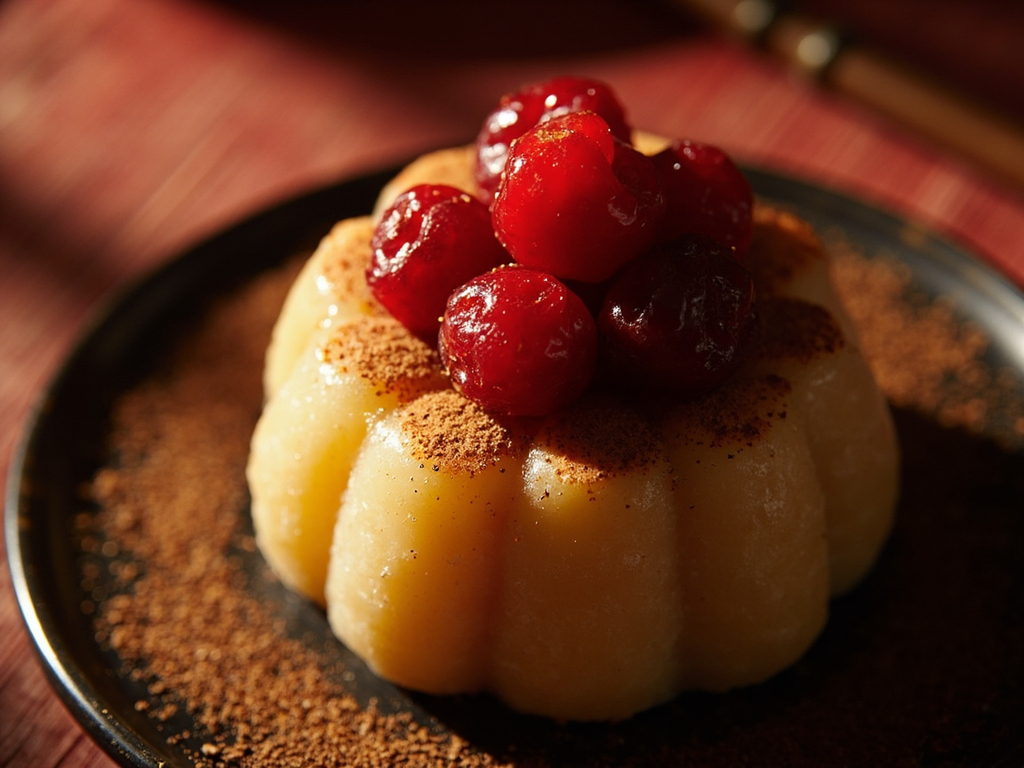
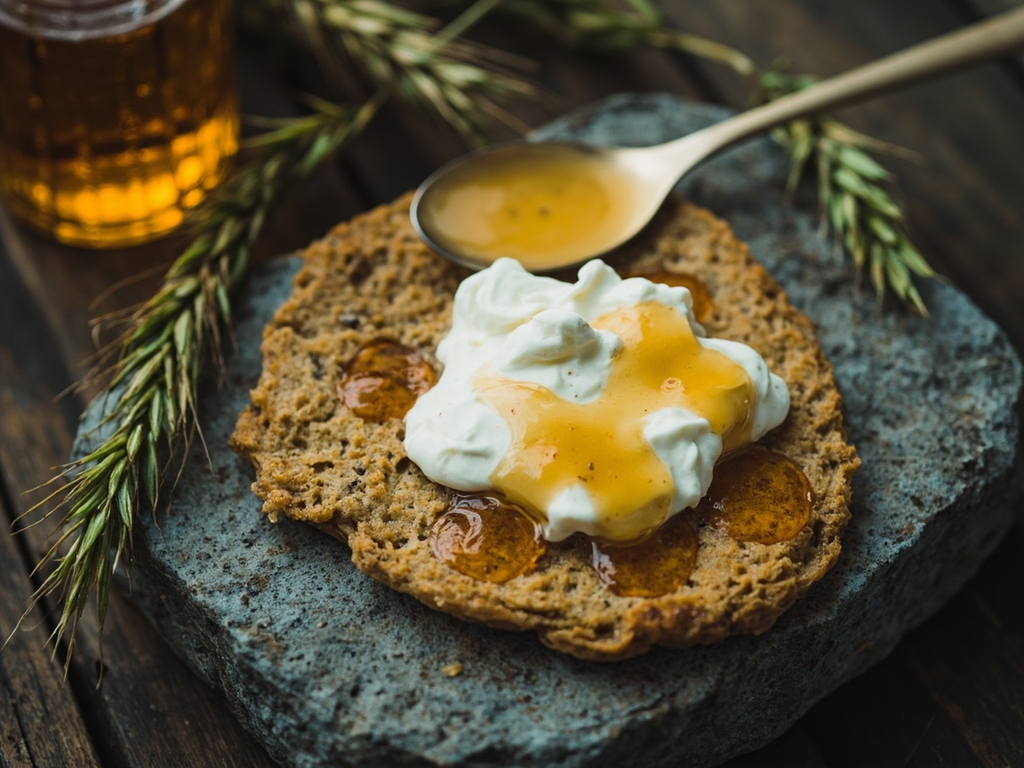
A barley cake topped with honey and clotted cream, placed on a stone or at the foot of a tree as a share offered to the goddess — the share one does not eat, the one that is returned.
Approach, child of my blood. Before the household breaks bread, it is to me that the first sheaf, the first milking, the first honeycomb belong. Place this cake on the cold stone, under the sky where my court shines — Llys Dôn, which you call Cassiopeia — and do not take it back: what is given to me fertilizes the land you till. Who shares with the mother knows no scarcity.
- •Freshly ground barley flour — a generous handful (base of the cake)
- •Wild honey — to drizzle (sweet offering)
- •Curdled milk (thickened milk) — one ladle (first fruits of the milking)
- •Spring water — as needed (binder)
Aberth y Cynhaeaf — The First-Fruit Offering to the Mother Goddess
A barley cake topped with honey and clotted cream, placed on a stone or at the foot of a tree as a share offered to the goddess — the share one does not eat, the one that is returned.
Why this dish? Dôn is the root of the Plant Dôn, the matriarchal goddess guarantor of harvests: to her were offered the first fruits of crops and milk, first fruits deposited as a sign of gratitude for the abundance she bestows upon the Children of Dôn.
Approach, child of my blood. Before the household breaks bread, it is to me that the first sheaf, the first milking, the first honeycomb belong. Place this cake on the cold stone, under the sky where my court shines — Llys Dôn, which you call Cassiopeia — and do not take it back: what is given to me fertilizes the land you till. Who shares with the mother knows no scarcity.
Ingredients (period version)
- Freshly ground barley flour — a generous handful (base of the cake)
- Wild honey — to drizzle (sweet offering)
- Curdled milk (thickened milk) — one ladle (first fruits of the milking)
- Spring water — as needed (binder)
Ingredients
- Barley flour — 150 g (base of the cake)
- Warm water — 90 ml (binder)
- Salt — 1 pinch (seasoning)
- Multifloral honey — 3 tbsp (topping)
- Thick crème fraîche or fresh cheese — 100 g (evokes the curdled milk of first fruits)
Method
- Mix the barley flour, salt and warm water to obtain a supple dough, without working it too long.
- Shape a flat cake about one centimeter thick.
- Cook on a hot stone or dry cast-iron pan, 4 to 5 minutes per side, until marked with brown spots.
- Let cool slightly, drizzle generously with honey and place a spoonful of cream or fresh cheese on top.
- Present on a flat stone or a leaf — to evoke the offering, symbolically reserve a portion that is not eaten.
How it was made : The Celts practiced votive deposition of food and objects near springs, trees and stones. Mother goddesses (matronae) received milk, grain and honey, first fruits of fertility. No text describes a precise recipe for an offering to Dôn: this is an evocation built on attested Celtic votive practices and Iron Age Welsh diet.
The contemporary twist : Serve the cake as a rustic dessert under the name "goddess's share", one per table, to be shared ritually among all.
Sources : Miranda Aldhouse-Green, Celtic Goddesses: Warriors, Virgins and Mothers (1995) · Will & John Koch, The Celtic Heroic Age (on the Mabinogi and Plant Dôn)
Don · Charactorium