 flip
flipLibum, the Cheese Cake Offered to the Genius of the House
Libum, the Cheese Cake Offered to the Genius of the House
Why this dish? Mistress of a great Roman household and thrice married to public men, Fulvia presided over domestic worship. The libum, a cake baked on bay leaves and offered to the protective Genius of the home, accompanied these pious gestures that sealed a matron's authority over her household.
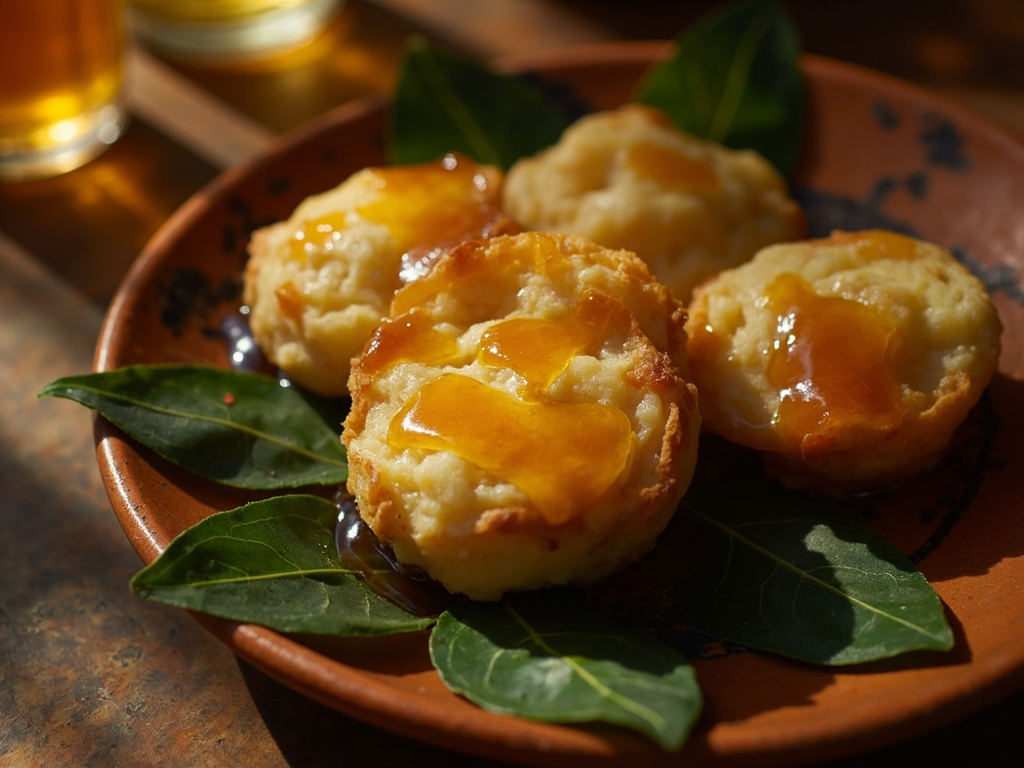
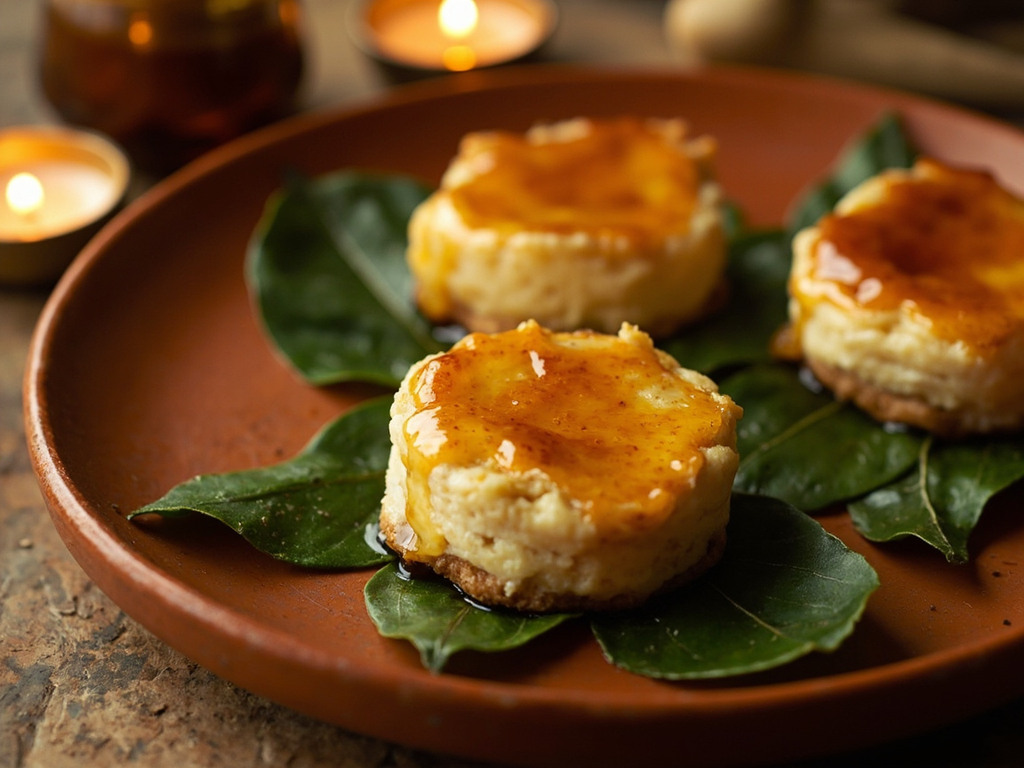
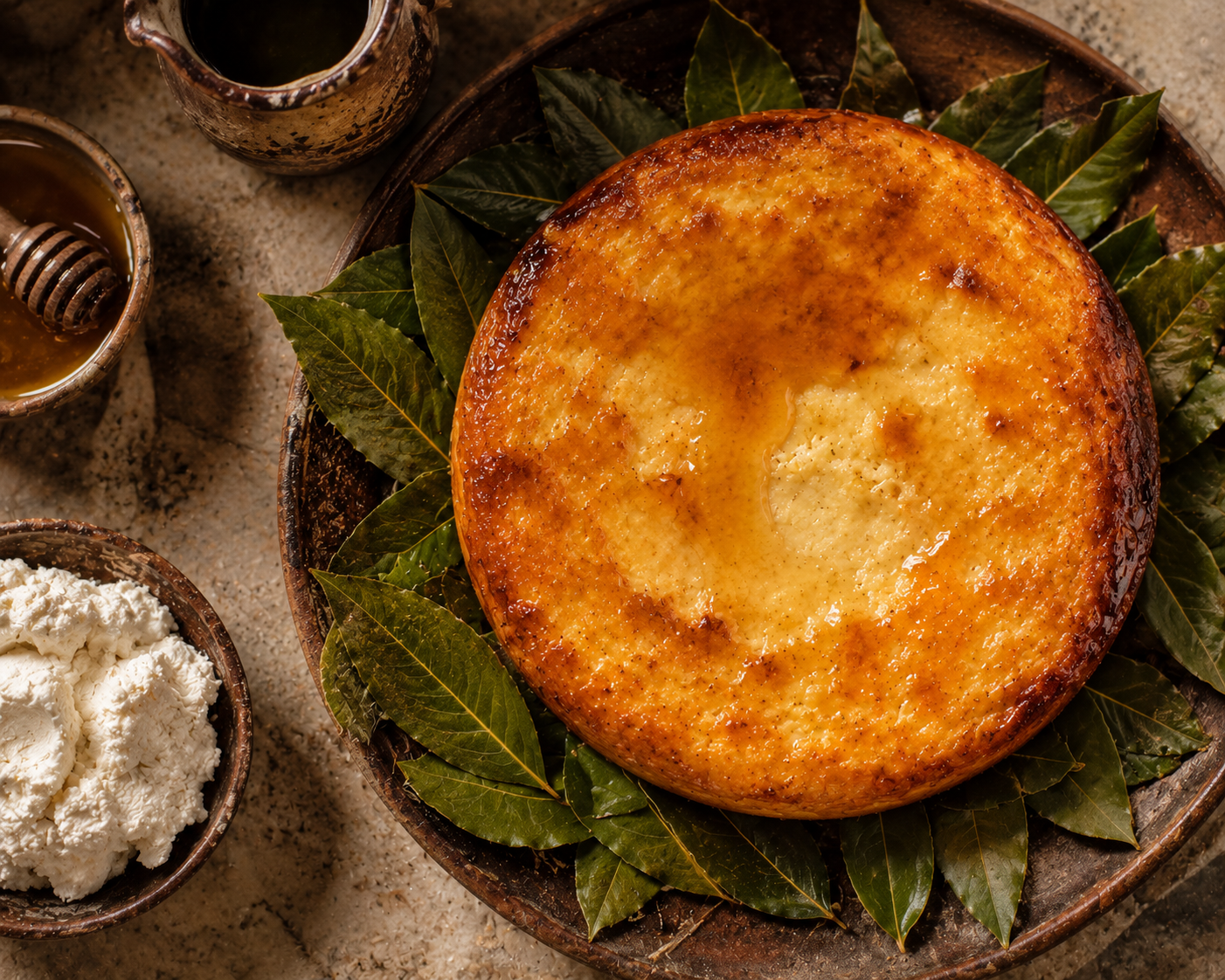
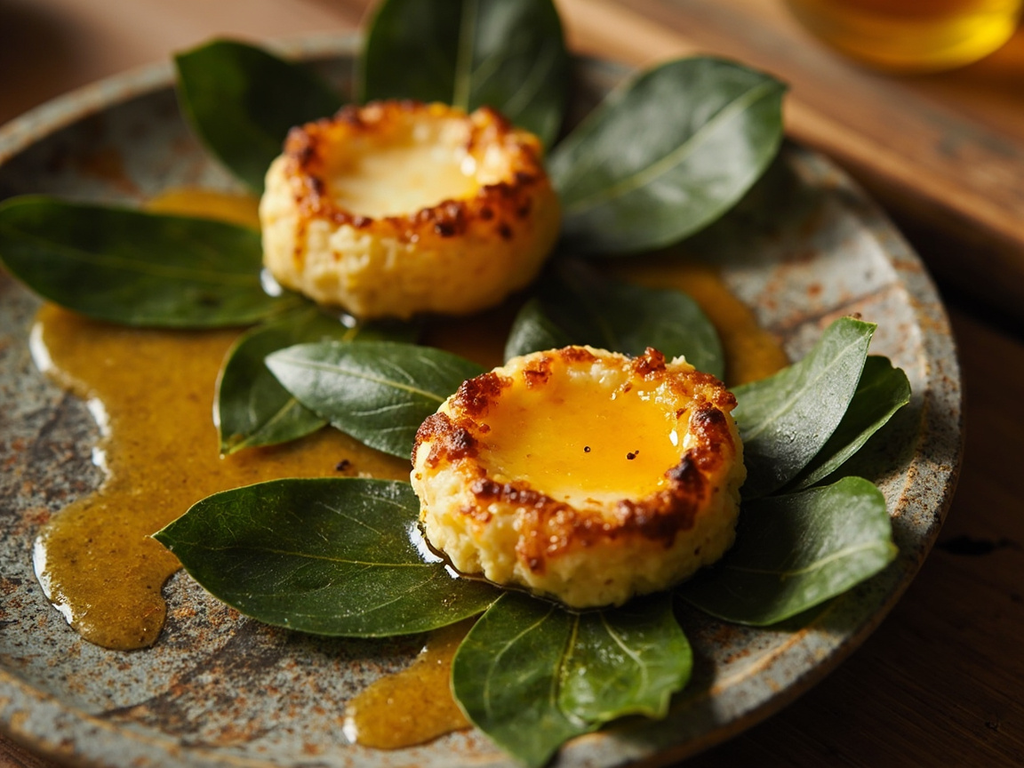
A small, soft cake of fresh cheese, egg, and flour, baked on a bay leaf then drizzled with honey. The recipe comes to us word for word from Cato the Elder.
Before the house awakens, I offer the Genius his due. We beat fresh cheese with egg and flour, place the dough on bay leaves, and bake gently under a clay bell. Once warm, I bathe it in honey: thus sweetness rises to the household gods. A matron who neglects her gods does not long keep her house—and I hold far more than a house.
- •Fresh sheep's cheese — two pounds (base)
- •Wheat flour — one pound (binder)
- •Egg — 1 (binder)
- •Bay leaves — a few (fragrant support)
- •Honey — for drizzling (offering sweetness)
Libum, the Cheese Cake Offered to the Genius of the House
A small, soft cake of fresh cheese, egg, and flour, baked on a bay leaf then drizzled with honey. The recipe comes to us word for word from Cato the Elder.
Why this dish? Mistress of a great Roman household and thrice married to public men, Fulvia presided over domestic worship. The libum, a cake baked on bay leaves and offered to the protective Genius of the home, accompanied these pious gestures that sealed a matron's authority over her household.
Before the house awakens, I offer the Genius his due. We beat fresh cheese with egg and flour, place the dough on bay leaves, and bake gently under a clay bell. Once warm, I bathe it in honey: thus sweetness rises to the household gods. A matron who neglects her gods does not long keep her house—and I hold far more than a house.
Ingredients (period version)
- Fresh sheep's cheese — two pounds (base)
- Wheat flour — one pound (binder)
- Egg — 1 (binder)
- Bay leaves — a few (fragrant support)
- Honey — for drizzling (offering sweetness)
Ingredients
- Ricotta or well-drained fresh sheep's cheese — 250 g (base)
- Wheat flour — 125 g (binder)
- Egg — 1 (binder)
- Fresh bay leaves — 4 to 6 (fragrant support)
- Honey — 4 tbsp (glaze)
Method
- Mash the cheese until smooth, incorporate the egg, then the flour to form a supple dough.
- Shape small patties and place each on a bay leaf.
- Bake at medium heat (180°C) for about 35–40 minutes, under a bell or inverted dish, until golden.
- Remove the cakes while warm, discard the bay leaves.
- Drizzle generously with warm honey before serving.
How it was made : Cato the Elder, in 'De agricultura' (2nd century BC), gives the exact recipe for libum: cheese, flour, egg, baked on bay leaves under a hot clay bell ('sub testu'), then glazed with honey. It was a ritual cake offered to household deities.
The contemporary twist : Served cold with a drizzle of chestnut honey and crushed walnuts, it becomes a stunning 'ancient cheesecake'.
Sources : Cato the Elder, De agricultura, 75
Fulvia · Charactorium