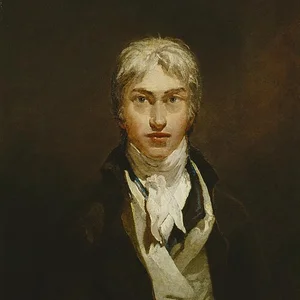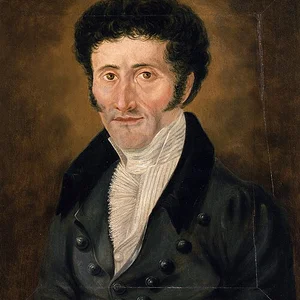

German Romantic writer, composer, and illustrator (1776-1822), Hoffmann is one of the major figures of fantastic Romanticism. Author of the Fantastic Tales, he also composed operas and produced satirical drawings. His work inspired Offenbach, Tchaikovsky, and Schumann.
E.T.A. Hoffmann(1776 — 1822)
Ernst Theodor Amadeus Hoffmann
royaume de Prusse
10 min read
Frequently asked questions
Famous Quotes
« Music is the most romantic of all the arts.»
« The dream is often more real than reality.»
Key Facts
- 1776: born in Königsberg (Prussia)
- 1813–1814: publication of the Kreisleriana in the Phantasiestücke in Callots Manier
- 1816: publication of The Sandman (Der Sandmann)
- 1819–1821: publication of The Serapion Brethren
- 1822: death in Berlin at the age of 46
Works & Achievements
Hoffmann's first collection of short stories and musical essays, including the Kreisleriana devoted to his musician alter ego and the celebrated Don Juan. The title pays homage to the Lorraine engraver Jacques Callot, master of the grotesque and the fantastic.
A masterpiece of German fantastic fiction, in which the student Anselmus wavers between reality and a wondrous world populated by golden serpents and sorcerer archivists. The work profoundly influenced the fantastic genre across Europe and remains Hoffmann's most widely studied text.
A Gothic novel tracing the descent into darkness of a monk seduced by diabolical elixirs, built around themes of the double and guilt. The work foreshadows the great psychological novels of the 19th century and anticipates both Stevenson and Poe.
A fantastic short story analyzed by Freud as the archetype of the "uncanny" (Unheimliche): young Nathanaël develops a morbid obsession with the automaton Olympia and the terrifying figure of the Sandman. It is Hoffmann's most extensively discussed text in psychoanalysis and literary theory.
A children's tale blending animated toys, fantastical warfare, and waking dream, which inspired Tchaikovsky's ballet of the same name (1892). Thanks to its choreographic legacy, it is Hoffmann's best-known work to audiences worldwide.
A Romantic opera that premiered to great success at the Royal Theatre in Berlin, set to a libretto by Friedrich de la Motte Fouqué based on a fantastic tale of a water sprite in love with a mortal. It is regarded as one of the founding works of German Romantic opera, predating Weber's Der Freischütz.
An unfinished novel of bold construction, weaving together the philosophical memoirs of a cat with the fragmented biography of Kapellmeister Kreisler. This experimental text anticipates modern narrative techniques and was admired by both Thomas Mann and Kafka.
Anecdotes
Hoffmann was such an admirer of Mozart that he changed his third given name, Wilhelm, to Amadeus — Mozart's name of genius. This symbolic gesture illustrates the central role of music in his life: for him, Mozart represented the absolute ideal of musical Romanticism, a guiding figure with whom he wished to identify.
By day, Hoffmann was a rigorous Prussian civil servant, drafting rulings at the Kammergericht in Berlin; by night, he transformed into a fantastical writer haunted by his own creatures. This double life was not a contradiction but a creative tension that drove his entire body of work, embodying better than anyone the Romantic conflict between the bourgeois world and the artistic ideal.
Hoffmann was a regular at the Lutter & Wegner restaurant in Berlin, where he met each evening with the actor Ludwig Devrient and other artists over Rhine wine and lively conversation. These late-night, wine-fueled evenings were a genuine source of inspiration for him: returning home deep into the night, he would write his darkest tales by candlelight.
Hoffmann invented a fictional alter ego, the Kapellmeister Kreisler — a brilliant and unstable musician, ill-suited to the bourgeois world. This character directly inspired Robert Schumann, who dedicated to him his celebrated Kreisleriana for piano (1838), illustrating Hoffmann's lasting influence on all of European musical Romanticism.
When Napoleon seized Warsaw in 1806, Hoffmann overnight lost his position as a Prussian civil servant. Forced to support himself through music, he became an itinerant conductor — a professional setback that paradoxically opened the door to his career as an artist and writer.
Primary Sources
"Wenn von der Musik als einer selbständigen Kunst die Rede ist, soll immer nur die Instrumentalmusik gemeint sein, welche, jede Hilfe, jede Beimischung einer anderen Kunst verschmähend, das eigentümliche, nur in ihr zu erkennende Wesen der Kunst rein ausspricht." (For Hoffmann, instrumental music is the Romantic art par excellence, expressing the inexpressible without recourse to words or images.)
"An einem Himmelfahrtsabende jagte ein heftiger Stoß mehrere Menschen, die eben durch das Schwarze Tor gingen, auseinander, so daß der Student Anselmus, der eben mit großer Behendigkeit in die Kreuzgasse einbiegen wollte, kopfüber in einen Korb mit Äpfeln und Kuchen fiel." (Opening of the work: the student Anselmus is immediately plunged into a world where the real and the marvellous blur together.)
"Gewiß seid ihr alle besorgt, daß ich so lange, lange nicht geschrieben. Mutter grämte sich wohl und Clara wird geglaubt haben, ich lebe hier in Saus und Braus und vergesse die holde Engelsfigur, die so tief in mein Herz geprägt ist." (Nathanaël recounts to his friend the terrifying apparition of Coppelius in his childhood, the source of his obsession and future madness.)
"Johannes Kreisler war ein Kapellmeister, der, wie es manchem Musiker begegnet ist, in dieser Welt eine Art Heimatlosigkeit empfand und nie recht wußte, wo er hingehörte." (Hoffmann presents Kreisler as a misfit genius wandering between two worlds, a fictional double of the author himself.)
"Es gibt Momente, in denen alle äußere Erscheinung wie in einem innern Wesen aufgeht und das Gemüt, von allem äußern Treiben erlöst, in sich selbst versunken, die Stimmen einer höhern Welt vernimmt." (Hoffmann here advances a mystical conception of music as a pathway to a higher world, the very foundation of his Romantic aesthetic.)
Key Places
Hoffmann's birthplace, where he was born in 1776 and spent his childhood in a family of lawyers. It is also Kant's city, steeped in a strong intellectual tradition that left its mark on the young Hoffmann before he departed to join the artistic bohemia.
Hoffmann lived here from 1808 to 1813 as the theater's musical director. It is in Bamberg, a medieval city of mysterious alleyways, that he wrote his first fantastical stories and conceived the Fantasiestücke; he also experienced an ill-fated passion here for his student Julia Mark.
Hoffmann served as a Prussian civil servant here from 1804 to 1806 and directed an active philharmonic society. The Napoleonic occupation abruptly ended this period and forced him to reinvent himself as a traveling artist — a decisive turning point in his life.
Hoffmann settled permanently in Berlin in 1814 and spent the last eight years of his life there, working as a judge at the Kammergericht while writing his masterpieces. It was there that he frequented the restaurant Lutter & Wegner and died in 1822.
Hoffmann worked here as a theater conductor in 1813–1814, in the midst of the upheavals of the Napoleonic Wars. It was in Leipzig that he published his first major works with the publisher Brockhaus, truly launching his literary career.
Typical Objects

Hoffmann's everyday tool, used both to write his court rulings and to pen his tales by candlelight at night. His handwriting was reputed to be meticulous despite the long hours spent working after dark.

Hoffmann played several instruments and composed prolifically — his opera Undine and his lieder demonstrate genuine musical mastery. Music was for him a daily discipline, not a mere pastime.

Hoffmann produced satirical portraits and biting caricatures of his contemporaries. His drawings sometimes illustrated his own texts or circulated in Berlin salons, earning him a reputation as a sharp-eyed illustrator.

His evenings at the Lutter & Wegner restaurant in Berlin, spent with the actor Ludwig Devrient and fellow artists, were inseparable from his creative life. Rhine wine flowed freely, and Hoffmann himself acknowledged that these excesses fed his inspiration just as surely as they destroyed his health.

Hoffmann filled notebooks with handwritten musical staves, composing operas, lieder, and chamber music. His most ambitious work, the opera Undine (1816), was performed to great success at the Royal Theatre in Berlin.

A hugely popular optical device in the early nineteenth century that projected fantastical images into the darkness, the magic lantern embodied for Hoffmann the blurred boundary between the real and the imaginary that he explored throughout his tales.
School Curriculum
Vocabulary & Tags
Key Vocabulary
Daily Life
Morning
Hoffmann rose each morning to make his way to the Kammergericht in Berlin, where he handled legal cases in his role as a justice counselor. His morning was strictly devoted to administrative work and hearings, with no artistic activity whatsoever — he was known for his professional rigor despite his turbulent nightlife.
Afternoon
In the afternoon, after fulfilling his duties at the court, Hoffmann could turn his attention to composing music or to reviewing and correcting his literary manuscripts. He maintained his connections with Berlin's artistic circles, meeting musicians, actors, and painters in cafés and salons.
Evening
The evening was the heart of his creative life: he would meet his friends — most notably the actor Ludwig Devrient — at the Lutter & Wegner restaurant, over Rhine wine and wide-ranging conversations about music, theater, and literature. Returning home late at night, he wrote by candlelight until dawn, producing his tales in a kind of altered state hovering between mild intoxication and imaginative exaltation.
Food
Hoffmann led a bohemian life with little regard for healthy eating: he drank wine, punch, and strong coffee in abundance, and ate irregularly depending on his finances and the company he kept. These excesses took a heavy toll on his health; in the final years of his life, afflicted by a progressive paralysis, he could no longer write by hand and had to dictate his texts.
Clothing
As a Prussian civil servant, Hoffmann wore the regulation somber, dark attire of the Prussian bureaucracy in court — a black jacket and white jabot. In salons and artistic cafés, he favored a more casual and romantic style, befitting his identity as a multi-talented artist.
Housing
In Berlin, Hoffmann lived in a modest apartment shared with his books, musical scores, paintbrushes, and instruments. His home reflected the creative disorder of a man of many talents, surrounded by works in progress and a wide array of artistic references.