 flip
flipFårikål — mutton and cabbage with black pepper
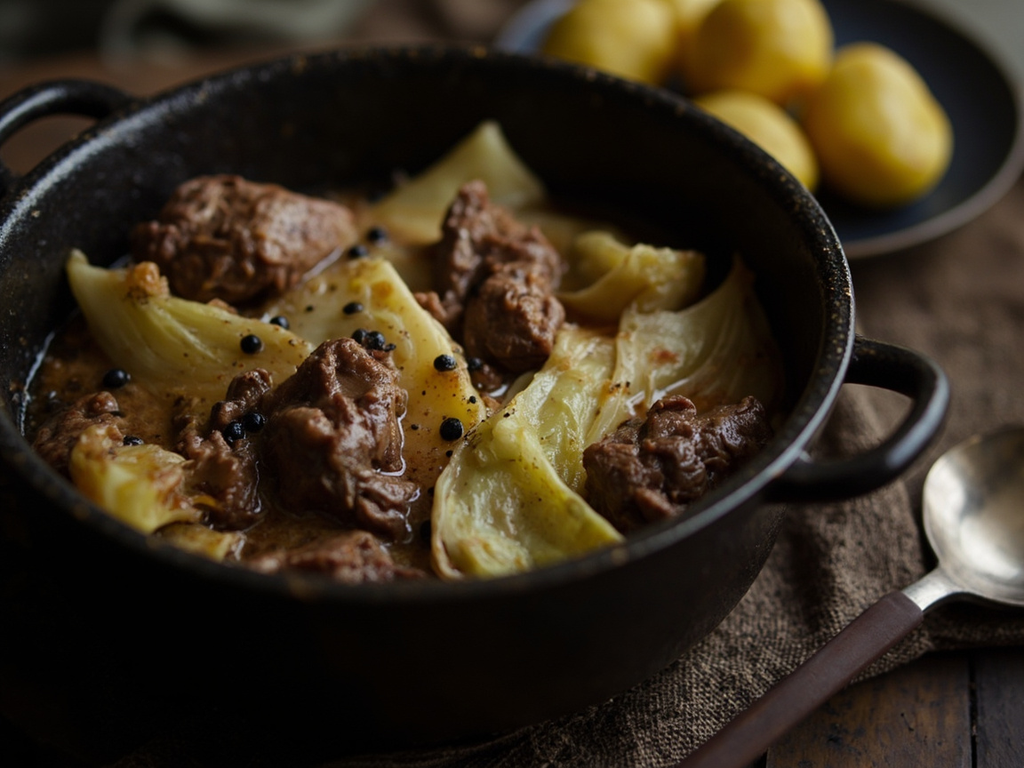
Fårikål — mutton and cabbage with black pepper
Why this dish? National dish of the Norwegian autumn, fårikål simmered in every home in Christiania when the cold returned. After his 1908 cure, Munch returned to this sober and restorative food of his country, far from the lavish dinners of Berlin and Paris: mutton, cabbage, pepper, nothing more.
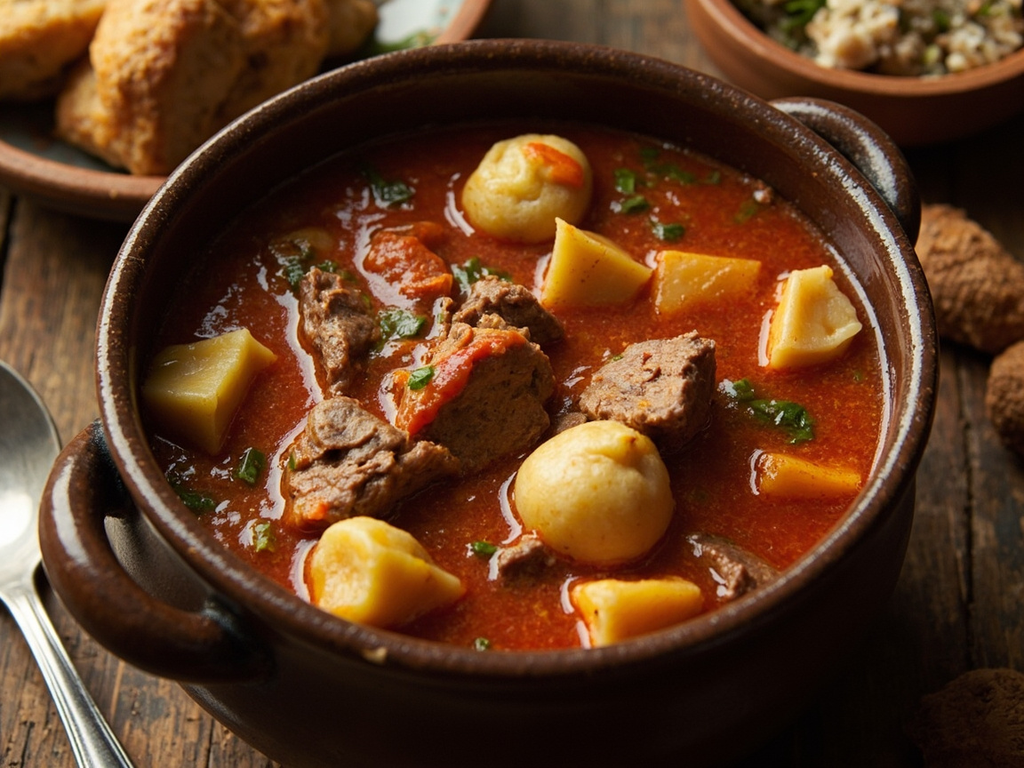
A very simple stew where mutton pieces and cabbage wedges are stacked in layers in a large pot, with a generous shower of whole black peppercorns, and cooked long until tender. It is the meal that heralds the arrival of autumn.
When the first frost bit the fjord, my landlady would put the great cast-iron pot on the fire, and the whole house smelled of mutton and cabbage. You see, you don't grind the pepper: you throw it in whole, by handfuls, between the layers, and each grain you crunch under your tooth awakens the body numb with cold. I have known the sumptuous tables of the continent and the wine that ruined my health; but it is this poor man's dish, slow and patient like the Norwegian winter, that gave me back to myself after Copenhagen. Let it simmer for hours, without rushing — painting, like the pot, cannot abide haste.
- •Mutton shoulder and neck with bone — a good piece (meat, the fat flavors the broth)
- •Cabbage — one large head (vegetable that melts and sweetens)
- •Black peppercorns — a large handful (spicy signature, thrown whole)
- •Salt — to taste (seasoning)
- •Water — enough to half-cover (broth)
- •Rye flour — a pinch (optional) (to slightly thicken the juice)
Fårikål — mutton and cabbage with black pepper
A very simple stew where mutton pieces and cabbage wedges are stacked in layers in a large pot, with a generous shower of whole black peppercorns, and cooked long until tender. It is the meal that heralds the arrival of autumn.
Why this dish? National dish of the Norwegian autumn, fårikål simmered in every home in Christiania when the cold returned. After his 1908 cure, Munch returned to this sober and restorative food of his country, far from the lavish dinners of Berlin and Paris: mutton, cabbage, pepper, nothing more.
When the first frost bit the fjord, my landlady would put the great cast-iron pot on the fire, and the whole house smelled of mutton and cabbage. You see, you don't grind the pepper: you throw it in whole, by handfuls, between the layers, and each grain you crunch under your tooth awakens the body numb with cold. I have known the sumptuous tables of the continent and the wine that ruined my health; but it is this poor man's dish, slow and patient like the Norwegian winter, that gave me back to myself after Copenhagen. Let it simmer for hours, without rushing — painting, like the pot, cannot abide haste.
Ingredients (period version)
- Mutton shoulder and neck with bone — a good piece (meat, the fat flavors the broth)
- Cabbage — one large head (vegetable that melts and sweetens)
- Black peppercorns — a large handful (spicy signature, thrown whole)
- Salt — to taste (seasoning)
- Water — enough to half-cover (broth)
- Rye flour — a pinch (optional) (to slightly thicken the juice)
Ingredients
- Mutton or lamb shoulder with bone, in pieces — 1.2 kg (meat)
- Green or white cabbage — 1 kg (1 large head) (vegetable)
- Whole black peppercorns — 2 tbsp (spicy signature)
- Coarse salt — 1 tbsp (seasoning)
- Water — about 500 ml (broth)
- Flour (optional) — 1 tbsp (to bind the juice)
Method
- Cut the cabbage into large wedges, keeping a bit of core so they hold together.
- In a large pot, alternate layers: meat fat side down, then cabbage, salting and scattering peppercorns (and a dusting of flour if you want a thicker juice) at each layer.
- Pour in water until halfway up, bring slowly to a simmer, cover.
- Let simmer over very low heat for 1.5 to 2 hours, until the meat falls off the bone and the cabbage is tender.
- Serve piping hot in deep bowls with plain boiled potatoes.
How it was made : Fårikål (literally 'mutton in cabbage') was cooked in a single pot on the kitchen fire, making it an ideal autumn dish after the slaughter of sheep brought down from the mountain pastures. It was eaten for several days in a row, reheated, as it improves in flavor. Potatoes, cultivated in Norway since the late 18th century, already accompanied it in Munch's time.
The contemporary twist : Serve fårikål in a deep bowl, meat coated with the peppery juice, with a single steamed potato placed like a pale pebble — a stark presentation worthy of a Northern landscape.
Edvard Munch · Charactorium