 flip
flipNasi goreng kampung
Nasi goreng kampung
Why this dish? Nasi goreng is THE daily Indonesian dish, made with leftover rice for breakfast or late at night. Anggun, raised in Jakarta before becoming a star, grew up with the smell of fried rice with garlic and kecap manis: it is the madeleine she evokes when speaking of her childhood.
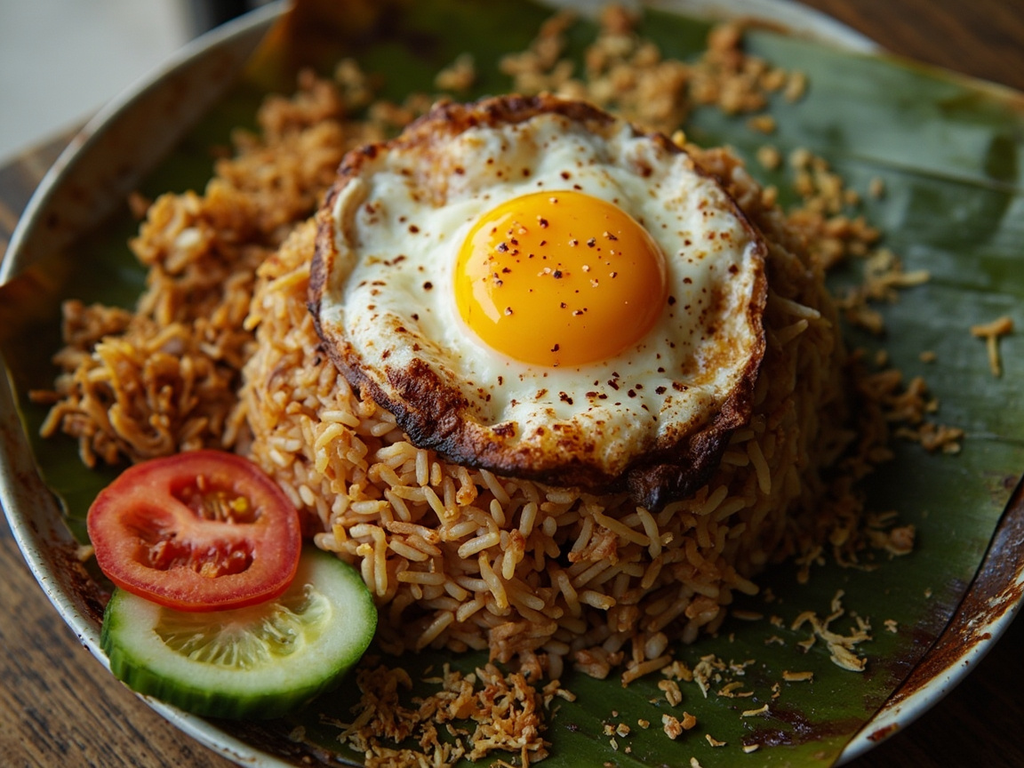
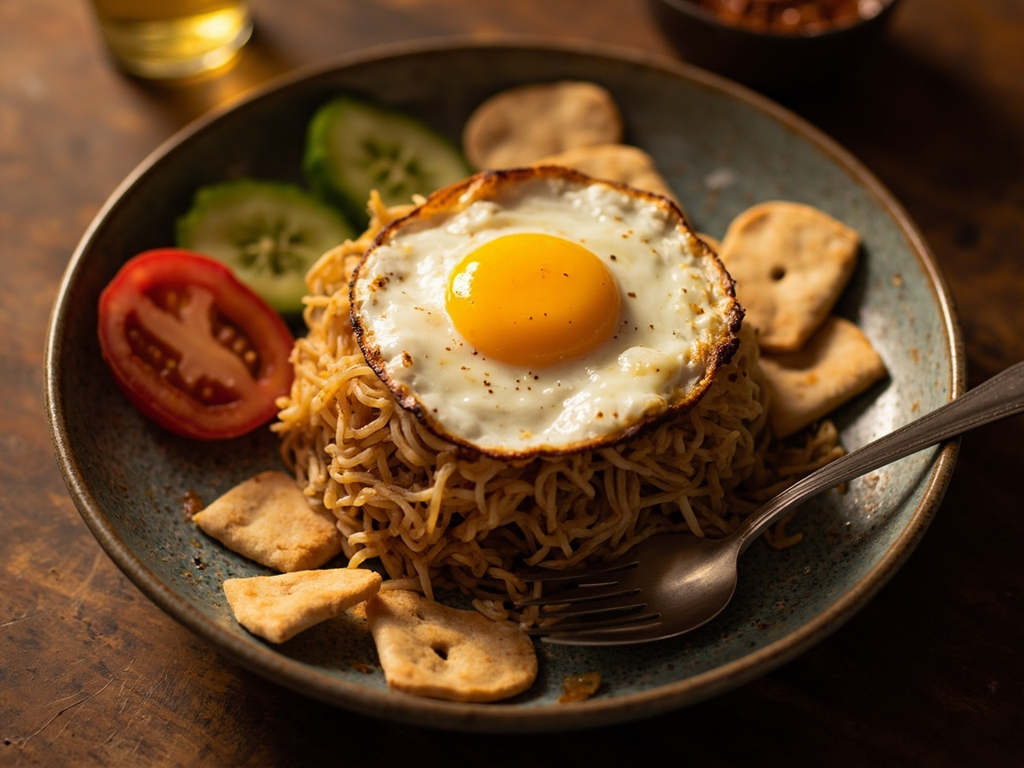
Fried rice in a wok, perfumed with garlic, shallot, and kecap manis, topped with a sunny-side-up egg with crispy edges. The go-to dish for Javanese families, at any hour.
At home in Jakarta, we never throw away yesterday's rice — it's the best, dry, doesn't stick in the wok. My mother would crush garlic and shallot in the mortar, let the terasi sizzle for a second, then everything would fry on high heat in a few moves. The secret is kecap manis: you pour it at the last moment, it caramelizes and coats every grain. And the egg on top, with its lacy edges — for me, that's the taste of home, wherever I sing in the world.
- •Cooked white rice from the day before — a large bowl (base)
- •Garlic and red shallot — a handful, pounded (aromatic base)
- •Terasi (shrimp paste) — a pinch (fermented umami)
- •Kecap manis — a generous drizzle (color and sweet-salty)
- •Bird's eye chili — according to courage (heat)
- •Chicken egg — 1 per person (topping)
Nasi goreng kampung
Fried rice in a wok, perfumed with garlic, shallot, and kecap manis, topped with a sunny-side-up egg with crispy edges. The go-to dish for Javanese families, at any hour.
Why this dish? Nasi goreng is THE daily Indonesian dish, made with leftover rice for breakfast or late at night. Anggun, raised in Jakarta before becoming a star, grew up with the smell of fried rice with garlic and kecap manis: it is the madeleine she evokes when speaking of her childhood.
At home in Jakarta, we never throw away yesterday's rice — it's the best, dry, doesn't stick in the wok. My mother would crush garlic and shallot in the mortar, let the terasi sizzle for a second, then everything would fry on high heat in a few moves. The secret is kecap manis: you pour it at the last moment, it caramelizes and coats every grain. And the egg on top, with its lacy edges — for me, that's the taste of home, wherever I sing in the world.
Ingredients (period version)
- Cooked white rice from the day before — a large bowl (base)
- Garlic and red shallot — a handful, pounded (aromatic base)
- Terasi (shrimp paste) — a pinch (fermented umami)
- Kecap manis — a generous drizzle (color and sweet-salty)
- Bird's eye chili — according to courage (heat)
- Chicken egg — 1 per person (topping)
Ingredients
- Cooked and cooled long-grain rice — 300 g (day-old rice ideal) (base)
- Garlic cloves — 2 (aromatic base)
- Shallots — 2 (aromatic base)
- Terasi shrimp paste — 1/2 tsp (fermented umami)
- Kecap manis (sweet soy sauce) — 2 tbsp (color and sweet-salty)
- Fresh red chili — 1 (heat)
- Eggs — 2 (topping)
- Neutral oil — 2 tbsp (cooking)
- Cucumber and tomato — a few slices (freshness on the side)
Method
- Blend garlic, shallots, chili, and terasi into a coarse paste.
- Heat oil in a very hot wok and fry the paste for 1 minute until fragrant.
- Add cold rice, break up clumps, and stir-fry on high heat to dry it out.
- Pour in kecap manis, mix until every grain is amber.
- Keep warm and fry eggs sunny-side up in the same pan, with crispy edges.
- Serve rice in a dome, top with egg, add cucumber and tomato on the side.
How it was made : Nasi goreng was born from an anti-waste logic: stir-frying rice with fire and sauce allowed it to be preserved and safely eaten the next day in the hot, humid climate of the archipelago. Every Javanese family has its own version, more or less spicy.
The contemporary twist : Served in a single bowl with emoji-style toppings: crispy fried shallots, krupuk (shrimp crackers) planted like sails, and a comma of sambal on the edge.
Anggun · Charactorium