 flip
flipTzoalli — Amaranth and Honey Figurines
Tzoalli — Amaranth and Honey Figurines
Why this dish? Under the name Ehecatl-Quetzalcoatl, the wind god received sweet offerings — flowers, butterflies, copal — and not bloody sacrifices. The Mexica kneaded toasted amaranth with honey to shape the images of the gods, which were then shared: a food that was both the god and the gift to the god.
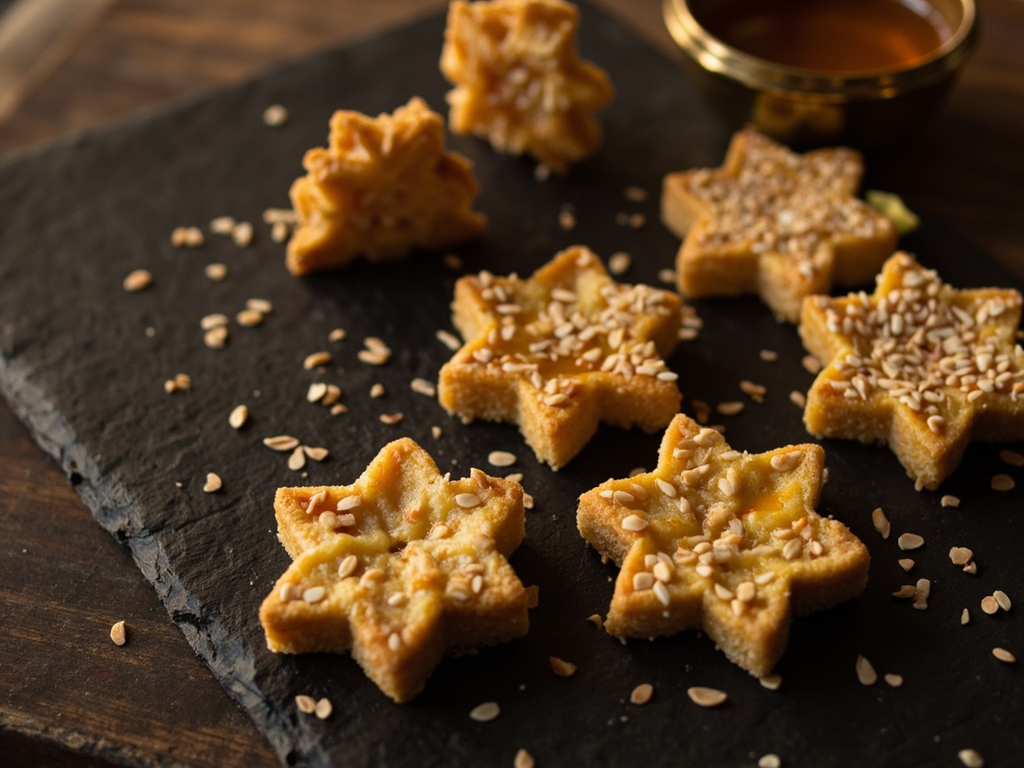
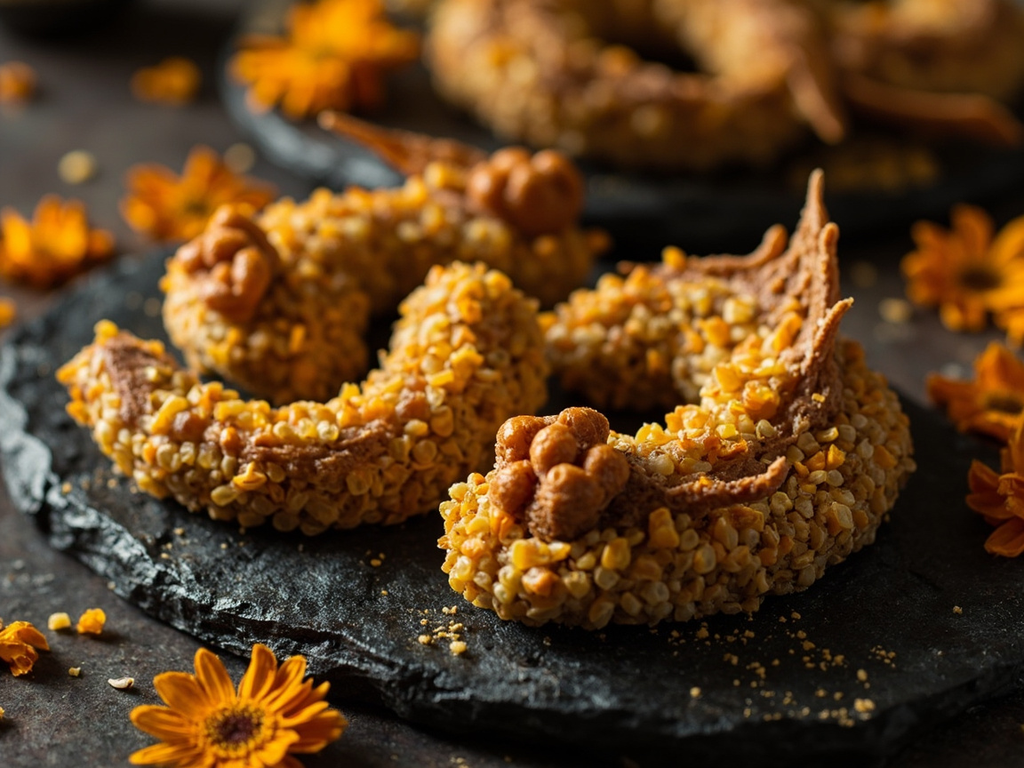
A paste of puffed amaranth seeds bound with bee honey, molded into small figures (feathered serpent, flower, bird) then left to harden. Crunchy, light as a breath, barely sweet.
I am the breath that passes between your fingers as you knead this dough. Take the huauhtli, that tiny grain you pop on the hot stone, and bind it with the honey of stingless bees: you hold my offered flesh. Shape me a serpent, a flower, a bird — the form matters little, it is your gesture that I breathe. Do not pour blood for me, mortal: a butterfly, a corolla, this honey suffice to gladden me.
- •Amaranth (huauhtli) toasted and puffed — two full handfuls (base of the paste)
- •Honey from stingless bees (or reduced maguey syrup) — enough to bind (binder and sweetness)
- •Water — a few drops (adjust the paste)
Tzoalli — Amaranth and Honey Figurines
A paste of puffed amaranth seeds bound with bee honey, molded into small figures (feathered serpent, flower, bird) then left to harden. Crunchy, light as a breath, barely sweet.
Why this dish? Under the name Ehecatl-Quetzalcoatl, the wind god received sweet offerings — flowers, butterflies, copal — and not bloody sacrifices. The Mexica kneaded toasted amaranth with honey to shape the images of the gods, which were then shared: a food that was both the god and the gift to the god.
I am the breath that passes between your fingers as you knead this dough. Take the huauhtli, that tiny grain you pop on the hot stone, and bind it with the honey of stingless bees: you hold my offered flesh. Shape me a serpent, a flower, a bird — the form matters little, it is your gesture that I breathe. Do not pour blood for me, mortal: a butterfly, a corolla, this honey suffice to gladden me.
Ingredients (period version)
- Amaranth (huauhtli) toasted and puffed — two full handfuls (base of the paste)
- Honey from stingless bees (or reduced maguey syrup) — enough to bind (binder and sweetness)
- Water — a few drops (adjust the paste)
Ingredients
- Puffed amaranth seeds — 200 g (base)
- Liquid honey — 120 g (binder and sweetness)
- Agave syrup — 1 tbsp (dough flexibility)
- Warm water — 1 to 2 tbsp (adjust)
Method
- Warm the honey and agave syrup in a saucepan until fluid and stringy (without boiling).
- Off the heat, add the puffed amaranth and mix quickly to coat each grain.
- When the dough holds together, place it on a board and press firmly by hand or with a rolling pin.
- While still warm, cut or shape small figures (serpent, flower, bird, sun disk).
- Let harden in the air for one to two hours before serving.
How it was made : Bernardino de Sahagún describes in the Florentine Codex these divine images of tzoalli (amaranth and honey or aguamiel dough), made for great festivals then broken and distributed to the faithful. Amaranth, being sacred, was partly banned by the Spanish because of these ritual uses.
The contemporary twist : Served as small pressed medallions in a feathered serpent mold — the direct ancestor of the amaranth bars (alegrías) still sold in Mexican markets.
Sources : Bernardino de Sahagún, Historia general de las cosas de Nueva España (Florentine Codex), books II and III · Sophie D. Coe, America's First Cuisines, University of Texas Press, 1994
Ehecatl · Charactorium