 flip
flipBarley Flatbrauð over the Fire
Barley Flatbrauð over the Fire
Why this dish? Ask and Embla are the first humans, the ancestors of humanity who learn to feed themselves: what could be more foundational than barley bread, the grain-staple that nourished all the North? Baked without an oven, on a stone or griddle over the embers, it is the oldest and most universal gesture of the Scandinavian table.
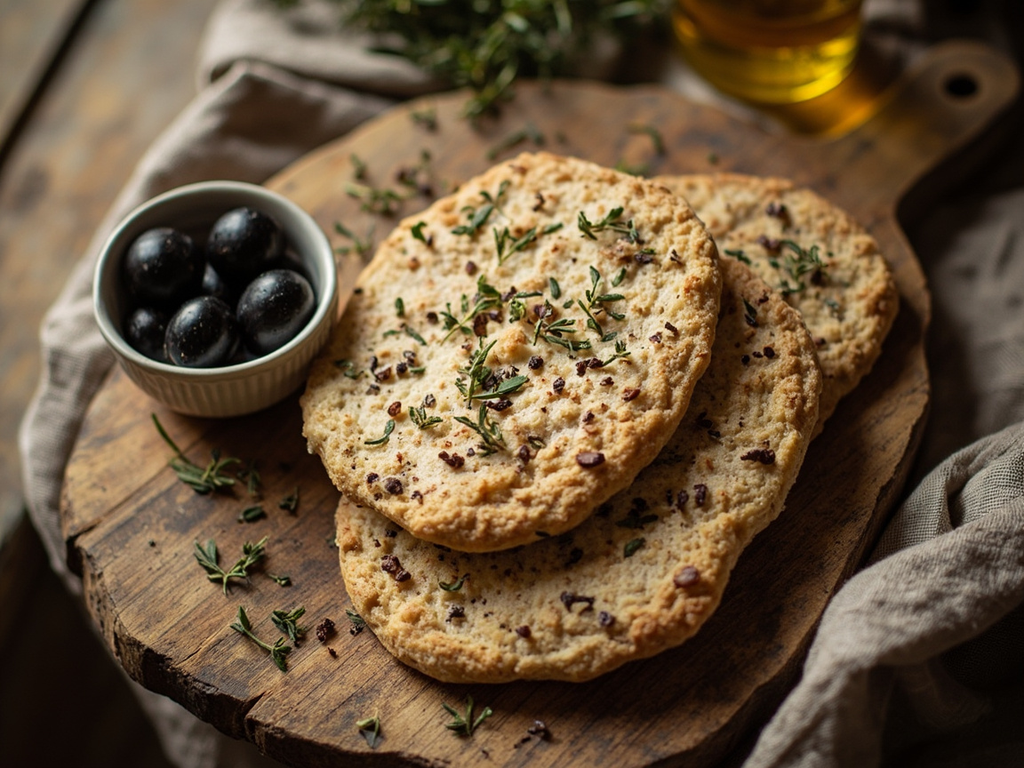
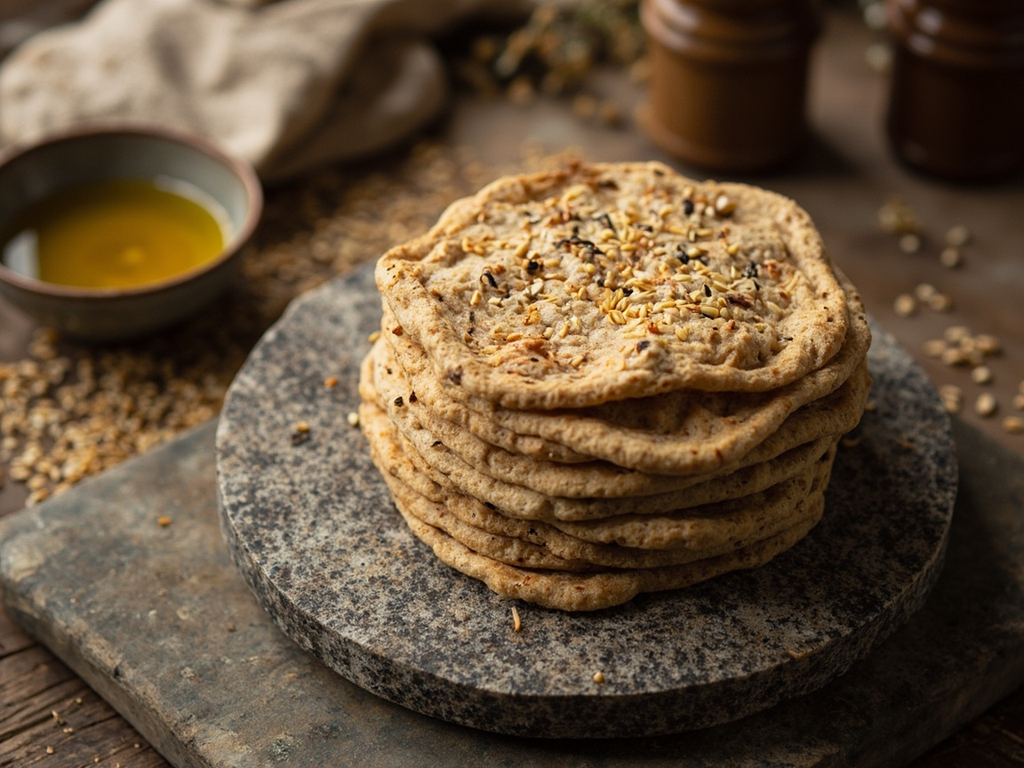
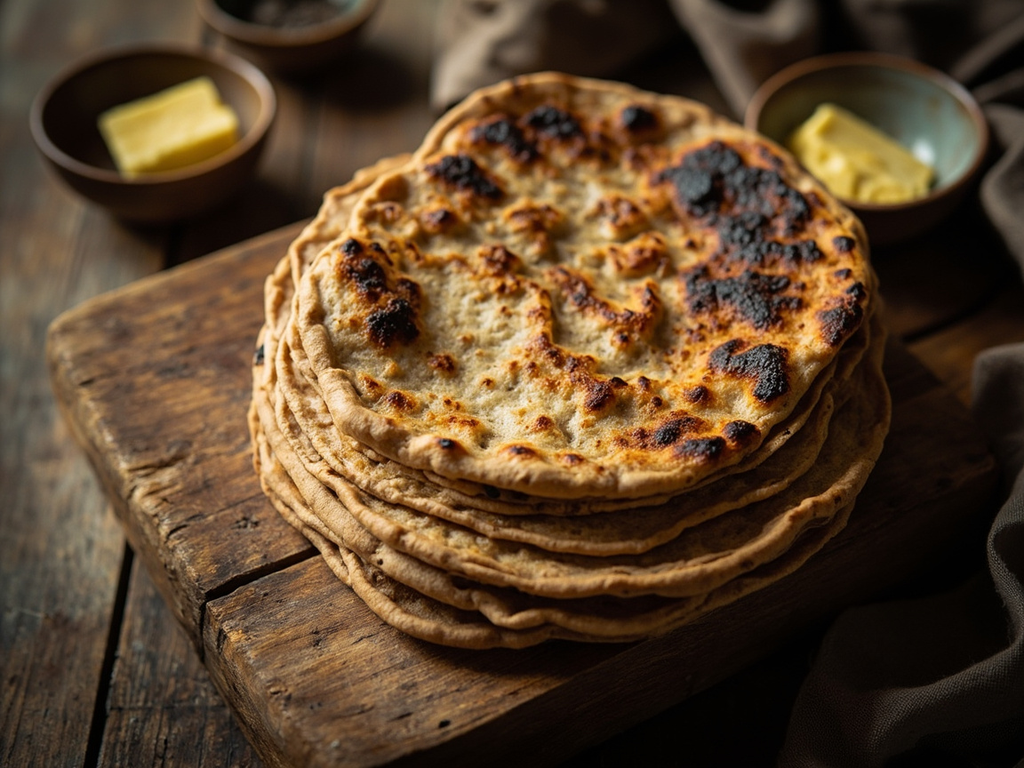
A thin, rustic barley griddle cake, cooked on a hot stone until it blisters and browns. Dry, it keeps for days; you break it and dip it in milk or broth.
Listen, you who come after me. The gods drew us from the driftwood washed ashore, and the first hunger was ours. So I took the grain the earth offered, ground it between two stones, moistened it with water, and laid it on the fire-hot stone. Turn it quickly when it puffs, or the fire will eat it! This bread asks for nothing, neither leaven nor oven — only your hands and the embers. By it my people lived, and yours will live.
- •Stone-ground barley flour — two handfuls per flatbread (base)
- •Spring water — enough to bind (binder)
- •Sea salt — a pinch (seasoning)
Barley Flatbrauð over the Fire
A thin, rustic barley griddle cake, cooked on a hot stone until it blisters and browns. Dry, it keeps for days; you break it and dip it in milk or broth.
Why this dish? Ask and Embla are the first humans, the ancestors of humanity who learn to feed themselves: what could be more foundational than barley bread, the grain-staple that nourished all the North? Baked without an oven, on a stone or griddle over the embers, it is the oldest and most universal gesture of the Scandinavian table.
Listen, you who come after me. The gods drew us from the driftwood washed ashore, and the first hunger was ours. So I took the grain the earth offered, ground it between two stones, moistened it with water, and laid it on the fire-hot stone. Turn it quickly when it puffs, or the fire will eat it! This bread asks for nothing, neither leaven nor oven — only your hands and the embers. By it my people lived, and yours will live.
Ingredients (period version)
- Stone-ground barley flour — two handfuls per flatbread (base)
- Spring water — enough to bind (binder)
- Sea salt — a pinch (seasoning)
Ingredients
- Barley flour — 250 g (base)
- Rye (or wheat) flour for structure — 50 g (binder)
- Warm water — about 180 ml (binder)
- Salt — 1 tsp (seasoning)
- Butter for serving — to taste (garnish)
Method
- Mix the flours and salt, add water little by little until a soft, non-sticky dough forms. Knead briefly.
- Divide into egg-sized balls, roll out very thinly on a floured surface (3-4 mm).
- Heat a cast-iron pan or dry griddle over high heat, without fat.
- Cook each flatbread 1-2 minutes per side: it should blister and develop brown spots.
- Stack under a cloth to keep soft, or let dry for storage. Serve with butter.
How it was made : Barley was the dominant cereal in Scandinavia, hardier than wheat in this climate. Without bread ovens in most farms, flatbreads were baked on a flat stone (helle) or an iron plate set over the central fire of the longhouse. Dried, they kept and were portable.
The contemporary twist : Sprinkle crushed caraway or dill seeds before cooking, and serve with a whipped semi-salted butter — a nod to today's Scandinavian flatbreads.
Embla · Charactorium