 flip
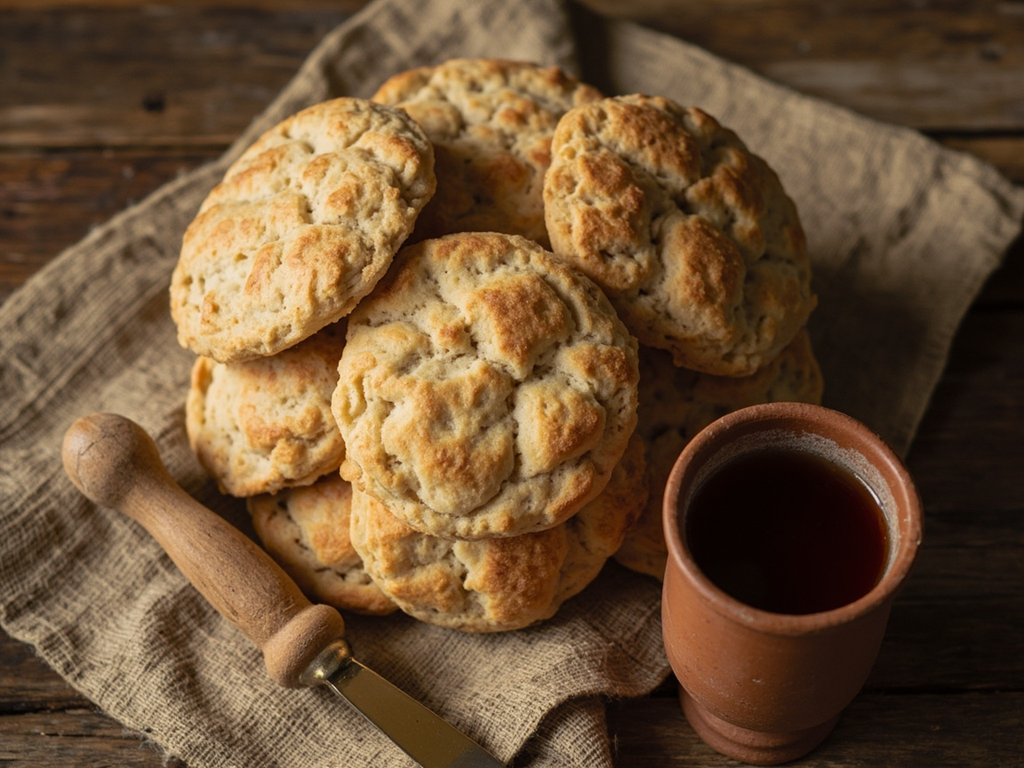
Bucellatum, the sailor's twice-baked bread
Bucellatum, the sailor's twice-baked bread
Why this dish? The entire Aeneid is a sea odyssey: seven years of wandering from Troy to Italy, through storms sent by Juno. To feed a crew at sea for weeks, a bread that would not mold was needed: bucellatum, a twice-baked spelt biscuit, hard as stone but imperishable. This is the true bread of ancient fleets, the one that carried Aeneas to Latium.
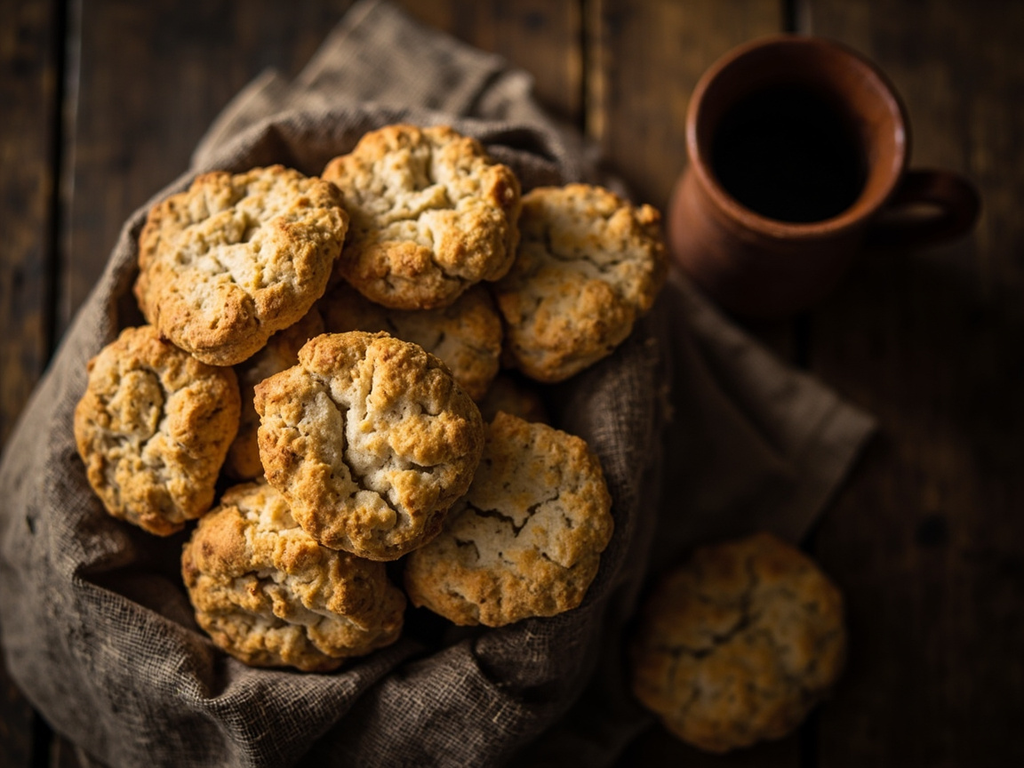
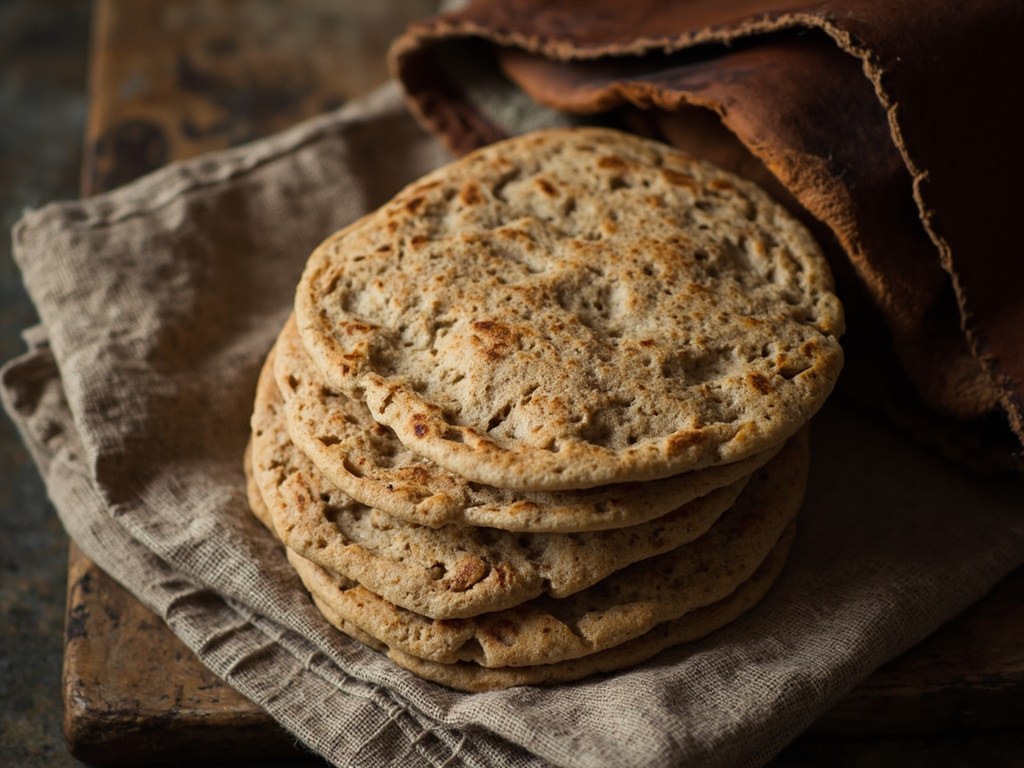
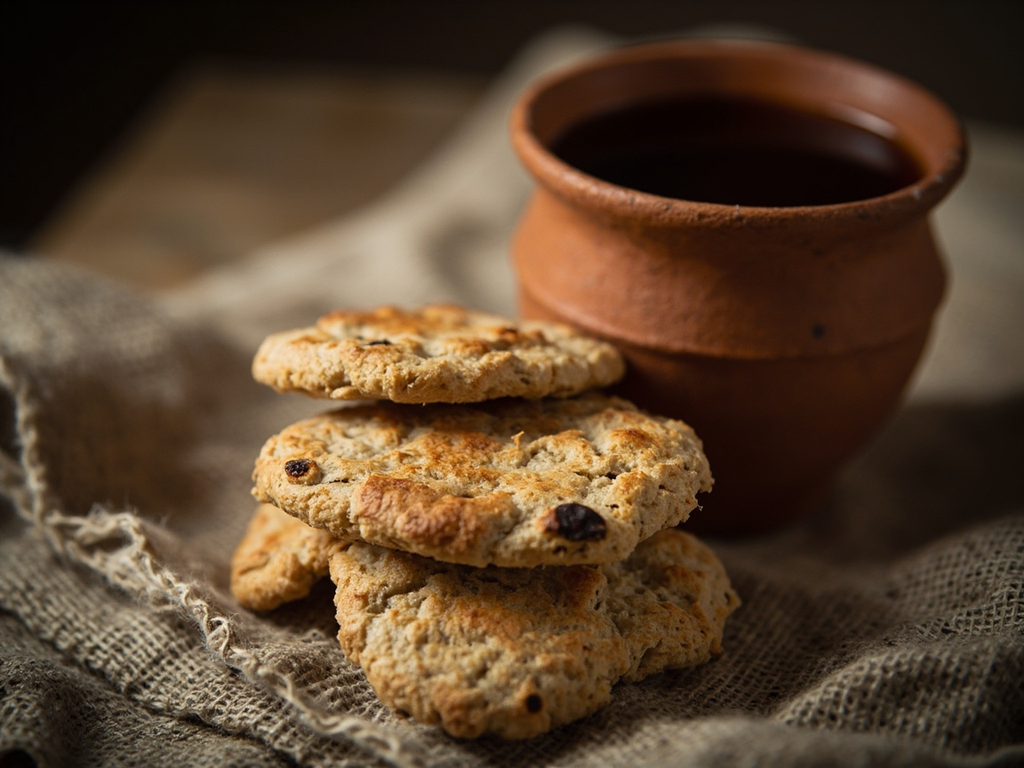
Small flat spelt loaves, lightly salted, baked once then long dried in the oven until dry and crunchy. They are dipped in water, diluted wine (posca), or broth to soften. Simple, rustic, built to last: the food of endurance.
Seven winters I wandered the waves before reaching promised Italy. At sea, one does not eat as at a king's table: take the spelt, bake it, then bake it again until it is hard as the ship's keel. Dip it in wine cut with water, and it will hold your belly when Juno's storm howls in the rigging. A man who would fulfill his destiny must first learn to eat poorly.
- •Spelt flour — as needed (base)
- •Salt — a pinch (flavor and preservation)
- •Water — as needed (dough)
- •Sourdough starter — a little (optional) (light fermentation)
Bucellatum, the sailor's twice-baked bread
Small flat spelt loaves, lightly salted, baked once then long dried in the oven until dry and crunchy. They are dipped in water, diluted wine (posca), or broth to soften. Simple, rustic, built to last: the food of endurance.
Why this dish? The entire Aeneid is a sea odyssey: seven years of wandering from Troy to Italy, through storms sent by Juno. To feed a crew at sea for weeks, a bread that would not mold was needed: bucellatum, a twice-baked spelt biscuit, hard as stone but imperishable. This is the true bread of ancient fleets, the one that carried Aeneas to Latium.
Seven winters I wandered the waves before reaching promised Italy. At sea, one does not eat as at a king's table: take the spelt, bake it, then bake it again until it is hard as the ship's keel. Dip it in wine cut with water, and it will hold your belly when Juno's storm howls in the rigging. A man who would fulfill his destiny must first learn to eat poorly.
Ingredients (period version)
- Spelt flour — as needed (base)
- Salt — a pinch (flavor and preservation)
- Water — as needed (dough)
- Sourdough starter — a little (optional) (light fermentation)
Ingredients
- Whole spelt flour — 300 g (structure)
- Warm water — 150 ml (hydration)
- Salt — 5 g (seasoning)
- Sourdough starter or yeast — 1 tsp (optional) (lightness)
Method
- Mix flour, salt, and water (and starter) to form a firm dough; knead 8 minutes.
- Rest 1 hour if using starter.
- Shape into small flat loaves 1.5 cm thick.
- Bake at 200°C for 20 minutes until colored.
- Lower oven to 110°C and dry the loaves for 1.5 to 2 hours until completely dry and hard.
- Store in a dry cloth; serve dipped in broth or diluted wine.
How it was made : Bucellatum (from bucca, mouthful) was the dried bread ration of Roman soldiers and sailors, direct ancestor of the sea biscuit and ship's biscuit. Twice baked to remove all moisture, it could keep for months. Legionaries received a portion of their pay in grain which they processed themselves.
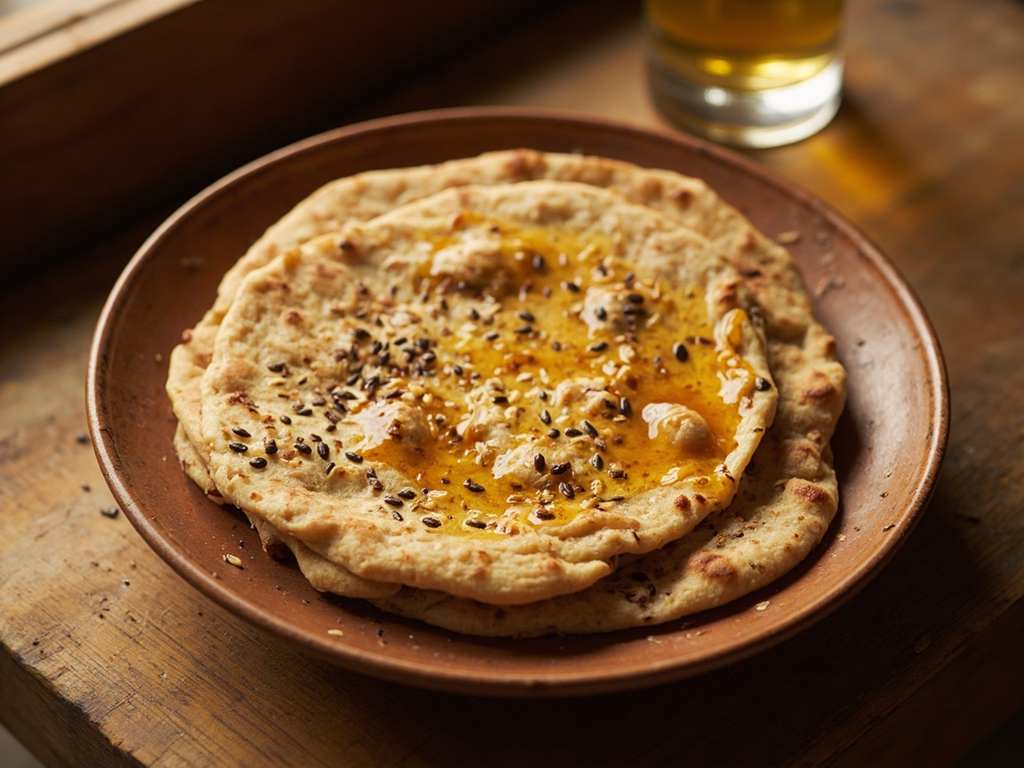
The contemporary twist : Recooked into thin slices with a drizzle of olive oil and fennel seeds, it becomes an aperitif cracker "legionary ration" to serve with a fresh cheese and honey dip.
Sources : Pliny the Elder, Natural History, Book XVIII · Vegetius, De re militari (military rations)
Aeneas · Charactorium