 flip
flipBarley Maza with Oil and Olives
Barley Maza with Oil and Olives
Why this dish? Epictetus preaches frugality as an exercise of freedom: barley maza, the food of the slave and the philosopher, is exactly what one expects at the table of a Stoic master born in servitude.
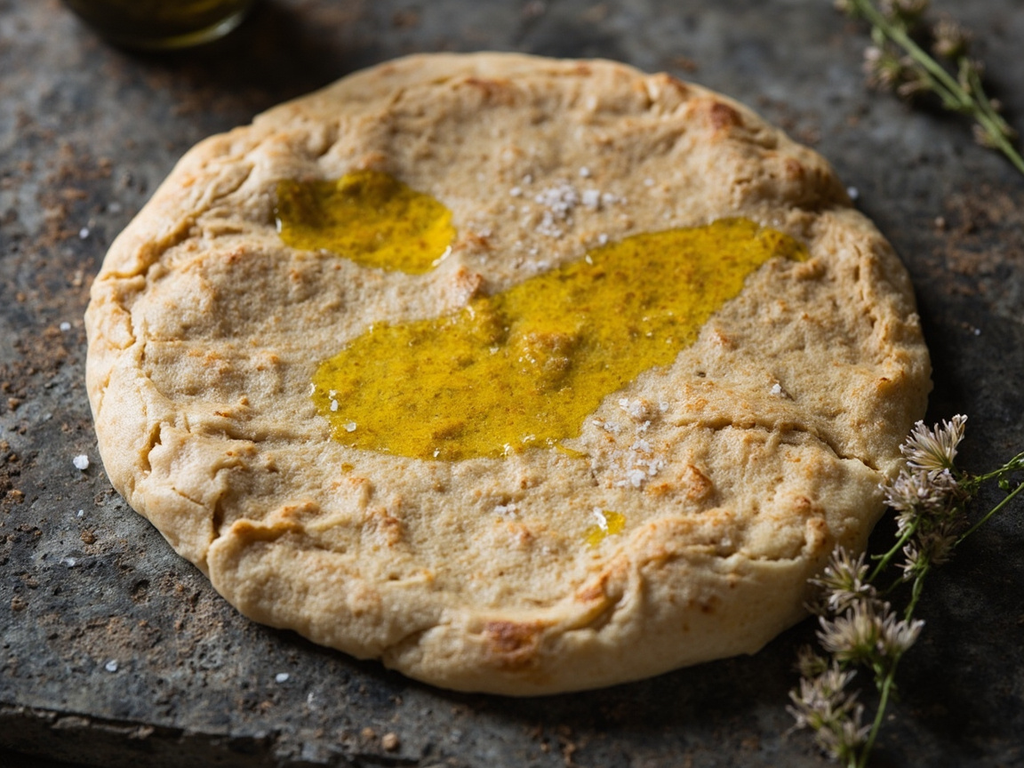
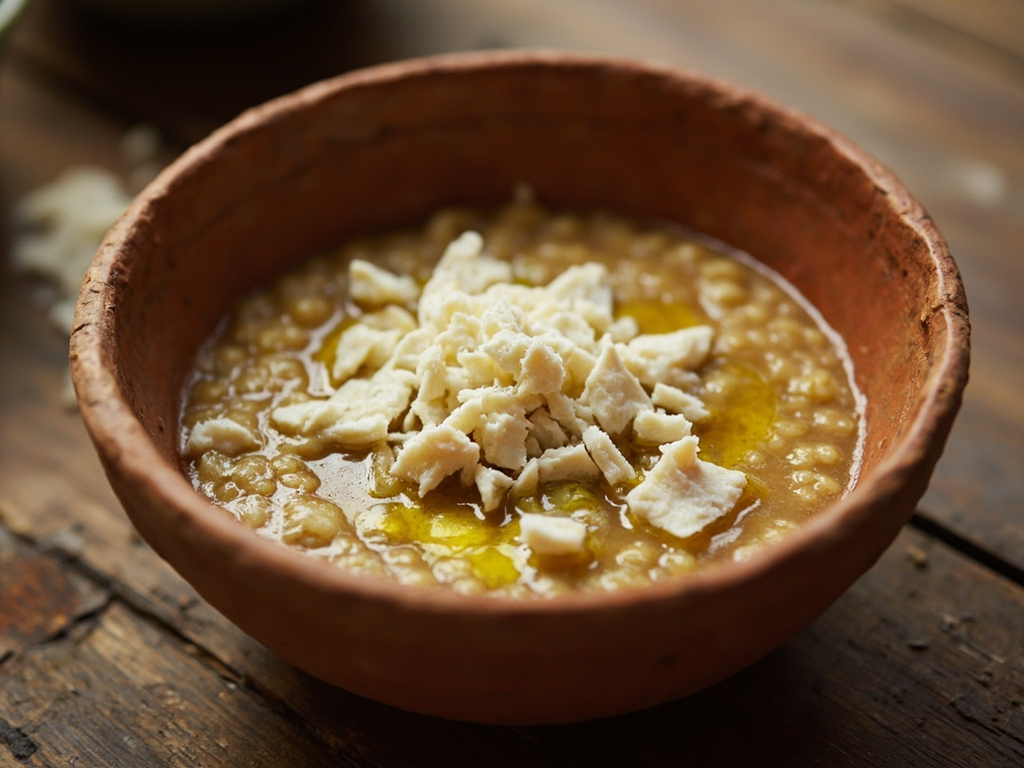
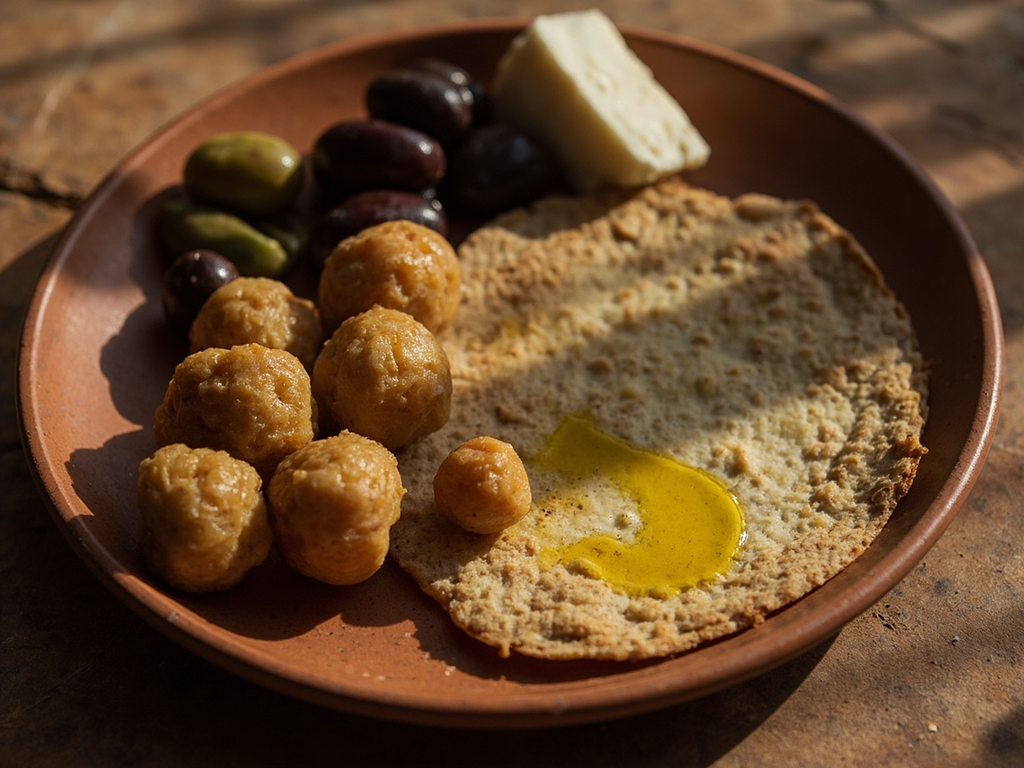
A paste of roasted and ground barley, kneaded with water and oil, rolled into balls or spread like a raw flatbread. Eaten with a few olives and some cheese. Rustic, sober, filling: the meal of one who asks for nothing more than what is necessary.
You seek a feast? Go to the rich, they will fatten you like a pig. I give you ground barley, kneaded with my hands with a little water and oil, and three olives. Eat, and ask yourself: am I still hungry, or merely desirous? What depends on you is to be content with this; the rest is not your concern. I lived as a slave eating even less, and I was freer than my master.
- •Roasted barley flour (alphita) — two handfuls (base of the maza)
- •Spring water — enough to knead (binder)
- •Olive oil — a drizzle (fat, signature)
- •Brine-cured olives — a few (salty accompaniment)
- •Salt — a pinch (seasoning)
Barley Maza with Oil and Olives
A paste of roasted and ground barley, kneaded with water and oil, rolled into balls or spread like a raw flatbread. Eaten with a few olives and some cheese. Rustic, sober, filling: the meal of one who asks for nothing more than what is necessary.
Why this dish? Epictetus preaches frugality as an exercise of freedom: barley maza, the food of the slave and the philosopher, is exactly what one expects at the table of a Stoic master born in servitude.
You seek a feast? Go to the rich, they will fatten you like a pig. I give you ground barley, kneaded with my hands with a little water and oil, and three olives. Eat, and ask yourself: am I still hungry, or merely desirous? What depends on you is to be content with this; the rest is not your concern. I lived as a slave eating even less, and I was freer than my master.
Ingredients (period version)
- Roasted barley flour (alphita) — two handfuls (base of the maza)
- Spring water — enough to knead (binder)
- Olive oil — a drizzle (fat, signature)
- Brine-cured olives — a few (salty accompaniment)
- Salt — a pinch (seasoning)
Ingredients
- Barley flour (or blended barley flakes) — 120 g (base)
- Warm water — 60 to 80 ml (binder)
- Extra virgin olive oil — 2 tbsp (fat)
- Black brine-cured olives — about ten (accompaniment)
- Salt — 1 pinch (seasoning)
Method
- If you only have barley flakes, toast them in a dry pan for 3 minutes then blend into a coarse flour to restore the roasted taste of alphita.
- In a bowl, mix the barley flour and salt.
- Add the olive oil, then gradually the warm water, kneading until you get a soft, non-sticky dough.
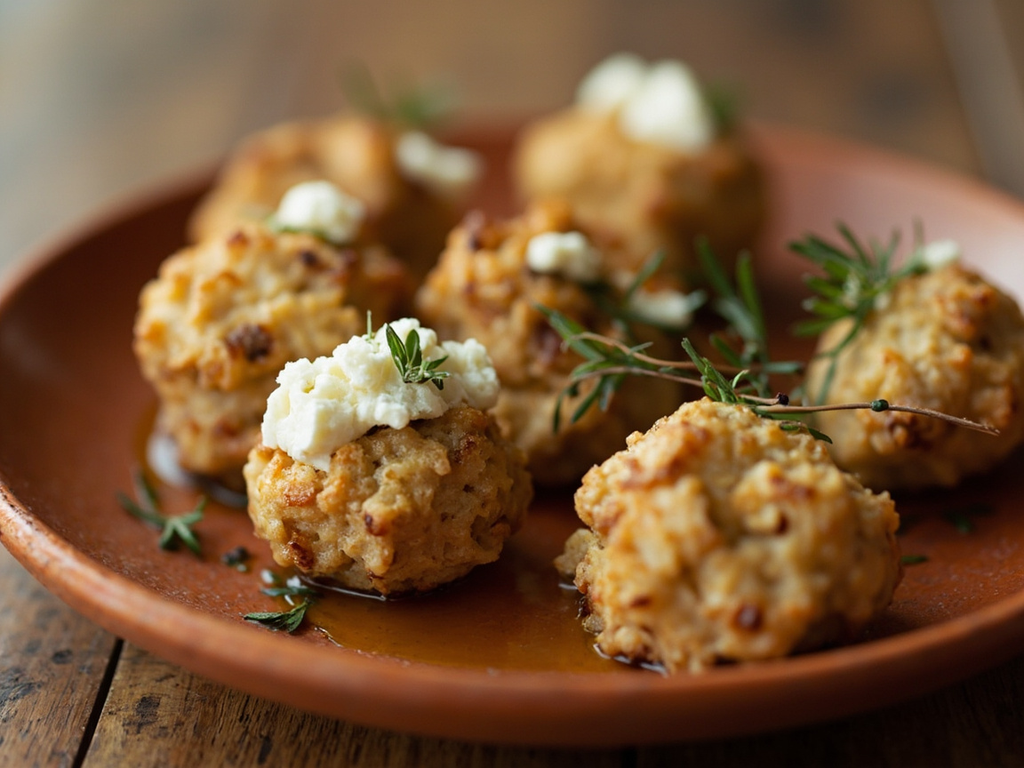
- Roll into small balls or flatten into thick cakes; let rest for 10 minutes.
- Serve as is (maza is not always cooked) with the olives, a final drizzle of oil, and, if you like, a piece of goat cheese.
How it was made : Maza was the staple food of ordinary Greeks: roasted and ground barley (alphita), kneaded with water, oil, or honey, often eaten without cooking. Far less prestigious than the wheat bread of the rich, it symbolized sobriety — a central theme for the Stoics.
The contemporary twist : Serve the maza balls as "sage's tapas" on an olive wood board, with a small bowl of new olive oil for dipping.
Epictetus · Charactorium