 flip
flipMaza — daily barley dough
Maza — daily barley dough
Why this dish? Maza was the daily bread of the Greek people, including the priests and servants of Apollo's sanctuaries. More than leavened bread, it nourished the one who came to consult the oracle after a long journey.
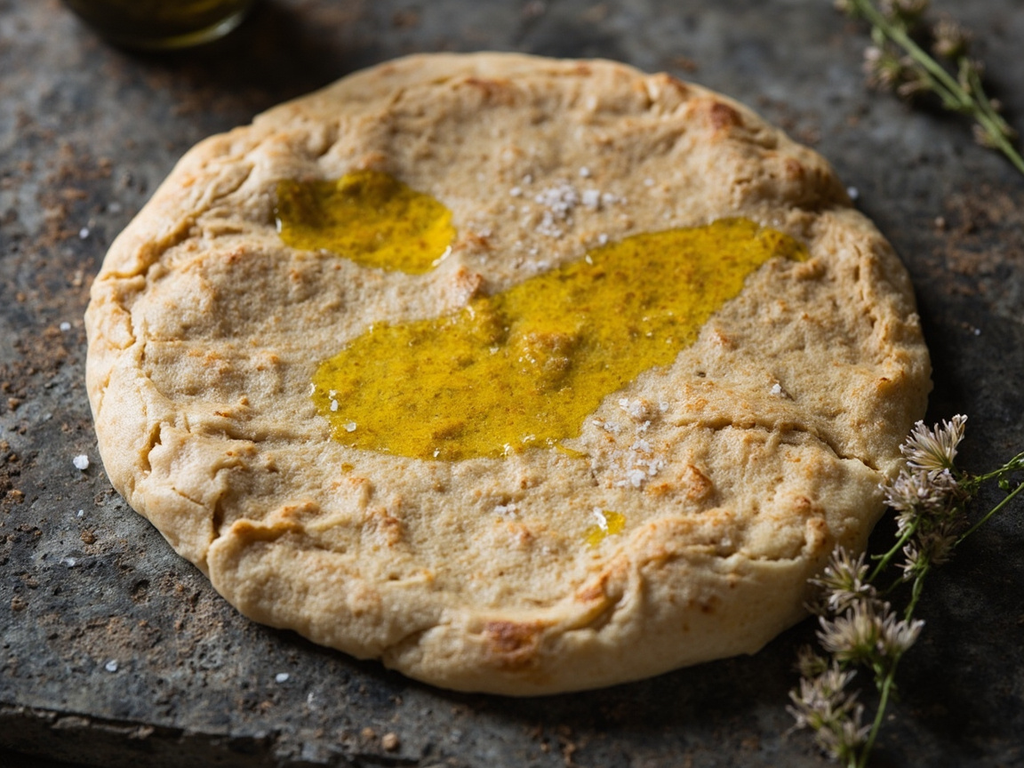
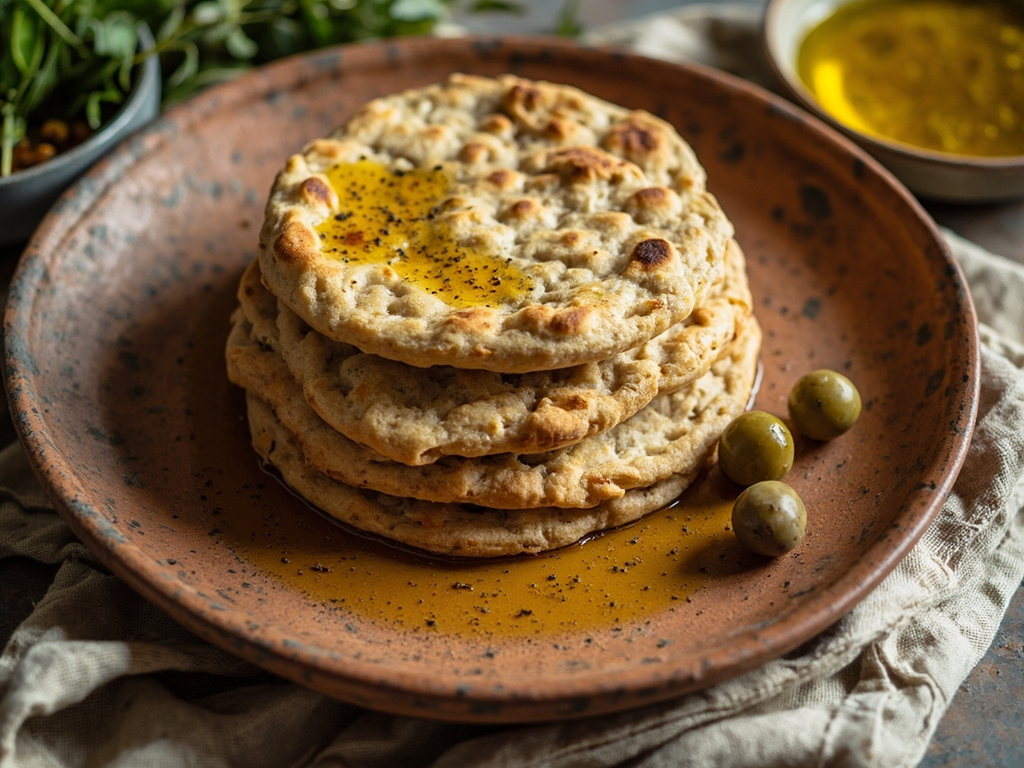
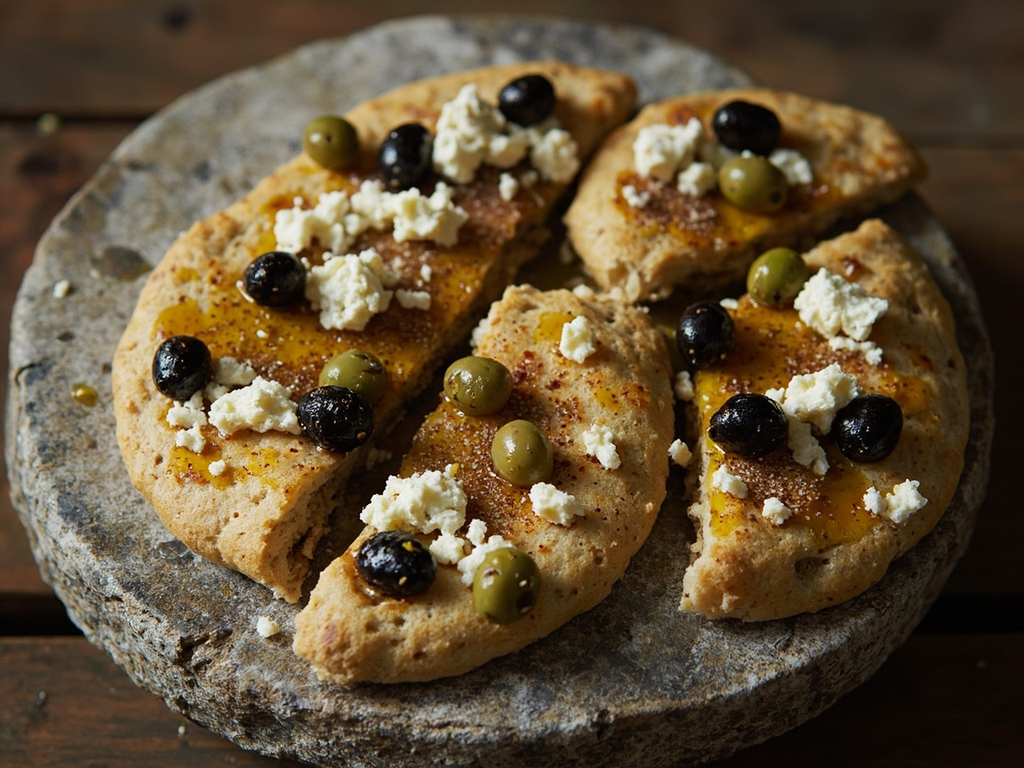
A dough of toasted barley kneaded with water, olive oil and a little salt — sometimes enhanced with cheese or honey. It was eaten raw in balls or lightly cooked, as the base of every meal.
You think perhaps that the gods eat only ambrosia? Know that the shepherd who guards my sacred flocks feeds on barley, as his father and his father's father did. Toast your grain well so it smells of hazelnut, grind it, moisten it with spring water and a drizzle of oil, and press it in your palm. That is maza: humble, yes, but it is she who built Greece before a single temple was raised in my honor.
- •Toasted then ground barley (alphita) — a good measure (nourishing base)
- •Spring water — as needed (binder)
- •Olive oil — a drizzle (fat, flavor)
- •Salt — a pinch (seasoning)
- •Fresh goat cheese or honey — as desired (savory or sweet variation)
Maza — daily barley dough
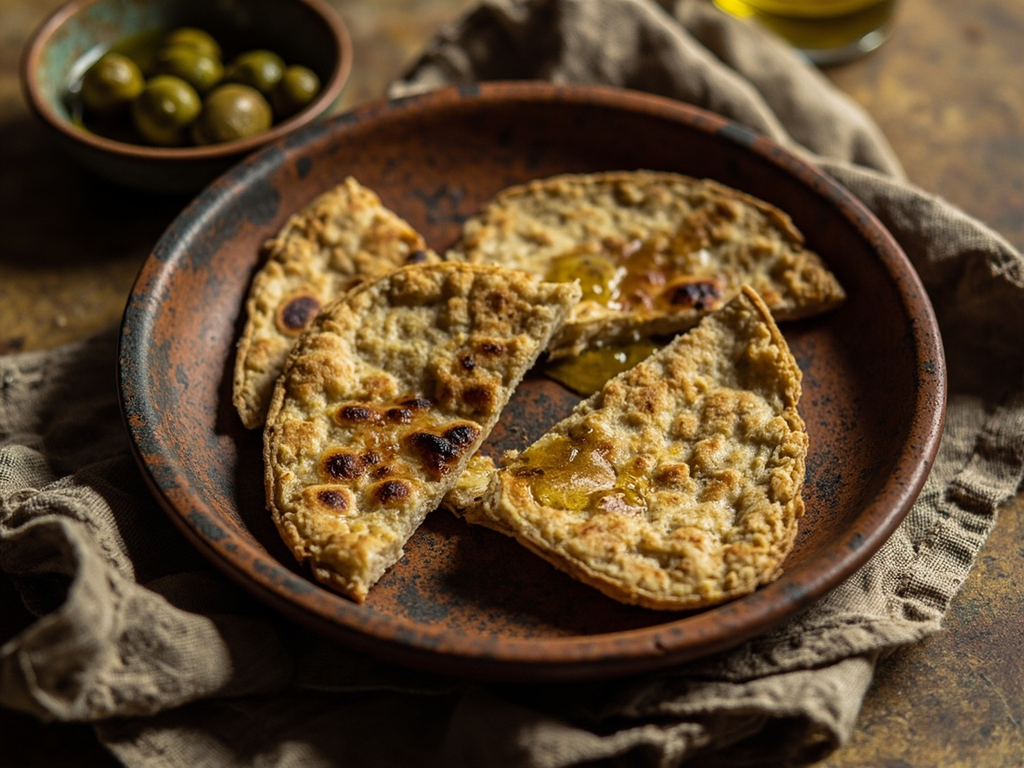
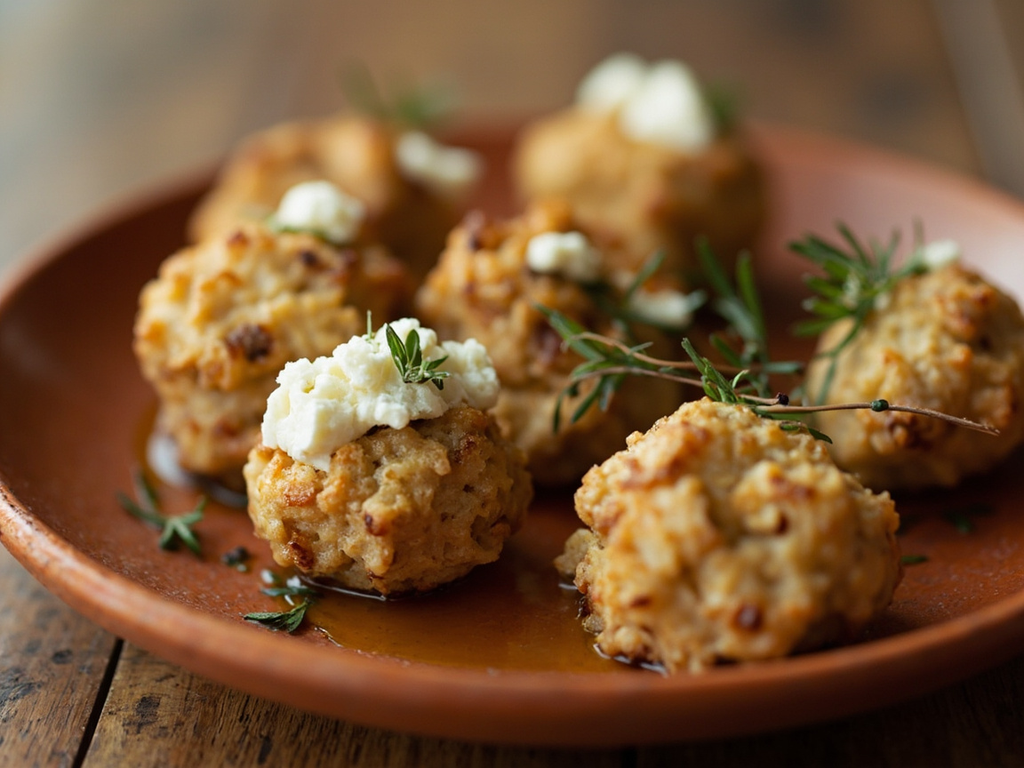
A dough of toasted barley kneaded with water, olive oil and a little salt — sometimes enhanced with cheese or honey. It was eaten raw in balls or lightly cooked, as the base of every meal.
Why this dish? Maza was the daily bread of the Greek people, including the priests and servants of Apollo's sanctuaries. More than leavened bread, it nourished the one who came to consult the oracle after a long journey.
You think perhaps that the gods eat only ambrosia? Know that the shepherd who guards my sacred flocks feeds on barley, as his father and his father's father did. Toast your grain well so it smells of hazelnut, grind it, moisten it with spring water and a drizzle of oil, and press it in your palm. That is maza: humble, yes, but it is she who built Greece before a single temple was raised in my honor.
Ingredients (period version)
- Toasted then ground barley (alphita) — a good measure (nourishing base)
- Spring water — as needed (binder)
- Olive oil — a drizzle (fat, flavor)
- Salt — a pinch (seasoning)
- Fresh goat cheese or honey — as desired (savory or sweet variation)
Ingredients
- Toasted barley flour (or hulled barley toasted then ground) — 150 g (base)
- Warm water — 100 to 120 ml (binder)
- Olive oil — 2 tbsp (flavor and binder)
- Salt — 1/2 tsp (seasoning)
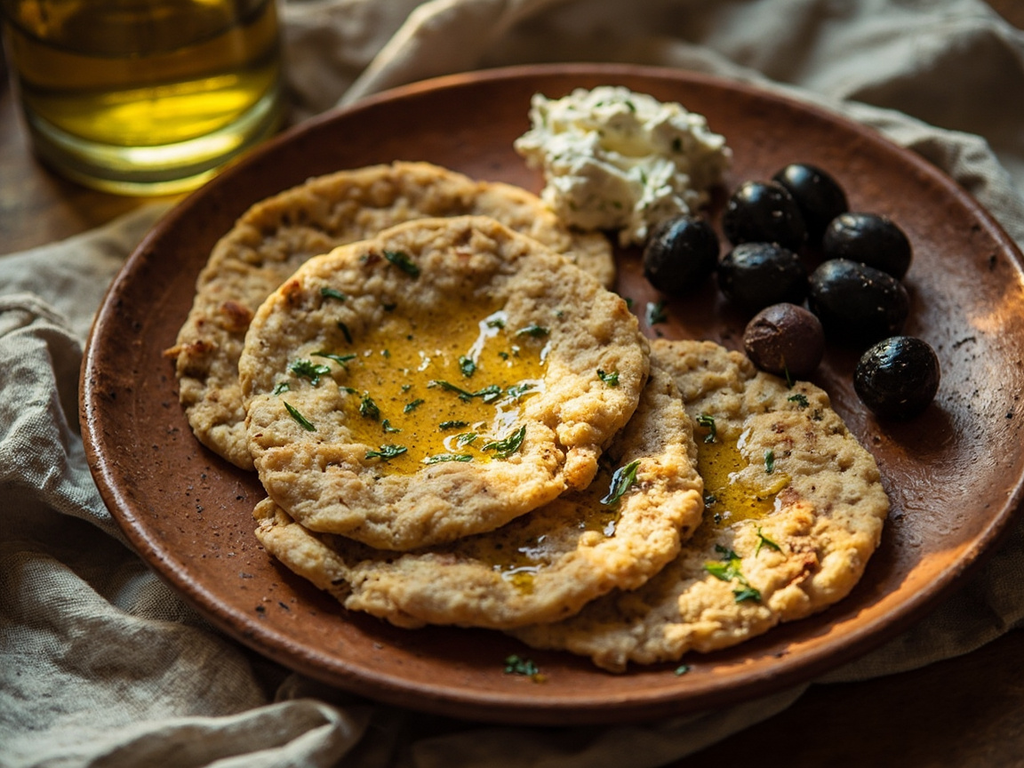
- Crumbled feta or honey — to taste (variation)
Method
- If the flour is not already toasted, dry-toast the barley flour in a pan for a few minutes until it smells nutty, then let cool.
- Mix the toasted flour with the salt.
- Incorporate the olive oil, then the warm water little by little while kneading, until a firm and malleable dough forms.
- For the savory version, incorporate the feta; for the sweet version, a little honey.
- Shape into balls or hand-flattened cakes.
- Enjoy as is, or pan-fry 2 minutes per side for a light crust.
How it was made : Maza is THE ordinary Greek dish, mentioned everywhere from Homer to Aristophanes. Barley, less demanding than wheat, made it the dietary staple of the majority; it was often eaten without cooking, simply kneaded. Leavened wheat bread remained rarer and urban.
The contemporary twist : As an appetizer, roll the balls in dried oregano and serve with olives: an ancient savory 'energy ball'.
Sources : Athenaeus of Naucratis, The Deipnosophists (The Banquet of the Learned) · Andrew Dalby, Siren Feasts: A History of Food and Gastronomy in Greece (Routledge, 1996)
Apollo · Charactorium