 flip
flipBiscotti da viaggio alle mandorle
Biscotti da viaggio alle mandorle
Why this dish? An indefatigable diplomat, Machiavelli spent weeks in the saddle on Italian roads — missions to Rome, to Cesare Borgia in Romagna, to the French court. These twice-baked, dry, imperishable biscuits were the ideal traveler's provision: they kept for weeks in the saddlebags without going rancid.
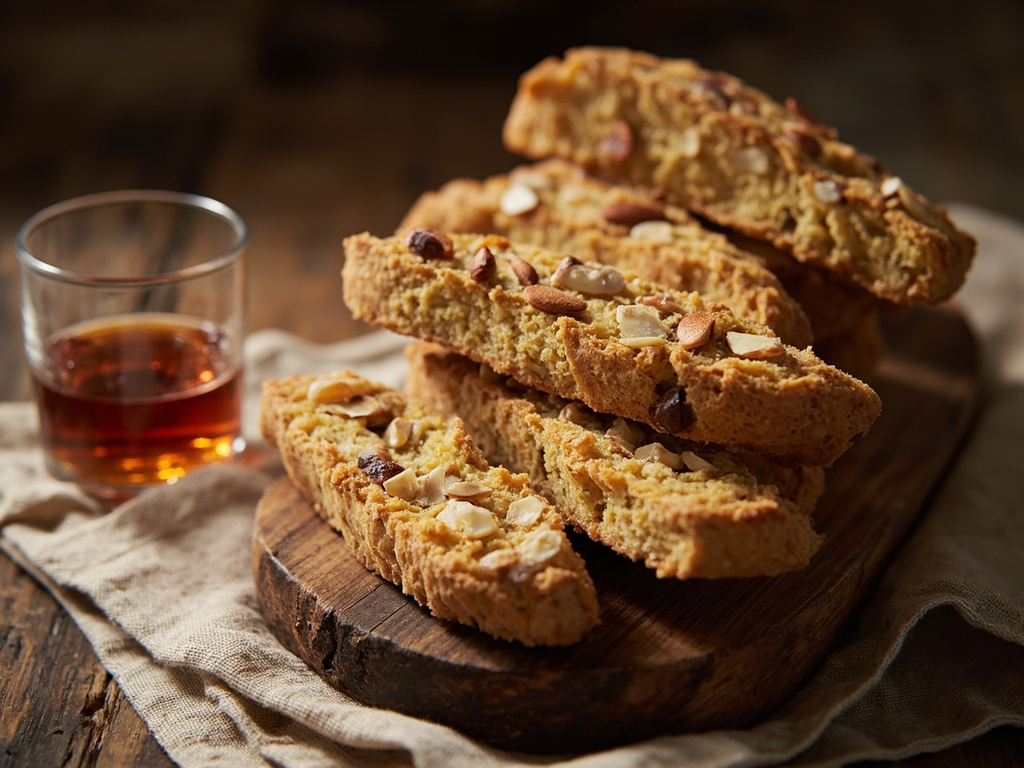
Small almond cakes baked first as a log, then sliced and re-baked until dry and crunchy. Sweetened with a bitter edge from the almonds, flavored with anise: made to last and to be dipped in wine.
He who serves princes lives on horseback, and he who lives on horseback must carry his lasting bread. I had flour, honey, egg, and plenty of almonds kneaded, baked into a long loaf, then sliced and returned to the oven so that everything dries and keeps. Slip them into your saddlebag, ambassador: they do not mold or turn sour when you ride from Florence to Romagna. In the evening, dip them in a cup of wine to soften them — the negotiator's stomach, like his mind, must know how to wait and make do with little.
- •Wheat flour — a good amount (base)
- •Almonds (sweet, with a few bitter) — a large handful (flavor and structure)
- •Honey or sugar — to taste (sweetness and preservation)
- •Eggs — a few (binder)
- •Anise seeds — a pinch (flavor)
Biscotti da viaggio alle mandorle
Small almond cakes baked first as a log, then sliced and re-baked until dry and crunchy. Sweetened with a bitter edge from the almonds, flavored with anise: made to last and to be dipped in wine.
Why this dish? An indefatigable diplomat, Machiavelli spent weeks in the saddle on Italian roads — missions to Rome, to Cesare Borgia in Romagna, to the French court. These twice-baked, dry, imperishable biscuits were the ideal traveler's provision: they kept for weeks in the saddlebags without going rancid.
He who serves princes lives on horseback, and he who lives on horseback must carry his lasting bread. I had flour, honey, egg, and plenty of almonds kneaded, baked into a long loaf, then sliced and returned to the oven so that everything dries and keeps. Slip them into your saddlebag, ambassador: they do not mold or turn sour when you ride from Florence to Romagna. In the evening, dip them in a cup of wine to soften them — the negotiator's stomach, like his mind, must know how to wait and make do with little.
Ingredients (period version)
- Wheat flour — a good amount (base)
- Almonds (sweet, with a few bitter) — a large handful (flavor and structure)
- Honey or sugar — to taste (sweetness and preservation)
- Eggs — a few (binder)
- Anise seeds — a pinch (flavor)
Ingredients
- Wheat flour — 250 g (base)
- Whole almonds, unpeeled — 150 g (flavor and structure)
- Sugar — 150 g (or 120 g honey) (sweetness and preservation)
- Eggs — 2 + 1 yolk (binder)
- Anise seeds — 1 tsp (flavor)
- Baking powder (optional) — 1/2 packet (lightness)
- Salt — 1 pinch (balance)
Method
- Mix flour, sugar, baking powder, salt, and anise seeds in a bowl.
- Add beaten eggs and knead into a homogeneous dough, then incorporate whole almonds.
- Shape two long logs on a baking sheet, brush with egg yolk.
- First bake at 170°C for 25 minutes until firm and golden.
- Remove, let cool slightly, then slice the logs on the bias into 1.5 cm pieces.
- Lay the slices flat and bake again for 10 to 15 minutes at 150°C until dry and crunchy; let cool to harden.
How it was made : The principle of 'bis-cotto' (twice-cooked) is ancient: the second baking drives out moisture, making these biscuits nearly imperishable — provisions for sailors, soldiers, and travelers long before they became a table delicacy. In Tuscany, they were traditionally dipped in wine to soften them.
The contemporary twist : Serve them stacked in a tight bundle in a small glass, with a cup of sweet wine (or grape juice) alongside for the dipping ritual: the Florentine traveler's break at the counter.
Machiavelli · Charactorium