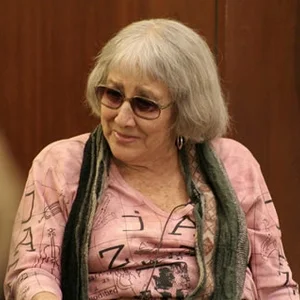

Eugenie Clark (1922-2015) was an American ichthyologist, a pioneer of scientific diving and a world-renowned shark expert. Nicknamed “the Shark Lady,” she transformed the image of these predators and advanced the study of fishes.
Eugenie Clark(1922 — 2015)
Eugenie Clark
États-Unis
6 min read
Frequently asked questions
Key Facts
- Born in 1922 in New York to a Japanese American mother, fascinated by aquariums from childhood.
- Earned a doctorate in zoology from New York University in 1950.
- Founded in 1955 the laboratory that would become the Mote Marine Laboratory in Florida.
- Conducted research showing sharks' ability to learn, overturning their image as mere killing machines.
- Kept diving and researching past the age of 90, passing away in 2015.
Works & Achievements
Creation of her own laboratory in Florida, which became a leading oceanographic research institute.
A best-selling autobiography that introduced her adventures as a diver and biologist to the general public.
Scientific demonstration that sharks can learn, shattering the image of the mindless predator.
An account of life at her laboratory and her research on shark behavior.
Identification of a natural toxin (pardaxine) that drives sharks away, opening up avenues for protecting divers.
A dozen articles, including “Sharks: Magnificent and Misunderstood” (1981), that transformed the public's view of sharks.
Several species (bearing the epithet clarki or clarkae) were named after her, a recognition of her contribution to ichthyology.
Anecdotes
As a little girl, Eugenie spent her Saturdays alone at the New York Aquarium in Battery Park while her mother was at work. With her nose pressed against the glass, she imagined walking among the fish, on the other side of the pane. This childhood fascination shaped the whole course of her life.
To prove that sharks are not mere killing machines, she trained lemon sharks in her Florida laboratory: they learned to push a target with their snouts to earn food. Her experiments showed that these predators can learn and remember, overturning their reputation.
In the Red Sea, Eugenie studied a small flatfish, the “Moses sole,” which secretes a toxic milky fluid. When a shark tried to bite it, its jaws locked up and it fled: she had just discovered a natural shark repellent.
When a Mexican fisherman told her about “sleeping” sharks lying motionless in underwater caves near Isla Mujeres, many thought her naive: it was believed at the time that a shark had to swim constantly in order to breathe. She dived, saw for herself, and proved that these sharks really could rest.
Nicknamed “the Shark Lady,” she never stopped diving: she made one of her last dives at the age of 92, shortly before her death. Over more than half a century, she carried out more than seventy deep-submersible dives.
Primary Sources
In it, Eugénie Clark recounts her first dives and scientific fishing expeditions in the Pacific and the Red Sea, describing, spear in hand, her wonderstruck discovery of reef fish.
In this second account, she relates the founding and daily life of her Florida laboratory, and her training experiments proving that sharks can learn.
Article in which Clark argues that sharks, “magnificent and misunderstood,” are rarely dangerous to humans and deserve to be studied rather than feared.
Scientific report of the experiments showing that sharks can be conditioned to associate a visual target with a food reward.
Key Places
Eugenie Clark's birthplace, where she grew up with her mother and was a regular visitor to the city aquarium.
The place where, as a child, she spent her Saturdays watching the fish. Her calling as an ichthyologist was born here.
The laboratory she founded in 1955 under the name Cape Haze Marine Laboratory. The hub of her shark research, it grew into a major oceanographic institute.
A favorite site for her expeditions: studying reef fish and discovering the shark-repelling properties of the Moses sole.
An island off Cancún where she observed the famous “sleeping sharks” lying motionless in underwater caves.
The university where she taught zoology starting in 1968 and trained many students in marine biology.
Typical Objects
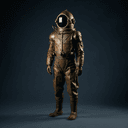
A compressed-air cylinder and regulator allowing one to breathe underwater during long dives. Invented in 1943, it made it possible to observe fish directly in their natural environment.
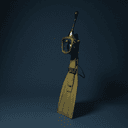
The diver's basic equipment, allowing one to see clearly underwater and move about efficiently. Clark used it for observation and free diving.
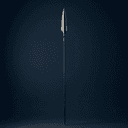
A handheld spear, of the “Hawaiian sling” type, used to collect fish specimens for study. It is the object that gives her book Lady with a Spear its title.
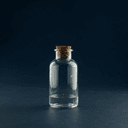
Glass containers in which collected fish were preserved in formalin for study and classification. Essential to the ichthyologist's work.
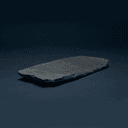
A waterproof tablet allowing one to write down and draw observations directly during a dive. The field biologist's note-taking tool.
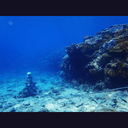
A waterproof housing used to photograph sharks, fish and reefs for research and public outreach. Her images fed her articles in National Geographic.
📷 CC BY 2.0 · Wikimedia Commons ↗School Curriculum
Vocabulary & Tags
Key Vocabulary
Tags
Daily Life
Morning
In the field, the day began early with preparing the diving gear and checking the air tanks. Before the heat set in, she would submerge to observe sharks and reef fish, slate in hand.
Afternoon
Afternoons were spent in the laboratory: sorting and preserving specimens in formalin, taking measurements, performing dissections and writing notes. There she also carried out her training experiments with sharks in tanks.
Evening
In the evening, she wrote up her observations, her articles and her books, and prepared lectures and classes. It was also the time to discuss the day's discoveries with her students and colleagues.
Food
In the field, meals were simple and suited to life by the sea or aboard ships: fish, rice, fruit and canned goods. Having grown up with a Japanese mother, she enjoyed Japanese cuisine, including its seafood.
Clothing
Underwater, she wore a swimsuit or wetsuit, a mask, fins and a diving apparatus. On land and in the laboratory, she dressed in the practical attire of a field scientist.
Housing
Her life was divided between her Florida base, near her laboratory, and temporary lodgings during expeditions: research vessels, marine stations or coastal camps on the Red Sea and elsewhere.
Historical Timeline
Period Vocabulary
Liens externes & ressources
Références
Œuvres
Fondation du Cape Haze Marine Laboratory (Mote Marine Laboratory)
1955
Lady with a Spear
1953
Expériences de conditionnement des requins-citrons
1958-1959
The Lady and the Sharks
1969
Découverte du répulsif anti-requin de la sole de Moïse
vers 1972
Articles pour National Geographic
1955-1990
Espèces de poissons nommées en son honneur
XXe siècle