 flip
flipFeijoada do sábado (Saturday feijoada)
Feijoada do sábado (Saturday feijoada)
Why this dish? Feijoada is THE family ritual of Saturday lunch in Rio, Flora's hometown. Wherever she is in the world — Los Angeles, New York, Montreux — it's the dish that brings the Brazilian diaspora together and stirs up saudade for the homeland. A stew shared among many, like a jam session.
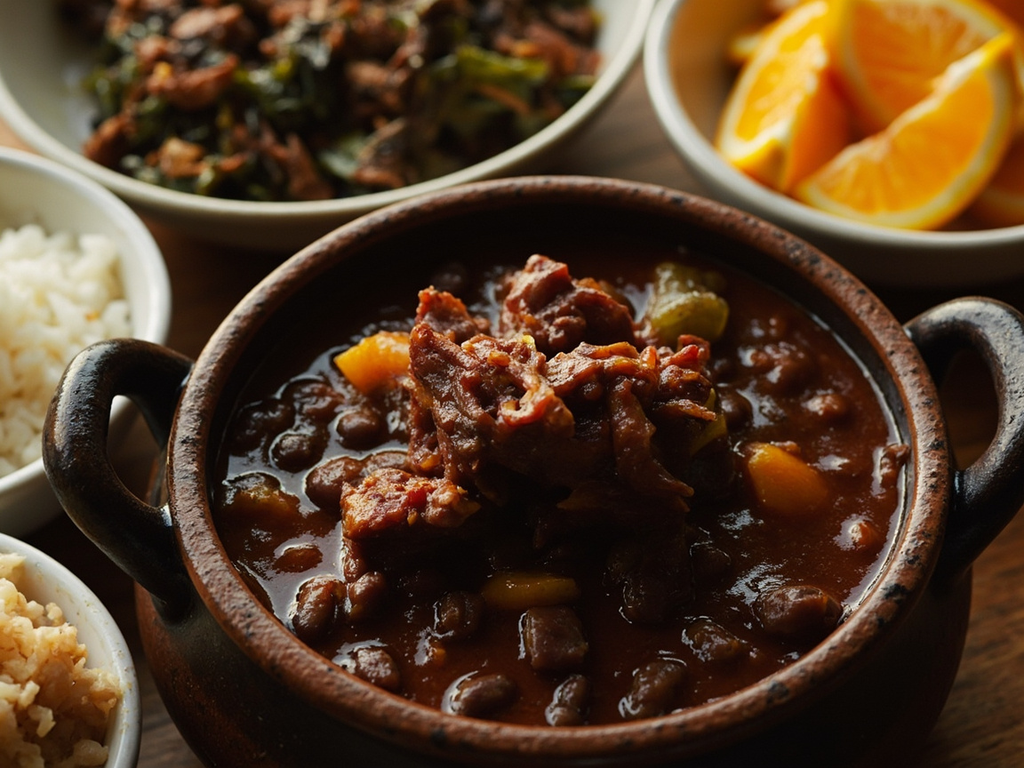
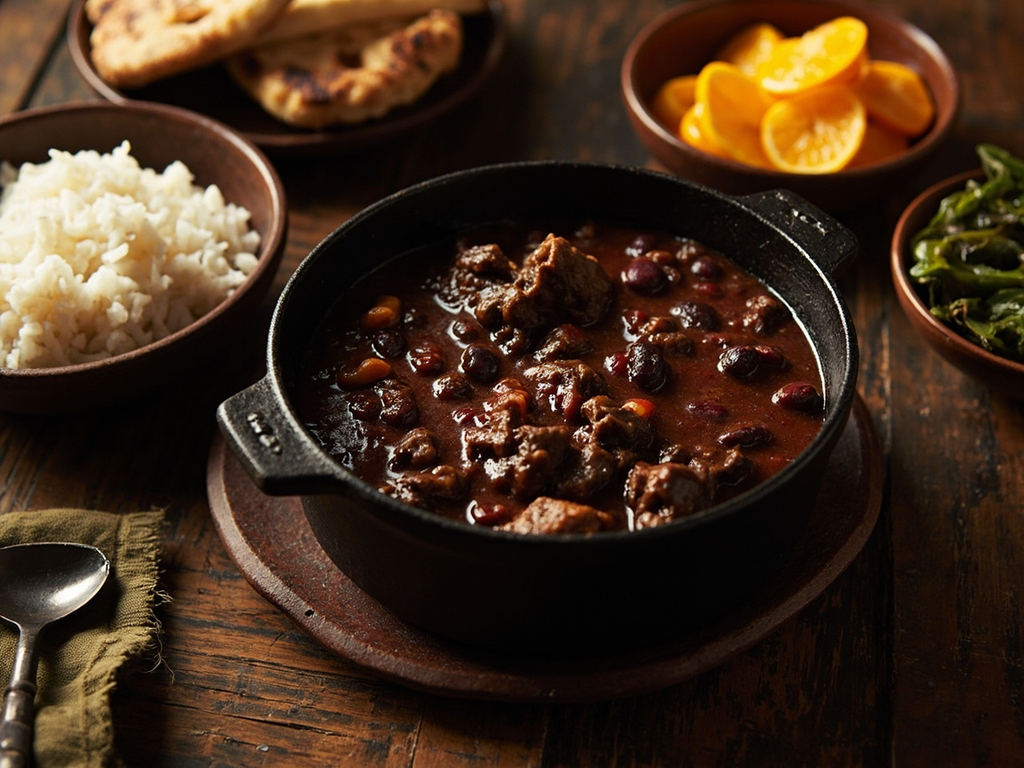
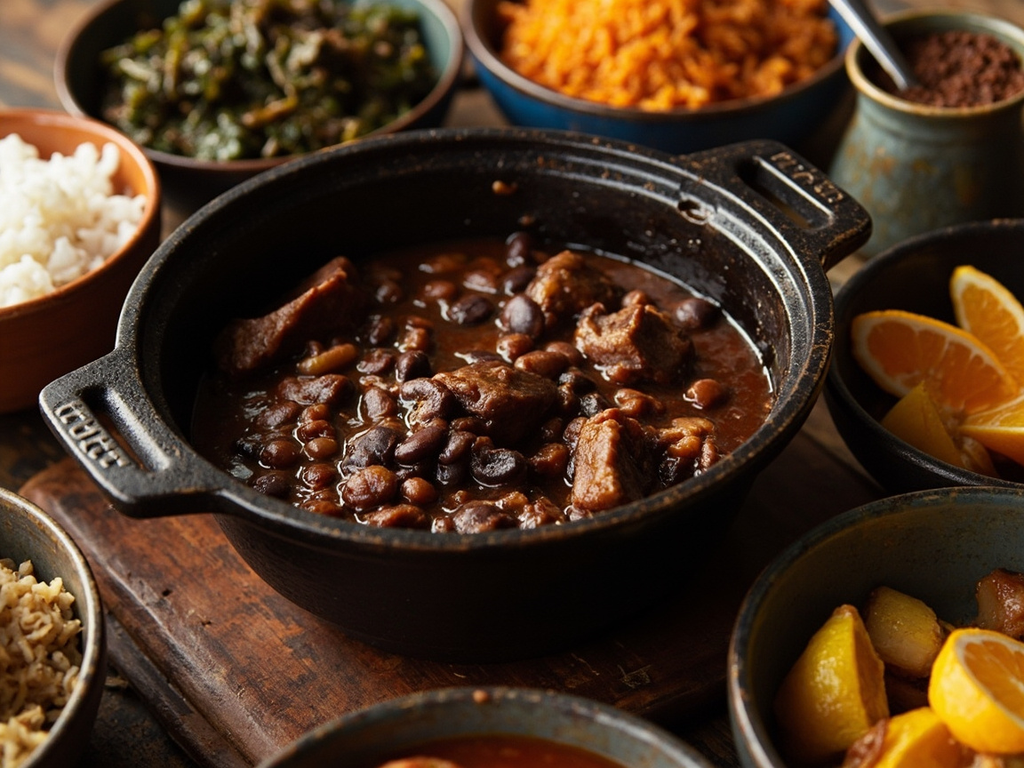
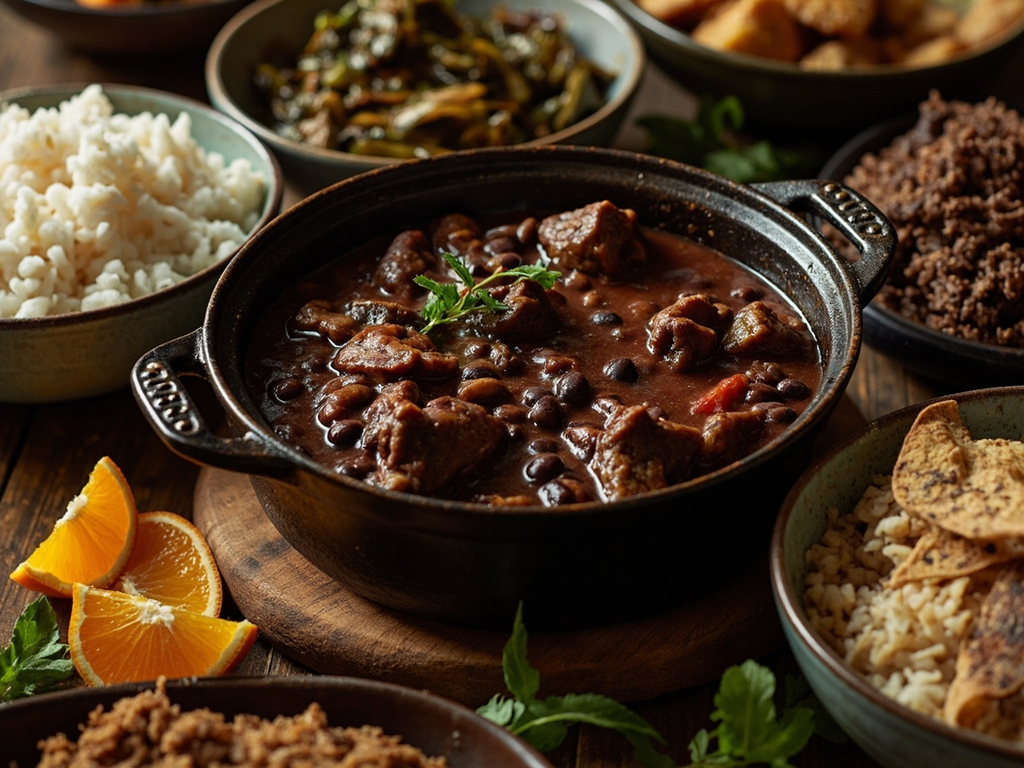
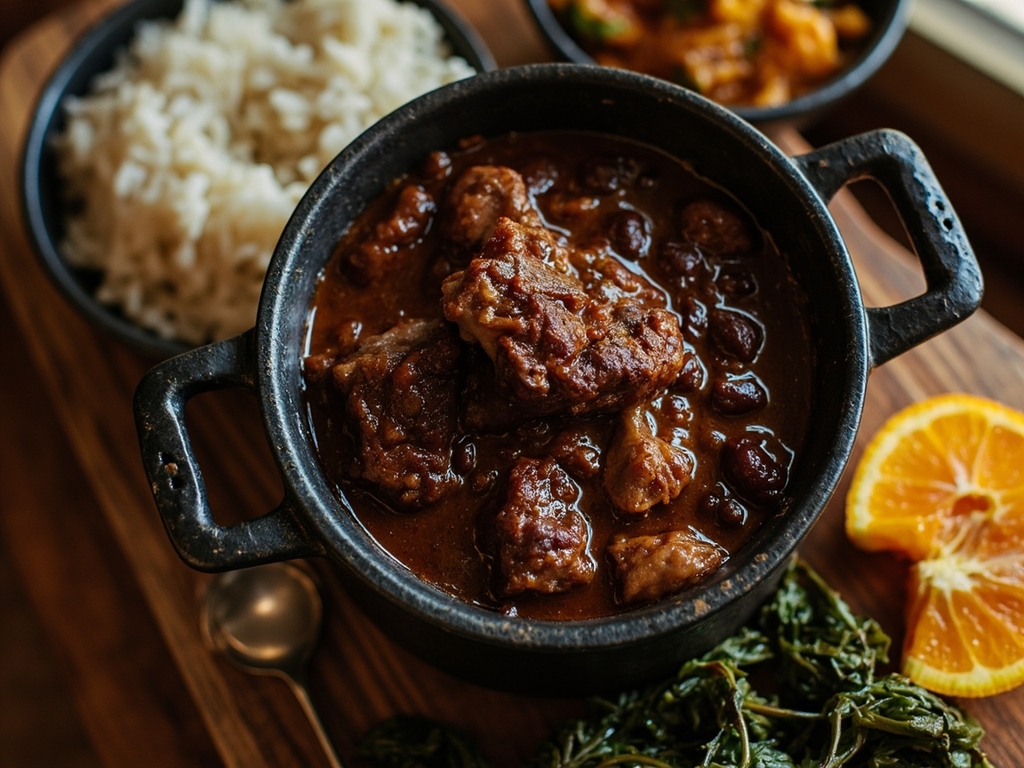
A deep black bean stew slowly simmered with several cuts of pork (fresh, salted, smoked). Served with white rice, orange slices, shredded collard greens, and farofa. A whole-day meal, designed for a crowd.
On Saturdays, at home in Rio, there was no discussion: it was feijoada. I'd put on a record, my mother at the piano in the other room, and the pot would sing on the fire for hours — you need patience, like holding a long note. The trick, my friend, is the orange: its fresh acidity that wakes up the heavy, warm black bean. Even in Los Angeles, far from home, I made this dish so I wouldn't forget where my voice came from.
- •Black beans (feijão preto) — a large bowlful (base of the dish)
- •Various pork cuts (shoulder, ribs, ear, tail, smoked bacon) — a generous assortment (richness and smokiness)
- •Smoked sausage (paio/linguiça) — a few pieces (smoky umami)
- •Onion, garlic, bay leaves — in abundance (aromatic base)
- •Sweet orange — a few (acidic freshness at the table)
Feijoada do sábado (Saturday feijoada)
A deep black bean stew slowly simmered with several cuts of pork (fresh, salted, smoked). Served with white rice, orange slices, shredded collard greens, and farofa. A whole-day meal, designed for a crowd.
Why this dish? Feijoada is THE family ritual of Saturday lunch in Rio, Flora's hometown. Wherever she is in the world — Los Angeles, New York, Montreux — it's the dish that brings the Brazilian diaspora together and stirs up saudade for the homeland. A stew shared among many, like a jam session.
On Saturdays, at home in Rio, there was no discussion: it was feijoada. I'd put on a record, my mother at the piano in the other room, and the pot would sing on the fire for hours — you need patience, like holding a long note. The trick, my friend, is the orange: its fresh acidity that wakes up the heavy, warm black bean. Even in Los Angeles, far from home, I made this dish so I wouldn't forget where my voice came from.
Ingredients (period version)
- Black beans (feijão preto) — a large bowlful (base of the dish)
- Various pork cuts (shoulder, ribs, ear, tail, smoked bacon) — a generous assortment (richness and smokiness)
- Smoked sausage (paio/linguiça) — a few pieces (smoky umami)
- Onion, garlic, bay leaves — in abundance (aromatic base)
- Sweet orange — a few (acidic freshness at the table)
Ingredients
- Dried black beans — 500 g (soaked overnight) (base of the dish)
- Pork shoulder + ribs — 600 g total (melting meat)
- Smoked bacon — 150 g (smokiness)
- Smoked sausage (Morteau or linguiça) — 200 g (umami)
- Onions — 2 (base)
- Garlic — 4 cloves (base)
- Bay leaves — 2 (flavor)
- Orange — 2 (serving)
- White rice, collard greens (or kale), cassava flour — for serving (accompaniment)
Method
- The night before, soak the black beans in a large volume of cold water.
- On the day, cook the beans at a simmer with bay leaves for 1 hour.
- Meanwhile, sear the pork cuts and sausage to brown them.
- Sauté onion and garlic, add the meats, then pour them into the bean pot.
- Simmer for 1.5 to 2 hours over low heat until the broth thickens and the meat is tender.
- Serve with white rice, sautéed shredded collard greens, farofa, and fresh orange slices.
How it was made : The feijoada as we know it was born in the 19th century in Brazilian urban kitchens, blending the European tradition of bean stew with Afro-Brazilian know-how. In the 20th century, it became a national emblem and the Sunday/Saturday ritual of families, simmered all morning long on the stove.
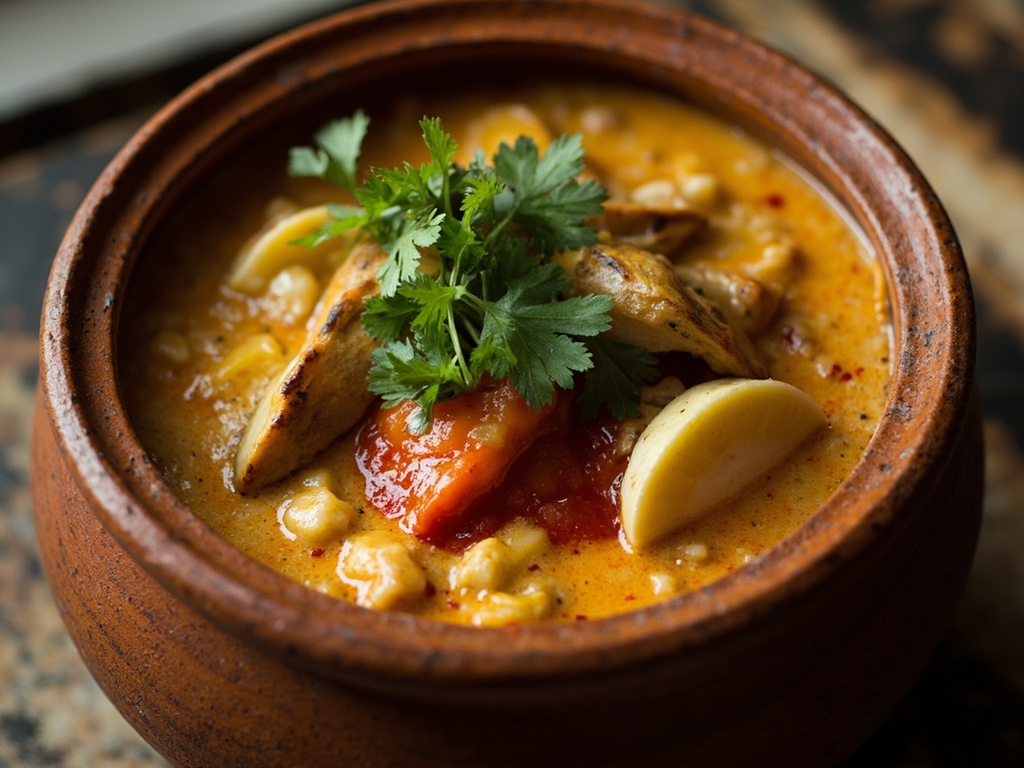
The contemporary twist : Served in small individual casseroles with a lacquered orange wedge, for an 'appetizer feijoada' that opens a dinner to the rhythms of bossa nova.
Flora Purim · Charactorium