 flip
flipFeijoada completa
Feijoada completa
Why this dish? Chateaubriand received at his generous table, and feijoada is the national dish of large Brazilian gatherings — the one that brings together, on Saturday or Sunday, patrons and guests around a common pot. This black bean and salted meat stew embodies the mixed-race Brazil he celebrated in his newspapers and radios.
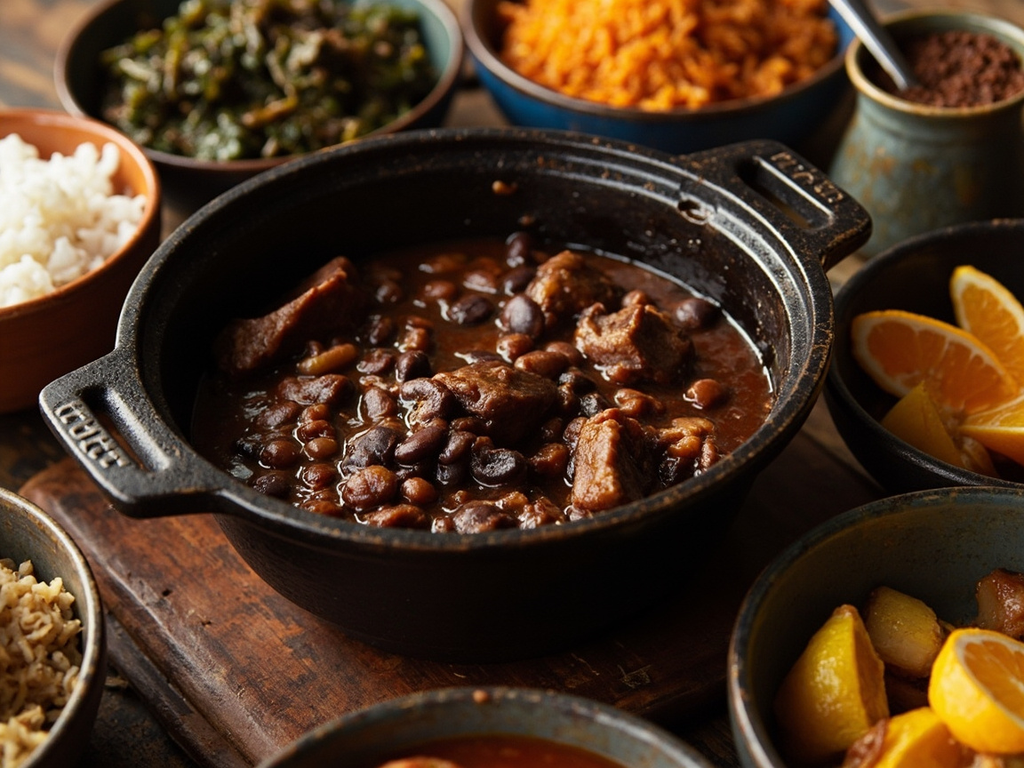
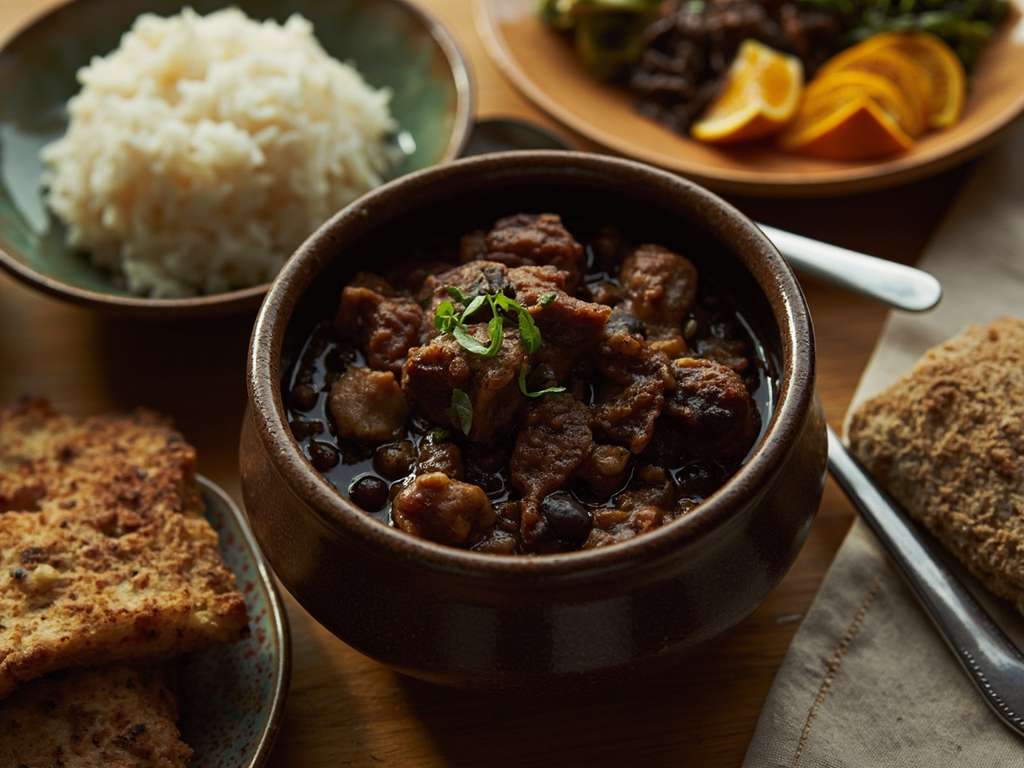
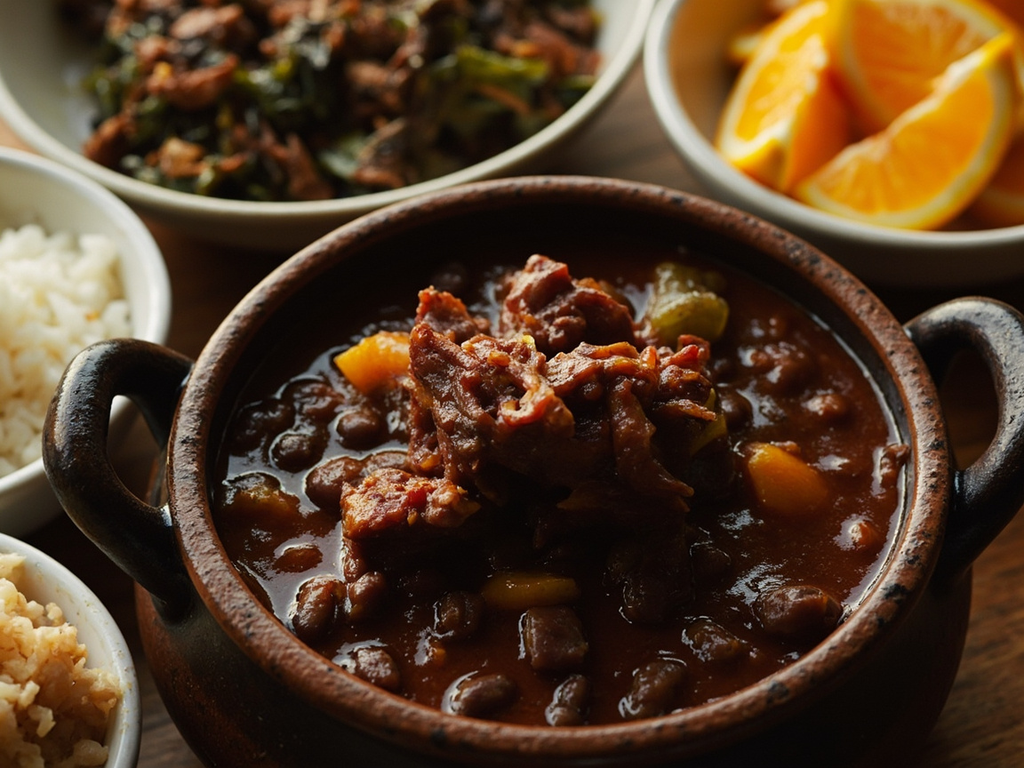
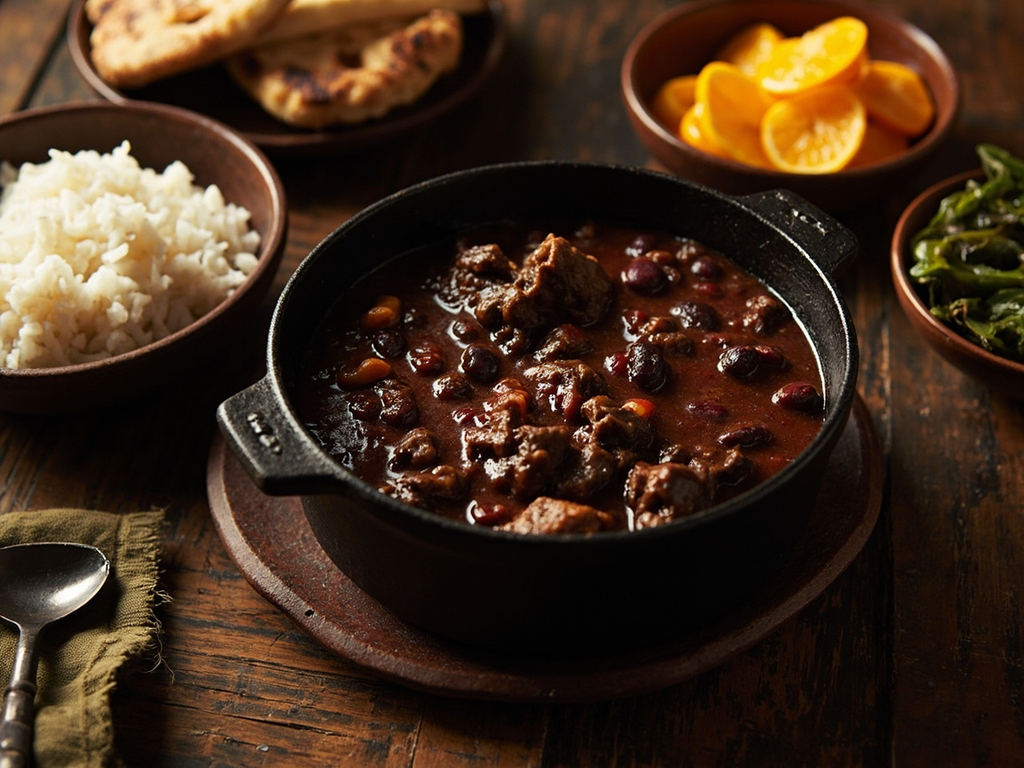
A slow-cooked stew of black beans and an assortment of salted and smoked pork, served with white rice, farofa, shredded collard greens, and orange slices. A dense, deep dish shared in large company over an entire afternoon.
My dear friend, when I entertain, I spare no expense: a proper feijoada demands a pot where every cut of the pig simmers, and you must devote the whole day to it without watching the clock. You soak the black beans the night before, toss in the lard, the salted rib, the smoked sausage, and let the fire do its work slowly, as one builds a newspaper empire. You splash it with cachaça before sitting down, slice the orange to lighten the stomach, and talk politics until evening. It is around this black, steaming dish that friendships are forged and ministries are undone.
- •Black beans — a large measure (stew base)
- •Salted pork cuts (ribs, tail, ear, trotter) — in abundance (meaty core and salt)
- •Smoked bacon and paio sausage — according to the table (smoke and fat)
- •Carne-seca (salted dried beef) — a few pieces (umami, depth)
- •Garlic, onion, bay leaf — generously (aromatics)
- •Manioc flour — one bowl (farofa accompaniment)
- •Oranges — several (freshness, digestion)
Feijoada completa
A slow-cooked stew of black beans and an assortment of salted and smoked pork, served with white rice, farofa, shredded collard greens, and orange slices. A dense, deep dish shared in large company over an entire afternoon.
Why this dish? Chateaubriand received at his generous table, and feijoada is the national dish of large Brazilian gatherings — the one that brings together, on Saturday or Sunday, patrons and guests around a common pot. This black bean and salted meat stew embodies the mixed-race Brazil he celebrated in his newspapers and radios.
My dear friend, when I entertain, I spare no expense: a proper feijoada demands a pot where every cut of the pig simmers, and you must devote the whole day to it without watching the clock. You soak the black beans the night before, toss in the lard, the salted rib, the smoked sausage, and let the fire do its work slowly, as one builds a newspaper empire. You splash it with cachaça before sitting down, slice the orange to lighten the stomach, and talk politics until evening. It is around this black, steaming dish that friendships are forged and ministries are undone.
Ingredients (period version)
- Black beans — a large measure (stew base)
- Salted pork cuts (ribs, tail, ear, trotter) — in abundance (meaty core and salt)
- Smoked bacon and paio sausage — according to the table (smoke and fat)
- Carne-seca (salted dried beef) — a few pieces (umami, depth)
- Garlic, onion, bay leaf — generously (aromatics)
- Manioc flour — one bowl (farofa accompaniment)
- Oranges — several (freshness, digestion)
Ingredients
- Dried black beans — 500 g (stew base)
- Salted pork ribs / shoulder — 400 g (main meat)
- Smoked sausage (paio or mild chorizo) — 200 g (smoked)
- Smoked bacon — 150 g (flavorful fat)
- Carne-seca or desalted dried beef — 200 g (umami)
- Onion — 2 (aromatic)
- Garlic — 6 cloves (aromatic)
- Bay leaves — 2 (flavor)
- White rice — 300 g (accompaniment)
- Toasted manioc flour (farofa) — 1 bowl (accompaniment)
- Collard greens (couve) — 1/2 head (shredded garnish)
- Oranges — 3 (digestive slices)
Method
- The night before, soak the black beans and separately desalt the salted meats and carne-seca, changing the water several times.
- On the day, cook the beans in plenty of water with bay leaf until tender (about 1.5 hours).
- Gradually add the meats (longest-cooking first, sausages later) and simmer for 1 hour.
- Sauté garlic and onion in a little bacon fat, scoop out a ladle of beans, mash them, and return to the pot to thicken the broth.
- Simmer another 30 minutes; the broth should be thick and dark brown-black.
- Prepare white rice, farofa (toasted manioc flour in butter), sautéed shredded collard greens, and slice the oranges.
- Serve the feijoada in the pot; each person composes their plate with all accompaniments.
How it was made : Long presented as a dish born in the senzalas from pork offcuts, feijoada is actually heir to Iberian and European bean stews, enriched in Brazil by the abundance of pork and black beans. In the 20th century, it became a national dish and a weekend social ritual. It was cooked in large cast-iron pots over wood fire all morning long.
The contemporary twist : Serve as a 'buffet feijoada': the pot in the center, with small separate bowls (rice, farofa, collard greens, orange, chili vinaigrette) so each guest composes their plate as at a Chatô reception.
Sources : Luís da Câmara Cascudo, História da Alimentação no Brasil, 1967 · Gilberto Freyre, Casa-Grande & Senzala, 1933
Assis Chateaubriand · Charactorium