 flip
flipMoqueca de banana-da-terra e palmito — the fishless moqueca
Moqueca de banana-da-terra e palmito — the fishless moqueca
Why this dish? Astrud was born in Salvador de Bahia, the cradle of moqueca. Having become an animal defender, she would have loved this vegetable version that keeps all the fragrance of her homeland — dendê oil, coconut milk, cilantro — without fish or seafood.
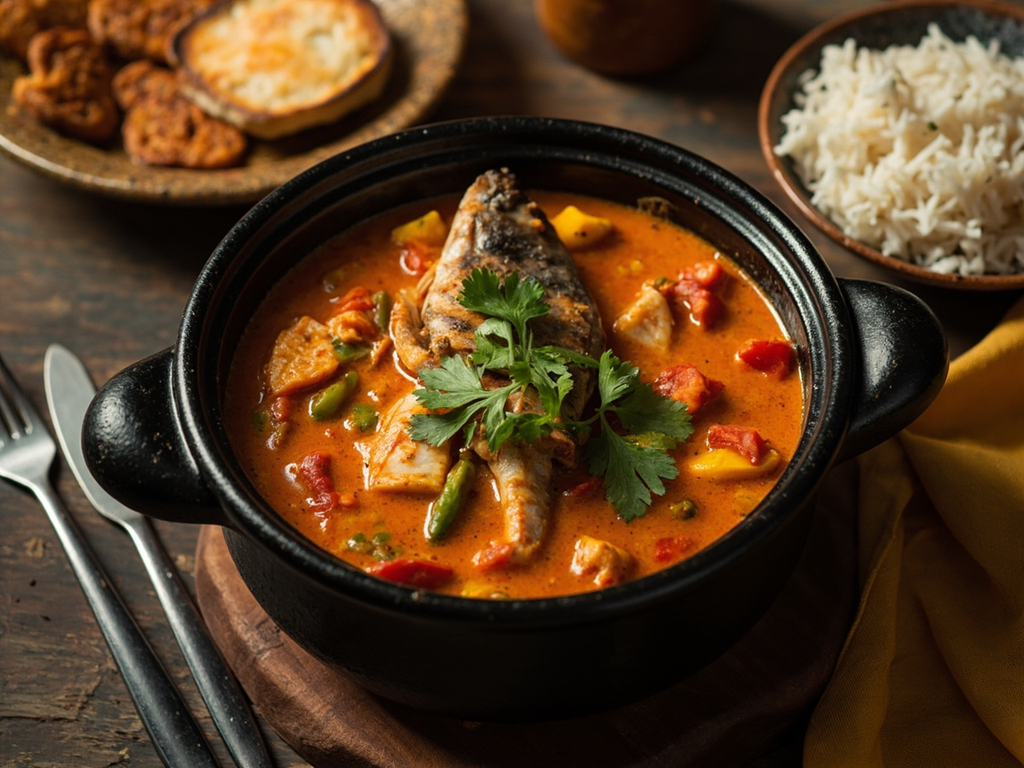
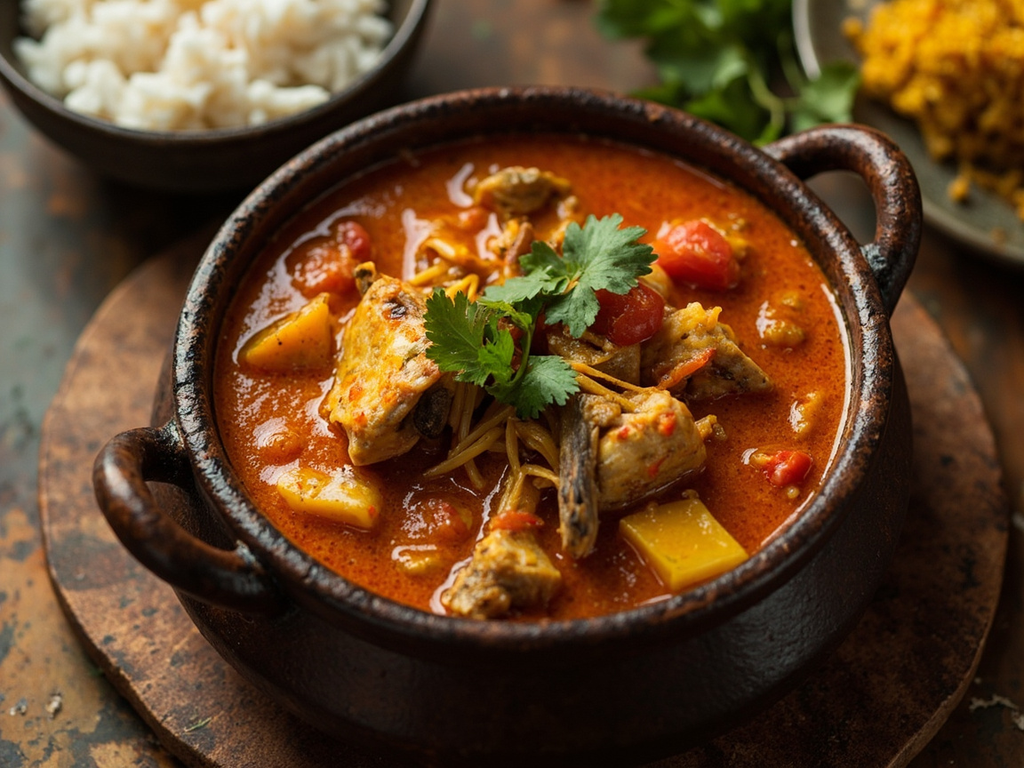
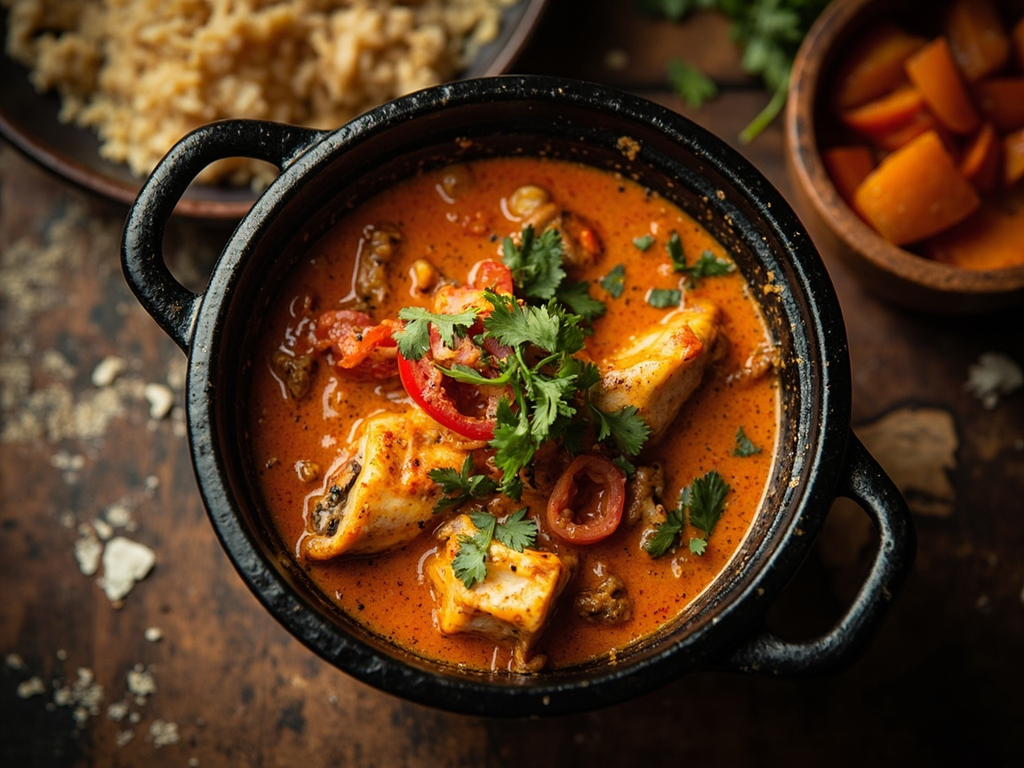
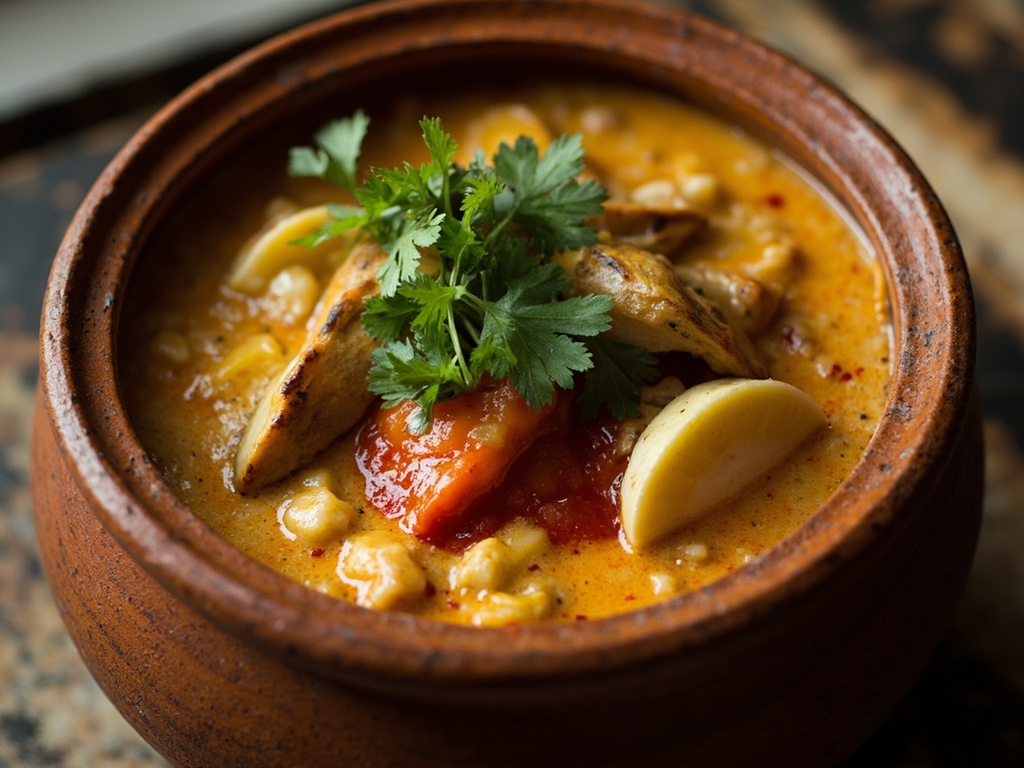
A stew simmered in an earthenware pot: slices of plantain and hearts of palm bathed in a golden coconut milk sauce with onion, bell pepper, and tomato, all colored by red palm oil and perfumed with cilantro. A festive, generous, and fragrant moqueca in its animal-free version.
In Salvador, moqueca is celebration, it's Sunday, it's the whole family around the panela de barro simmering. Me, as the years went by, I no longer wanted fish in it — I care too much for the creatures that share our world. So I let the banana-da-terra melt into the coconut milk, I drizzle a little dendê for the color of the sun, and I cover it with fresh coentro. Taste it: it's all of Bahia, and no one had to suffer for it.
- •Ripe plantain — two (main melting element)
- •Fresh hearts of palm — a few (meaty texture)
- •Coconut milk — a bowl (sauce base)
- •Dendê oil (red palm) — a drizzle (signature, color and fragrance)
- •Onion, bell pepper, tomato — one of each (aromatic base (refogado))
- •Fresh cilantro (coentro) — a nice bunch (final fragrance)
- •Lime — one (acidity)
Moqueca de banana-da-terra e palmito — the fishless moqueca
A stew simmered in an earthenware pot: slices of plantain and hearts of palm bathed in a golden coconut milk sauce with onion, bell pepper, and tomato, all colored by red palm oil and perfumed with cilantro. A festive, generous, and fragrant moqueca in its animal-free version.
Why this dish? Astrud was born in Salvador de Bahia, the cradle of moqueca. Having become an animal defender, she would have loved this vegetable version that keeps all the fragrance of her homeland — dendê oil, coconut milk, cilantro — without fish or seafood.
In Salvador, moqueca is celebration, it's Sunday, it's the whole family around the panela de barro simmering. Me, as the years went by, I no longer wanted fish in it — I care too much for the creatures that share our world. So I let the banana-da-terra melt into the coconut milk, I drizzle a little dendê for the color of the sun, and I cover it with fresh coentro. Taste it: it's all of Bahia, and no one had to suffer for it.
Ingredients (period version)
- Ripe plantain — two (main melting element)
- Fresh hearts of palm — a few (meaty texture)
- Coconut milk — a bowl (sauce base)
- Dendê oil (red palm) — a drizzle (signature, color and fragrance)
- Onion, bell pepper, tomato — one of each (aromatic base (refogado))
- Fresh cilantro (coentro) — a nice bunch (final fragrance)
- Lime — one (acidity)
Ingredients
- Ripe plantains — 2 large (melting element)
- Hearts of palm (palmito) — 1 jar (220 g drained) (meaty texture)
- Coconut milk — 400 ml (sauce)
- Dendê oil (red palm) — 2 tbsp (signature)
- Onion — 1 (aromatic base)
- Red bell pepper — 1 (aromatic base)
- Tomatoes — 2 (aromatic base)
- Garlic — 3 cloves (aromatic)
- Fresh cilantro — 1 bunch (fragrance)
- Lime — 1 (acidity)
- Salt — to taste (seasoning)
Method
- Peel the plantains and cut into thick rounds; sprinkle with juice of half a lime.
- Slice onion, bell pepper, and tomatoes. In a pot (ideally earthenware), sweat these vegetables with the minced garlic until softened.
- Arrange the plantain rounds and hearts of palm cut into chunks on the vegetable bed.
- Pour in the coconut milk, season with salt, cover, and simmer over low heat for 20 minutes without stirring too much.
- At the end of cooking, add the dendê oil and half the cilantro; adjust acidity with the remaining lime.
- Sprinkle with the rest of the cilantro and serve with white rice.
How it was made : The traditional Bahian moqueca is made with fish or shrimp, simmered in a panela de barro (earthenware pot) with coconut milk and dendê — a technique and ingredients inherited from West African cuisines brought by enslaved people. Vegetable versions (plantain, heart of palm) exist in the popular repertoire and are common today.
The contemporary twist : Serve directly in the steaming panela de barro set on a wooden trivet, with cilantro and a lime wedge as a finishing touch.
Sources : Luís da Câmara Cascudo, História da Alimentação no Brasil
Astrud Gilberto · Charactorium