 flip
flipNestr þingmanna — barley flatbread and dried fish for the traveler
Nestr þingmanna — barley flatbread and dried fish for the traveler
Why this dish? To render justice, one must first get there. Forseti, god of the þing and of reconciliation, is the patron of those who take the road to assemblies — like Þingvellir in Iceland. The nestr, those dried and compact provisions, is what you slip into your satchel to last until the place of judgment.
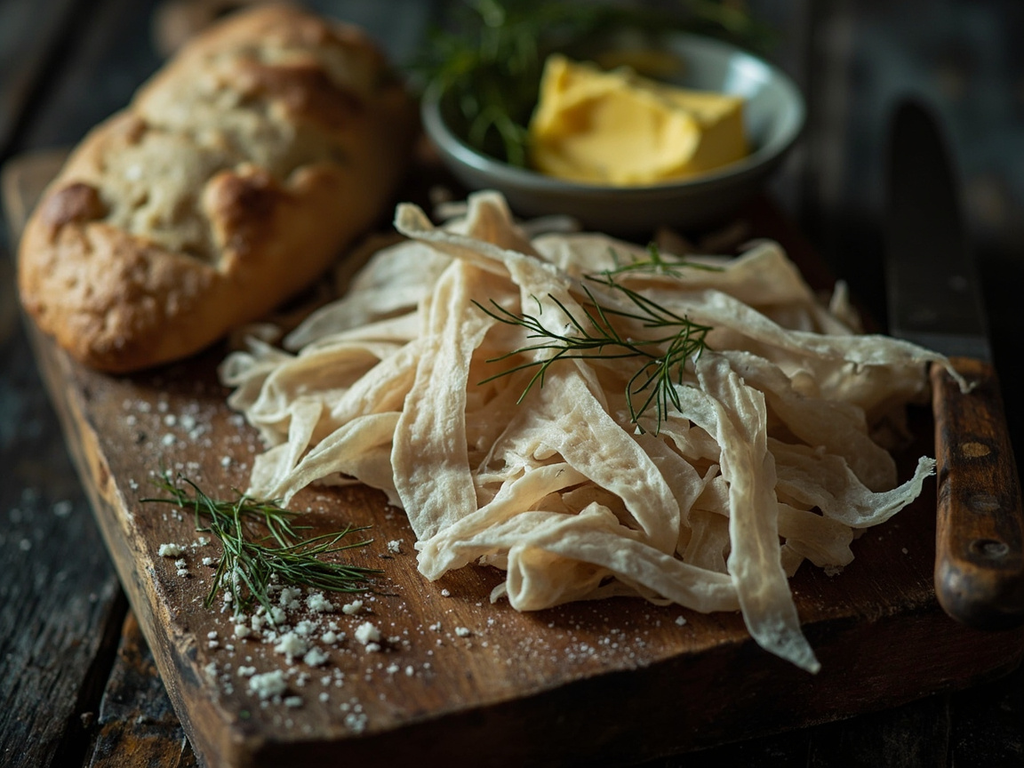
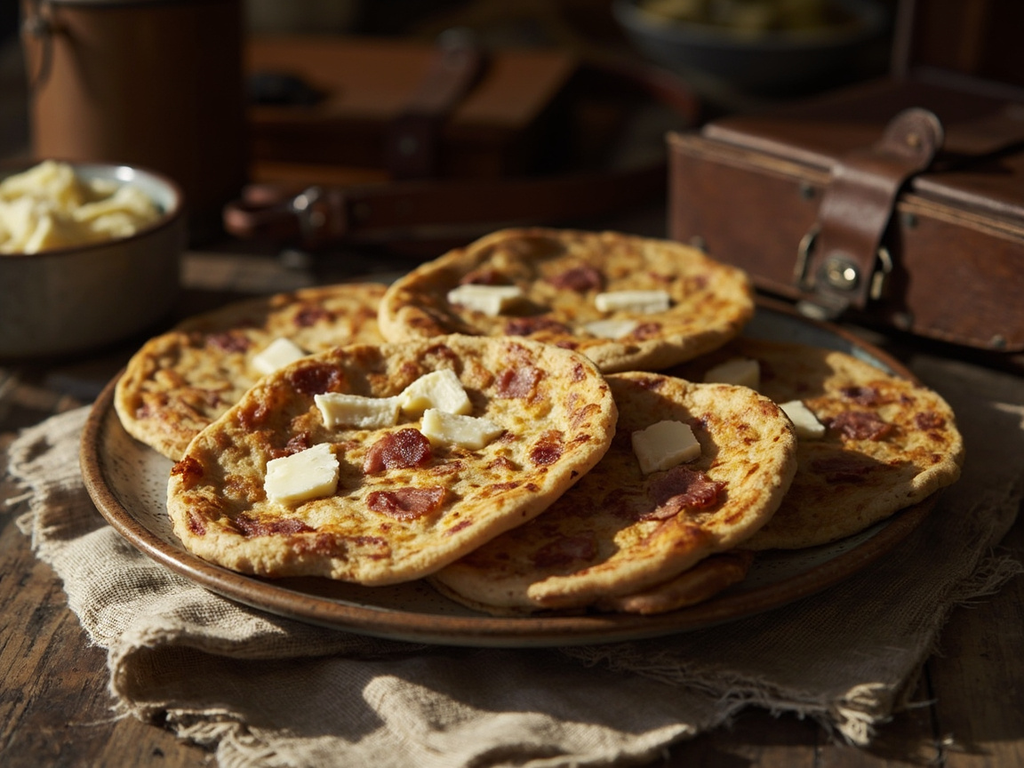
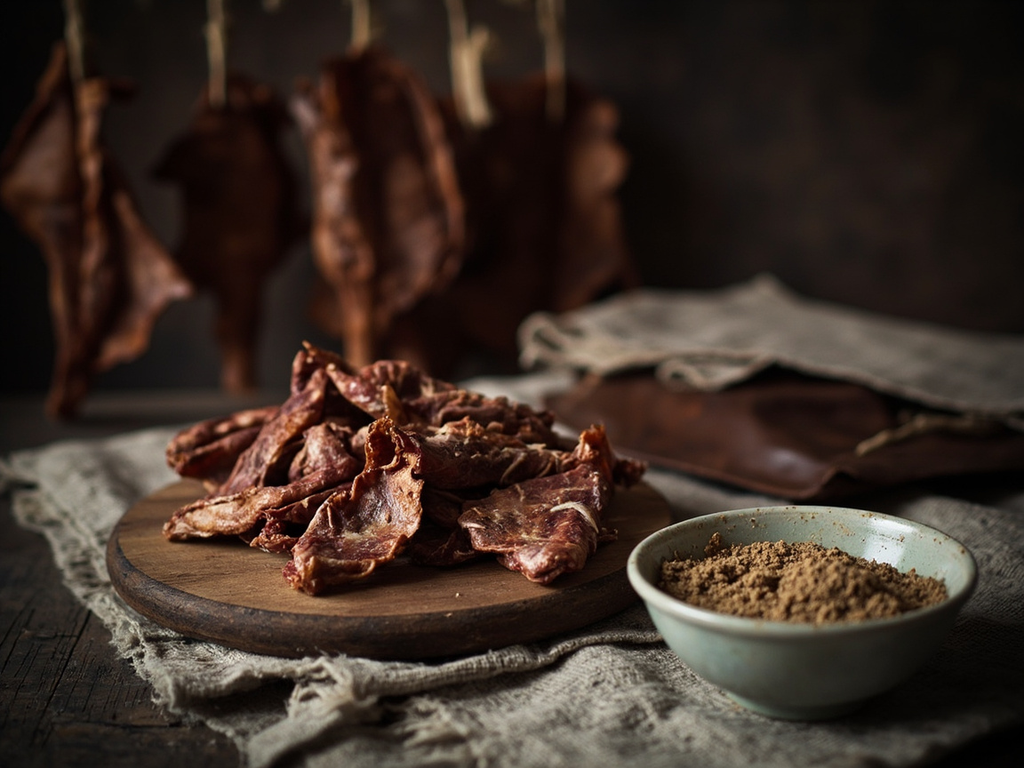
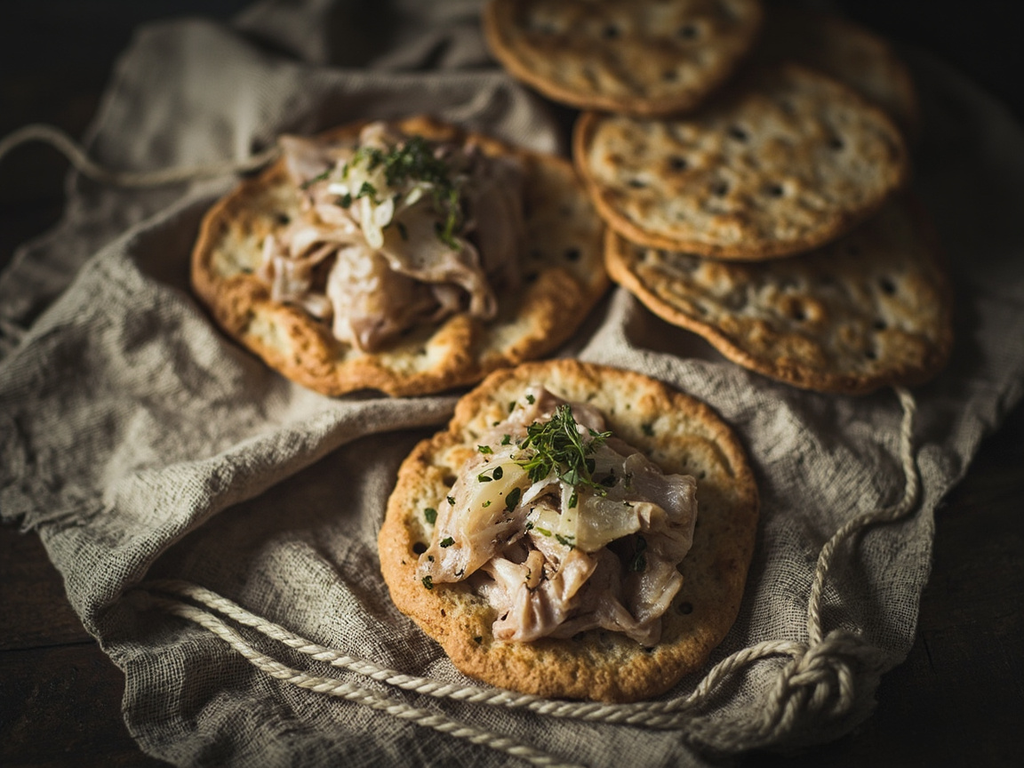
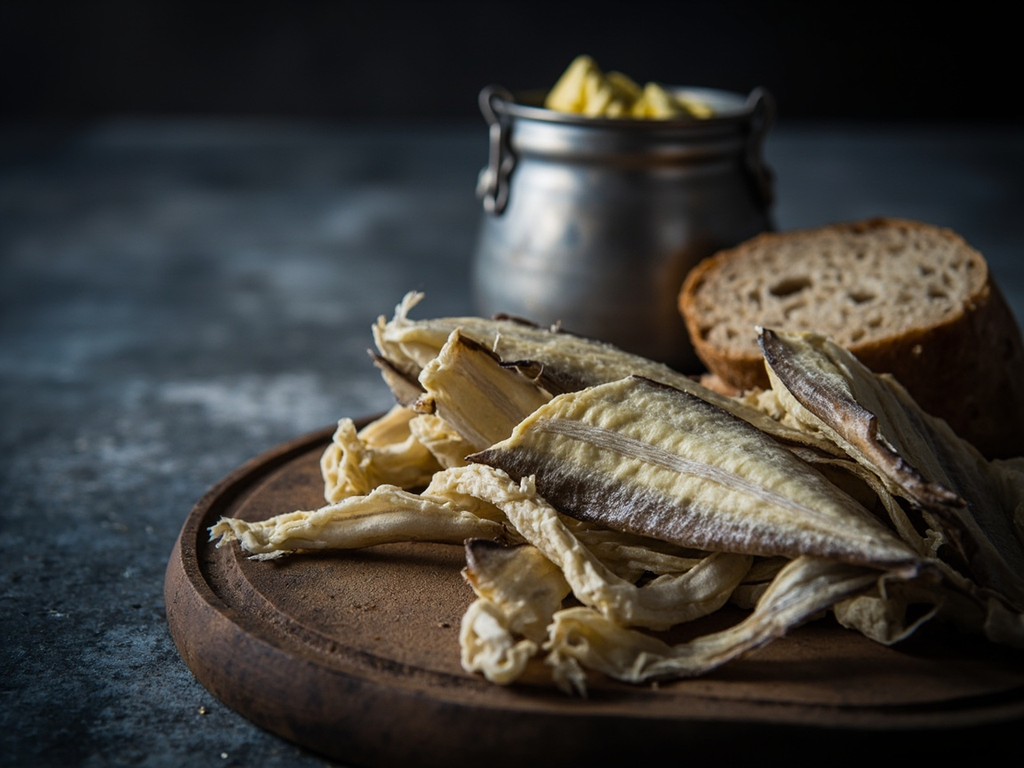
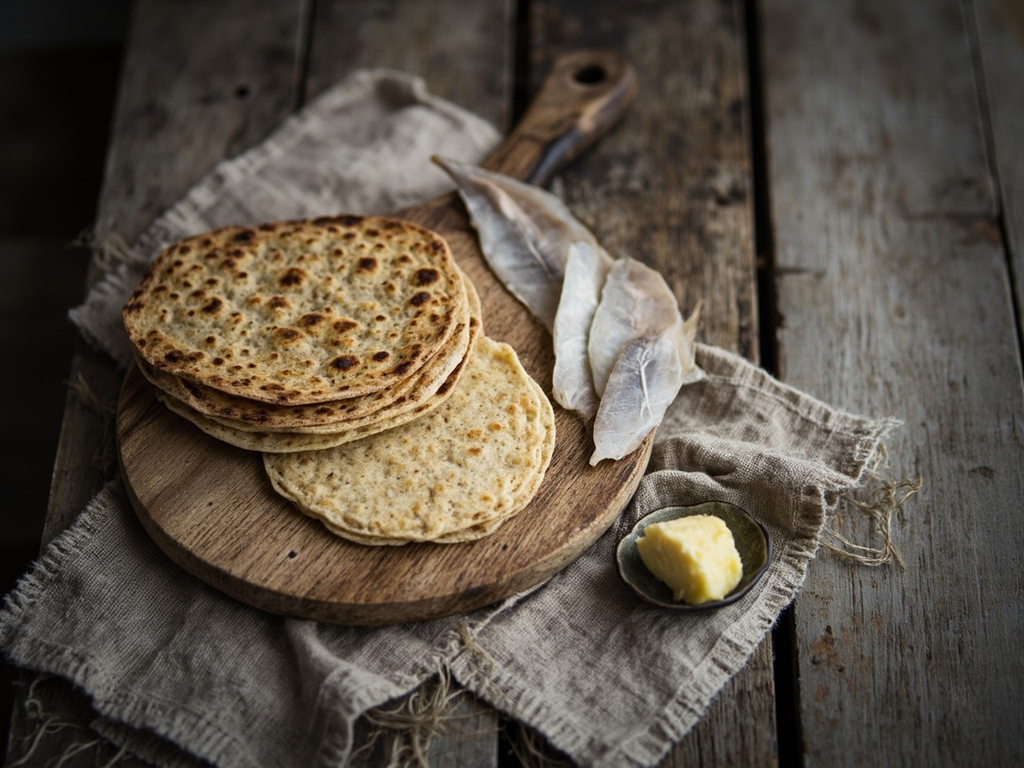
A barley flatbread cooked on a stone, hard and nourishing, accompanied by strips of wind-dried fish (harðfiskr). Nothing spoils, everything is portable: this is the hiker's snack, chewed at length on the path to the þing while gazing at the horizon.
The road to the þing is long, and no one pleads on an empty stomach. I slip into my satchel what wind and fire have made imperishable: the barley flatbrauð baked on the hot stone, hard under the tooth, and the harðfiskr, that fish the North wind has dried to the bone. Dip it a moment in water or chew it as is, rubbed with a little butter — it will carry you to the place where the law is spoken.
- •Barley flour — enough for the dough (flatbread base)
- •Water — to bind (binder)
- •Salt — a pinch (seasoning)
- •Lean fish (cod, haddock) — fillets (dried protein)
- •Butter — a little (fish garnish)
Nestr þingmanna — barley flatbread and dried fish for the traveler
A barley flatbread cooked on a stone, hard and nourishing, accompanied by strips of wind-dried fish (harðfiskr). Nothing spoils, everything is portable: this is the hiker's snack, chewed at length on the path to the þing while gazing at the horizon.
Why this dish? To render justice, one must first get there. Forseti, god of the þing and of reconciliation, is the patron of those who take the road to assemblies — like Þingvellir in Iceland. The nestr, those dried and compact provisions, is what you slip into your satchel to last until the place of judgment.
The road to the þing is long, and no one pleads on an empty stomach. I slip into my satchel what wind and fire have made imperishable: the barley flatbrauð baked on the hot stone, hard under the tooth, and the harðfiskr, that fish the North wind has dried to the bone. Dip it a moment in water or chew it as is, rubbed with a little butter — it will carry you to the place where the law is spoken.
Ingredients (period version)
- Barley flour — enough for the dough (flatbread base)
- Water — to bind (binder)
- Salt — a pinch (seasoning)
- Lean fish (cod, haddock) — fillets (dried protein)
- Butter — a little (fish garnish)
Ingredients
- Barley flour — 250 g (flatbread base)
- Rye flour (supplement) — 50 g (dough structure)
- Warm water — about 150 ml (binder)
- Salt — 1 tsp (seasoning)
- Dried cod fillets (commercial harðfiskr) — as needed (dried protein)
- Butter — for spreading (garnish)
Method
- Mix the flours and salt, gradually add water until a firm, non-sticky dough forms.
- Divide into balls, roll out into thin rounds.
- Cook on a very hot griddle or cast-iron pan, without fat, 2 to 3 minutes per side, until golden spots appear.
- Let cool and harden: the bread will keep for several days.
- Serve with the dried fish, lightly buttered, to chew on the road — or dip the harðfiskr in a little warm water to soften it.
How it was made : Harðfiskr — fish dried in the cold wind without salt or smoke — was a major preserved food in Iceland and Norway, transportable and nearly imperishable. Paired with barley flatbread cooked on a stone, it formed the travel ration of merchants, sailors, and men going to assemblies.
The contemporary twist : Present the harðfiskr in strips with a knob of semi-salted butter, in the current Icelandic style where it is still nibbled as a snack — a living 'Viking snack'.
Sources : Tradition of Icelandic and Norwegian harðfiskr (wind-dried fish) · Daniel Serra & Hanna Tunberg, An Early Meal: A Viking Age Cookbook (2013)
Forseti · Charactorium