flip
flipCotognata, quince paste
Cotognata, quince paste
Why this dish? A great Florentine household stored provisions for winter and offered sweets to guests. Cotognata, a dense quince paste that keeps for months, combined utility with ostentation: it was cut into sweet diamonds to present at the end of a meal or to give as gifts, a present worthy of a merchant.
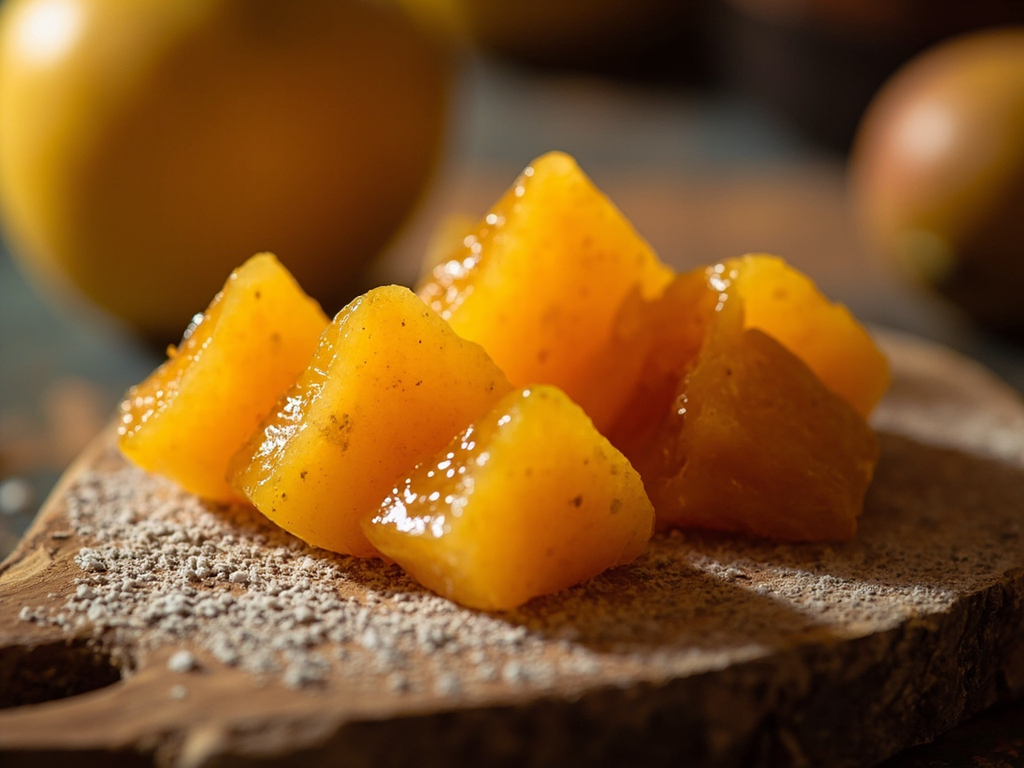
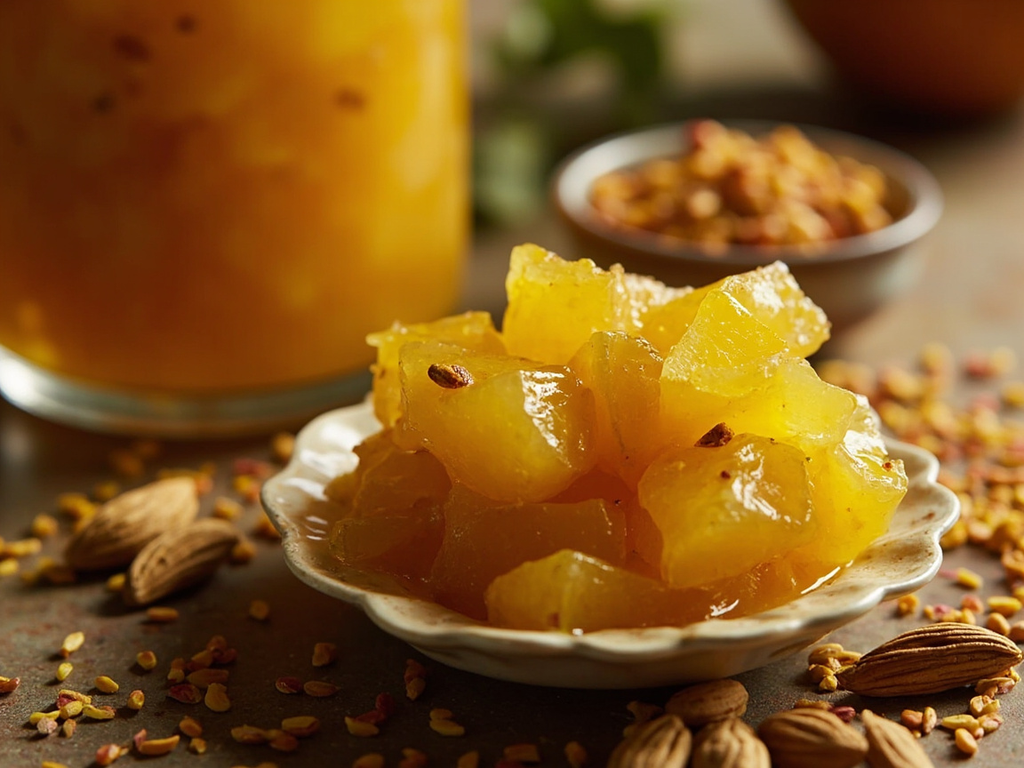
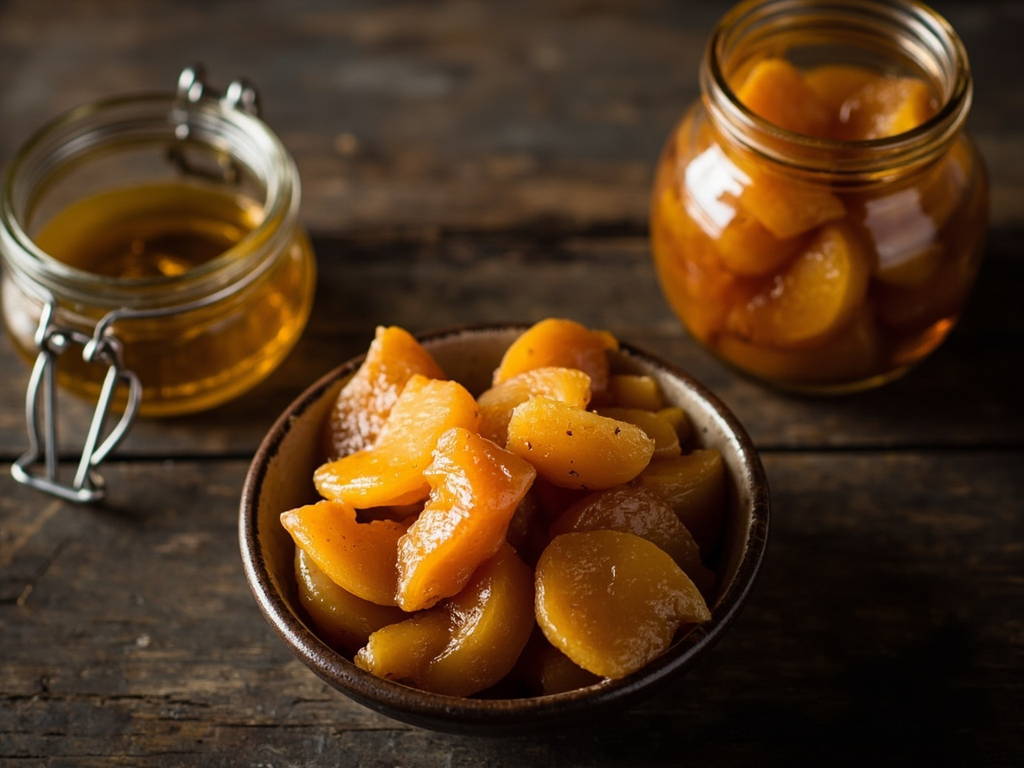
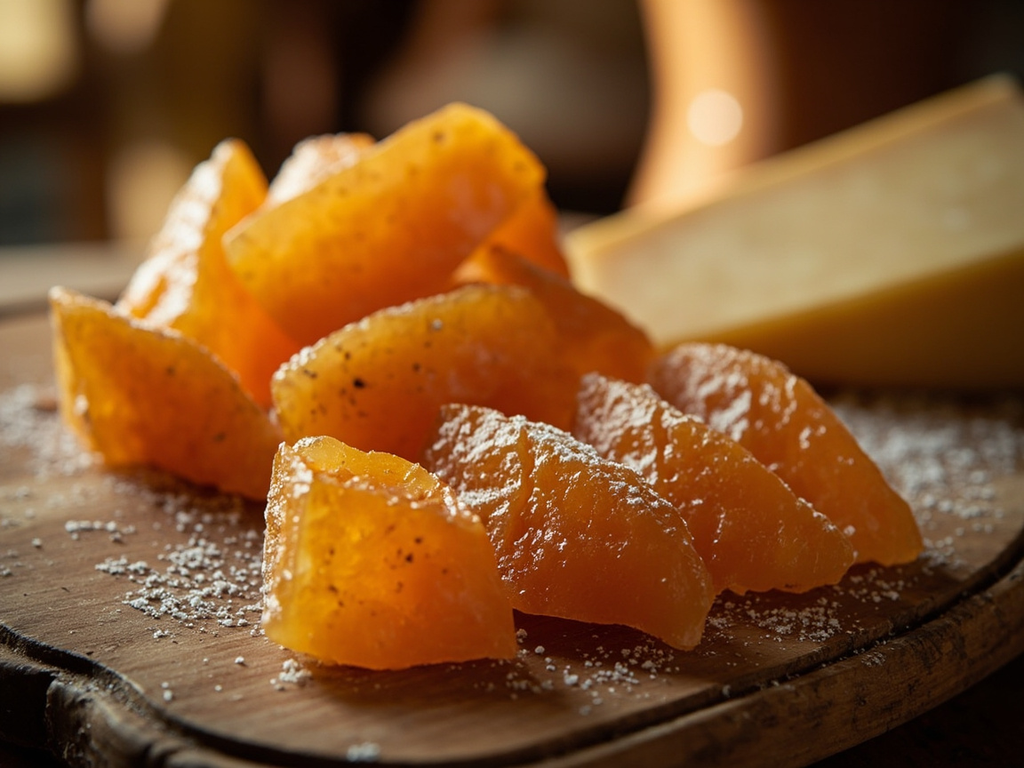
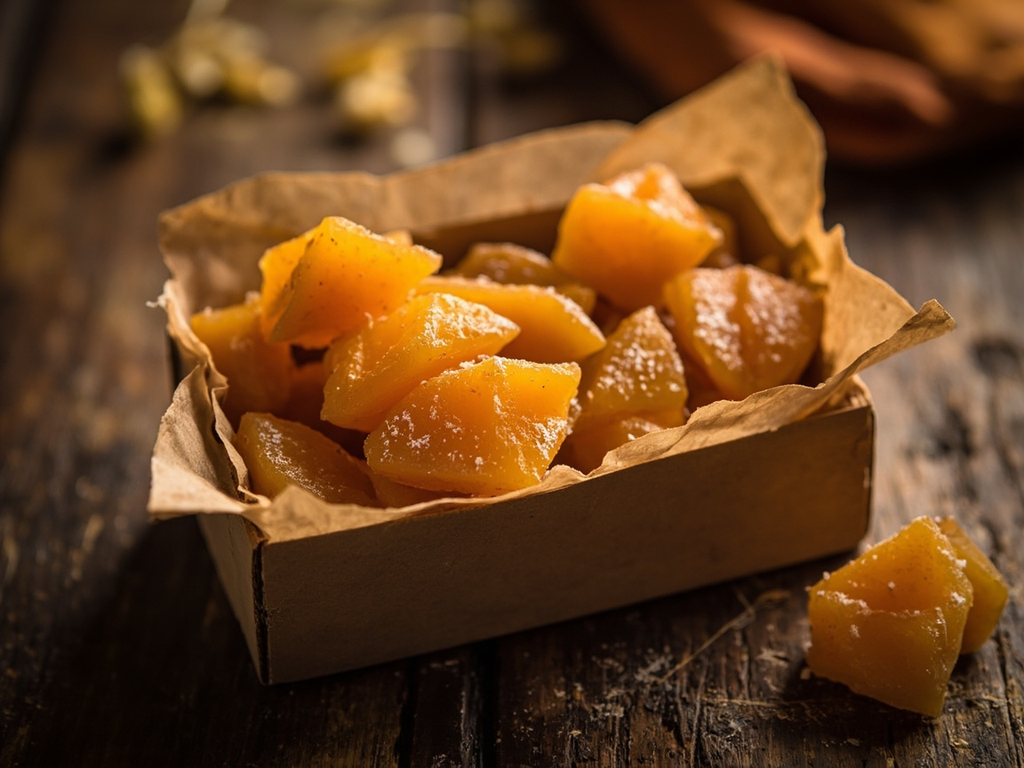
A firm, translucent paste of quinces cooked with sugar, dried, then cut into diamonds. The quintessential keepable preserve, both a winter reserve and a prestige confection for the credenza.
In autumn, when quinces perfume the pantry, I want not a single one wasted. Have them cooked until tender, pass the pulp, mix it with an equal weight of sugar, and stir over the fire until the spoon stands upright in it. Spread, let dry, cut into diamonds: here is enough to regale my guests all winter, and to offer a present that keeps without losing any of its sweetness.
- •Ripe quinces — a basket (star)
- •Cane sugar — equal weight to pulp (preservative and sweetness)
- •Rose water (optional) — a dash (perfume)
Cotognata, quince paste
A firm, translucent paste of quinces cooked with sugar, dried, then cut into diamonds. The quintessential keepable preserve, both a winter reserve and a prestige confection for the credenza.
Why this dish? A great Florentine household stored provisions for winter and offered sweets to guests. Cotognata, a dense quince paste that keeps for months, combined utility with ostentation: it was cut into sweet diamonds to present at the end of a meal or to give as gifts, a present worthy of a merchant.
In autumn, when quinces perfume the pantry, I want not a single one wasted. Have them cooked until tender, pass the pulp, mix it with an equal weight of sugar, and stir over the fire until the spoon stands upright in it. Spread, let dry, cut into diamonds: here is enough to regale my guests all winter, and to offer a present that keeps without losing any of its sweetness.
Ingredients (period version)
- Ripe quinces — a basket (star)
- Cane sugar — equal weight to pulp (preservative and sweetness)
- Rose water (optional) — a dash (perfume)
Ingredients
- Quinces — 1 kg (star)
- Sugar — same weight as pulp obtained (preservative and sweetness)
- Lemon juice — 1 tbsp (acidity / set)
- Rose water (optional) — 1 tsp (perfume)
Method
- Wash, peel, and core the quinces; cut into pieces.
- Cook in a little water until very tender, then puree finely.
- Weigh the puree, add the same weight of sugar and lemon juice.
- Cook over low heat, stirring constantly, until the paste thickens and pulls away from the bottom (20-30 min) — watch for splatters.
- Spread 1.5 cm thick on a lined tray, smooth, and let dry for 1-2 days in a dry place.
- Cut into diamonds, optionally roll in sugar, and store in a box.
How it was made : Quince paste is the ancestor of Mediterranean keepable confections (Italian cotognata, Spanish membrillo). The quince, too tart to eat raw, became a long-lasting sweet through cooking with sugar. Such sweet preserves, costly in sugar, adorned the buffets of the rich and served as refined gifts.
The contemporary twist : Served in thin slices with aged Tuscan pecorino — the sweet-salty cheese/quince pairing, very much in the period agrodolce spirit.
Sources : Bartolomeo Scappi, Opera dell'arte del cucinare (1570) · Maestro Martino, Libro de arte coquinaria (15th c.)
Francesco del Giocondo · Charactorium