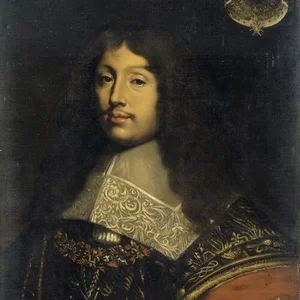

François de La Rochefoucauld (1613-1680) was a French writer and moralist of the Grand Siècle. An aristocratic rebel turned author, he is famous for his Maxims, a collection of brief, disenchanted sayings about human nature, in which self-love governs all our conduct.
François de La Rochefoucauld(1613 — 1680)
François de La Rochefoucauld
France
5 min read
Frequently asked questions
Famous Quotes
« Our virtues are, most often, only vices in disguise.»
« We all have strength enough to endure the misfortunes of others.»
« Hypocrisy is the homage that vice pays to virtue.»
« There are good marriages, but no delightful ones.»
« We give nothing so freely as our advice.»
Key Facts
- Born in 1613 in Paris into a great family of the nobility.
- Took an active part in the Fronde of the Princes (1648-1653), during which he was wounded.
- Published the Maxims (Reflections, or Sentences and Moral Maxims) in 1665, revised across five editions.
- Wrote his Memoirs on the upheavals of the Fronde.
- Frequented the salons, notably those of Madame de Sablé and Madame de La Fayette; died in 1680.
Works & Achievements
Account of his life and the events of the Fronde; a valuable document on the political intrigues of the 17th century.
First official edition of his maxims, establishing him as a great moralist of classicism.
Fifth and final edition revised by the author, the reference version of his major work.
Short essays on moral themes (love, conversation, death), published after his death.
A literary self-portrait in the fashion of the salons, in which he describes himself with lucidity and psychological subtlety.
Anecdotes
During the Fronde, La Rochefoucauld fought with weapons in hand against royal power. In 1652, during a battle at the Faubourg Saint-Antoine in Paris, he was struck in the face by a musket shot that left him almost blind for several months.
His famous Maxims were first born from a parlor game. At the home of Madame de Sablé, the guests would amuse themselves by summing up a truth about human nature in a short, striking sentence; La Rochefoucauld excelled at this and collected these aphorisms.
An unauthorized copy of his Maxims first circulated in the Netherlands in 1664, without his knowledge. Furious at this distorted pirated edition, he published an official version himself in 1665 to correct the text.
His most famous maxim states that “our virtues are, most often, only vices in disguise.” According to him, self-love—that is, self-interest—hides behind even our seemingly most generous acts.
Growing old and crippled by gout, La Rochefoucauld held a salon with his friend Madame de La Fayette, the author of *The Princess of Clèves*. Their intellectual friendship lasted until his death and nourished the work of both writers.
Primary Sources
Our virtues are, most often, only vices in disguise.
Self-love is the greatest of all flatterers.
Neither the sun nor death can be looked at steadily.
The restless and turbulent temperament of the French constantly drives them to desire change.
Hypocrisy is a tribute that vice pays to virtue.
Key Places
City where La Rochefoucauld was born in 1613 and died in 1680, and where he frequented the great literary salons.
District of Paris where he was gravely wounded in the face during the battle of the Fronde of the Princes in 1652.
A society gathering place in Paris where guests played the game of maxims that inspired his work.
The La Rochefoucauld family residence in Charente, cradle of this ancient aristocratic house.
Region in the southwest where he took part in the upheavals of the Fronde alongside the rebellious princes.
Typical Objects

A small printed book gathering his moral aphorisms, sold and read in the salons of high society.

The moralist's writing instruments, a goose feather cut into a quill and dipped in ink to compose maxims and letters.

A weapon carried by the rebellious aristocrat, a symbol of his rank and used during the battles of the Fronde.

A headpiece of curled false hair, a sign of prestige worn by the nobles of the Grand Siècle.

Letters exchanged with his salon friends such as Madame de Sablé and Madame de La Fayette, where his ideas matured.

A comfortable seat in the Parisian salons where people conversed about wit, morality and literature.
School Curriculum
Vocabulary & Tags
Key Vocabulary
Daily Life
Morning
An elderly aristocrat often suffering from gout, La Rochefoucauld begins his day late and without haste. A valet helps him wash and dress before he receives his mail and his first visitors.
Afternoon
The afternoon is devoted to reading, writing letters, and patiently refining his maxims. He polishes each sentence for hours to achieve perfect concision.
Evening
In the evening, he frequents the Parisian salons, notably that of Madame de La Fayette, where people discuss morality, literature, and the latest news from court. Brilliant conversation is an art as prized there as writing.
Food
At the table of a nobleman of the Grand Siècle, roasted meats, game, poultry, pastries, and wines are served. The meals are hearty and refined, but his gout no doubt forces him to moderate certain excesses.
Clothing
He wears the costume of the gentleman: a justaucorps, a lace shirt, breeches, silk stockings, and a curled wig. The sword at his side recalls his rank of ancient nobility.
Housing
Born into a great family, he resides in a Parisian hôtel particulier and owns lands and châteaux, such as Verteuil in Charente. His residences are luxuriously furnished and hung with tapestries.
Historical Timeline
Period Vocabulary
Liens externes & ressources
Références
Œuvres
Réflexions ou Sentences et Maximes morales (1re édition)
1665
Maximes (édition de 1678)
1678
Réflexions diverses
1731
Le portrait de La Rochefoucauld par lui-même
1659
See also
Related Characters
Adam Smith
1723 — 1790
Anne Thérèse de Marguenat de Courcelles, marquise de Lambert
Arthur Schopenhauer
1788 — 1860
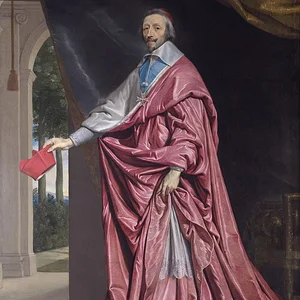
Cardinal de Richelieu
1585 — 1642
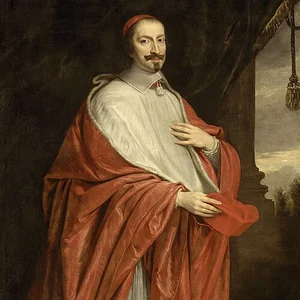
Cardinal Mazarin
1602 — 1661
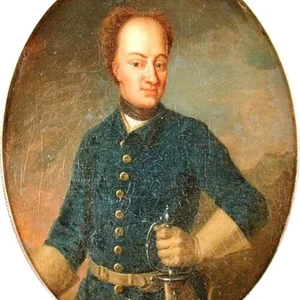
Charles XII of Sweden