 flip
flipGreen porée with leeks and chard
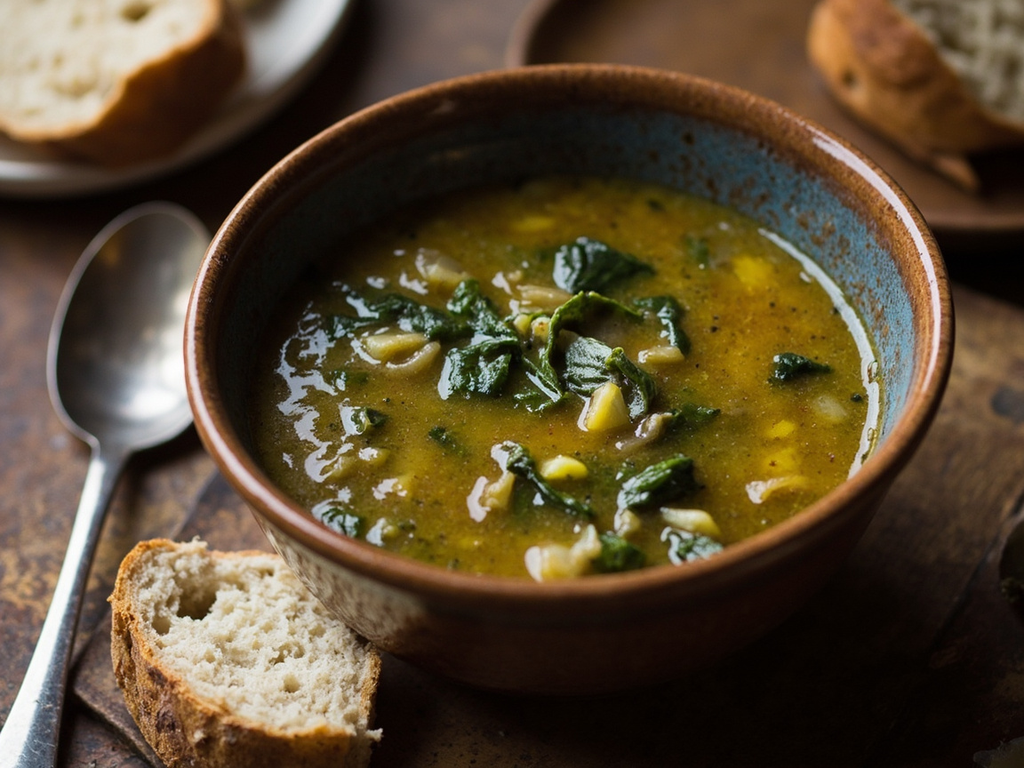
Green porée with leeks and chard
Why this dish? A daily dish on 16th-century French tables, porée modestly nourished even wealthy households between feasts. Paré, the son of a Laval artisan who became a court surgeon, knew this simple cooking before royal splendor: a broth of herbs eaten without ceremony.
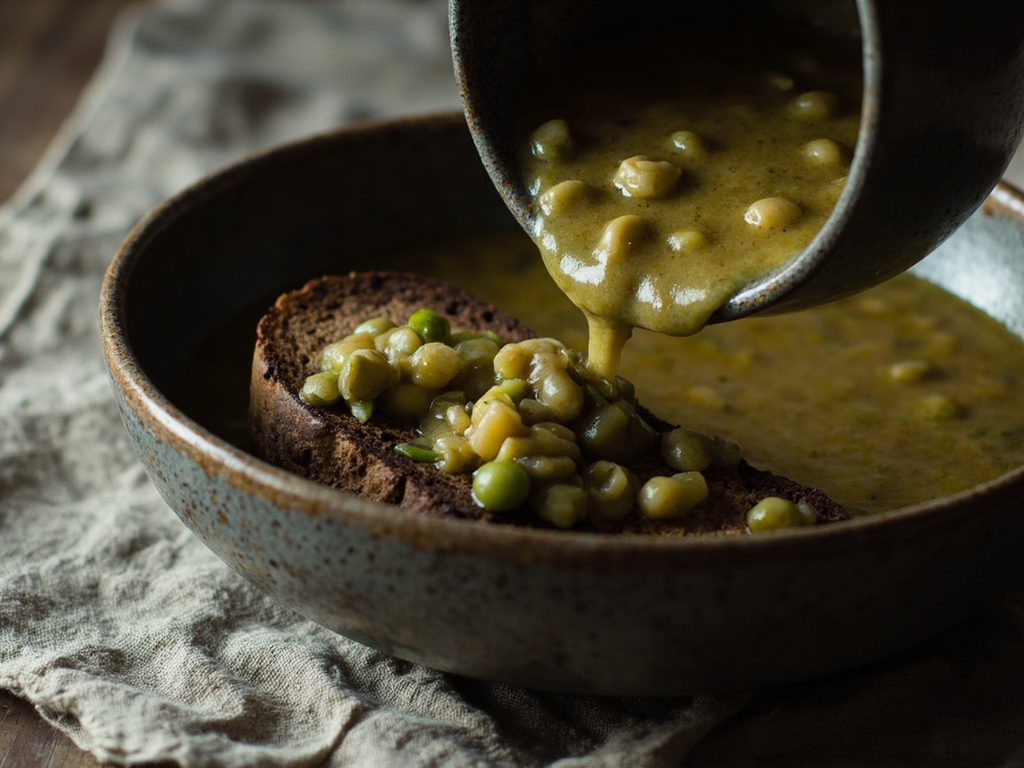
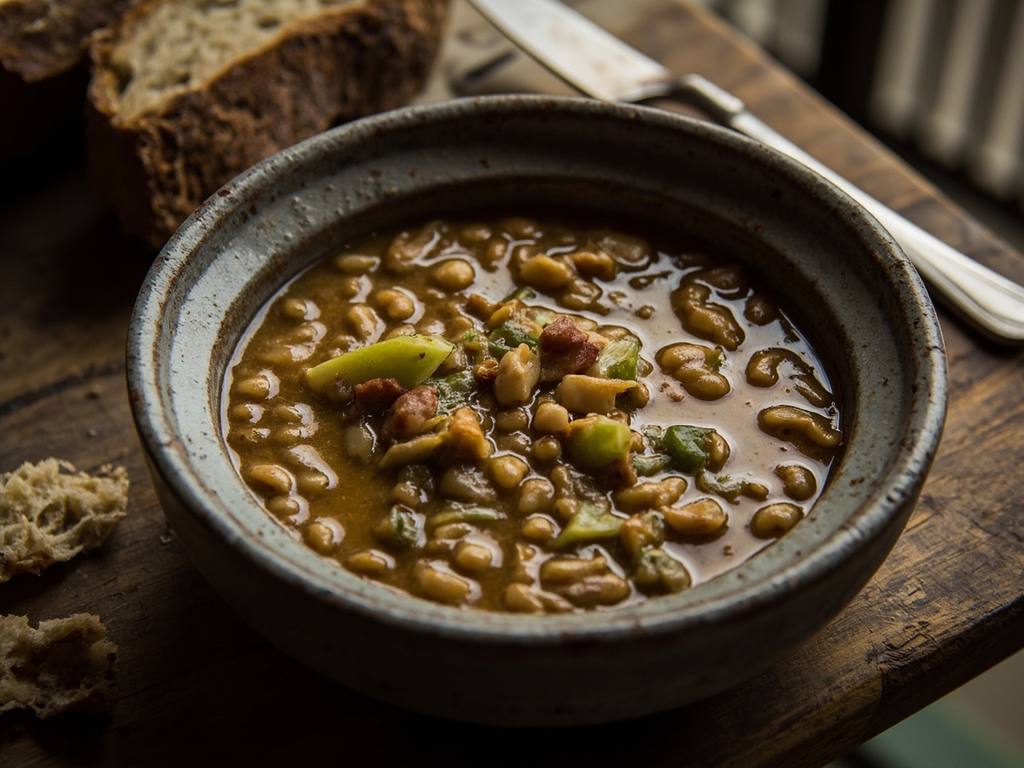
A thick soup of leeks, chard, and herbs bound with bread, mild and comforting, as served in almost every home.
Now then, my friend, here is the porée we ate at home in Laval before I ever saw the King's table. Take your leeks and your chard, wash them well, chop them fine, and cook them very gently in meat broth. I add some breadcrumbs to thicken it and a little saffron for a lovely golden color. It is poor man's food, indeed, but it warms the belly and keeps a man on his feet through cold country mornings, as I have seen many times in army camps.
- •Leeks — a good bunch (base of the pottage)
- •Chard leaves — a handful (greens)
- •Meat broth (chicken or beef) — enough to cover (cooking liquid)
- •Stale breadcrumbs — a few slices (thickener)
- •Saffron — a few pistils (color and aroma)
- •Lard or butter — a spoonful (fat)
- •Salt — to taste (seasoning)
Green porée with leeks and chard
A thick soup of leeks, chard, and herbs bound with bread, mild and comforting, as served in almost every home.
Why this dish? A daily dish on 16th-century French tables, porée modestly nourished even wealthy households between feasts. Paré, the son of a Laval artisan who became a court surgeon, knew this simple cooking before royal splendor: a broth of herbs eaten without ceremony.
Now then, my friend, here is the porée we ate at home in Laval before I ever saw the King's table. Take your leeks and your chard, wash them well, chop them fine, and cook them very gently in meat broth. I add some breadcrumbs to thicken it and a little saffron for a lovely golden color. It is poor man's food, indeed, but it warms the belly and keeps a man on his feet through cold country mornings, as I have seen many times in army camps.
Ingredients (period version)
- Leeks — a good bunch (base of the pottage)
- Chard leaves — a handful (greens)
- Meat broth (chicken or beef) — enough to cover (cooking liquid)
- Stale breadcrumbs — a few slices (thickener)
- Saffron — a few pistils (color and aroma)
- Lard or butter — a spoonful (fat)
- Salt — to taste (seasoning)
Ingredients
- Leeks — 4 medium (base of the pottage)
- Chard leaves (or spinach) — 150 g (greens)
- Chicken broth — 1 liter (cooking liquid)
- Stale country bread — 2 slices (thickener)
- Saffron — 1 pinch (color and aroma)
- Butter — 30 g (fat)
- Salt, pepper — to taste (seasoning)
Method
- Finely slice the white and tender green parts of the leeks; shred the chard leaves.
- Melt butter in a pot, sweat the vegetables for 5 minutes without browning.
- Pour in the broth, add saffron, season lightly with salt, and simmer for 25 minutes.
- Crumble the stale bread into the soup, stir, and let it melt for 5 minutes to thicken.
- Adjust seasoning and serve very hot, optionally with a drizzle of good butter.
How it was made : 'Porée' in the Middle Ages and Renaissance referred to any pottage of garden herbs; green porée (leeks, chard, herbs) was distinguished from white porée. Bread was used to thicken soups in the absence of potatoes, unknown in French kitchens at the time.
The contemporary twist : Serve as a smooth, puréed velouté, topped with a fried leek chip and three saffron pistils.
Sources : Le Viandier de Taillevent · Platine (Bartolomeo Sacchi), De honesta voluptate
Ambroise Paré · Charactorium