 flip
flipChicken with Verjuice and Grapes, in the Manner of Périgord
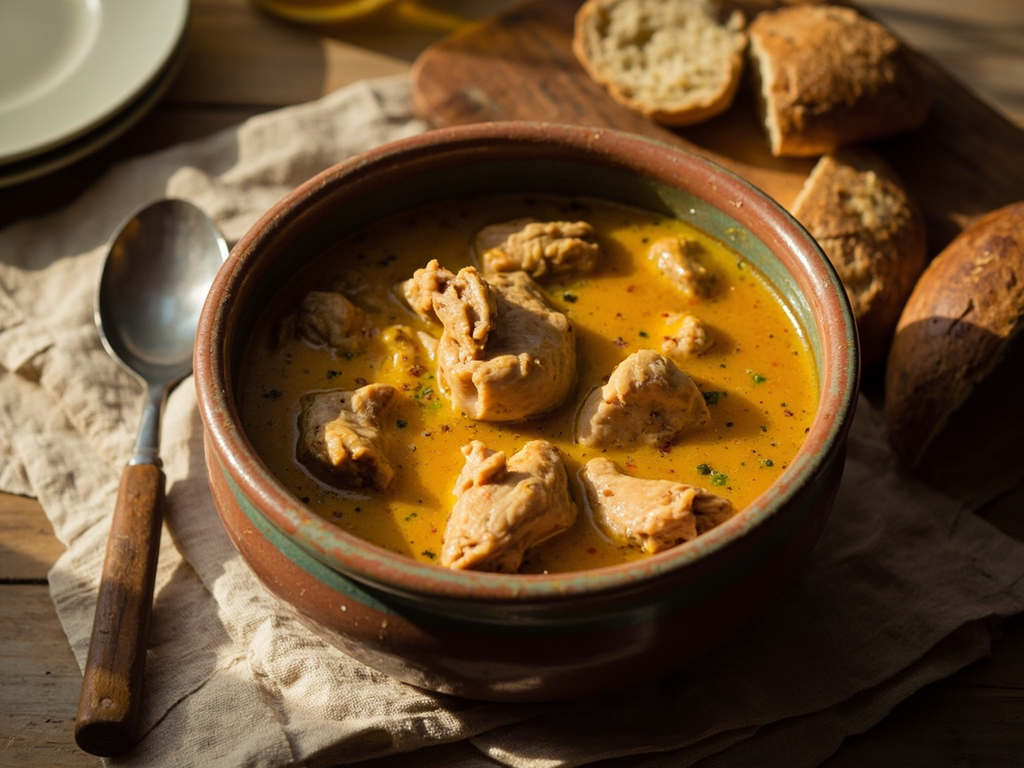
Chicken with Verjuice and Grapes, in the Manner of Périgord
Why this dish? Montaigne was said to enjoy poultry and fruits from his orchard, and ate "with appetite and without great ceremony." This poultry enlivened with verjuice from his own vines is exactly the kind of straightforward, unpretentious dish that might have turned on the spit at the Château de Montaigne on an ordinary day.
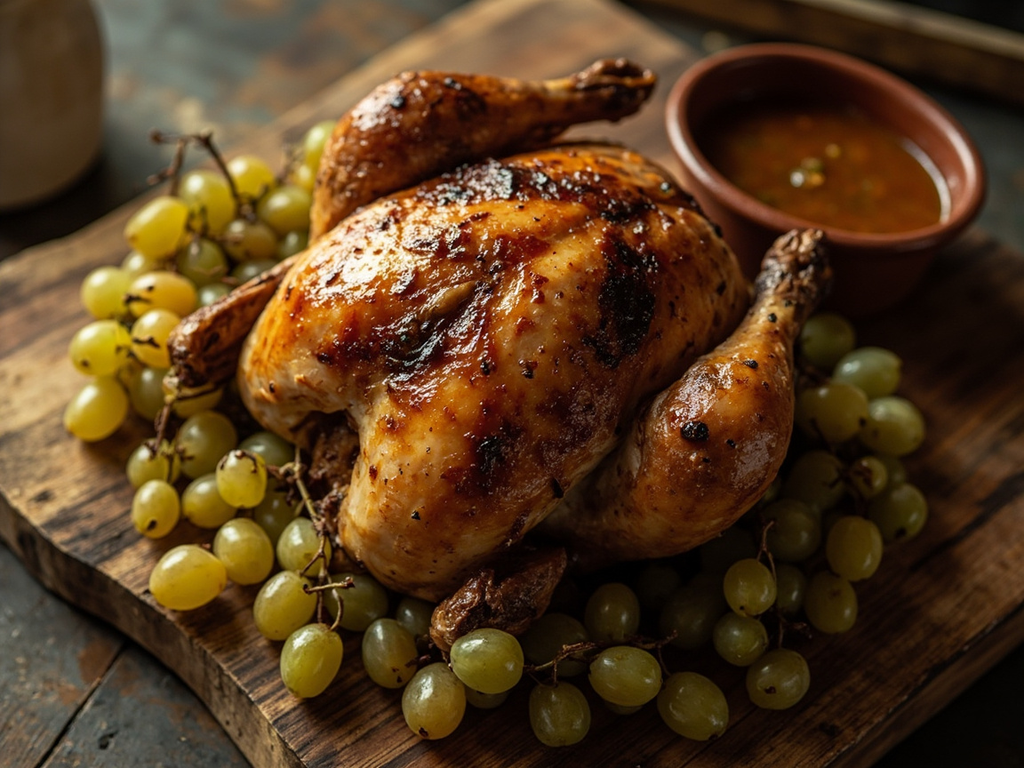
A roast bird, basted with a tart juice of green grapes and garnished with fresh grape clusters: the meeting of savory and tart beloved in Renaissance French kitchens, simple and honest like a country meal.
Here, reader, is what I like to find on my table without much preparation: a fat hen roasted on the spit, basted with this verjuice drawn from my own vines before the grapes ripen. I have never liked meats too disguised with spices; a little acidity, a few grapes, and the flesh speaks enough. I eat with good appetite and quickly, I confess, faster than my health would wish — but what, each follows his nature, and mine is gourmand without ceremony.
- •Hen or young cockerel — one whole bird (meat to roast)
- •Verjuice (green grape juice) — a good cup (acidity, basting)
- •Fresh grapes — a handful of clusters (garnish, sweetness)
- •Lard — a few strips (fat, tenderness)
- •Ginger and pepper — a pinch (subtle spices)
- •Salt — to taste (seasoning)
Chicken with Verjuice and Grapes, in the Manner of Périgord
A roast bird, basted with a tart juice of green grapes and garnished with fresh grape clusters: the meeting of savory and tart beloved in Renaissance French kitchens, simple and honest like a country meal.
Why this dish? Montaigne was said to enjoy poultry and fruits from his orchard, and ate "with appetite and without great ceremony." This poultry enlivened with verjuice from his own vines is exactly the kind of straightforward, unpretentious dish that might have turned on the spit at the Château de Montaigne on an ordinary day.
Here, reader, is what I like to find on my table without much preparation: a fat hen roasted on the spit, basted with this verjuice drawn from my own vines before the grapes ripen. I have never liked meats too disguised with spices; a little acidity, a few grapes, and the flesh speaks enough. I eat with good appetite and quickly, I confess, faster than my health would wish — but what, each follows his nature, and mine is gourmand without ceremony.
Ingredients (period version)
- Hen or young cockerel — one whole bird (meat to roast)
- Verjuice (green grape juice) — a good cup (acidity, basting)
- Fresh grapes — a handful of clusters (garnish, sweetness)
- Lard — a few strips (fat, tenderness)
- Ginger and pepper — a pinch (subtle spices)
- Salt — to taste (seasoning)
Ingredients
- Free-range chicken — 1 (approx. 1.5 kg) (meat to roast)
- Verjuice (or substitute white grape juice + a squeeze of lime juice) — 20 cl (acidity, sauce)
- Fresh white grapes — 250 g (garnish)
- Lard strips or butter — 50 g (moisture)
- Ground ginger — 1/2 tsp (spice)
- Pepper, salt — to taste (seasoning)
Method
- Salt and pepper the chicken inside and out, sprinkle with a little ginger, bard with lard or rub with butter.
- Roast in the oven at 200°C for about 1 hour 15 minutes, basting regularly with its own juices.
- Halfway through cooking, pour half the verjuice into the pan and continue basting.
- Ten minutes before the end, add the grape clusters around the chicken so they confit in the juices.
- Deglaze the pan with the remaining verjuice, reduce for two minutes to obtain a tart sauce, adjust salt, and coat the carved chicken.
How it was made : In the 16th century, poultry was roasted on a spit before the fire, basted constantly to prevent drying. Verjuice, ubiquitous, played the role that lemon holds today: it provided fresh acidity without the sweetness of ripe fruit. Cooks readily paired meat and grapes, as attested by period collections around Taillevent and court cuisine.
The contemporary twist : Serve the chicken on a wooden board with its confit grapes, a drizzle of reduced verjuice, and a few fried sage leaves for crunch — a "tour chicken" to share.
Sources : Montaigne, Essais (especially book III, on his tastes at table) · Le Viandier (Taillevent tradition)
Michel de Montaigne · Charactorium