 flip
flipIpocrasso — spiced wine for winter evenings
Ipocrasso — spiced wine for winter evenings
Why this dish? Romagna red wine is the companion of Zappi's meals. For winter evenings in the freezing workshop, or to honor a patron who has come to sign an altarpiece contract, it is enhanced with precious spices — cinnamon, ginger, cloves — from nearby Venice. A measured luxury, befitting a respected craftsman.
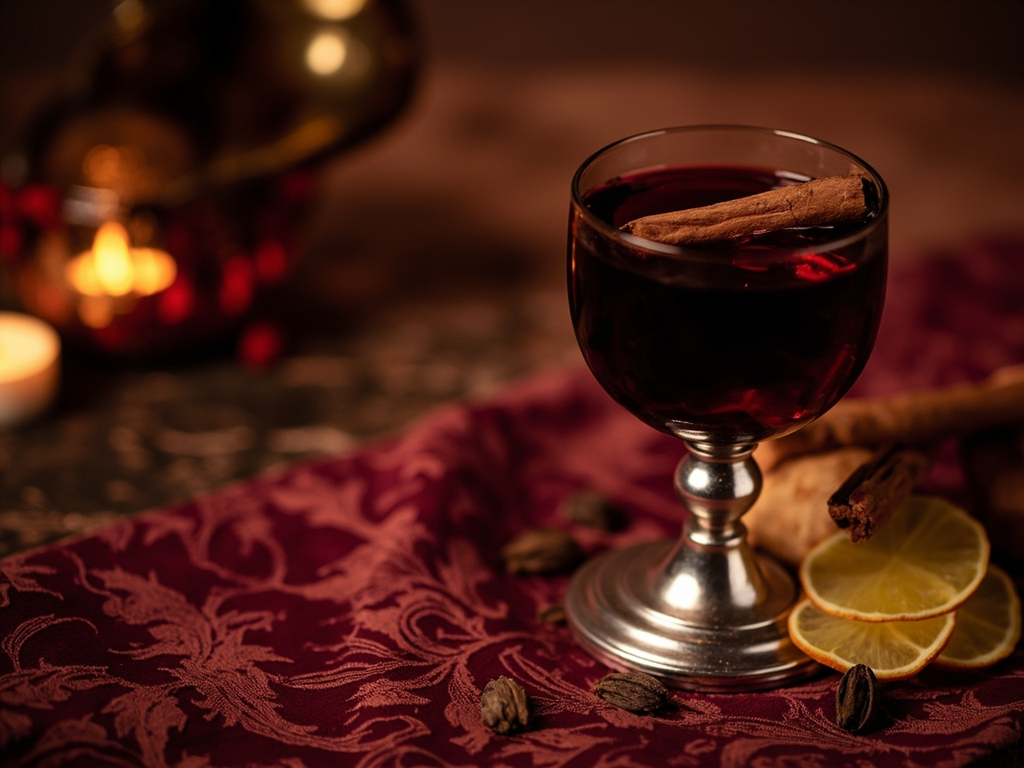
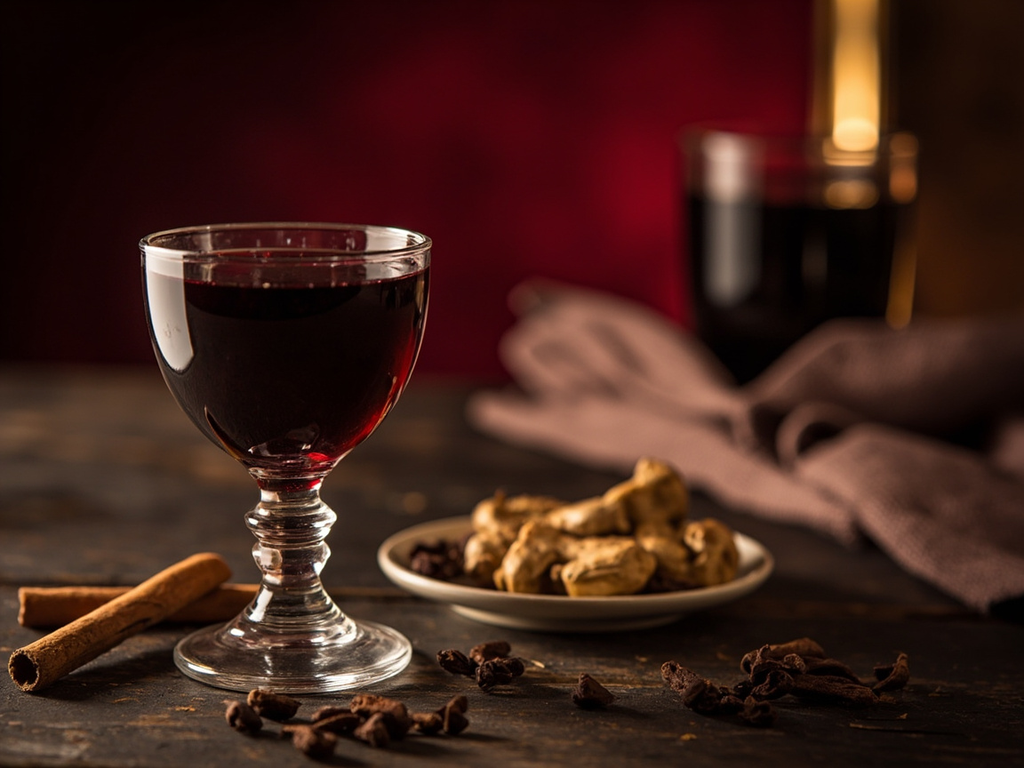
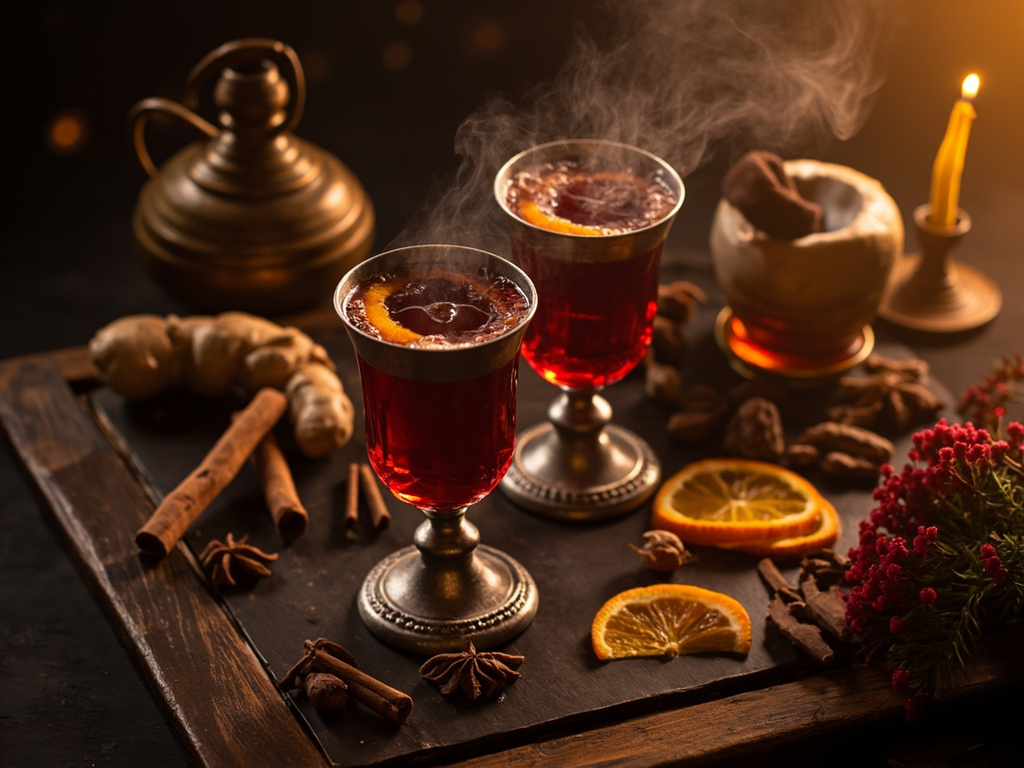
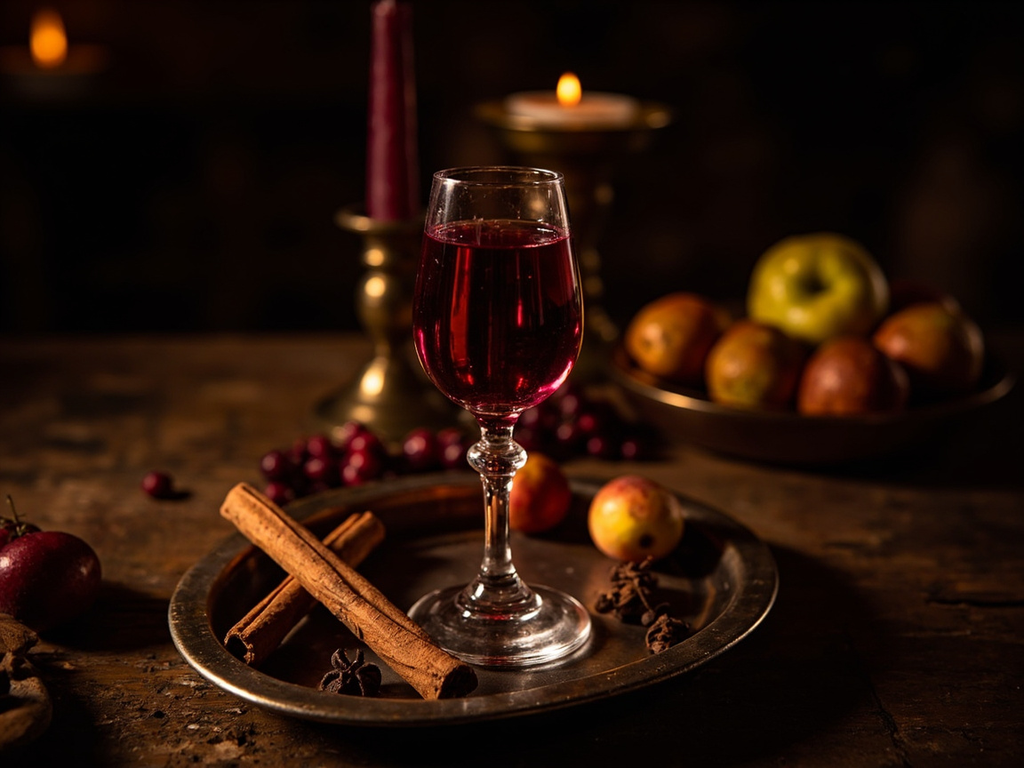
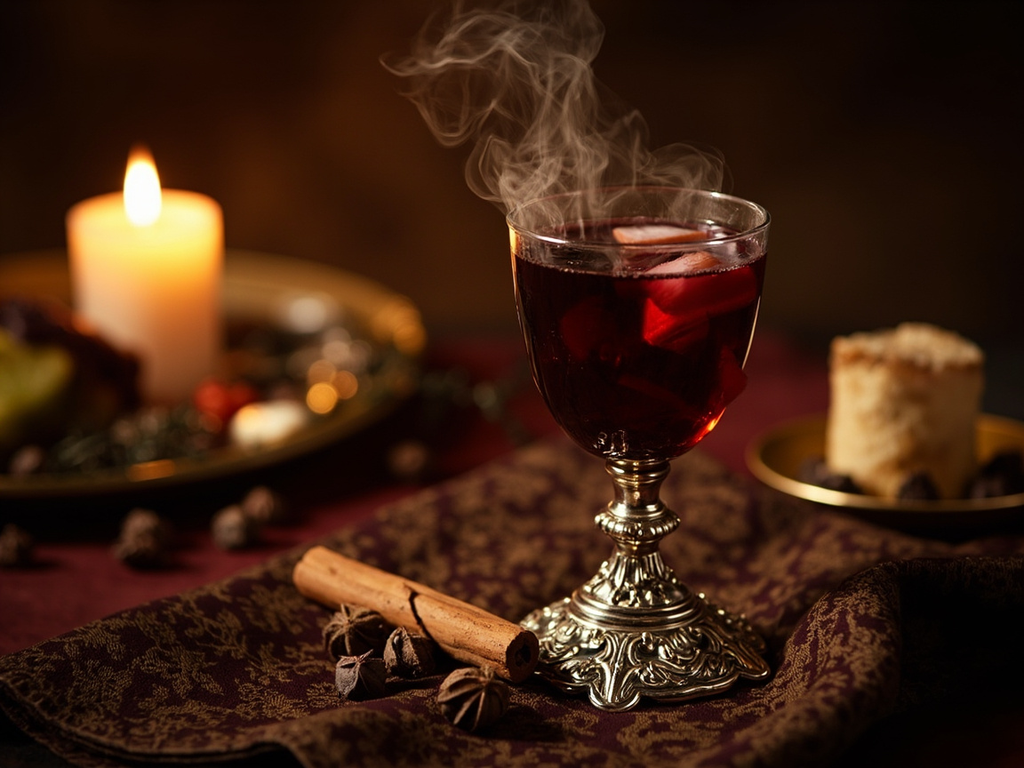
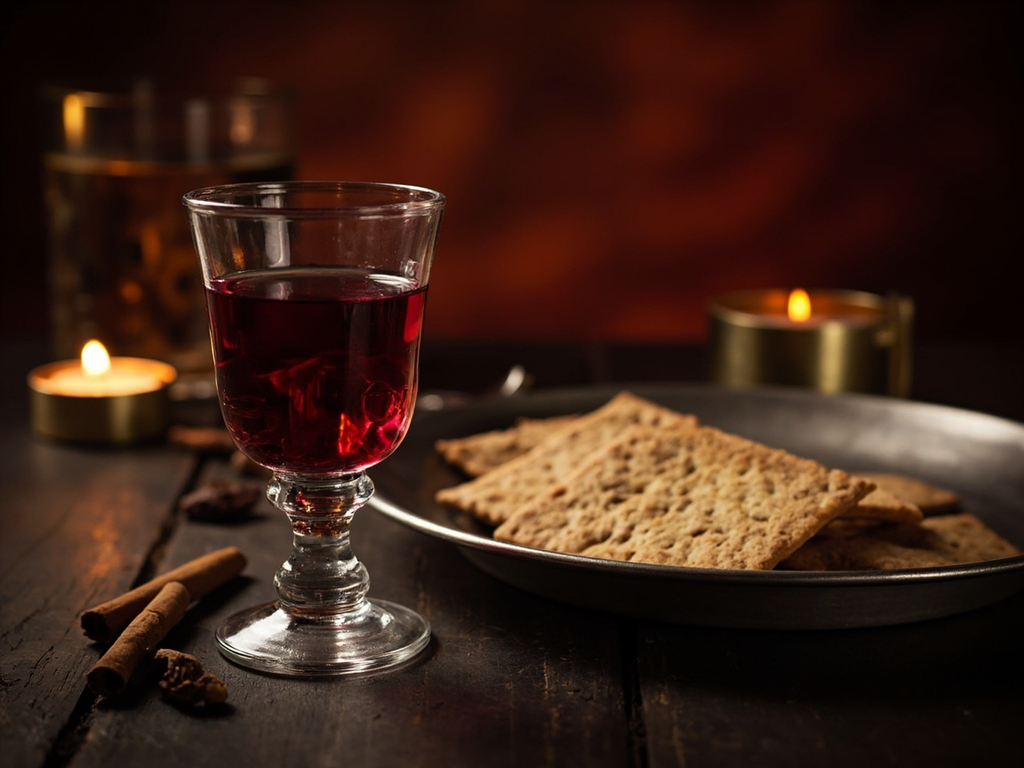
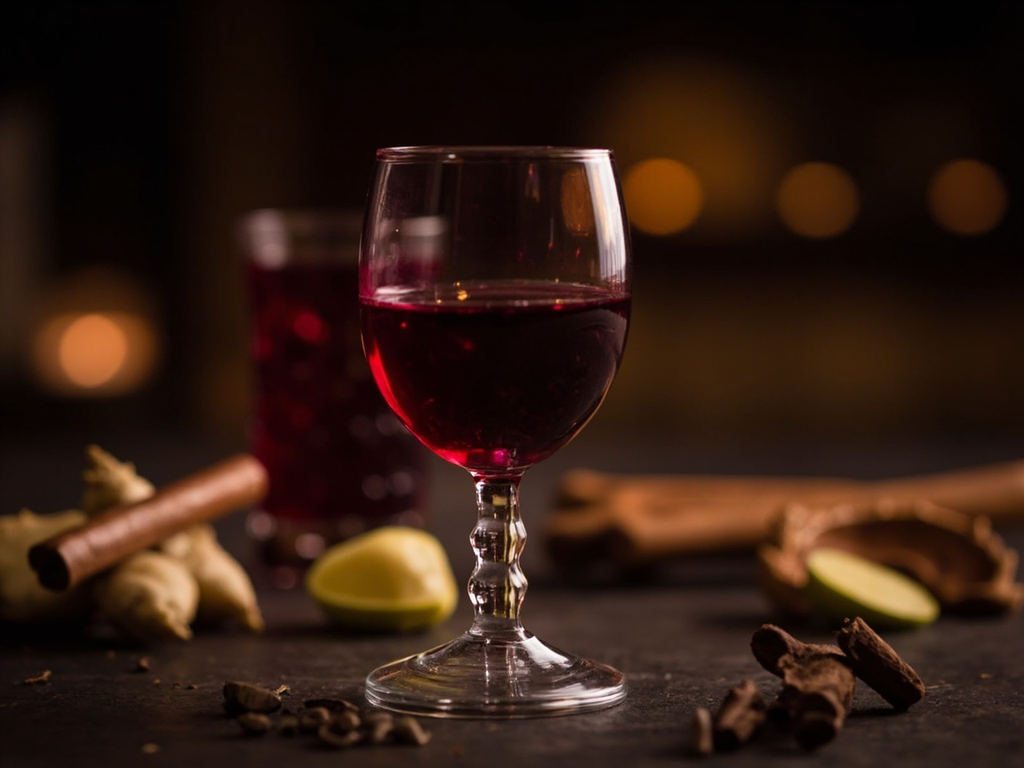
Red wine warmed and perfumed with spices, then sweetened with honey or sapa, filtered through a cloth (Hippocrates's sleeve, which gives it its name). A prestigious Renaissance drink, warm and comforting.
When a patron comes up to the workshop to sign the commission for an altarpiece, one does not send him away with a dry throat! I take my best Romagna wine, mix in cinnamon, ginger, and cloves found at the port of Venice, and a little honey to round it off. I let it infuse near the fire without ever boiling — wine takes fright at great heat and loses its soul — then strain everything through a tight cloth, like good Hippocrates's sleeve. Serve it warm, in small sips: it warms the blood and loosens the tongue for bargaining.
- •Romagna red wine — a pitcher (base)
- •Cinnamon — one stick (spice)
- •Ginger — a piece (spice)
- •Cloves — a few (spice)
- •Honey (or sapa) — to taste (sweetness)
Ipocrasso — spiced wine for winter evenings
Red wine warmed and perfumed with spices, then sweetened with honey or sapa, filtered through a cloth (Hippocrates's sleeve, which gives it its name). A prestigious Renaissance drink, warm and comforting.
Why this dish? Romagna red wine is the companion of Zappi's meals. For winter evenings in the freezing workshop, or to honor a patron who has come to sign an altarpiece contract, it is enhanced with precious spices — cinnamon, ginger, cloves — from nearby Venice. A measured luxury, befitting a respected craftsman.
When a patron comes up to the workshop to sign the commission for an altarpiece, one does not send him away with a dry throat! I take my best Romagna wine, mix in cinnamon, ginger, and cloves found at the port of Venice, and a little honey to round it off. I let it infuse near the fire without ever boiling — wine takes fright at great heat and loses its soul — then strain everything through a tight cloth, like good Hippocrates's sleeve. Serve it warm, in small sips: it warms the blood and loosens the tongue for bargaining.
Ingredients (period version)
- Romagna red wine — a pitcher (base)
- Cinnamon — one stick (spice)
- Ginger — a piece (spice)
- Cloves — a few (spice)
- Honey (or sapa) — to taste (sweetness)
Ingredients
- Full-bodied red wine — 75 cl (base)
- Cinnamon stick — 1 (spice)
- Fresh ginger — 4-5 thin slices (spice)
- Cloves — 4 (spice)
- Honey or sapa — 3-4 tbsp (sweetness)
- Quince or apple zest (optional) — 1 (flavor)
Method
- Pour the wine into a saucepan, add cinnamon, ginger, and cloves.
- Heat gently without ever boiling, 15-20 minutes, to infuse the spices.
- Stir in honey or sapa until dissolved.
- Strain through a clean cloth (or coffee filter) to clarify.
- Serve warm in small glasses or cups.
How it was made : Ipocrasso (or hypocras) is a spiced, sweetened wine highly prized during the Renaissance, served at the end of banquets. It was filtered through a *Hippocrates's sleeve*, hence its name. Cristoforo di Messisbugo and Scappi give versions. Spices, imported by Venice, marked the household's status; sweetening was done with honey or sapa when sugar was scarce.
The contemporary twist : Served chilled over ice cubes, as a summer *hypocras frappé*, with a strip of bitter orange zest.
Sources : Cristoforo di Messisbugo, Banchetti, composizioni di vivande (1549) · Bartolomeo Scappi, Opera (1570)
Gian Paolo Zappi · Charactorium