 flip
flipGefilte Fish, Pre-Prepared Stuffed Fish
Gefilte Fish, Pre-Prepared Stuffed Fish
Why this dish? An iconic dish of the Eastern European Jewish table from which Golda came. It is prepared on Thursday or Friday morning to be served cold on Friday night, because cooking is forbidden during Shabbat: this is the 'prepared ahead' cuisine that every Ashkenazi housewife, including Golda, mastered.
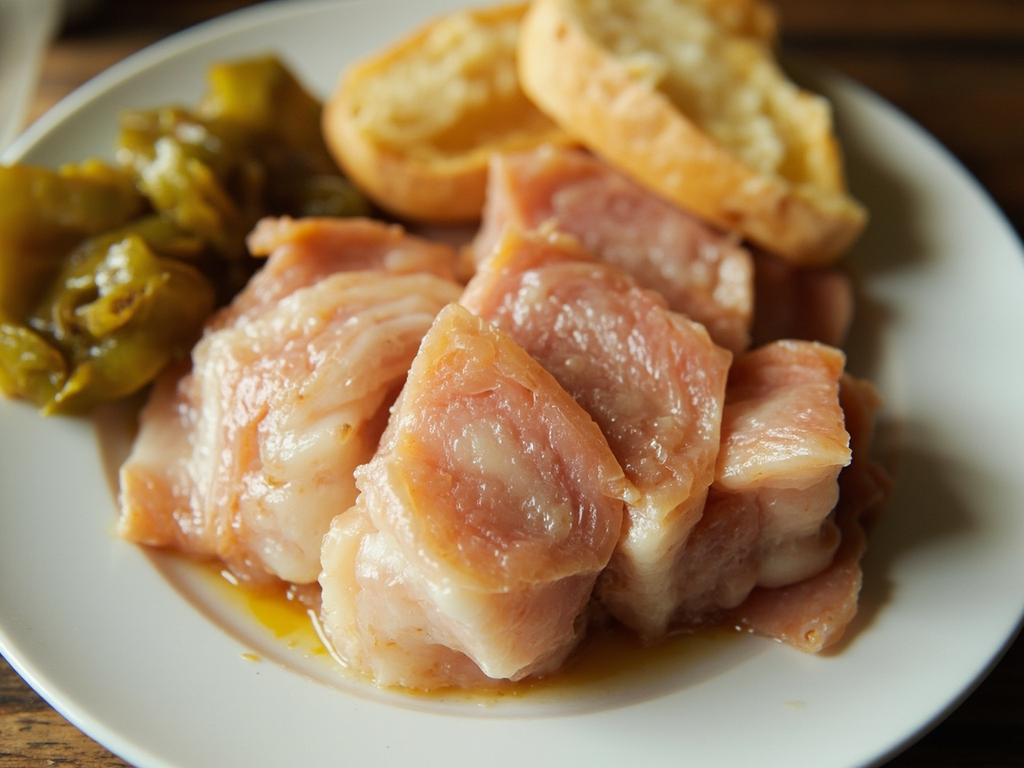
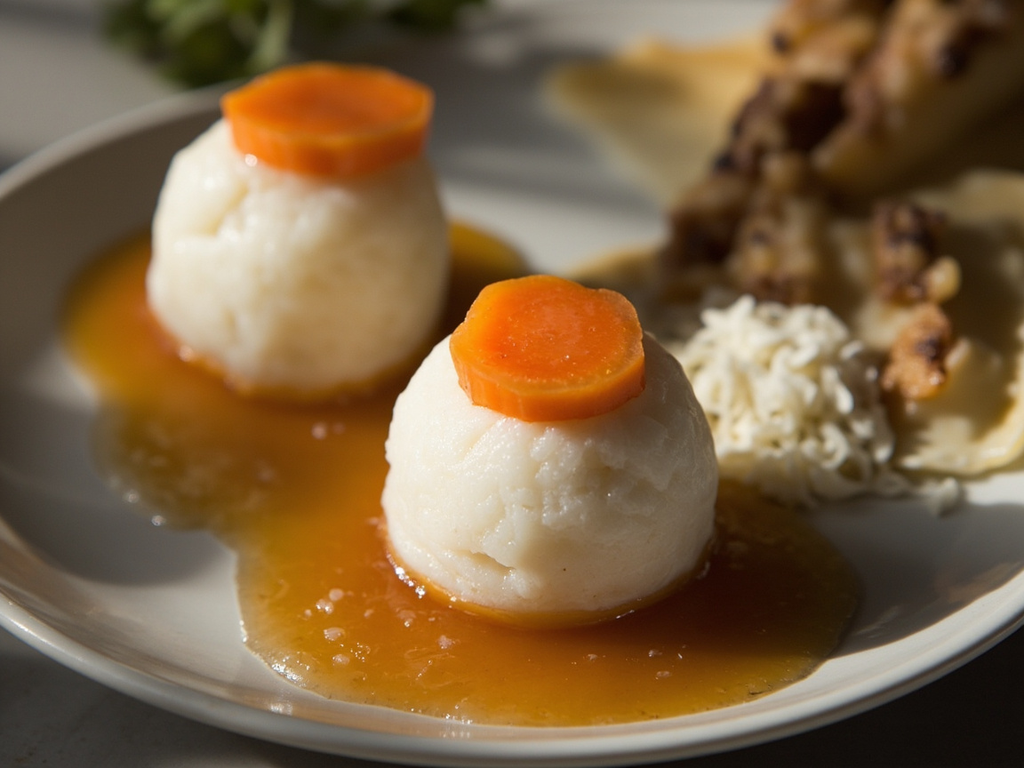
Quenelles of minced freshwater fish (carp, pike), poached in a stock with carrots and onions, served cold, coated in their jelly, with a dab of sharp horseradish. Mild, salty, and delicately umami.
Fish was prepared on Thursday, never Friday night — during Shabbat you don't work, that's all. We minced the carp finely, mixed it with onion and a little egg, rolled quenelles and poached them gently in the stock. Once cold, the broth jells, and with some horseradish that stings your nose, you need nothing else. This dish takes patience, like you need to run a household.
- •Carp and pike (minced flesh) — according to catch (mixture)
- •Onion — one or two (flavor and binder)
- •Eggs — a few (binder)
- •Carrots — a few (stock and garnish)
- •Fish bones and heads — all (stock and jelly)
- •Grated horseradish — at serving (sharp condiment)
Gefilte Fish, Pre-Prepared Stuffed Fish
Quenelles of minced freshwater fish (carp, pike), poached in a stock with carrots and onions, served cold, coated in their jelly, with a dab of sharp horseradish. Mild, salty, and delicately umami.
Why this dish? An iconic dish of the Eastern European Jewish table from which Golda came. It is prepared on Thursday or Friday morning to be served cold on Friday night, because cooking is forbidden during Shabbat: this is the 'prepared ahead' cuisine that every Ashkenazi housewife, including Golda, mastered.
Fish was prepared on Thursday, never Friday night — during Shabbat you don't work, that's all. We minced the carp finely, mixed it with onion and a little egg, rolled quenelles and poached them gently in the stock. Once cold, the broth jells, and with some horseradish that stings your nose, you need nothing else. This dish takes patience, like you need to run a household.
Ingredients (period version)
- Carp and pike (minced flesh) — according to catch (mixture)
- Onion — one or two (flavor and binder)
- Eggs — a few (binder)
- Carrots — a few (stock and garnish)
- Fish bones and heads — all (stock and jelly)
- Grated horseradish — at serving (sharp condiment)
Ingredients
- White fish fillets (carp, pike, or substitute hake/pollock) — 700 g (mixture)
- Onions — 2 (flavor)
- Eggs — 2 (binder)
- Matzo meal or matzo — 3 tbsp (binder)
- Carrots — 3 (stock and garnish)
- Salt, sugar, pepper — to taste (seasoning)
- Fresh or jarred horseradish — at serving (condiment)
Method
- Prepare stock: fish heads/bones (or trimmings), one onion, carrot rounds, water, salt, a pinch of sugar. Simmer 30 min.
- Finely mince fillets with onion; add eggs, matzo meal, salt, pepper, a pinch of sugar. Work into a smooth paste.
- Wet hands and form oval quenelles.
- Gently poach in simmering stock, covered, for 1 hour.
- Let quenelles cool in broth, then refrigerate: stock sets into jelly.
- Serve cold, garnished with a carrot round, with horseradish on the side.
How it was made : Gefilte fish arose from a double constraint: deboning before Shabbat (forbidden on the day itself) and stretching a costly fish by mixing it with bread and onion. Polish versions are sweet, Lithuanian ones peppery — a centuries-old debate among Ashkenazi regions.
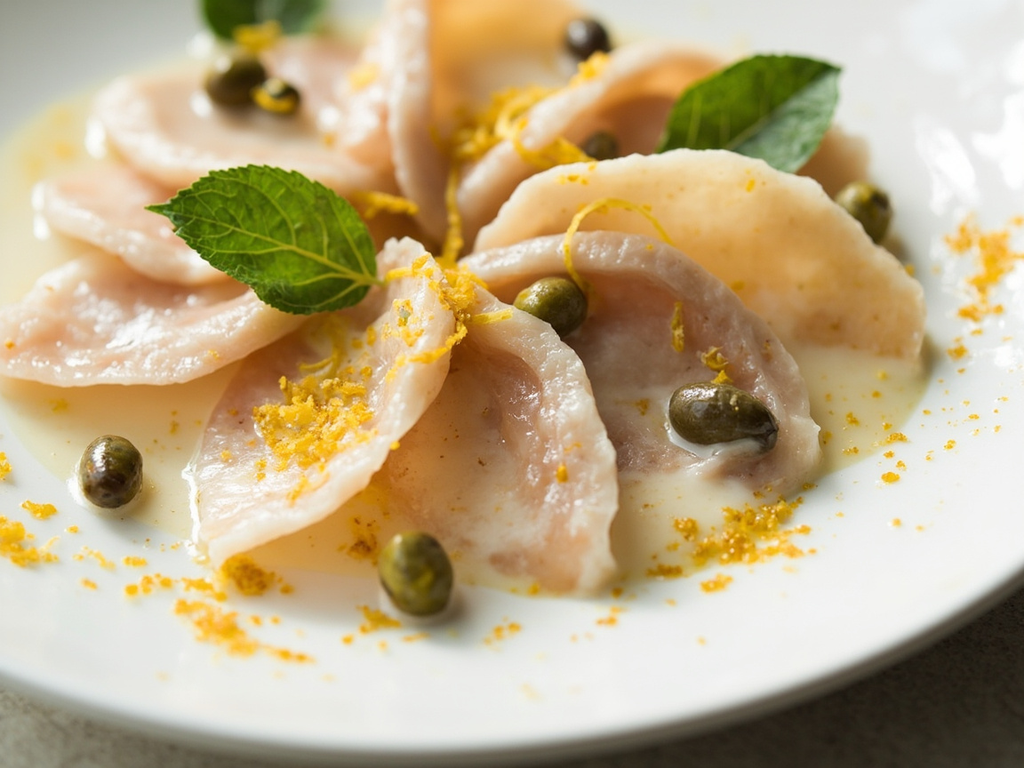
The contemporary twist : Presented as small individual quenelles on a spoon, with a touch of jelly and a dot of pink beet horseradish, it becomes a chic appetizer bite.
Sources : Gil Marks, Encyclopedia of Jewish Food (2010) · Claudia Roden, The Book of Jewish Food (1996)
Golda Meir · Charactorium