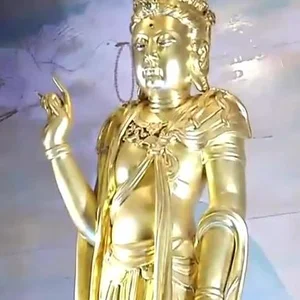

Guan Yin is the Buddhist goddess of compassion and mercy, venerated throughout East Asia. Originating from the bodhisattva Avalokiteśvara tradition, she gradually took on a feminine form in China between the 7th and 12th centuries. She is one of the most popular religious figures in Mahayana Buddhism.
Guan Yin
Guanyin
9 min read
Frequently asked questions
Key Facts
- Origin: feminine transformation of the Indian bodhisattva Avalokiteśvara between the 7th and 12th centuries in China
- Her name literally means 'She Who Perceives the Sounds (of the World)', that is, the prayers of suffering beings
- She is venerated in Mahayana Buddhism, popular Taoism, and Chinese folklore, illustrating Asian religious syncretism
- Her iconography often depicts her holding a vase of compassion dew and a willow branch
- She is one of the most depicted deities in Asian Buddhist art, from Chinese temples to Vietnamese and Japanese pagodas (Kannon)
Works & Achievements
The founding text of the Guanyin cult in China: it describes her 32 manifestations and promises to rescue anyone who calls her name. It is one of the most copied and recited Buddhist texts in Chinese history, and the true bedrock of popular devotion.
A short wisdom text recited daily throughout Mahayana Buddhism, it presents Avalokiteśvara/Guanyin teaching the doctrine of emptiness. Its daily recitation is one of the most widespread devotional practices across all of Asia.
A narrative text that canonizes the legend of Princess Miao Shan and definitively identifies her with Guanyin. This story spread the iconography of the thousand-armed Guanyin throughout the Empire and Southeast Asia, fixing the Chinese form of the goddess for centuries.
Masterpieces of Chinese Buddhist sculpture in lacquered wood or painted clay, preserved notably at Dunhuang, Lingyin Si, and Dazu. These statues represent the major artistic expression of the Guanyin cult and bear witness to exceptional technical mastery.
This iconographic type — Guanyin in white robes, seated in a cave facing the sea — spread to Japan, Korea, and Vietnam, becoming one of the most reproduced religious images in the history of East Asia.
The rituals established at Putuo Shan — recitations, circumambulations, lotus offerings — constitute a living heritage and have shaped popular devotion to Guanyin across all of East Asia for more than a millennium.
Anecdotes
Guanyin was originally a masculine figure: the Indian bodhisattva Avalokiteśvara, depicted with a thin mustache in the earliest frescoes along the Silk Road. Between the 7th and 12th centuries, under the influence of popular cults and local Chinese legends, this figure gradually became feminized. By the 12th century, the transformation was complete: Guanyin was now a beautiful woman dressed in white, one of the most widely reproduced religious representations in Asia.
The most popular legend identifies Guanyin with Princess Miao Shan, daughter of a cruel king who refused to let her marry and burned down the monastery where she had withdrawn. After her death, she descended into Hell and, through her compassion alone, transformed that place of suffering into paradise — so much so that the king of Hell sent her back to earth because no one was left to punish. This story, told in the 'Xiangshan Baojuan', is still recited in many Chinese temples.
Guanyin is associated with a thousand arms, each holding a symbolic object meant to assist a different being. This iconography, which appeared during the Tang dynasty, illustrates the Buddhist idea that compassion must take a thousand forms to reach all suffering beings. Song dynasty temples preserve thousand-armed statues of extraordinary technical mastery, some featuring more than 1,000 hands individually carved from lacquered wood.
In the Putuo Shan archipelago, off the coast of Zhejiang, an entire island has been dedicated to Guanyin since the 9th century. Legend has it that a Japanese monk was attempting to bring a statue home by boat, but miraculous storms prevented him — a sign that the goddess wished to remain on the island. Putuo Shan thus became the principal pilgrimage site dedicated to Guanyin, drawing tens of thousands of devotees every year as far back as the Song dynasty.
Chapter 25 of the Lotus Sūtra — known as 'the Guanyin chapter' — is one of the most copied and recited Buddhist texts in all of Chinese history. It promises that anyone who calls upon the name of Guanyin in danger will be miraculously delivered: from flames, floods, swords, and demons. Translated into Chinese by the monk Kumārajīva around 406 CE, this text shaped popular devotion to Guanyin for centuries.
Primary Sources
If countless beings, enduring all manner of suffering, hear of the bodhisattva Guanshiyin and call upon his name with all their heart, the bodhisattva Guanshiyin will at once perceive their voices and deliver them all.
The bodhisattva Avalokiteśvara, while practicing the profound perfection of wisdom, clearly saw that the five aggregates are all empty, and thereby transcended all suffering and distress.
The princess Miao Shan, after enduring a thousand trials and descending into Hell to save the damned, received from a thousand gods a thousand arms and a thousand eyes, thus becoming Guanyin of the Thousand Hands, goddess of Great Compassion.
In the fifth Chunhua year [994], the Empress Dowager had a thousand-armed Guanyin statue erected in the imperial palace and decreed that recitations of the Lotus Sūtra be performed each month in her honor.
A merchant from Luoyang named Wang was caught in a shipwreck. He called out the name of Guanyin aloud and saw a golden light appear upon the waters; he reached the shore safe and sound the following morning.
Key Places
Sacred island considered the earthly dwelling of Guanyin. The foremost Buddhist pilgrimage site in China since the 9th century, it is home to dozens of temples and a monumental 33-metre statue visible from the sea.
One of the largest Buddhist complexes in China, rebuilt during the Tang and Song dynasties. It houses monumental sculptures of Guanyin carved into the cliffs of Feilai Feng, a masterpiece of Song Buddhist art.
A Silk Road cave complex where the earliest Chinese depictions of Avalokiteśvara/Guanyin were discovered (4th–11th centuries). The frescoes document the gradual transformation of the deity into a female figure.
The "Fragrant Mountain Temple" associated with the legend of Miao Shan. According to Song dynasty texts, it is here that the princess withdrew from the world and attained enlightenment, making the site a popular pilgrimage destination from the 11th century onward.
Capital of the Tang Empire and the intellectual heart of Chinese Buddhism. It was here that Xuanzang translated the texts he brought back from India, and where the cult of Avalokiteśvara flourished under imperial patronage before spreading across all of Asia.
Typical Objects
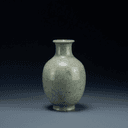
Guanyin holds a jade vase containing the water of compassion and purification. She uses it to pour this blessed water over suffering beings, symbolizing healing and deliverance from all suffering.
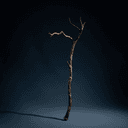
The willow branch dipped in the vase's water is the instrument with which Guanyin sprinkles the faithful to purify and heal them. The willow symbolizes flexibility, gentleness, and renewal — a compassion that bends without ever breaking.

Guanyin is often depicted standing or seated on a lotus, a flower that grows in mud yet rises immaculate above the water: a symbol of spiritual awakening attainable even from the depths of suffering.
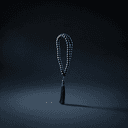
The 108 beads of the prayer beads represent the countless beings Guanyin accompanies on their path toward awakening. She is often depicted fingering them, each bead counting a prayer or a being rescued.

In the Tantric iconography adopted under the Tang dynasty, Guanyin possesses a thousand arms symbolizing her ability to simultaneously rescue all beings in the universe, each hand holding a different instrument — sword, flower, vase, rescue rope.
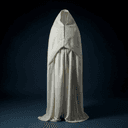
The 'White-Robed Guanyin' is one of the most widespread iconographies of the Song dynasty. White symbolizes absolute purity and the light of unconditional, boundless compassion.
School Curriculum
Vocabulary & Tags
Key Vocabulary
Daily Life
Morning
According to devotional texts, Guanyin begins each dawn meditating on universal suffering from her island of Putuo Shan, perched upon the Tidal Cave Rock. She perceives the calls of the faithful from around the world — her name 'Guanshiyin' literally means 'she who perceives the sounds of the world' — and prepares her merciful interventions, choosing the form in which she will manifest herself.
Afternoon
In hagiographic accounts, the goddess manifests in one of her 32 forms to rescue mortals in danger: she appears as a fisherwoman to save the shipwrecked, as a physician to heal the sick, or as a monk to teach the dharma to those who wander spiritually. Each manifestation is perfectly adapted to the situation and the sensibility of the one who implores her help.
Evening
In the evening, texts describe Guanyin receiving in her lotus palace the souls of the deceased who have invoked her name, guiding them toward the Pure Land of Buddha Amitabha. She also teaches her two celestial disciples: Shancai (善財, the child of abundance) and Longnu (龍女, the daughter of the dragon king), symbols of those whom compassion can transform.
Food
Guanyin is a divine goddess: she does not eat as mortals do. The offerings made to her in temples consist of fresh fruits, lotus flowers, uncooked rice, and pure water — a reflection of the fundamental vegetarian purity of Mahayana Buddhism. The consumption of animal flesh is strictly forbidden in monasteries dedicated to her veneration.
Clothing
Guanyin is depicted wearing a long, immaculate white robe or diaphanous veils with golden shimmers, crowned with a diadem bearing the silhouette of Buddha Amitabha. This white, unadorned attire deliberately contrasts with the Indian princely ornaments found in masculine depictions of Avalokiteśvara.
Housing
Guanyin's mythical dwelling is the Purple Bamboo Cave Palace (Zizhu Lin, 紫竹林) on the island of Putuo Shan, surrounded by purple bamboo, lotus flowers, and crystalline waters. This paradisiacal space at the border of the human and divine worlds is described in numerous devotional texts from the Tang and Song dynasties.
Historical Timeline
Period Vocabulary
Liens externes & ressources
Références
Œuvres
Chapitre 25 du Sūtra du Lotus — 'Porte universelle du bodhisattva Guanshiyin'
Traduction chinoise par Kumārajīva, vers 406 apr. J.-C.
Xinjing (心経) — Le Sūtra du Cœur
Traduit par Xuanzang, 649 apr. J.-C.
Xiangshan Baojuan (香山寶卷) — Trésor du Mont des Parfums
Attribué au moine Juean, vers 1090
Statues de Guanyin à mille bras (千手観音像)
VIIe-XIIIe siècles (dynasties Tang à Song)
Iconographie de la Guanyin en blanc (白衣観音, Baiyi Guanyin)
Codifiée sous la dynaste Song (960-1279)
Pèlerinages et cycles rituels de Putuo Shan
IXe siècle, codifiés sous les Song