 flip
flipOffering of Lotus Seeds and Jujubes with Cane Sugar
Offering of Lotus Seeds and Jujubes with Cane Sugar
Why this dish? The lotus is the very emblem of Guan Yin: she stands on a lotus flower, a sign of purity rising unstained from the mud. Placing a bowl of sweet lotus seeds and red jujubes before her image is to offer her the fruit of her own flower, and to wish the living descendants and long life.
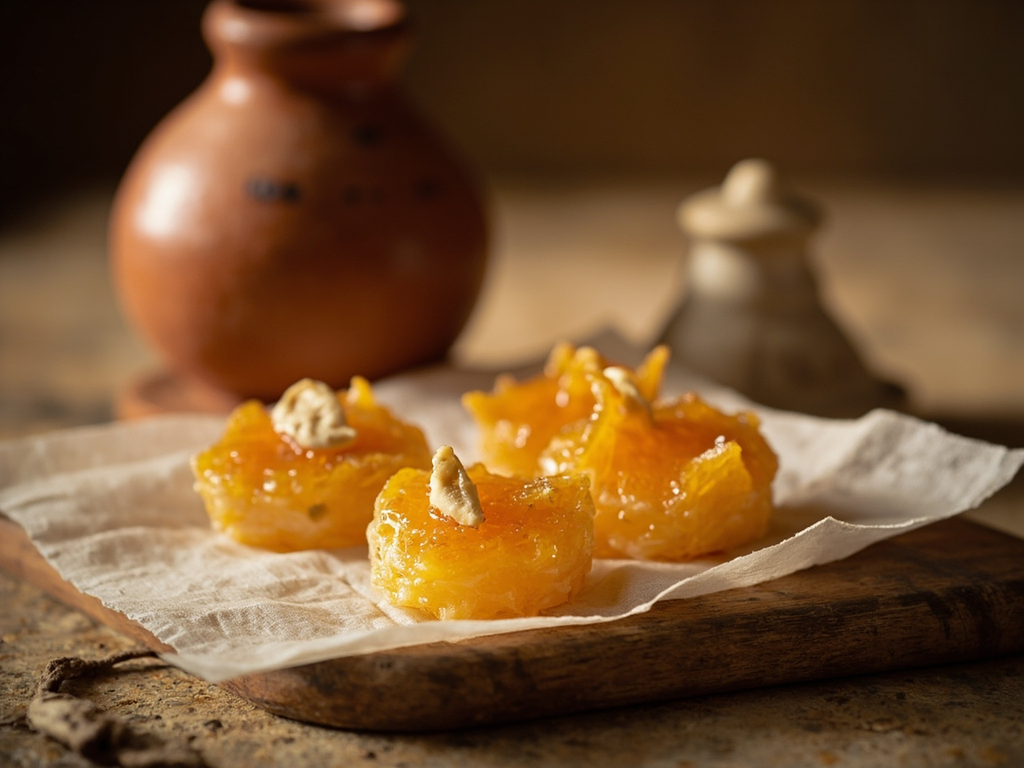
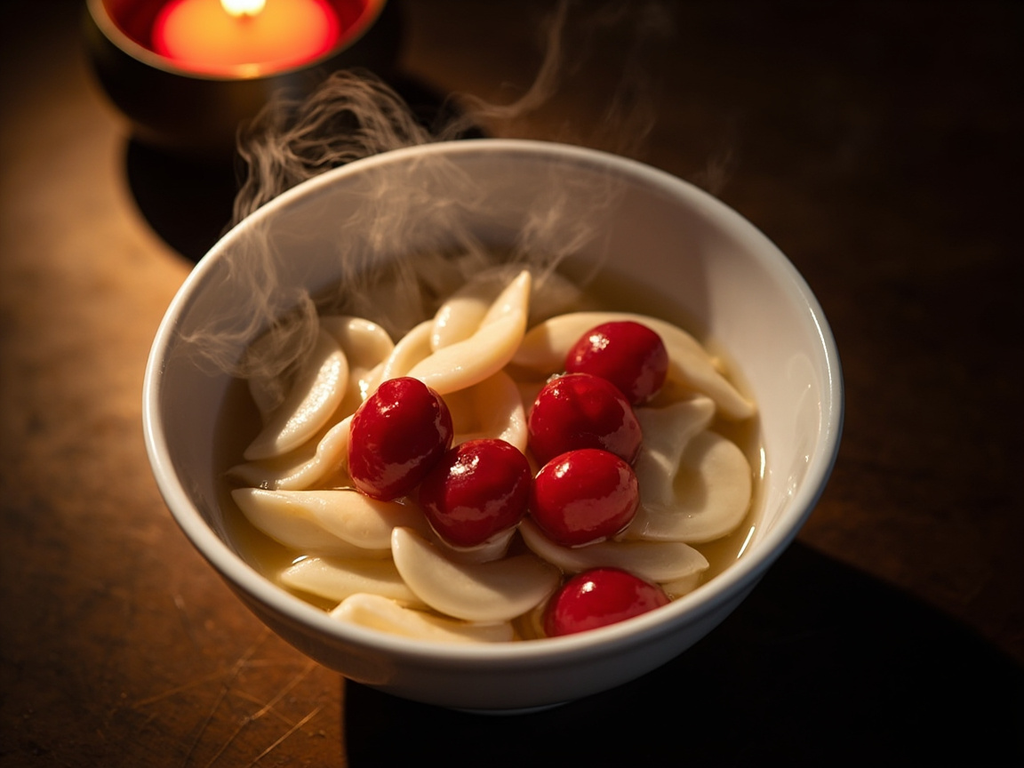
A clear bowl of tender lotus seeds and red jujubes simmered until melting, barely sweetened, offered then shared. Sweet, comforting, luminous as a temple candle.
Come close, child, and look at this bowl placed at my feet. These seeds are drawn from the very heart of the flower where I stand — they rise pure from the mud, like the soul freed from its sorrows. Soften them long in clear water, add the red dates that gladden the blood, and just a hint of sugar, for compassion needs no excess. Eat without haste: each seed you swallow is a wish for peace that I place within you.
- •Dried lotus seeds — a generous handful (base, symbol of purity)
- •Red jujubes (Chinese dates) — about ten (sweetness, auspicious color)
- •Unrefined cane sugar (or malt sugar) — to taste, light (sweetness)
- •Spring water — to cover (pure cooking liquid)
Offering of Lotus Seeds and Jujubes with Cane Sugar
A clear bowl of tender lotus seeds and red jujubes simmered until melting, barely sweetened, offered then shared. Sweet, comforting, luminous as a temple candle.
Why this dish? The lotus is the very emblem of Guan Yin: she stands on a lotus flower, a sign of purity rising unstained from the mud. Placing a bowl of sweet lotus seeds and red jujubes before her image is to offer her the fruit of her own flower, and to wish the living descendants and long life.
Come close, child, and look at this bowl placed at my feet. These seeds are drawn from the very heart of the flower where I stand — they rise pure from the mud, like the soul freed from its sorrows. Soften them long in clear water, add the red dates that gladden the blood, and just a hint of sugar, for compassion needs no excess. Eat without haste: each seed you swallow is a wish for peace that I place within you.
Ingredients (period version)
- Dried lotus seeds — a generous handful (base, symbol of purity)
- Red jujubes (Chinese dates) — about ten (sweetness, auspicious color)
- Unrefined cane sugar (or malt sugar) — to taste, light (sweetness)
- Spring water — to cover (pure cooking liquid)
Ingredients
- Dried lotus seeds (Asian grocery) — 150 g (base)
- Dried red jujubes — 12 pieces (sweetness)
- Whole cane sugar (or rock sugar) — 2 tbsp (sweetness)
- Water — 800 ml (cooking)
Method
- Soak lotus seeds for 2 hours, remove the green central germ (bitter) with a toothpick.
- Rinse jujubes, lightly score them so they release their sweetness.
- Place lotus seeds and jujubes in water, bring to a simmer, then cook over low heat for 40 to 50 minutes until the seeds are tender and soft.
- Add sugar at the end of cooking, let dissolve for 5 minutes.
- Serve warm in a clean bowl; for an offering, set the bowl down without tasting it first.
How it was made : During the Tang and Song dynasties, lotus seeds (lián zǐ) and jujubes were among the most common vegetarian offerings in temples, both for their symbolism (the word lián evokes union and fertility) and because they were preserved dried year-round. Sugar remained precious: they often sweetened with malt sugar (yítáng) from sprouted grains.
The contemporary twist : Serve in a small translucent white bowl resembling Dehua porcelain (the "white of China" from which Guan Yin statues were made), garnished with an edible lotus flower.
Guan Yin · Charactorium