 flip
flipRouen Duckling
Rouen Duckling
Why this dish? Maupassant spent his childhood and youth near Rouen, and frequented Croisset at his master Flaubert's home, just a few steps from the city. Rouen duckling, the glory of the 19th-century Norman table, is the grand festive dish of this land that was his.
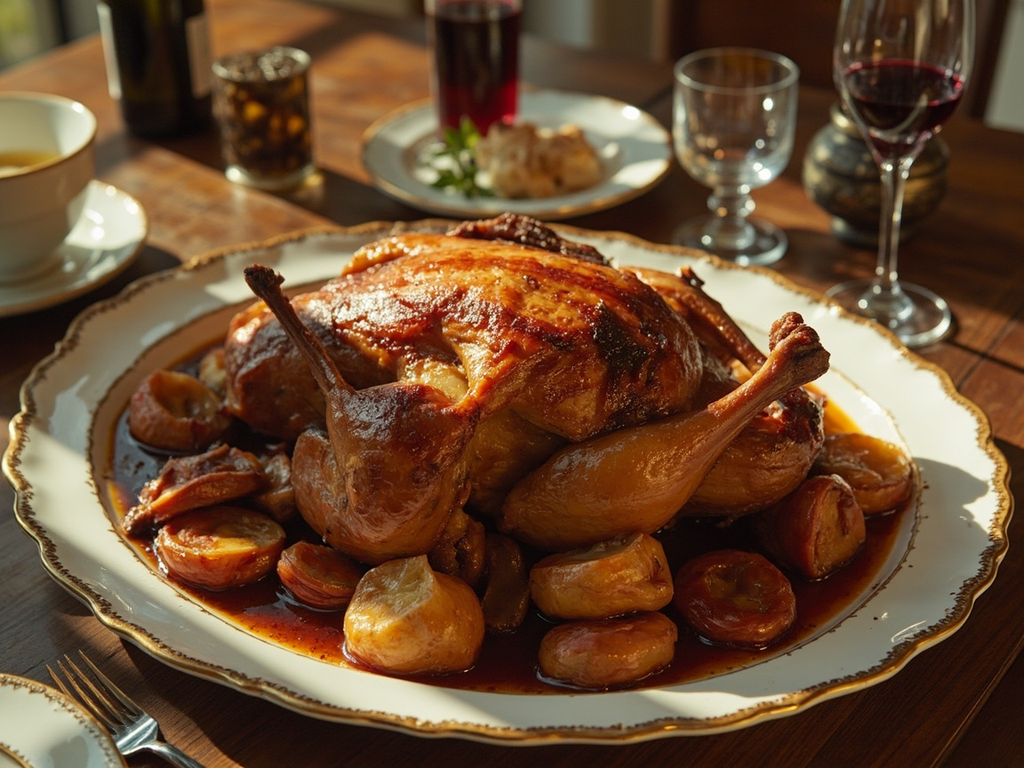
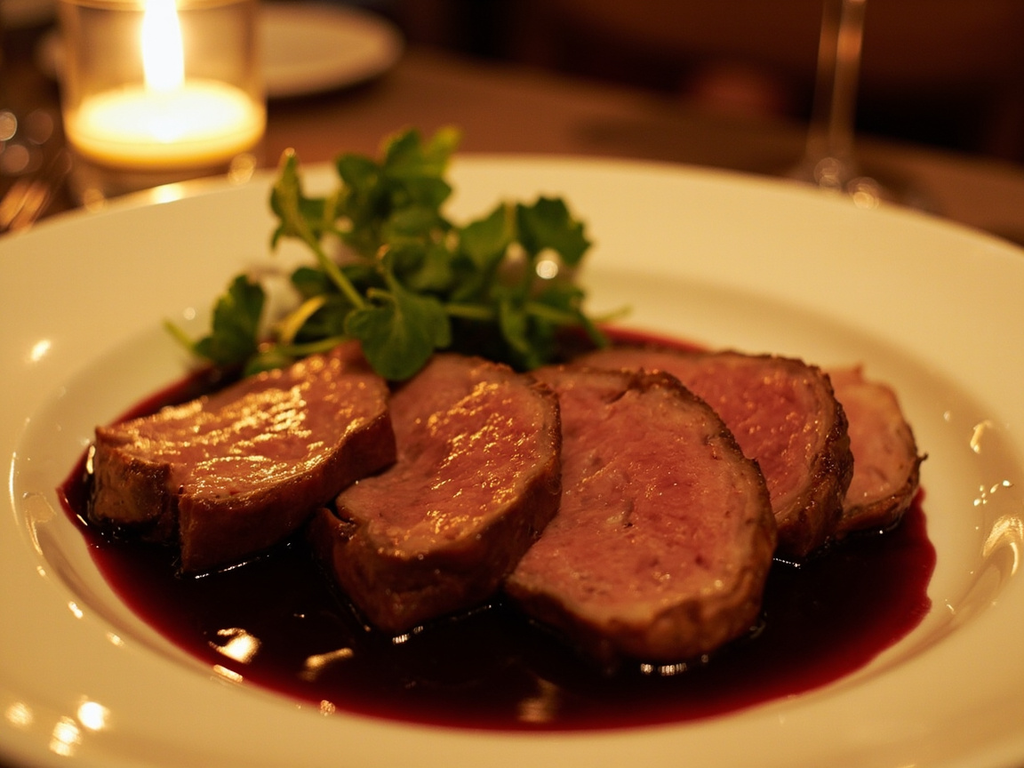
A roast duckling served rare, carved, the pressed carcass yielding a blood juice bound with red wine and butter — the pinnacle of Rouen cuisine.
In Rouen, you see, duck is almost a matter of honor. It is raised suffocated, so that the blood remains in the flesh, and it is served red, firm, not that pale poultry of bourgeois Sundays. At Flaubert's in Croisset, we talked of cooking as we talk of women: with gravity and appetite. The master would have shrugged at an overcooked duckling. Have it bleed, press the carcass, mount the sauce with butter until it coats the spoon — and you will hold there all the spirit of Normandy: blood, fat, and no prudishness.
- •Rouen duckling (suffocated) — one (meat)
- •Full-bodied red wine — a glass (sauce base)
- •Shallots — a few (aromatic)
- •Duck liver — that of the bird (sauce binder)
- •Butter — a lump (sauce mounting)
Rouen Duckling
A roast duckling served rare, carved, the pressed carcass yielding a blood juice bound with red wine and butter — the pinnacle of Rouen cuisine.
Why this dish? Maupassant spent his childhood and youth near Rouen, and frequented Croisset at his master Flaubert's home, just a few steps from the city. Rouen duckling, the glory of the 19th-century Norman table, is the grand festive dish of this land that was his.
In Rouen, you see, duck is almost a matter of honor. It is raised suffocated, so that the blood remains in the flesh, and it is served red, firm, not that pale poultry of bourgeois Sundays. At Flaubert's in Croisset, we talked of cooking as we talk of women: with gravity and appetite. The master would have shrugged at an overcooked duckling. Have it bleed, press the carcass, mount the sauce with butter until it coats the spoon — and you will hold there all the spirit of Normandy: blood, fat, and no prudishness.
Ingredients (period version)
- Rouen duckling (suffocated) — one (meat)
- Full-bodied red wine — a glass (sauce base)
- Shallots — a few (aromatic)
- Duck liver — that of the bird (sauce binder)
- Butter — a lump (sauce mounting)
Ingredients
- Duck breasts or a whole duckling — 1 duckling (1.8 kg) (meat)
- Full-bodied red wine — 25 cl (sauce base)
- Shallots — 3 (aromatic)
- Chicken livers — 2 (binder)
- Cold butter — 80 g (sauce mounting)
- Salt, mill pepper — to taste (seasoning)
Method
- Roast the duckling for 20 minutes in a very hot oven; it must remain rare. Remove the aiguillettes and legs, keep warm.
- Sweat the minced shallots, deglaze with red wine and reduce by half.
- Mash the chicken livers, pass through a sieve, and incorporate off the heat to bind the sauce (do not boil).
- Mount the sauce with cold butter, whisking until it coats the spoon.
- Adjust salt and pepper, nap the aiguillettes, and serve immediately with a little watercress.
How it was made : Rouen duckling was codified in the 19th century, notably at the Couronne restaurant in Rouen. The suffocated duck (not bled) retains its blood in the flesh; the carcass was pressed in a silver press to extract the juice, base of the sauce. No New World products: no tomato or bell pepper.
The contemporary twist : Lacking a duck press, a reduction of the cooking juice with a siphon gives a light emulsion that winks at the old gesture.
Guy de Maupassant · Charactorium