 flip
flipSeine Eel Matelote with Cider
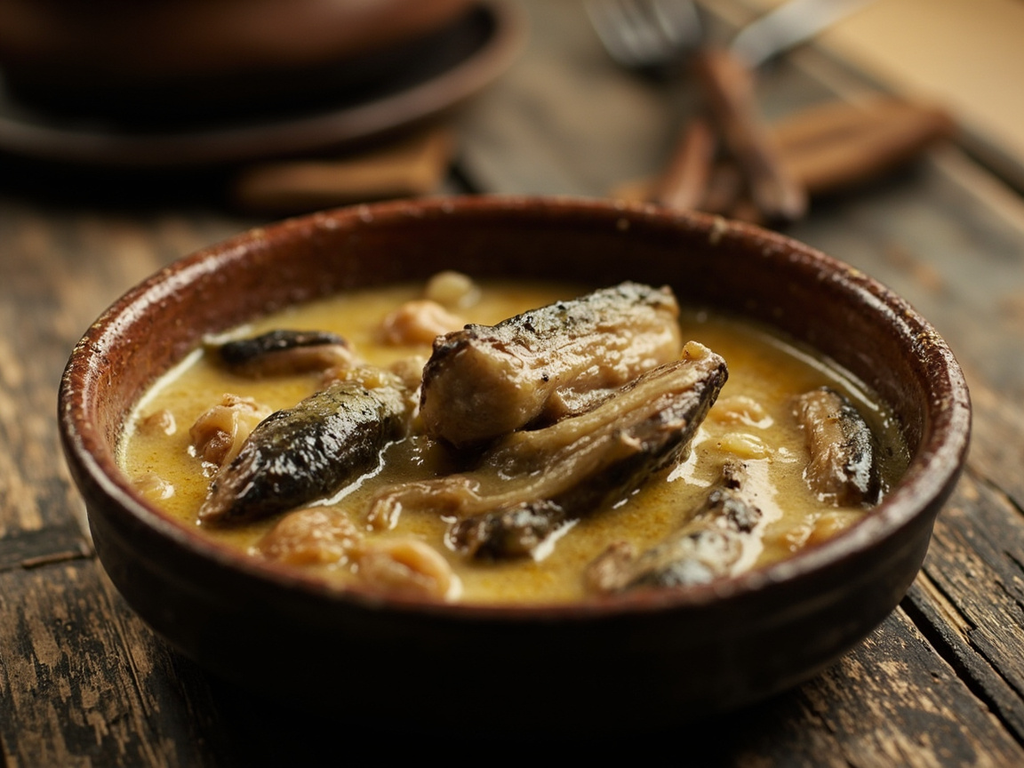
Seine Eel Matelote with Cider
Why this dish? Maupassant was a passionate oarsman on the banks of the Seine, at Chatou, Argenteuil, and Bezons, where he rowed until exhaustion. On his return, the guinguettes served fried fish and river matelote: eel pulled from the mud, simmered in cider and bound with cream, the very dish of the hungry rower he was.
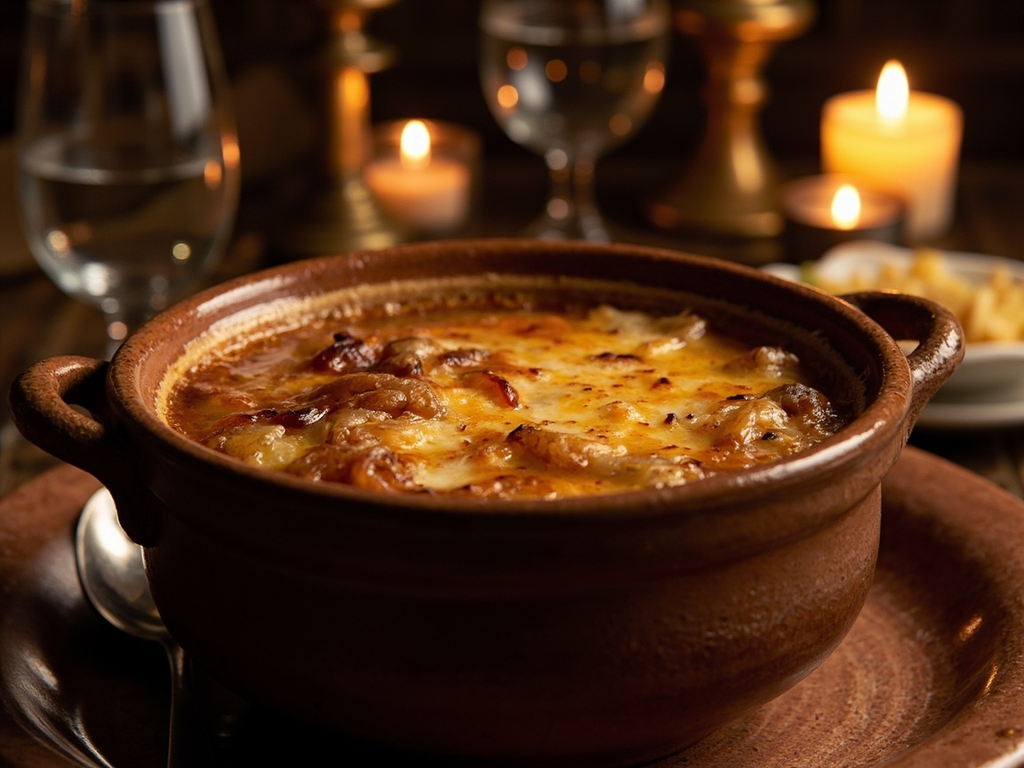
A stew of river fish simmered in cider and thickened with beurre manié, flavored with melted onions and a bouquet garni — the hearty cooking of the Seine riverbanks.
Ah, the Seine! You don't know what it is to have rowed all Sunday long, back aching, hands raw, and finally push open the door of a guinguette that smells of frying fish and browned onion. They brought us the eel matelote, steaming in its thick, creamy sauce, and we threw ourselves at it without ceremony, elbows on the table. I tell you: a man who has rowed isn't hungry, he has a beastly ravenousness, and this dish, rich and hot, set your soul right. The secret, you see, is the cider; never water, always the local cider.
- •Seine eel — a fine piece (fatty river fish)
- •Normandy brut cider — a generous bowlful (cooking liquid)
- •Onions — a few (aromatic base)
- •Churned butter — a good lump (thickening and fat)
- •Thick cream — to taste (final binding)
- •Bouquet garni (thyme, bay, parsley) — one bouquet (flavoring)
Seine Eel Matelote with Cider
A stew of river fish simmered in cider and thickened with beurre manié, flavored with melted onions and a bouquet garni — the hearty cooking of the Seine riverbanks.
Why this dish? Maupassant was a passionate oarsman on the banks of the Seine, at Chatou, Argenteuil, and Bezons, where he rowed until exhaustion. On his return, the guinguettes served fried fish and river matelote: eel pulled from the mud, simmered in cider and bound with cream, the very dish of the hungry rower he was.
Ah, the Seine! You don't know what it is to have rowed all Sunday long, back aching, hands raw, and finally push open the door of a guinguette that smells of frying fish and browned onion. They brought us the eel matelote, steaming in its thick, creamy sauce, and we threw ourselves at it without ceremony, elbows on the table. I tell you: a man who has rowed isn't hungry, he has a beastly ravenousness, and this dish, rich and hot, set your soul right. The secret, you see, is the cider; never water, always the local cider.
Ingredients (period version)
- Seine eel — a fine piece (fatty river fish)
- Normandy brut cider — a generous bowlful (cooking liquid)
- Onions — a few (aromatic base)
- Churned butter — a good lump (thickening and fat)
- Thick cream — to taste (final binding)
- Bouquet garni (thyme, bay, parsley) — one bouquet (flavoring)
Ingredients
- Eel (or failing that, monkfish/coley in chunks) — 800 g (fish)
- Brut cider — 50 cl (cooking liquid)
- Onions — 2 large (aromatic base)
- Butter — 60 g (cooking and beurre manié)
- Flour — 1 tbsp (thickening (beurre manié))
- Thick crème fraîche — 15 cl (final binding)
- Bouquet garni — 1 (flavoring)
- Salt, pepper — to taste (seasoning)
Method
- Sweat the sliced onions in butter without browning, in a casserole.
- Add the eel (or firm fish) chunks, brown for one minute.
- Pour in the cider, add the bouquet garni, season with salt, and simmer for 20 minutes.
- Remove the fish, reduce the liquid by half.
- Off the heat, thicken with beurre manié (kneaded butter and flour), then add the cream.
- Return the fish, reheat gently without boiling, and serve with steamed potatoes.
How it was made : On the 19th-century Seine, eel was a common, abundant, and fatty fish caught in traps. The guinguettes cooked it as a matelote, a freshwater version of the sea marinière, replacing wine with cider in western Normandy.
The contemporary twist : Serve the matelote in individual cassolettes with a dash of flambéed Calvados at the last moment — the 'flambéed oarsman'.
Guy de Maupassant · Charactorium