 flip
flipToasted bancha with umeboshi
Toasted bancha with umeboshi
Why this dish? Tea is inseparable from Zen: it was a monk, Eisai, who brought its cultivation to Japan to support meditation. Hakuin, who wrote about exhaustion and the "Zen sickness" in his Yasen Kanna, knew how much a hot, fortifying drink restores a monk drained by long sittings. This simple bancha, with salted plum, awakens without the ceremonial fuss of matcha.
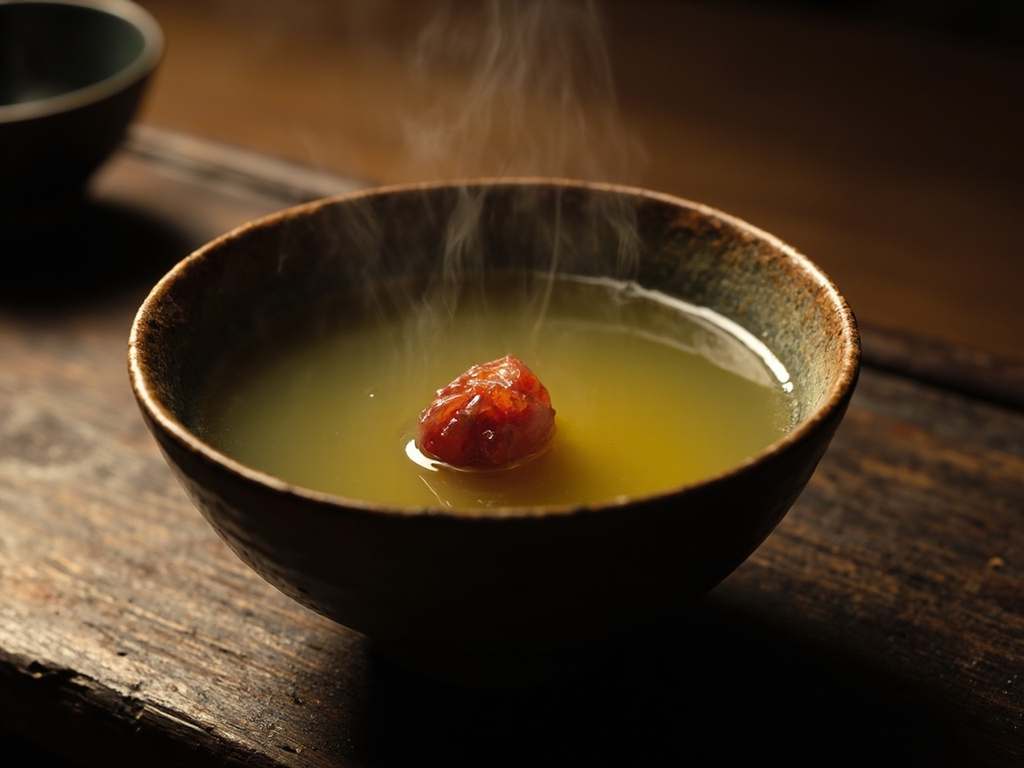
A coarse green tea (bancha) lightly roasted, poured boiling over a crushed salted fermented plum (umeboshi) at the bottom of the bowl. The heat, the bitterness of the tea, and the salty sourness of the plum: a restorative everyday drink.
When your legs tremble after three days of sitting and your head buzzes like a cracked bell, don't go looking for a prince's remedy. Crush a salted plum at the bottom of your bowl, pour the piping hot bancha over it, and drink slowly. Bitterness wakes you, sourness straightens you, salt brings you back to your body. I knew great exhaustion, young monk, and it was through humble things like this, and through breath, that I got back on my feet.
- •Bancha leaves (coarse green tea) — a generous pinch (tea base)
- •Umeboshi plum — one (sourness, salt, vigor)
- •Boiling spring water — one bowl (infusion)
Toasted bancha with umeboshi
A coarse green tea (bancha) lightly roasted, poured boiling over a crushed salted fermented plum (umeboshi) at the bottom of the bowl. The heat, the bitterness of the tea, and the salty sourness of the plum: a restorative everyday drink.
Why this dish? Tea is inseparable from Zen: it was a monk, Eisai, who brought its cultivation to Japan to support meditation. Hakuin, who wrote about exhaustion and the "Zen sickness" in his Yasen Kanna, knew how much a hot, fortifying drink restores a monk drained by long sittings. This simple bancha, with salted plum, awakens without the ceremonial fuss of matcha.
When your legs tremble after three days of sitting and your head buzzes like a cracked bell, don't go looking for a prince's remedy. Crush a salted plum at the bottom of your bowl, pour the piping hot bancha over it, and drink slowly. Bitterness wakes you, sourness straightens you, salt brings you back to your body. I knew great exhaustion, young monk, and it was through humble things like this, and through breath, that I got back on my feet.
Ingredients (period version)
- Bancha leaves (coarse green tea) — a generous pinch (tea base)
- Umeboshi plum — one (sourness, salt, vigor)
- Boiling spring water — one bowl (infusion)
Ingredients
- Bancha or hōjicha — 1 tbsp (tea)
- Umeboshi — 1 plum (sour garnish)
- Simmering water (≈ 90 °C) — 250 ml (infusion)
Method
- Place the umeboshi at the bottom of the bowl and coarsely crush it with chopsticks.
- Infuse bancha for 1 to 2 minutes in hot water.
- Pour the hot tea over the plum.
- Stir, drink slowly, including the plum.
How it was made : Bancha, made from older leaves and stems, was the everyday, cheap tea, as opposed to ceremonial matcha reserved for guests. The tea-umeboshi combination (umecha) is an ancient folk remedy for fatigue and stomach ailments.
The contemporary twist : Serve in a rough bowl with irregular glaze, raku style, letting the plum float like a red moon on dark water.
Hakuin · Charactorium