 flip
flipFestive spicy mole, chili and cacao sauce
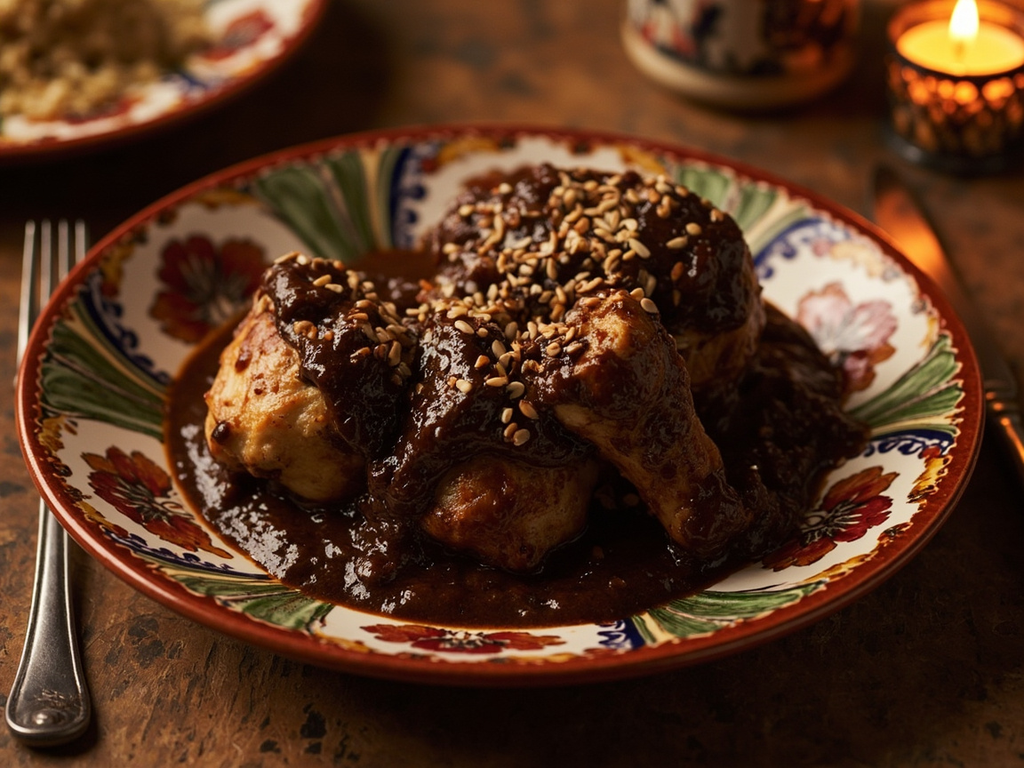
Festive spicy mole, chili and cacao sauce
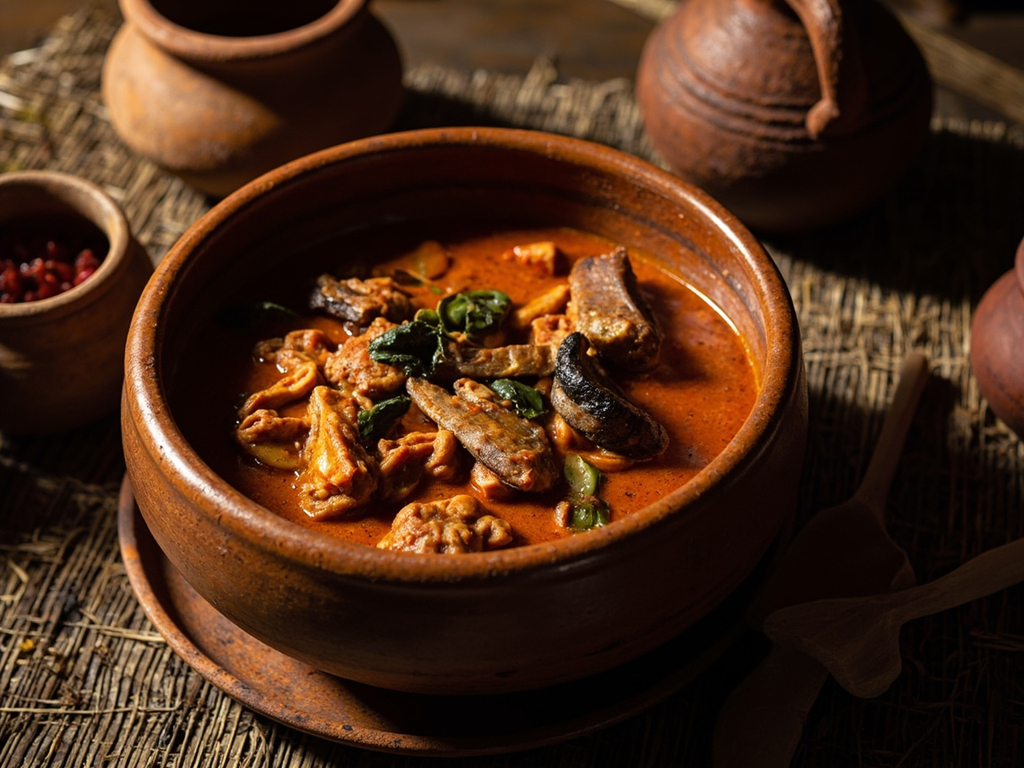
Why this dish? At the Day of the Dead festivities and great occasions in New Spain, mole crowns the table: a long-simmered sauce, the perfect mestizaje of two worlds. For a figure born from the collision of Aztec and Spanish, this dish tells exactly the world that gave rise to her legend.
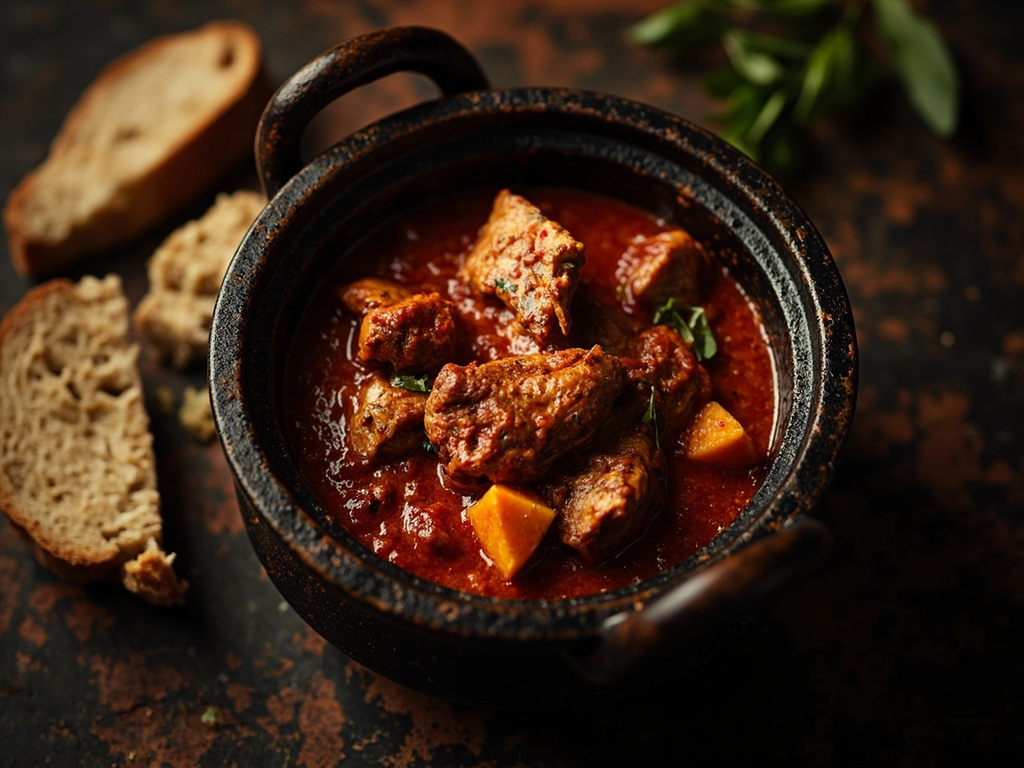
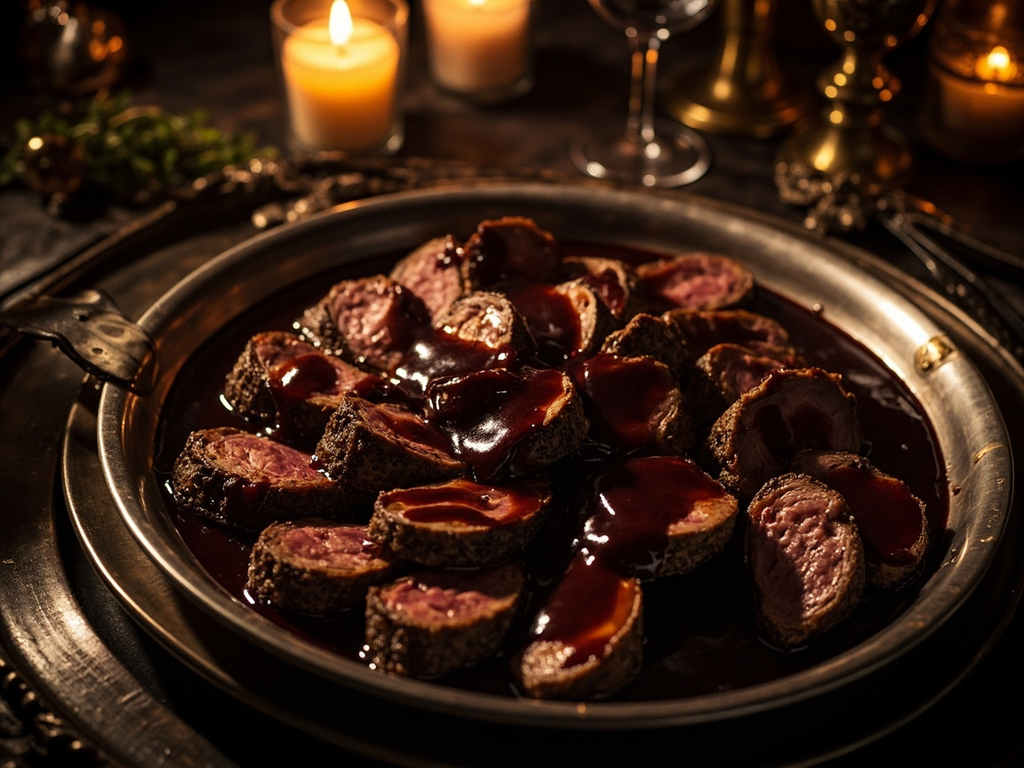
A deep, complex sauce where about twenty ingredients — dried chilies, spices, seeds, a hint of bitter cacao — are toasted, ground, and simmered, then ladled over poultry. Spicy without burning, almost chocolatey, of a velvety black.
For this dish, you need time, and time, alas, is all I have left. I toast the chilies one by one on the comal until their smoke stings the eyes — take care not to burn them, or bitterness spoils everything. Then I grind on the metate: the chilies, the spices brought by the galleons, and a tear of cacao for depth. It was served at weddings and feasts, when my house still echoed with laughter. Taste, and remember me as I was before the river.
- •Dried chilies (ancho, pasilla, mulato) — a handful of each, toasted (sauce base)
- •Ground cacao beans — a little (bitter depth)
- •Pumpkin seeds and sesame (mixed contribution) — toasted (binder and richness)
- •Cinnamon, clove, pepper (Eastern spices via Spain) — pinches (flavor)
- •Stale tortilla and toasted bread — a piece (thickener)
- •Turkey or hen — one (base)
Festive spicy mole, chili and cacao sauce
A deep, complex sauce where about twenty ingredients — dried chilies, spices, seeds, a hint of bitter cacao — are toasted, ground, and simmered, then ladled over poultry. Spicy without burning, almost chocolatey, of a velvety black.
Why this dish? At the Day of the Dead festivities and great occasions in New Spain, mole crowns the table: a long-simmered sauce, the perfect mestizaje of two worlds. For a figure born from the collision of Aztec and Spanish, this dish tells exactly the world that gave rise to her legend.
For this dish, you need time, and time, alas, is all I have left. I toast the chilies one by one on the comal until their smoke stings the eyes — take care not to burn them, or bitterness spoils everything. Then I grind on the metate: the chilies, the spices brought by the galleons, and a tear of cacao for depth. It was served at weddings and feasts, when my house still echoed with laughter. Taste, and remember me as I was before the river.
Ingredients (period version)
- Dried chilies (ancho, pasilla, mulato) — a handful of each, toasted (sauce base)
- Ground cacao beans — a little (bitter depth)
- Pumpkin seeds and sesame (mixed contribution) — toasted (binder and richness)
- Cinnamon, clove, pepper (Eastern spices via Spain) — pinches (flavor)
- Stale tortilla and toasted bread — a piece (thickener)
- Turkey or hen — one (base)
Ingredients
- Dried ancho, pasilla, mulato chilies — 2 each, seeded (base)
- Mexican dark chocolate (or 70% cacao) — 40 g (depth)
- Sesame seeds — 3 tbsp (richness)
- Almonds — 30 g (binder)
- Cinnamon, clove, black pepper — 1 pinch each (spices)
- Tomato and tomatillo — 2 + 2, roasted (acidity and body)
- Stale tortilla — 1 (thickener)
- Chicken or turkey thighs — 4 (base)
- Broth — 750 ml (binding)
Method
- Dry-toast the seeded chilies for a few seconds per side, then soak in hot water.
- Separately toast sesame, almonds, spices, then roast tomatoes and tomatillos.
- Blend drained chilies, nuts, spices, tomatoes, and tortilla with a little broth into a smooth paste; strain.
- Fry this paste in a little fat over medium heat, stirring (it darkens and concentrates).
- Add chocolate and broth, simmer 30-40 min until sauce coats a spoon; season with salt.
- Poach or roast the poultry, generously coat with mole, and sprinkle with toasted sesame.
How it was made : Mole as we know it is a colonial dish, developed in the convents of Puebla and Oaxaca where nuns and indigenous cooks fused local chilies with Eastern spices. Legend attributes its invention to a convent improvisation; the reality is a slow 17th-century mestizaje. Everything was ground on the metate by arm strength.
The contemporary twist : Plate a thigh coated in glossy mole, a swirl of cream, and a shower of sesame: the contrast of white on black evokes the white dress on dark waters.
Sources : Patricia Quintana, The Taste of Mexico (1986) · Rachel Laudan, Cuisine and Empire (2013)
La Llorona · Charactorium