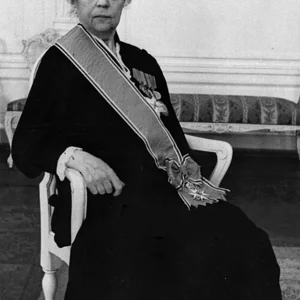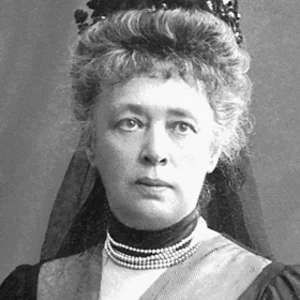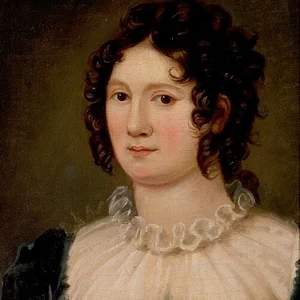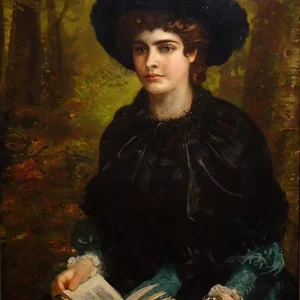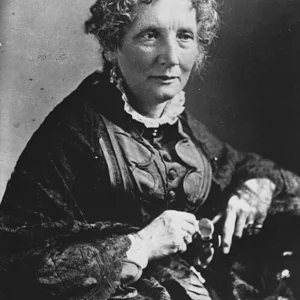

An American novelist and abolitionist activist, she was the author of “Uncle Tom's Cabin” (1852), a novel denouncing slavery that had a worldwide impact. Her work helped to mobilize public opinion against slavery in the United States.
Harriet Beecher Stowe(1811 — 1896)
Harriet Beecher Stowe
États-Unis
5 min read
Frequently asked questions
Key Facts
- Born in 1811 in Litchfield, Connecticut
- Publication of “Uncle Tom's Cabin” in 1852, a huge bestseller
- The novel sold hundreds of thousands of copies and was translated into many languages
- Met Abraham Lincoln in 1862, who reportedly greeted her as the author who had started the war
- Died in 1896 in Hartford, Connecticut
Works & Achievements
An antislavery novel with worldwide impact that rallied public opinion against slavery and became a historic bestseller.
A compilation of real documents and testimonies proving that her novel was based on attested facts.
A second antislavery novel exploring the corrosive effects of slavery on Southern society.
A novel of New England manners blending theological critique with social portraiture.
A nostalgic depiction of New England village life, regarded as one of her most accomplished works.
A controversial essay defending Lady Byron's reputation that sparked a public scandal.
Anecdotes
When President Abraham Lincoln met Harriet Beecher Stowe in 1862, he is said to have greeted her with these now-famous words: “So you're the little lady who wrote the book that started this great war.” The anecdote, though reported only much later, illustrates the immense political impact of her novel.
“Uncle Tom's Cabin” was first published as a serial in an abolitionist newspaper, the National Era, in 1851-1852. When it appeared as a book, it sold 300,000 copies in a single year in the United States, a colossal success for the time.
Harriet grew up in an exceptional family of pastors and activists: her brother Henry Ward Beecher became one of the most famous preachers in America, and her sister Catharine was a pioneer of education for girls.
To answer those who accused her of having invented the horrors of slavery, Stowe published in 1853 “A Key to Uncle Tom's Cabin,” a collection of real documents, testimonies, and legal statutes proving that her novel was grounded in attested facts.
The novel was so popular that it gave rise to countless theatrical adaptations, the “Tom shows,” seen by millions of spectators — far more people saw these plays than ever read the book itself.
Primary Sources
“If it were your own, you would run too!” said Eliza, fleeing across the ice of the Ohio with her child in her arms to escape the slave traders.
The object of these sketches is to awaken sympathy and feeling for the African race, as they exist among us.
This book presents the original facts and documents upon which the story is founded, together with corroborative statements verifying the truth of the work.
I write what I see and what I feel; I cannot do otherwise, for God has shown me these things.
Key Places
Birthplace of Harriet Beecher Stowe, where she was born in 1811 into a family of Congregationalist ministers.
Border town where she lived from 1832 to 1850; separated from slaveholding Kentucky by the Ohio River, she observed firsthand the reality of slavery and the flight of fugitive slaves.
It was in this town, where her husband taught at Bowdoin College, that she wrote *Uncle Tom's Cabin* in 1851.
Town where she spent the last decades of her life and where she died in 1896; her house is now a museum.
The family's place of residence while her husband taught at the theological seminary; there she continued her literary and activist work.
Typical Objects

The novelist's writing tools, with which she composed her manuscripts by hand, often in the midst of household chores.

The printed book that spread the abolitionist cause throughout the world and became one of the greatest publishing successes of the 19th century.
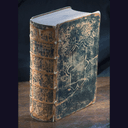
A central object in the Beecher family of preachers; the Christian faith deeply permeates the moral argument of her work.
📷 CC BY 2.5 · Wikimedia Commons ↗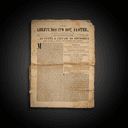
Periodicals such as the National Era that published her serial and carried the fight against slavery to the public.

Placards announcing the many stage adaptations of the novel, seen by millions of spectators across America.

A symbol of the servile condition denounced in her work, a recurring object in abolitionist literature and iconography.
📷 CC BY-SA 4.0 · Wikimedia Commons ↗School Curriculum
Vocabulary & Tags
Key Vocabulary
Tags
Daily Life
Morning
A mother of seven children, Harriet began her days with household chores and family prayer, a legacy of her religious upbringing. Between tasks, she found moments to jot down her ideas and write.
Afternoon
Afternoons were devoted to writing, often interrupted by caring for the children and managing the household. She wrote by hand, at the kitchen table or in a quiet corner of the house.
Evening
Evenings brought the family together around readings, theological discussions, and debates on the great moral questions of the day, notably the abolition of slavery. She also corresponded extensively with publishers and activists.
Food
Nineteenth-century New England fare relied on bread, vegetables from the garden, salt pork, dairy products, and homemade preserves. Tea and coffee accompanied the meals of a pious and temperate family.
Clothing
She wore the long, plain dresses of the Protestant middle class: a fitted bodice, full skirt, shawl, and bonnet. The colors were subdued, in keeping with the modesty expected of a minister's wife.
Housing
She lived in the wooden houses characteristic of New England, functional and welcoming. Her final home in Hartford, in the Nook Farm neighborhood, was an elegant Victorian house now turned into a museum.
Historical Timeline
Period Vocabulary
Liens externes & ressources
Références
Œuvres
La Case de l'oncle Tom (Uncle Tom's Cabin)
1852
A Key to Uncle Tom's Cabin
1853
Dred: A Tale of the Great Dismal Swamp
1856
The Minister's Wooing
1859
Oldtown Folks
1869
Lady Byron Vindicated
1870