 flip
flipChenes — Honey, Date and Sesame Cakes for Amun
Chenes — Honey, Date and Sesame Cakes for Amun
Why this dish? On the walls of her temple at Deir el-Bahari, Hatshepsut has offerings piled before Amun depicted, including breads and cakes. These honey sweets honored the god whose daughter she claimed to be, born of his divine union.
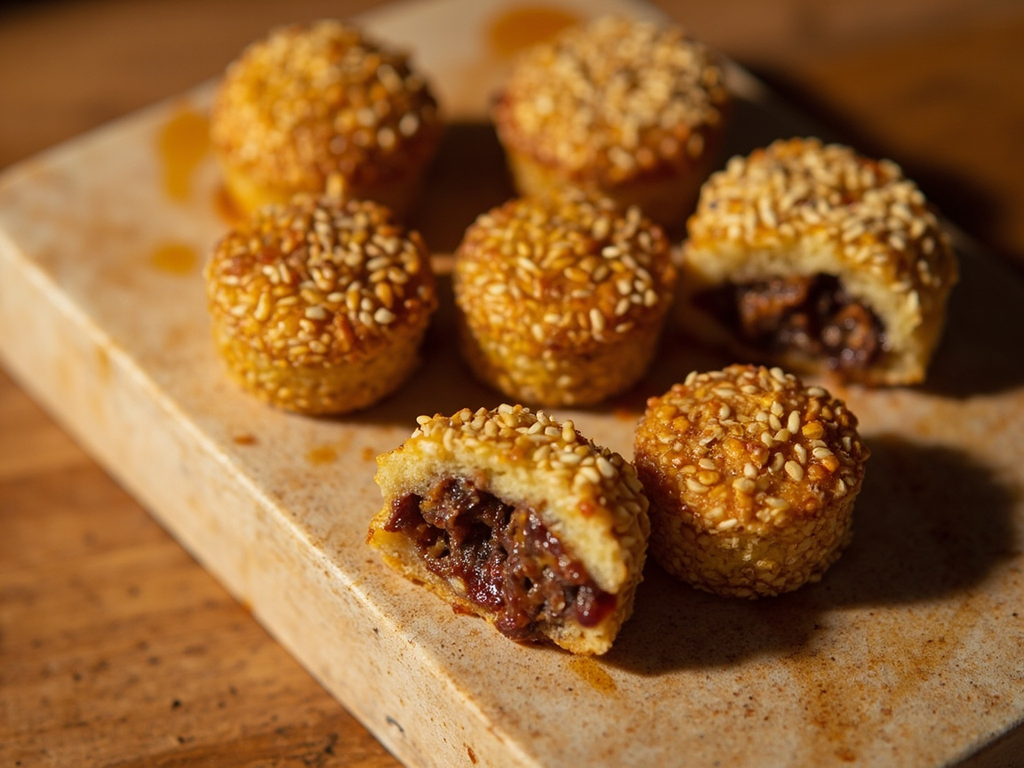
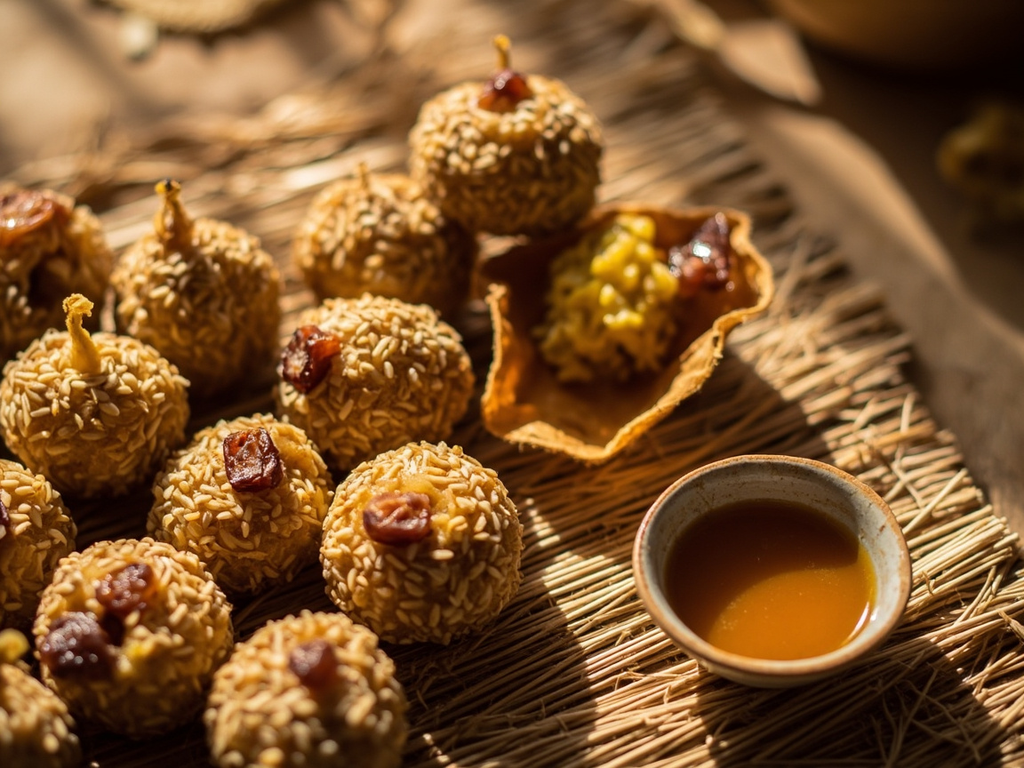
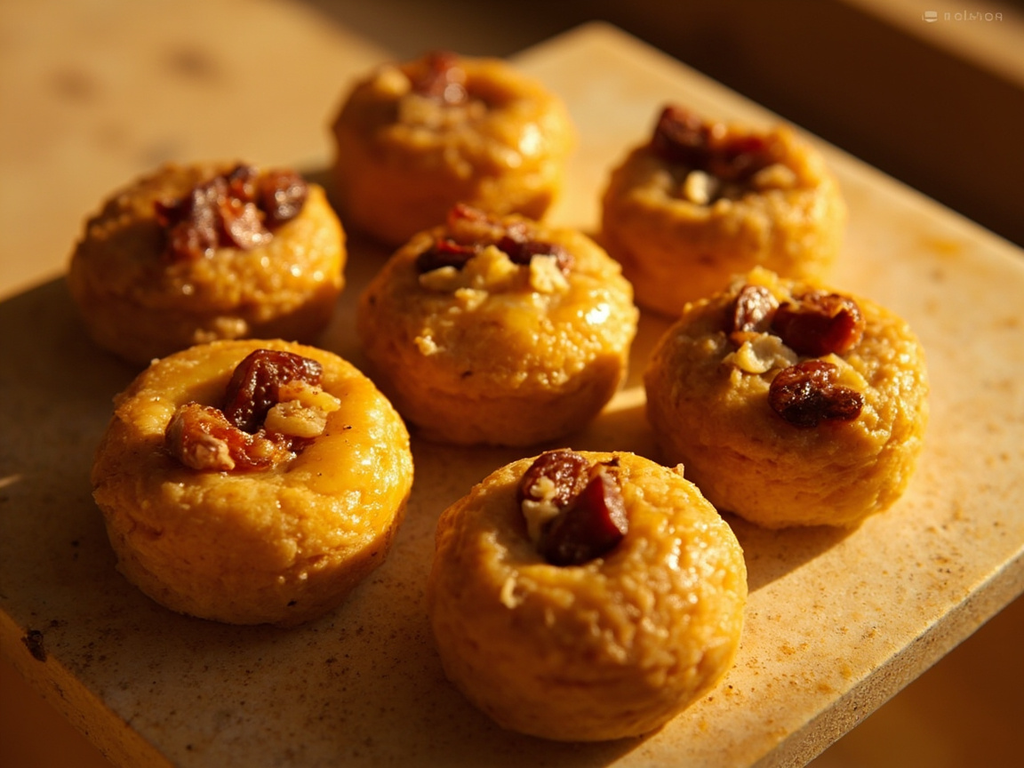
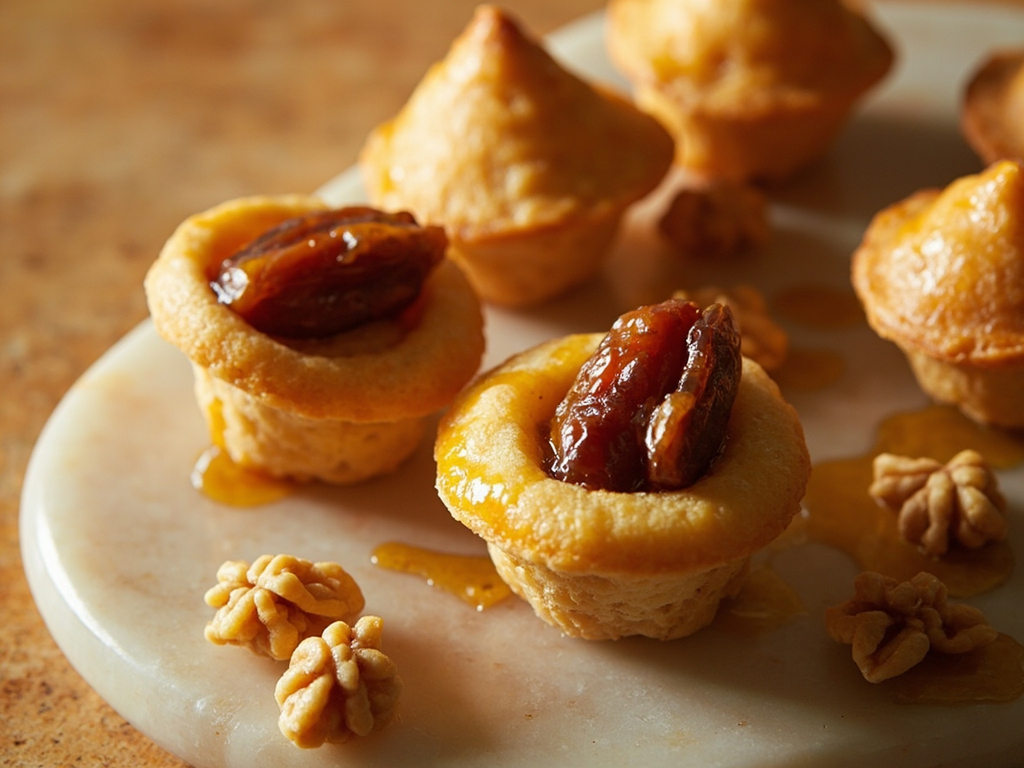
Small dense cakes, sweetened with honey, filled with crushed dates and rolled in sesame. Offered to the god on the altar, then consumed by the temple servants — inspired by offering breads, without reproducing the sacred rite itself.
I was born of the god Amun himself, and to him I first return what the earth gives me. See these little cakes: golden honey, dates crushed into a paste, all rolled in sesame and gently baked. My priests placed them on the altar at Deir el-Bahari, where the cliff meets the sky. What feeds the god then feeds those who serve him — nothing offered is lost. Taste them: it is the sweetness of my reign.
- •Emmer flour — one part (base)
- •Honey — abundant (binder and sweetness)
- •Dates crushed into paste — a good part (sweet filling)
- •Sesame seeds — for rolling (coating)
- •Moringa oil or fat — a little (softness)
Chenes — Honey, Date and Sesame Cakes for Amun
Small dense cakes, sweetened with honey, filled with crushed dates and rolled in sesame. Offered to the god on the altar, then consumed by the temple servants — inspired by offering breads, without reproducing the sacred rite itself.
Why this dish? On the walls of her temple at Deir el-Bahari, Hatshepsut has offerings piled before Amun depicted, including breads and cakes. These honey sweets honored the god whose daughter she claimed to be, born of his divine union.
I was born of the god Amun himself, and to him I first return what the earth gives me. See these little cakes: golden honey, dates crushed into a paste, all rolled in sesame and gently baked. My priests placed them on the altar at Deir el-Bahari, where the cliff meets the sky. What feeds the god then feeds those who serve him — nothing offered is lost. Taste them: it is the sweetness of my reign.
Ingredients (period version)
- Emmer flour — one part (base)
- Honey — abundant (binder and sweetness)
- Dates crushed into paste — a good part (sweet filling)
- Sesame seeds — for rolling (coating)
- Moringa oil or fat — a little (softness)
Ingredients
- Spelt flour — 200 g
- Honey — 120 g + a little for glazing
- Pitted Medjool dates — 150 g
- Sesame seeds — 60 g
- Neutral oil (or sesame oil) — 3 tbsp
- Water — a little if needed
Method
- Blend the dates into a thick paste with a spoonful of honey.
- Mix the flour, honey, and oil to form a supple dough (add a little water if necessary).
- Take balls of dough, flatten them, place a little date paste in the center, and close.
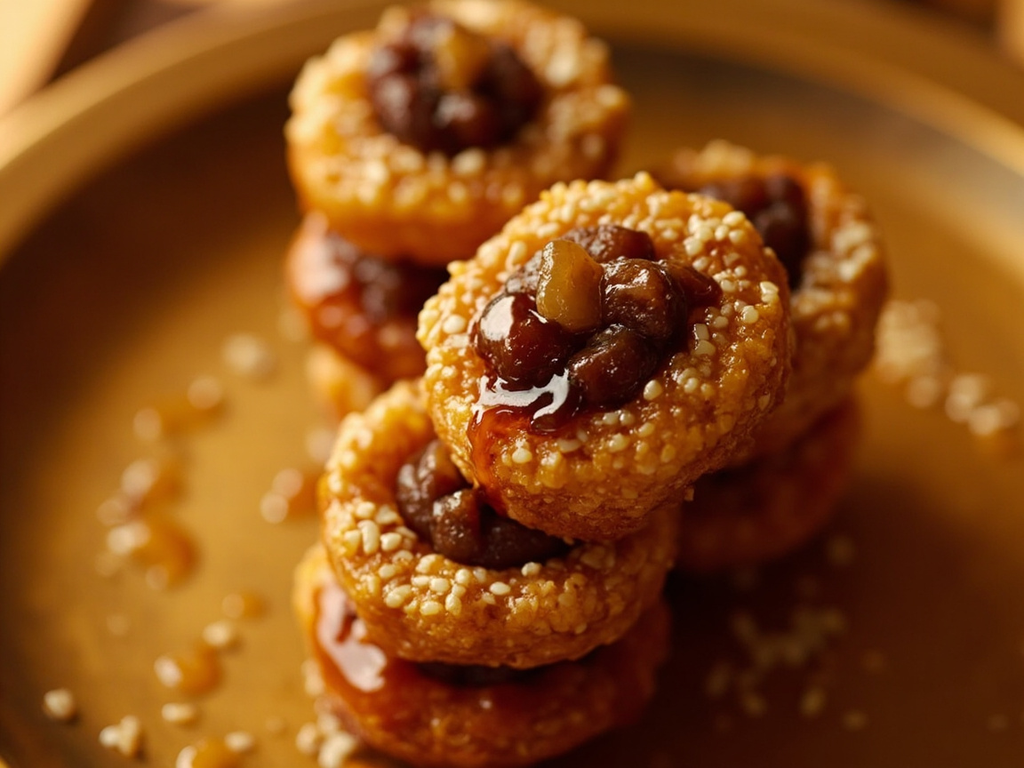
- Roll each cake in sesame seeds.
- Bake at 170 °C for 18 to 20 minutes until light golden, then brush with a veil of warm honey upon removal.
How it was made : Offering breads took various shapes (round, conical, sometimes figurative) and were kneaded with honey and fruits for sacred occasions. Baked in molds or on hot slabs, they were part of the offering lists carved in temples before being redistributed to the clergy.
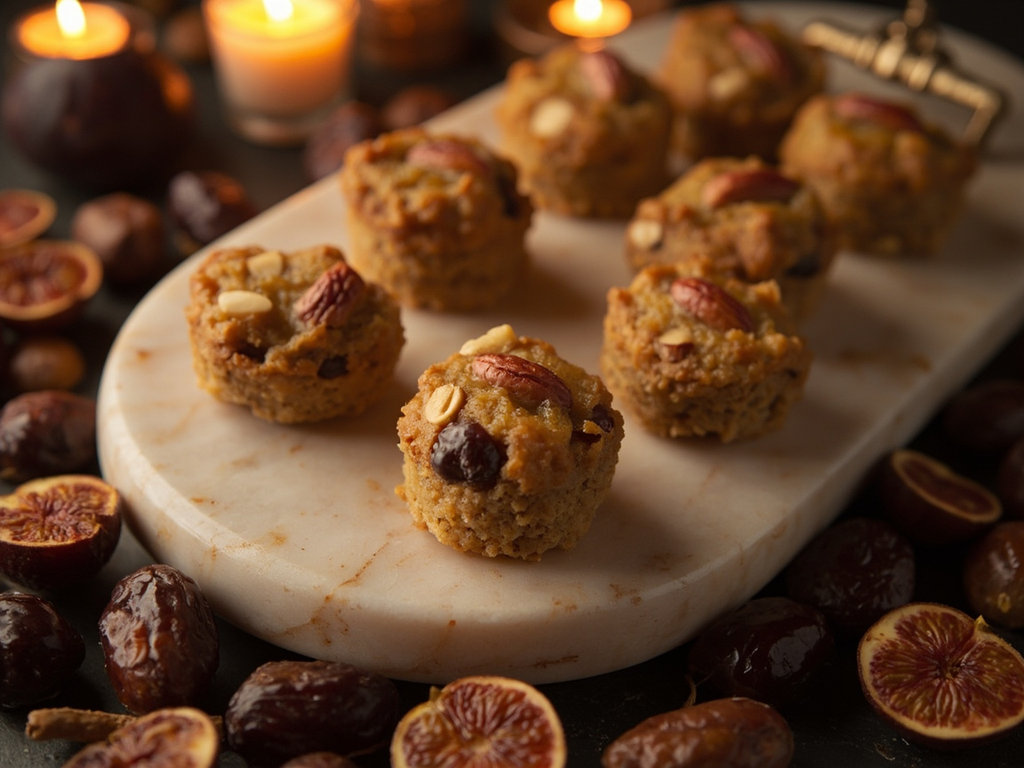
The contemporary twist : Stack the cakes in a small pyramid on a golden plate and sprinkle with edible petals, echoing the piled offerings in the frescoes.
Hatshepsut · Charactorium