 flip
flipFarewell onigiri (rice balls with pickled plum)
Farewell onigiri (rice balls with pickled plum)
Why this dish? The onigiri handed to a hungry traveler is one of the most tender images in Miyazaki's cinema: in *Spirited Away*, a simple rice ball makes the heroine cry and restores her strength. Food from the hand that comforts, onigiri embodies everything Miyazaki loves to show: concrete attention to someone through a little handmade food.
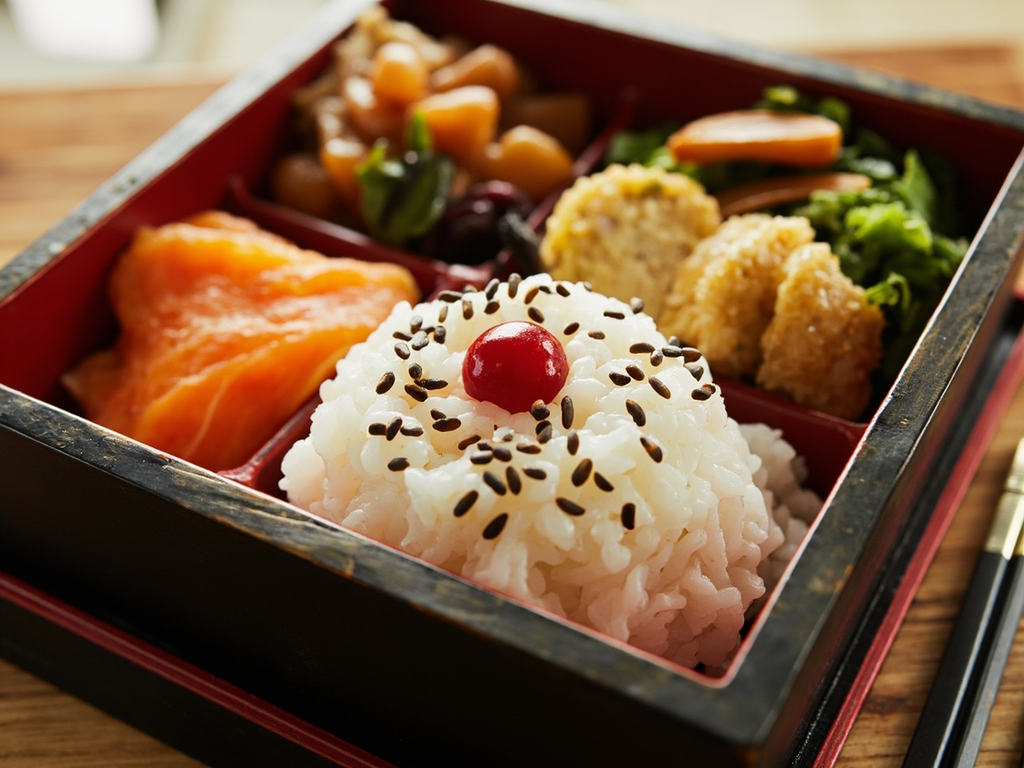
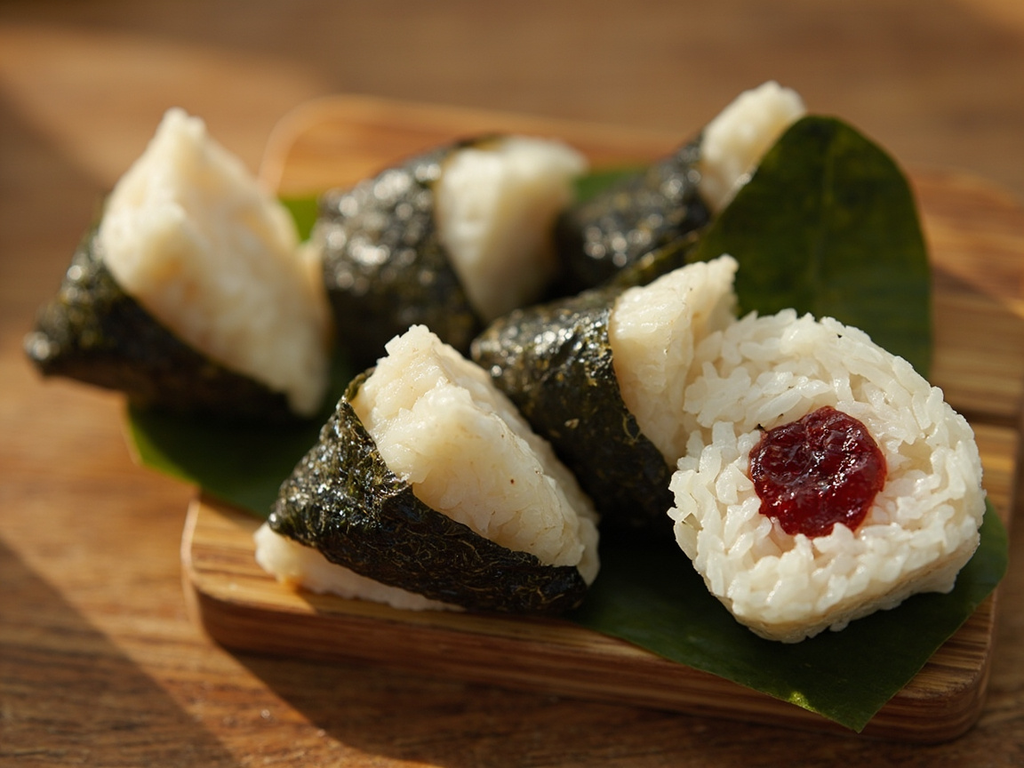
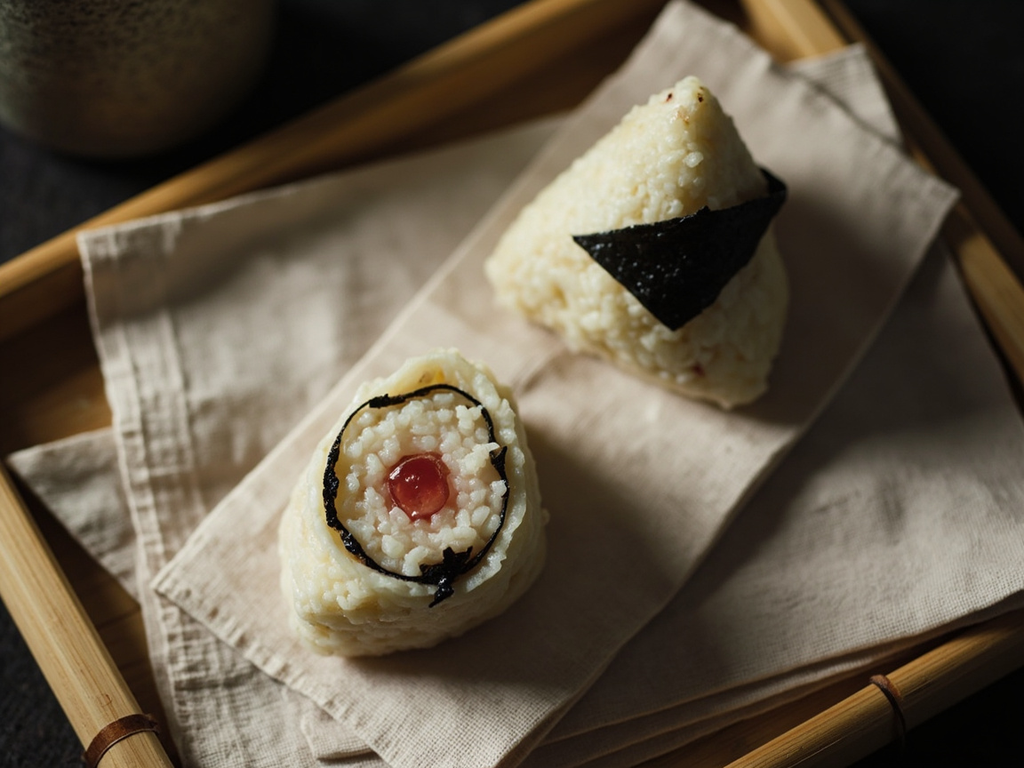
A hand-pressed triangle of rice, filled with a salty-sour pickled plum (umeboshi) and wrapped with a strip of nori. Eaten cold, slipped into a handkerchief or box, it has accompanied walkers and schoolchildren for centuries.
Wet your hands, put a little salt in the hollow of your palms — it's this salt that preserves and gives flavor. Take the rice while it's still warm, slip a salted plum into the center, and press, press into a triangle: not too hard, otherwise it's no longer rice, it's glue. When someone sets out on the road, you don't make speeches; you put this in their hand, and it's like saying "hang in there, come back." A well-made onigiri needs nothing more than two hands and a little heart.
- •Cooked Japanese rice (uruchimai) — one bowl per 2 balls (base)
- •Umeboshi (salted plum) — one per ball (sour-salty heart and preservative)
- •Salt — a pinch on hands (flavor and preservation)
- •Nori seaweed — one strip per ball (grip and sea flavor)
Farewell onigiri (rice balls with pickled plum)
A hand-pressed triangle of rice, filled with a salty-sour pickled plum (umeboshi) and wrapped with a strip of nori. Eaten cold, slipped into a handkerchief or box, it has accompanied walkers and schoolchildren for centuries.
Why this dish? The onigiri handed to a hungry traveler is one of the most tender images in Miyazaki's cinema: in *Spirited Away*, a simple rice ball makes the heroine cry and restores her strength. Food from the hand that comforts, onigiri embodies everything Miyazaki loves to show: concrete attention to someone through a little handmade food.
Wet your hands, put a little salt in the hollow of your palms — it's this salt that preserves and gives flavor. Take the rice while it's still warm, slip a salted plum into the center, and press, press into a triangle: not too hard, otherwise it's no longer rice, it's glue. When someone sets out on the road, you don't make speeches; you put this in their hand, and it's like saying "hang in there, come back." A well-made onigiri needs nothing more than two hands and a little heart.
Ingredients (period version)
- Cooked Japanese rice (uruchimai) — one bowl per 2 balls (base)
- Umeboshi (salted plum) — one per ball (sour-salty heart and preservative)
- Salt — a pinch on hands (flavor and preservation)
- Nori seaweed — one strip per ball (grip and sea flavor)
Ingredients
- Japanese short-grain rice (sushi) — 300 g raw (base)
- Pitted umeboshi — 4 (sour garnish)
- Fine salt — to taste on hands (hand seasoning)
- Nori sheets — 2, cut into strips (belt)
- Sesame seeds (optional) — 1 tbsp (aroma)
Method
- Rinse the rice until the water runs clear, cook using the Japanese method (absorption), let rest covered for 10 min.
- Let the rice cool slightly: too hot it burns your hands, too cold it won't stick together.
- Wet your hands, lightly salt your palms, take a handful of rice.
- Make a well, place an umeboshi inside, close the rice over it.
- Press into a triangle with a few firm but gentle presses, turning as you go.
- Wrap with a strip of nori just before serving (so it stays crisp).
How it was made : Pressed rice has traveled with Japanese people since ancient times; salted and acidified by umeboshi, it keeps without refrigeration — it was the ration of the farmer in the fields, the warrior, the pilgrim. The salted plum is not a taste whim: its acidity and salt protect the rice during travel.
The contemporary twist : Shape into irregular "handmade" balls rather than perfect triangles, and wrap them in a *furoshiki* cloth — the object as gift as much as food.
Hayao Miyazaki · Charactorium