Mâza with Cithaeron honey
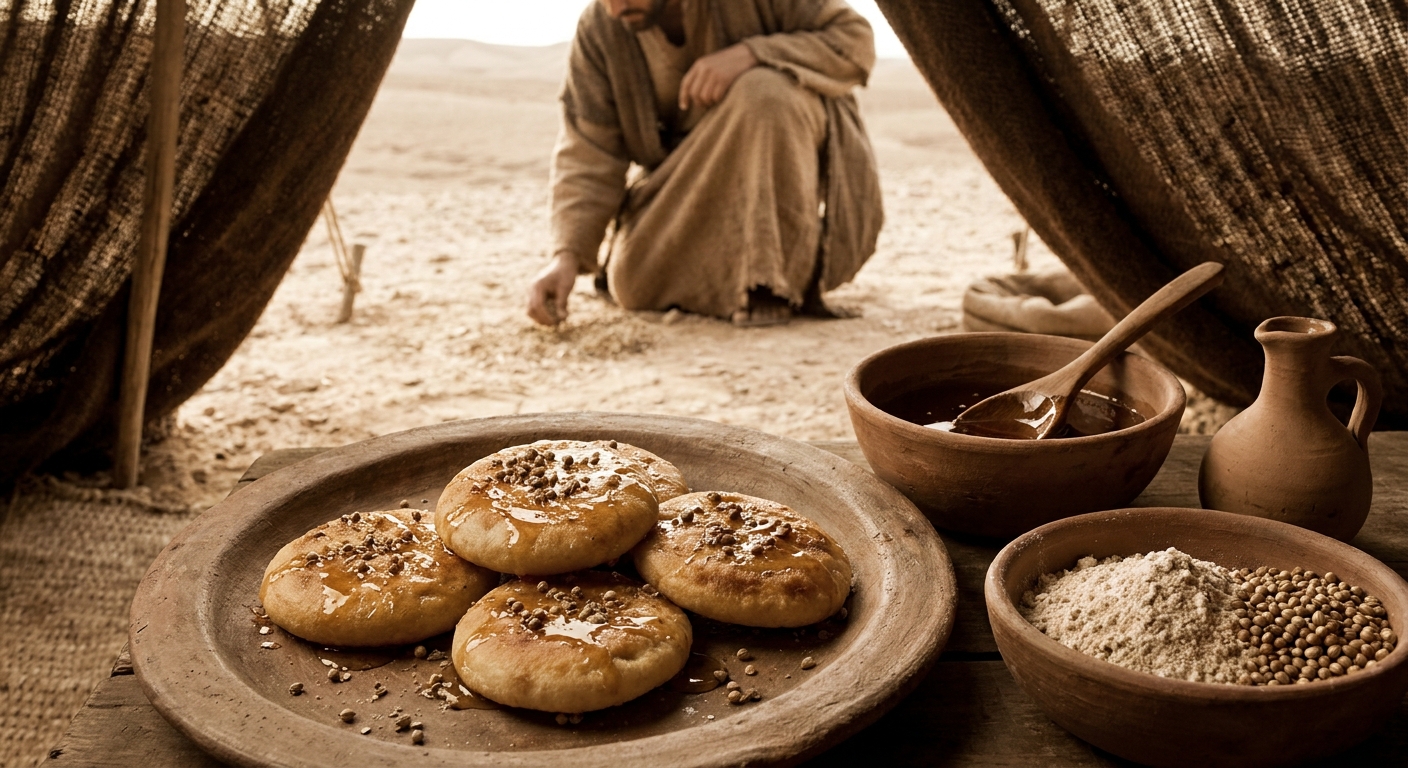
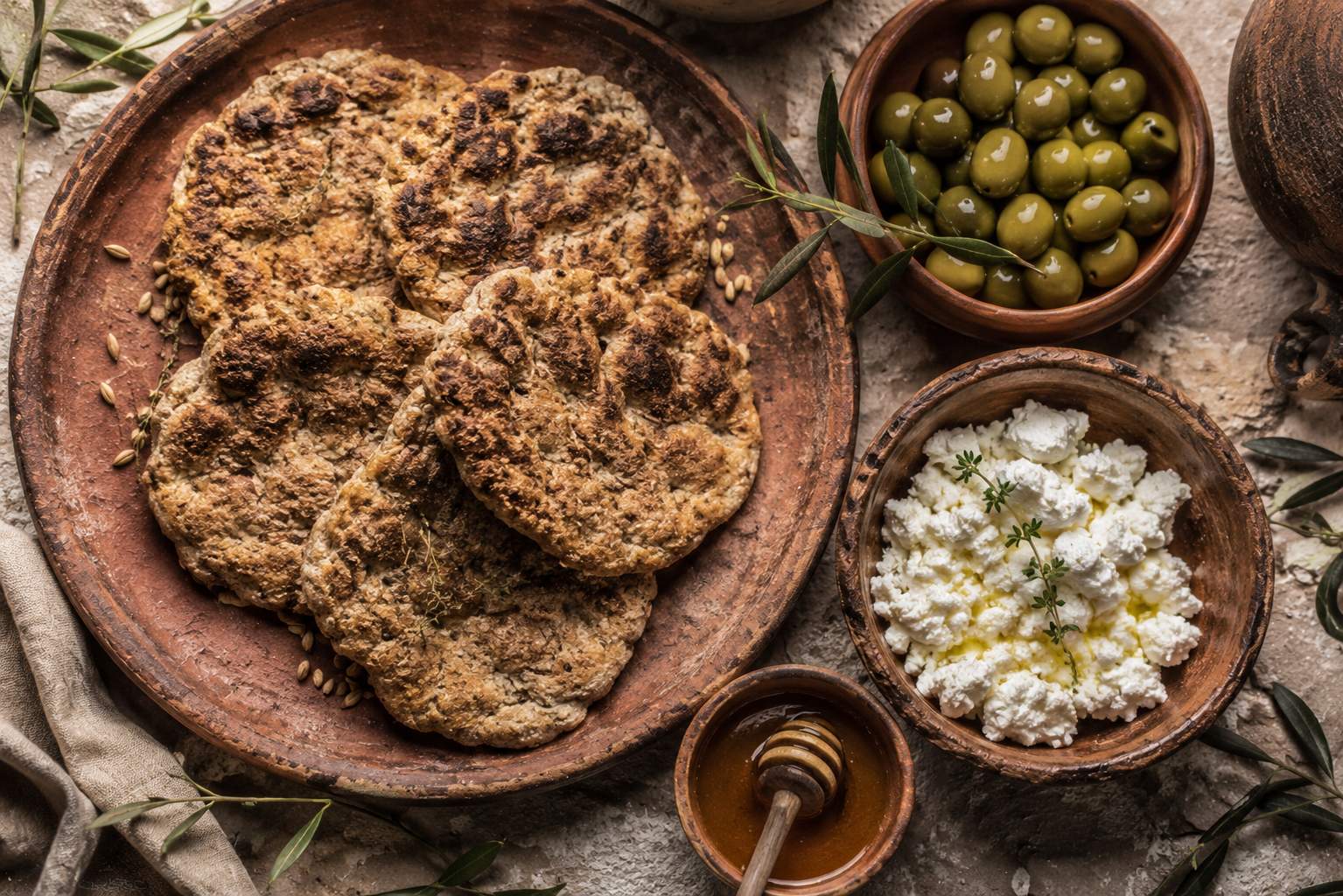
A dense cake of toasted barley kneaded, barely cooked, and drizzled with dark honey. The bitter undertone of roasted barley meets the resinous sweetness of mountain honey: the bread of the humble ennobled at a king's table.
A dense cake of toasted barley kneaded, barely cooked, and drizzled with dark honey. The bitter undertone of roasted barley meets the resinous sweetness of mountain honey: the bread of the humble ennobled at a king's table.
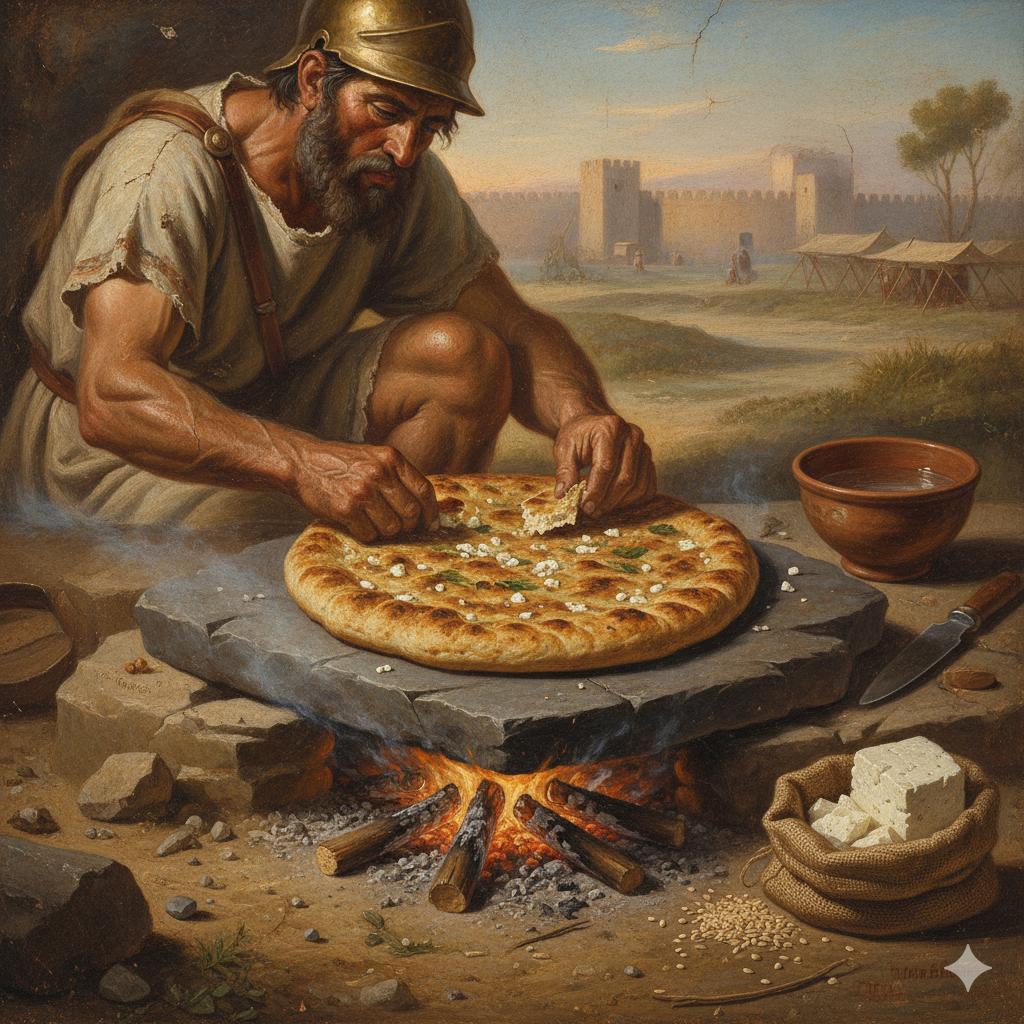
Approach, stranger, and do not scorn this humble cake. Know that barley was my first feast before I knew my name, up there on the slopes of Cithaeron where I was left for dead. At my Theban table, my servants toast the grain, grind it in the mortar, knead it with a trickle of water, and crown it with honey from those same heights. Eat: there is in this sweet bitterness the whole destiny of a man.
- •Toasted barley flour (álphita) — two generous handfuls (cereal base)
- •Spring water — as needed (binder)
- •Wild mountain honey — as much as you like (sweetness, topping)
- •Salt — a pinch (seasoning)
Mâza with Cithaeron honey
A dense cake of toasted barley kneaded, barely cooked, and drizzled with dark honey. The bitter undertone of roasted barley meets the resinous sweetness of mountain honey: the bread of the humble ennobled at a king's table.
Why this dish? Mâza, the unleavened barley cake, is the daily bread of both the ordinary Greek and the palace. For Oedipus, it is the taste of a stolen childhood: exposed as an infant on Mount Cithaeron, he might never have known its flavor. The honey from those same slopes sweetens it here.
Approach, stranger, and do not scorn this humble cake. Know that barley was my first feast before I knew my name, up there on the slopes of Cithaeron where I was left for dead. At my Theban table, my servants toast the grain, grind it in the mortar, knead it with a trickle of water, and crown it with honey from those same heights. Eat: there is in this sweet bitterness the whole destiny of a man.
Ingredients (period version)
- Toasted barley flour (álphita) — two generous handfuls (cereal base)
- Spring water — as needed (binder)
- Wild mountain honey — as much as you like (sweetness, topping)
- Salt — a pinch (seasoning)
Ingredients
- Barley flour — 200 g (cereal base)
- Warm water — 100–120 ml (binder)
- Amber honey (chestnut or mountain) — 4 tbsp (sweetness, topping)
- Salt — 1 pinch (seasoning)
- Olive oil — 1 tbsp (cooking)
Method
- Dry-toast the barley flour in a pan for a few minutes until it smells of toasted hazelnut, stirring constantly.
- Pour into a bowl with the salt, add warm water little by little, and knead into a thick, supple cake.
- Shape into two disks 1.5 cm thick and cook them 4–5 minutes per side in a drizzle of olive oil over medium heat.
- Generously drizzle with still-warm honey and serve immediately.
How it was made : Barley was the dominant cereal in archaic Greece, more rustic than wheat which was reserved for the rich. It was mostly eaten as mâza (unleavened cake) or porridge, since barley rises poorly. The flour was often pre-toasted (álphita), which improved preservation and gave this characteristic roasted flavor.
The contemporary twist : Serve as a bite-sized treat with flowing honey and a few walnut pieces, under the name "Cithaeron Cake" — the humble becomes royal.
Sources : Andrew Dalby, Siren Feasts: A History of Food and Gastronomy in Greece (1996) · Homer, Iliad and Odyssey (mentions of barley and mâza)
Oedipus · Charactorium