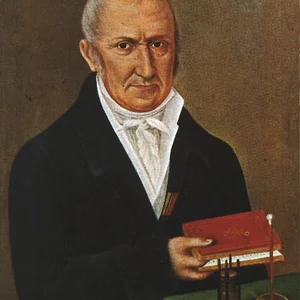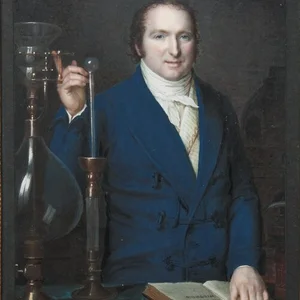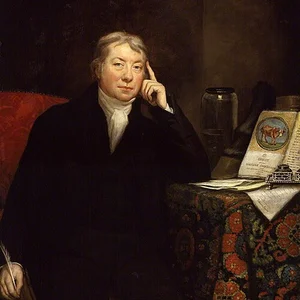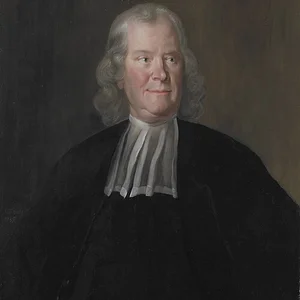

Dutch physician, botanist and chemist, professor at the University of Leiden. Considered the founder of modern clinical teaching and one of the greatest physicians of his era, he trained students who came from all over Europe.
Herman Boerhaave(1668 — 1738)
Herman Boerhaave
Hollande
6 min read
Frequently asked questions
Key Facts
- Born in 1668 in Voorhout, near Leiden (Dutch Republic)
- Appointed professor of medicine and botany at the University of Leiden in 1709
- Published his Institutiones medicae in 1708, a reference textbook throughout Europe
- Developed clinical teaching at the patient's bedside, training physicians from across the continent
- Died in 1738 in Leiden, at the height of his European fame
Works & Achievements
A textbook of theoretical medicine that set out the workings of the body in a clear and orderly way; it was translated and studied throughout Europe.
A concise collection of rules for recognizing and treating diseases, which became a classic taught throughout the eighteenth century.
A catalogue of the plants in the Leiden botanical garden, reflecting his immense work of enriching and classifying its collections.
A vast treatise grounding chemistry in observation and experiment rather than alchemy; it was a major reference work of the century.
Boerhaave established the practice of learning medicine at the patient's bedside, a method later taken up by the great schools of Vienna, Edinburgh, and Paris.
His students, such as van Swieten and Haller, spread his ideas and reformed medicine throughout Europe.
Anecdotes
Herman Boerhaave became so famous throughout Europe that, the story goes, a letter addressed “To the illustrious Boerhaave, physician, in Europe” reached him without any difficulty. Patients came from Russia, England and even Asia to consult him.
When he died, a mysterious and beautifully bound book was found among his papers, titled “The One and Only Secret of Medicine.” All its pages were blank, except one that bore these words: “Keep your head cool, your feet warm and your bowels open, and you will laugh at all the doctors.”
Boerhaave taught at the bedside of the sick, in the wards of the Saint Cecilia hospital in Leiden, where only twelve beds were set aside for his lessons. This revolutionary way of learning medicine “at the patient's bedside” made Leiden the medical capital of Europe.
Tsar Peter the Great of Russia, while travelling through the United Provinces, was absolutely determined to meet Boerhaave. Unable to see him during the day because of the crowds, he is said to have waited for him very early in the morning, sitting on a bench, to discuss medicine and botany with him.
Boerhaave directed the botanical garden of Leiden and enriched it considerably, growing it from a few hundred to several thousand species. He exchanged plants and seeds with scholars from all over the world to expand this living collection.
Primary Sources
The aim of medicine is to preserve health when present and to restore it when lost. Knowledge of the healthy body and of the diseased body is its foundation.
Disease is a state of the living body in which the functions necessary to life are injured or disturbed.
Chemistry is an art that teaches how to separate bodies from one another by means of fire and other instruments, in order to know their nature.
Here will be found described and classified the plants contained in the university garden, gathered from every part of the world.
Key Places
Village in the United Provinces near Leiden where Boerhaave was born in 1668, the son of a pastor.
Prestigious university where Boerhaave studied and then taught medicine, botany and chemistry for nearly forty years.
The university's botanical garden, one of the oldest in Europe, which Boerhaave directed and enriched with thousands of species from all over the world.
University where Boerhaave earned his doctorate in medicine in 1693.
Dutch city where Boerhaave lived, taught and died in 1738, drawing students from all across Europe.
Church in Leiden where Boerhaave was buried; a monument there honors his memory.
Typical Objects

Boerhaave was a pioneer in using the thermometer to measure the heat of the body and of chemistry experiments. He exchanged ideas about these instruments with Fahrenheit, the inventor of the scale.

A collection of dried and classified plants used to study botany. Boerhaave built herbaria for the Leiden garden, which he made one of the richest in Europe.

A furnace used to heat substances slowly and steadily in order to distil or separate them. Boerhaave used it for the chemistry experiments presented in his Elementa chemiae.

Glass vessels used to distil liquids and collect vapours during chemical experiments. Basic instruments of the eighteenth-century laboratory.

Boerhaave examined the pulse of his patients, counting the beats to assess their condition. The watch made it possible to measure the rate over time.

Boerhaave's lessons were copied by his students and then printed, sometimes without his consent, and circulated throughout Europe. These books made his reputation.
School Curriculum
Vocabulary & Tags
Key Vocabulary
Tags
Daily Life
Morning
Boerhaave rose early, often before dawn, and began by playing a tune on his lute or meditating in his garden. He then devoted the morning to his lectures at the university, where hundreds of students crowded in to hear him.
Afternoon
In the afternoon, he visited his patients, in town or at the hospital, and taught at the bedside of the sick. He also received a flood of mail from all over Europe—written consultations from physicians and princes alike.
Evening
In the evening, Boerhaave studied, wrote his treatises, and prepared the next day's lessons. He liked to relax in his country botanical garden, observing his rare plants.
Food
Renowned for his temperance, Boerhaave ate simply and in moderation, true to his famous advice to keep “the bowels open.” He championed healthy eating as a means of preserving good health.
Clothing
He wore the dark, sober dress of the scholar and the Protestant burgher of the United Provinces: a long frock coat, a white-collared shirt, and a wig, as the custom of the early 18th century required of professors.
Housing
Boerhaave lived in a comfortable house in Leiden, a prosperous and tidy city, and also owned a country estate with a garden where he cultivated his plants. His fortune, earned through his reputation, made him one of the city's well-to-do men.
Historical Timeline
Period Vocabulary
Liens externes & ressources
Références
Œuvres
Institutiones medicae
1708
Aphorismi de cognoscendis et curandis morbis
1709
Index plantarum (catalogue du jardin de Leyde)
1710
Elementa chemiae
1732
Fondation de l'enseignement clinique moderne
1714
Formation d'une génération de médecins européens
1701-1738