 flip
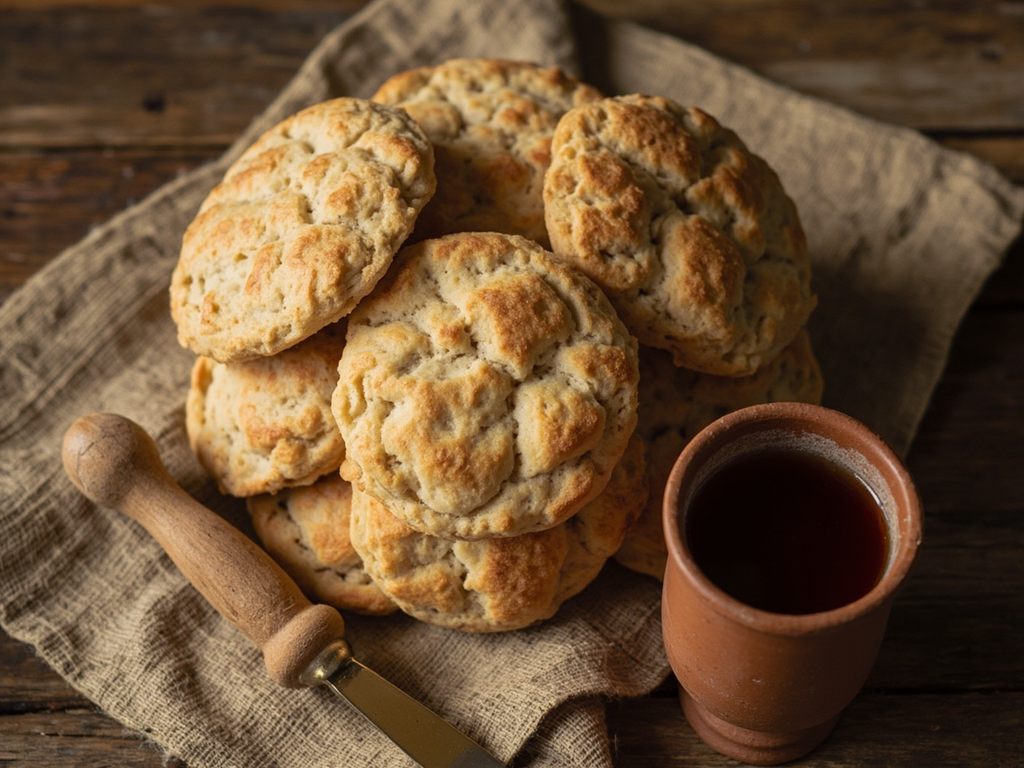
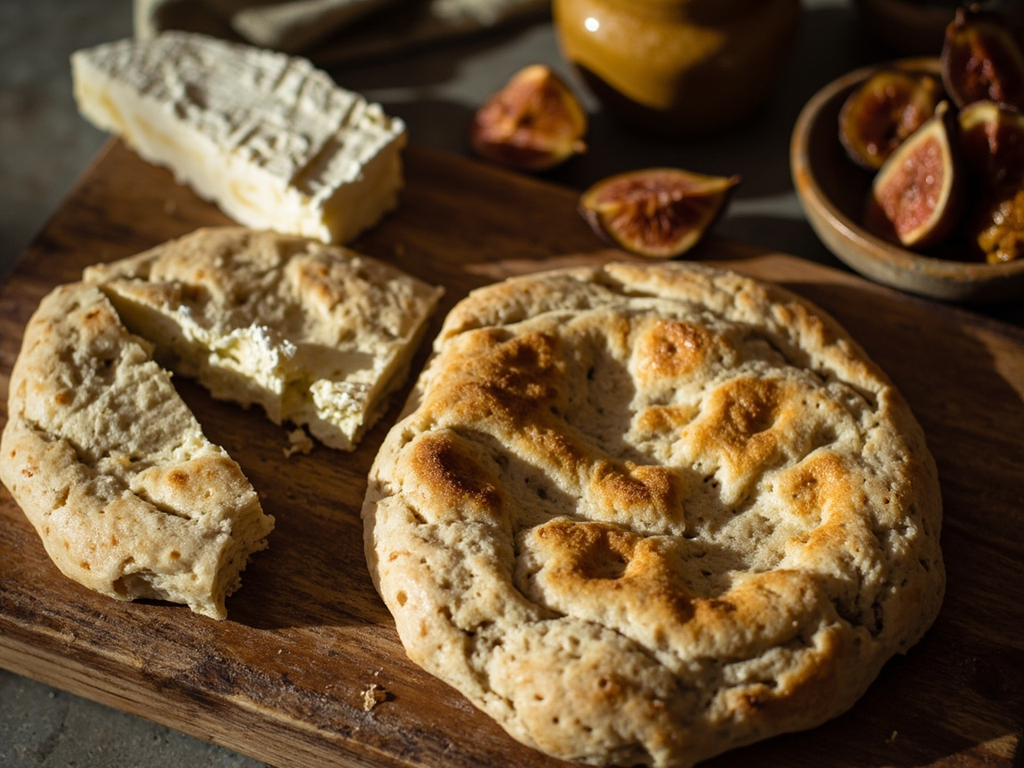
flipTraveler's Maza with Goat Cheese and Figs
Traveler's Maza with Goat Cheese and Figs
Why this dish? Hermes wears winged sandals and watches over anyone on the road. His natural snack is what travels without spoiling: barley maza, a piece of goat cheese, and dried figs — the meal of the shepherd and the peddler he protects.
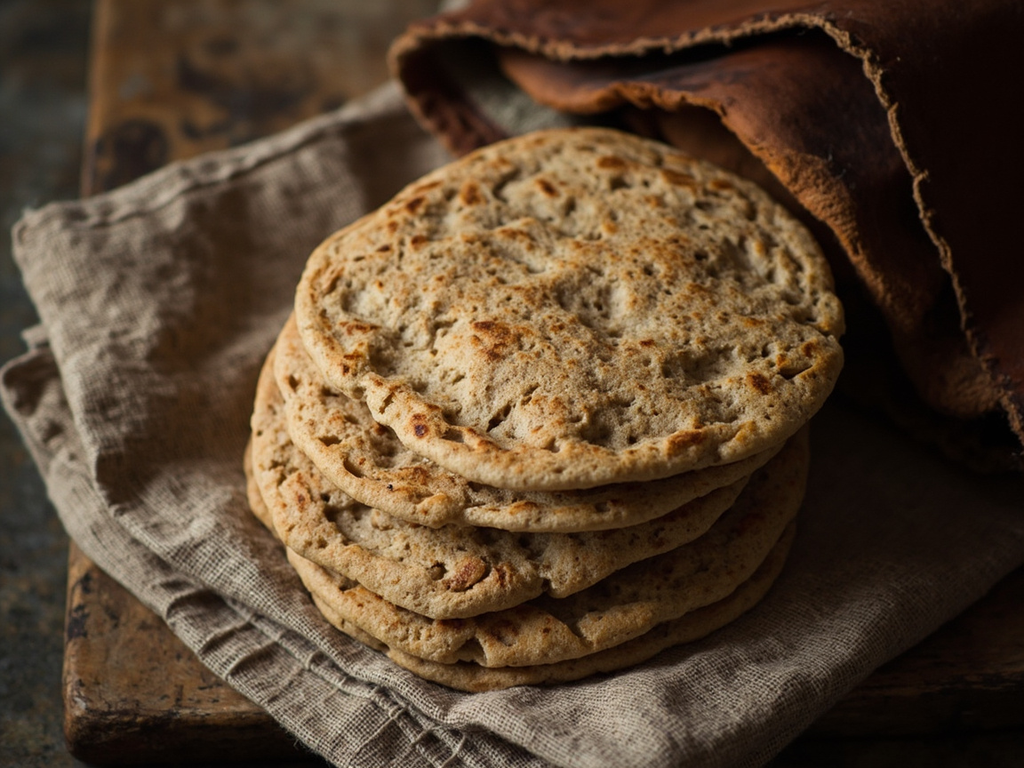
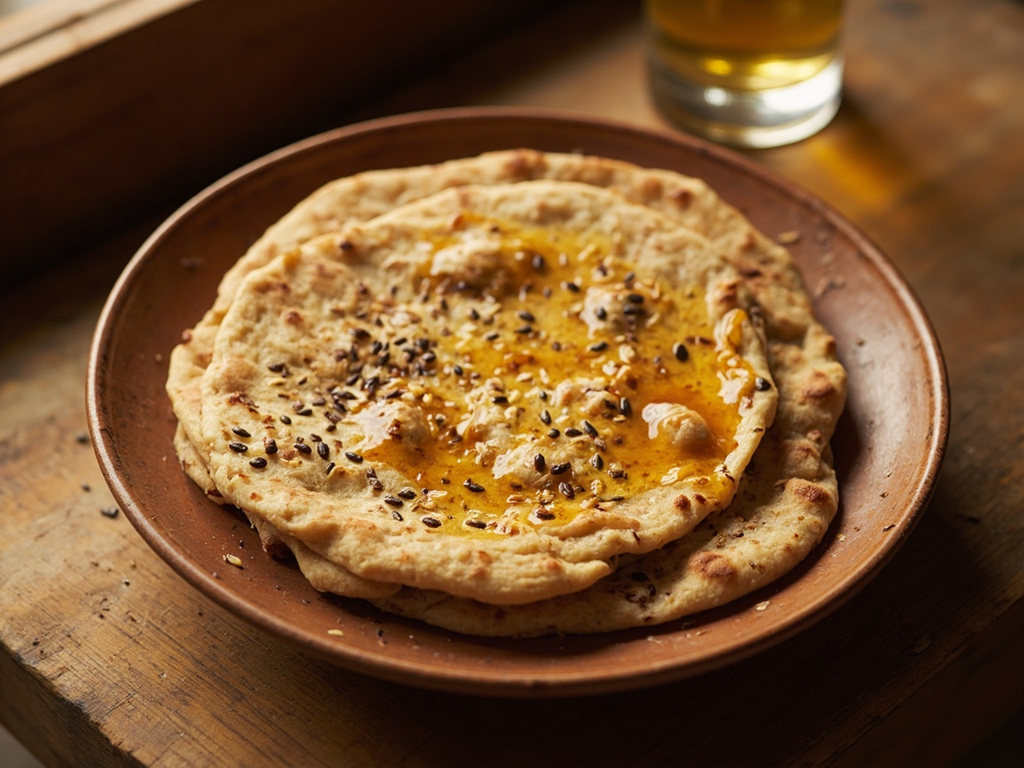
A dense, rustic barley flatbread, kneaded without leaven, eaten with firm goat cheese and dried figs. Nourishing, sticks to the ribs, portable: the quintessential walking lunch.
Taking the road at dawn? Good. Do not bring fragile fare that turns at the first sun. Do as the shepherds I guard: roast your barley, grind it, knead it with a little water and oil, and cook it on a hot stone. Slip into your pouch this maza, a wedge of goat cheese, and three dried figs — and you are set to cross the pass. I walk beside you; eat on the way, and we will talk of the business you are about to conclude.
- •Roasted barley flour (alphita) — three handfuls (nourishing base)
- •Water — as needed (hydration)
- •Olive oil — a drizzle (texture and flavor)
- •Sea salt — a pinch (seasoning, preservation)
- •Firm goat cheese — a piece (opson, protein)
- •Dried figs — a few (travel sugar, energy)
Traveler's Maza with Goat Cheese and Figs
A dense, rustic barley flatbread, kneaded without leaven, eaten with firm goat cheese and dried figs. Nourishing, sticks to the ribs, portable: the quintessential walking lunch.
Why this dish? Hermes wears winged sandals and watches over anyone on the road. His natural snack is what travels without spoiling: barley maza, a piece of goat cheese, and dried figs — the meal of the shepherd and the peddler he protects.
Taking the road at dawn? Good. Do not bring fragile fare that turns at the first sun. Do as the shepherds I guard: roast your barley, grind it, knead it with a little water and oil, and cook it on a hot stone. Slip into your pouch this maza, a wedge of goat cheese, and three dried figs — and you are set to cross the pass. I walk beside you; eat on the way, and we will talk of the business you are about to conclude.
Ingredients (period version)
- Roasted barley flour (alphita) — three handfuls (nourishing base)
- Water — as needed (hydration)
- Olive oil — a drizzle (texture and flavor)
- Sea salt — a pinch (seasoning, preservation)
- Firm goat cheese — a piece (opson, protein)
- Dried figs — a few (travel sugar, energy)
Ingredients
- Barley flour — 200 g (base)
- Water — 120–140 ml (hydration)
- Olive oil — 2 tbsp (texture)
- Salt — 1/2 tsp (seasoning)
- Aged goat cheese (e.g., firm log) — 120 g (accompaniment)
- Dried figs — 6 (sweet accompaniment)
Method
- Mix barley flour and salt, add oil then water little by little until a firm dough forms.
- Knead briefly and shape into flat discs about 1 cm thick.
- Cook in a dry, very hot pan (or on a stone/griddle) for 3–4 minutes per side, until browned in spots.
- Let cool: the maza hardens, making it portable.
- Serve (or pack) with sliced goat cheese and dried figs.
How it was made : Barley maza, not wheat bread, was the staple of the ordinary Greek — barley growing better in poor soils. It was often eaten raw (simply kneaded) or barely cooked. Cheese and figs were the most common opson, what one added to the flatbread to "relish" it.
The contemporary twist : Hiking version: press maza + goat cheese + fig into small "wraps" rolled in a fig leaf, tied — Hermes's lunchbox.
Sources : Athenaeus of Naucratis, The Deipnosophists · Andrew Dalby, Food in the Ancient World from A to Z (2003)
Hermes · Charactorium