 flip
flipShepherd's Migas from Extremadura
Shepherd's Migas from Extremadura
Why this dish? Cortés was born in Medellín, in the heart of Extremadura, land of shepherds and transhumance. Before the Indies, he was raised on this cuisine of scarcity, where stale bread is revived in pork fat.
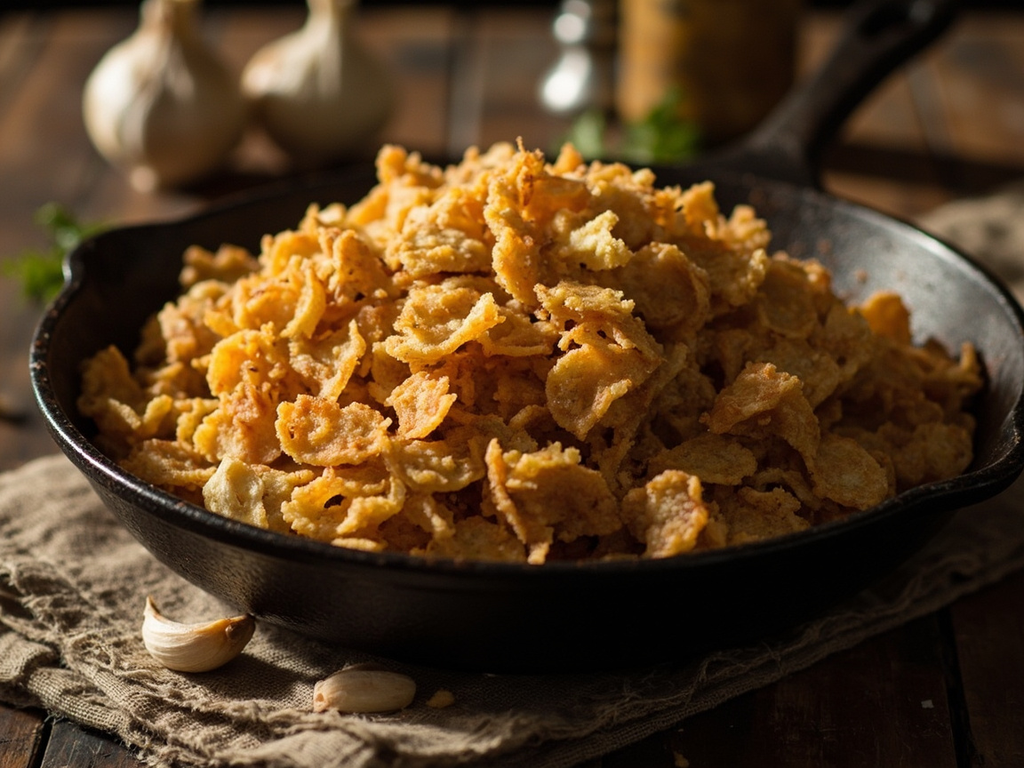
Stale bread broken into small pieces, moistened the night before, then fried in lard with garlic until golden and crispy. The survival dish of the sierra shepherds, filling for next to nothing.
Before the sea carried me to the Indies, I was a child of Medellín, in that harsh Extremadura where bread is never wasted. When the crust hardened, the shepherds would break it into small pieces, soak it in salted water all night, then fry it in lard until it danced in the pan. Believe me, on the icy mornings of the sierra, a bowl of hot migas was worth all the meats of the lords. I would add a crushed clove of garlic and give thanks to God for such a meager meal.
- •Stale wheat bread — one large hard loaf (base of the dish)
- •Lard fat (saindoux or panceta) — a good spoonful (fat and flavor)
- •Garlic — a few cloves (aromatic)
- •Water and salt — as needed (moisten the bread)
Shepherd's Migas from Extremadura
Stale bread broken into small pieces, moistened the night before, then fried in lard with garlic until golden and crispy. The survival dish of the sierra shepherds, filling for next to nothing.
Why this dish? Cortés was born in Medellín, in the heart of Extremadura, land of shepherds and transhumance. Before the Indies, he was raised on this cuisine of scarcity, where stale bread is revived in pork fat.
Before the sea carried me to the Indies, I was a child of Medellín, in that harsh Extremadura where bread is never wasted. When the crust hardened, the shepherds would break it into small pieces, soak it in salted water all night, then fry it in lard until it danced in the pan. Believe me, on the icy mornings of the sierra, a bowl of hot migas was worth all the meats of the lords. I would add a crushed clove of garlic and give thanks to God for such a meager meal.
Ingredients (period version)
- Stale wheat bread — one large hard loaf (base of the dish)
- Lard fat (saindoux or panceta) — a good spoonful (fat and flavor)
- Garlic — a few cloves (aromatic)
- Water and salt — as needed (moisten the bread)
Ingredients
- Stale bread (country loaf or day-old baguette) — 400 g (base)
- Lard or bacon — 4 tbsp lard or 150 g bacon (fat)
- Garlic — 4 whole cloves (aromatic)
- Salted warm water — 1 small glass (soften bread)
- Salt — to taste (seasoning)
Method
- The night before, cut the bread into small cubes. Sprinkle with salted warm water (do not soak), cover with a damp cloth, and let rest overnight.
- In a large pan, melt the lard (or fry the bacon) with the crushed garlic cloves.
- Add the bread cubes and stir constantly over medium-low heat for 20 to 30 minutes, until golden and crispy on the outside, soft inside.
- Salt, remove the garlic if desired, and serve hot, straight from the pan as in the shepherds' time.
How it was made : A dish of poverty and ingenuity, migas ensured that not a crumb of bread was wasted in an arid region. It was eaten with a wooden spoon, several people sharing the same pan, often early in the morning before taking the flocks out.
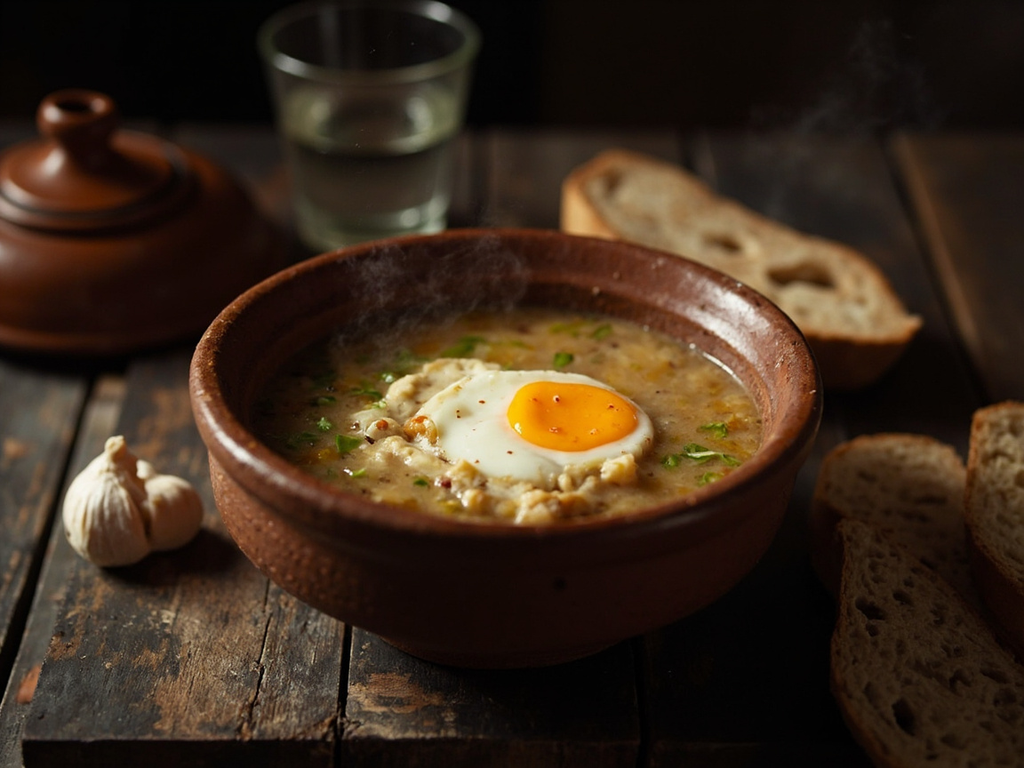
The contemporary twist : A pinch of pimentón de la Vera (unthinkable in the 15th century, as peppers had not yet reached Spain) and a fried egg on top turn this shepherd's dish into brunch.
Hernán Cortés · Charactorium