 flip
flipMiso Soup with Tofu and Wakame (味噌汁)
Miso Soup with Tofu and Wakame (味噌汁)
Why this dish? Miso soup opened every day in Japanese households of the Meiji era, including that of a young girl from Akasaka raised in an educated middle-class family. It is the invisible, faithful bowl that accompanied Raichō, from family breakfasts to the long nights writing the journal Seitō.
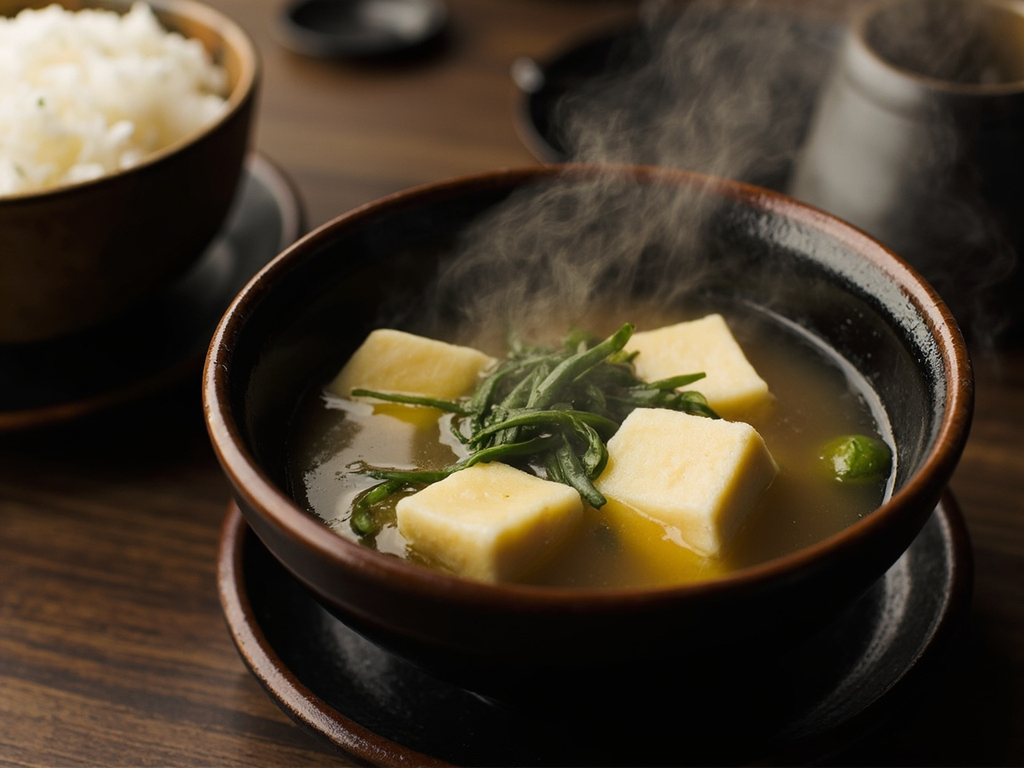
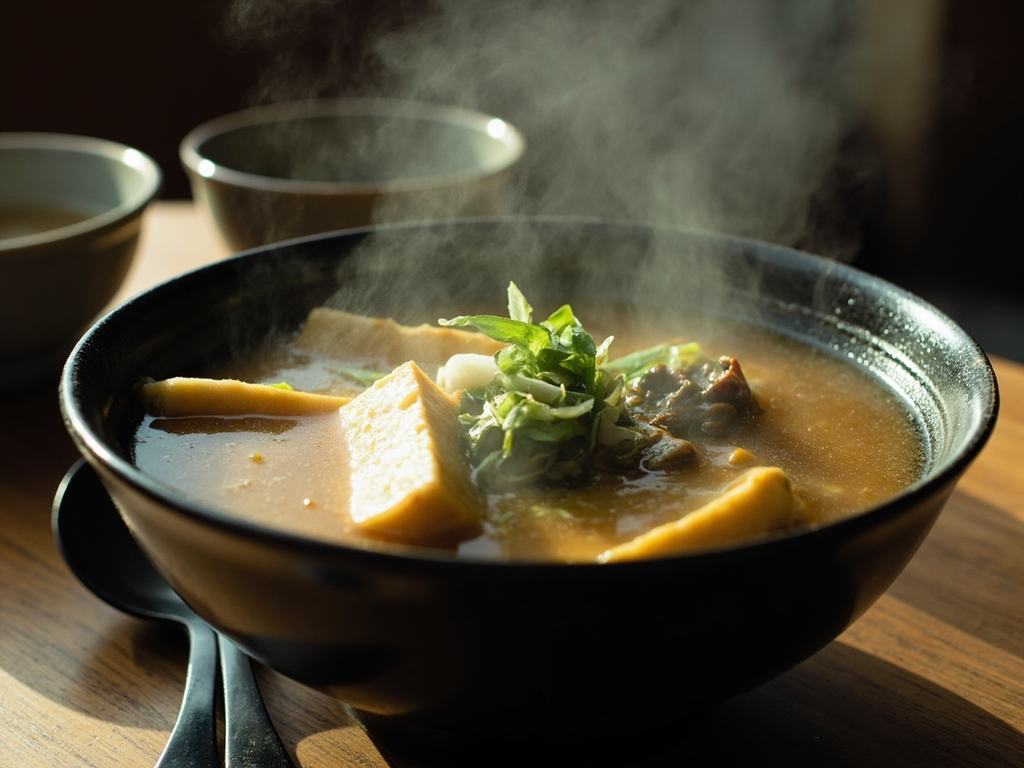
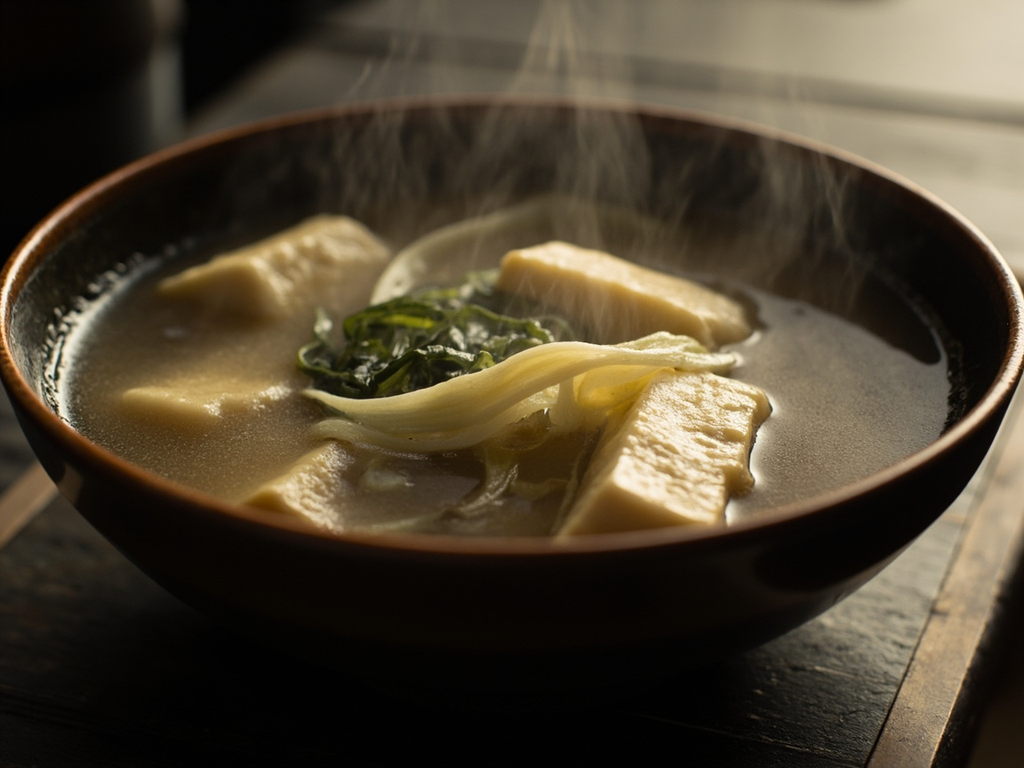
A clear dashi broth (kombu and dried bonito) in which a spoonful of miso dissolves, scattered with cubes of silken tofu and wakame seaweed that unfurl like flowers. Simple, warm, comforting — the repeated gesture of a lifetime.
Before the sun had even crossed the rooftops of Akasaka, my mother would make the dashi sing over the hearth. Remember this well: you never add miso to boiling water, or its soul dissipates and leaves only a bitterness without nobility. You turn off the heat, you dissolve the paste gently, as if confiding a secret. Later, when I kept vigil over the proofs of Seitō until dawn, this steaming bowl was my only companion, and it seemed to me that woman, like miso, reveals her true strength only when one finally stops rushing her.
- •Kombu (dried seaweed) — a hand-sized piece (dashi base)
- •Katsuobushi (dried bonito flakes) — a handful (broth umami)
- •Miso — to taste (fermented seasoning)
- •Tofu — half a block (garnish)
- •Dried wakame — a pinch (sea garnish)
Miso Soup with Tofu and Wakame (味噌汁)
A clear dashi broth (kombu and dried bonito) in which a spoonful of miso dissolves, scattered with cubes of silken tofu and wakame seaweed that unfurl like flowers. Simple, warm, comforting — the repeated gesture of a lifetime.
Why this dish? Miso soup opened every day in Japanese households of the Meiji era, including that of a young girl from Akasaka raised in an educated middle-class family. It is the invisible, faithful bowl that accompanied Raichō, from family breakfasts to the long nights writing the journal Seitō.
Before the sun had even crossed the rooftops of Akasaka, my mother would make the dashi sing over the hearth. Remember this well: you never add miso to boiling water, or its soul dissipates and leaves only a bitterness without nobility. You turn off the heat, you dissolve the paste gently, as if confiding a secret. Later, when I kept vigil over the proofs of Seitō until dawn, this steaming bowl was my only companion, and it seemed to me that woman, like miso, reveals her true strength only when one finally stops rushing her.
Ingredients (period version)
- Kombu (dried seaweed) — a hand-sized piece (dashi base)
- Katsuobushi (dried bonito flakes) — a handful (broth umami)
- Miso — to taste (fermented seasoning)
- Tofu — half a block (garnish)
- Dried wakame — a pinch (sea garnish)
Ingredients
- Water — 800 ml (liquid)
- Kombu — 10 g (a 10 cm square) (dashi base)
- Katsuobushi — 15 g (broth umami)
- Miso (preferably white or awase blend) — 3 tbsp (seasoning)
- Silken tofu — 200 g, diced (garnish)
- Dried wakame — 1 tbsp (rehydrated) (garnish)
- Chopped green onion — 1 stalk (finish)
Method
- Soak kombu in cold water for 30 min, then heat gently without boiling; remove kombu just before it boils.
- Add katsuobushi, turn off heat, let steep 2 min then strain: this is the dashi.
- Rehydrate wakame in a little water for 5 min, drain.
- Bring dashi to a gentle simmer, add tofu cubes and wakame.
- Off the heat, dissolve miso in a ladle of broth then stir it in — never boil after adding miso.
- Serve immediately, sprinkled with green onion.
How it was made : Dashi made from kombu and bonito has been the umami foundation of all Japanese cuisine for centuries. In the Meiji era, every household prepared its miso soup daily; tofu was bought fresh each morning from the itinerant vendor, announced by his characteristic horn.
The contemporary twist : An express version with instant dashi works well for a rushed morning, but a touch of grated ginger pleasantly enlivens the bowl in cold weather.
Hiratsuka Raichō · Charactorium