 flip
flipMorning Miso Soup (miso shiru)
Morning Miso Soup (miso shiru)
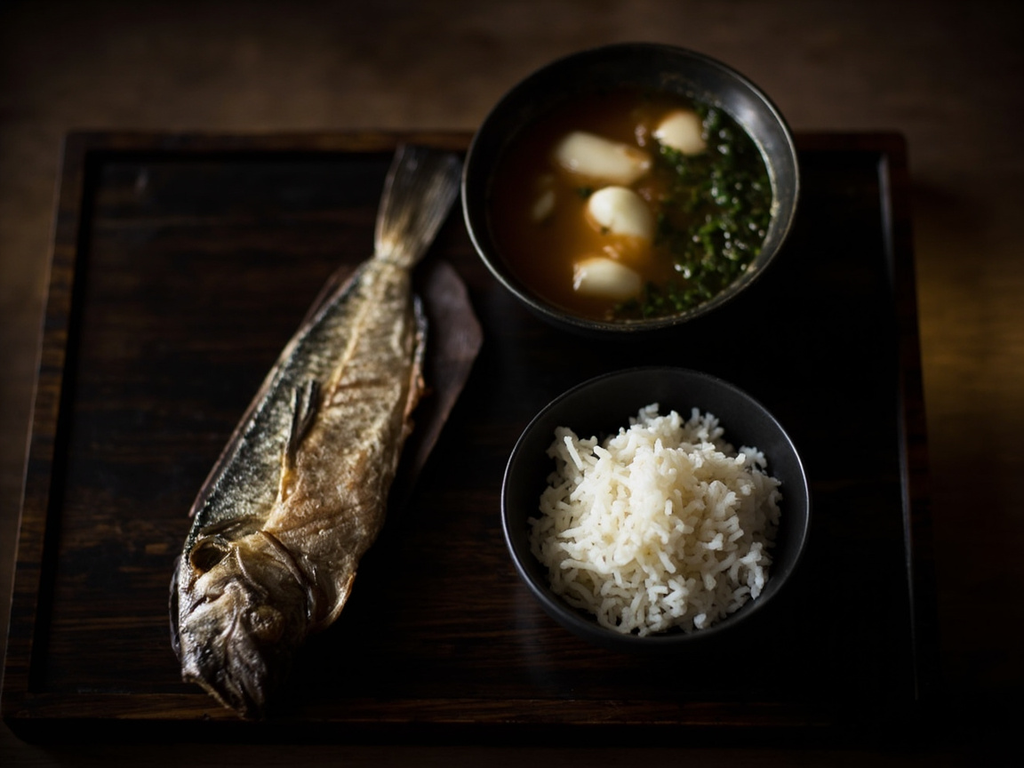
Why this dish? Tabei grew up in Miharu, Fukushima Prefecture, in a modest family of seven children. Miso soup, prepared each morning with dashi and a few garden vegetables, was the unchanging foundation of the post-war family table — the first warmth of the day before school and the early mountain hikes.
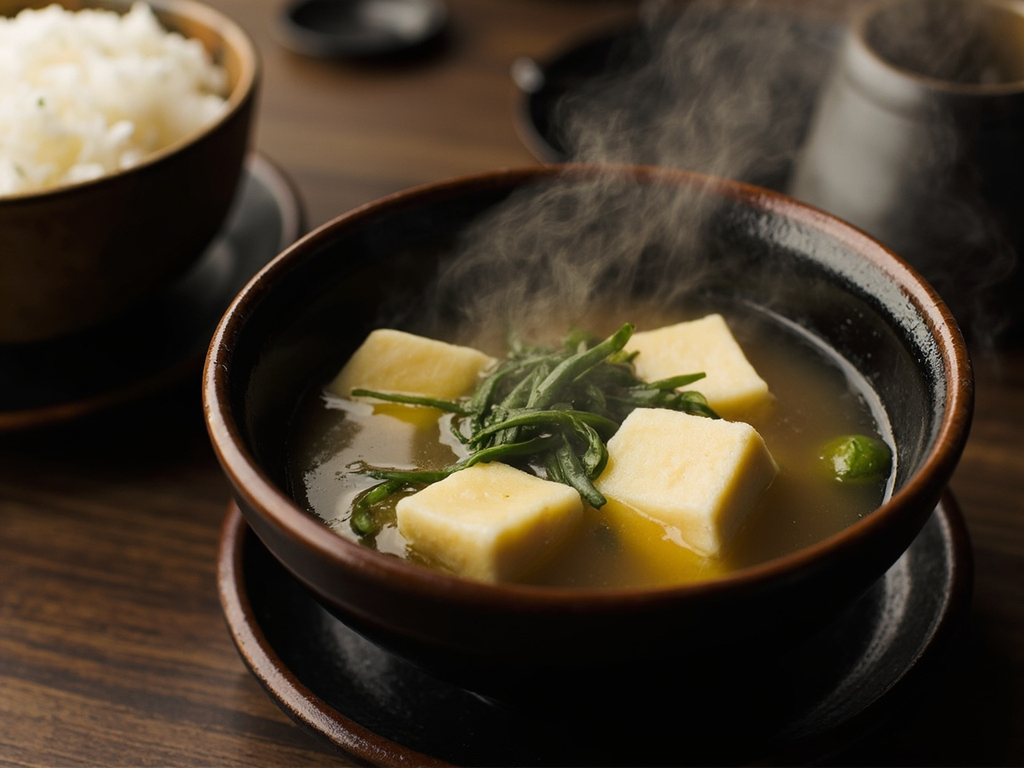
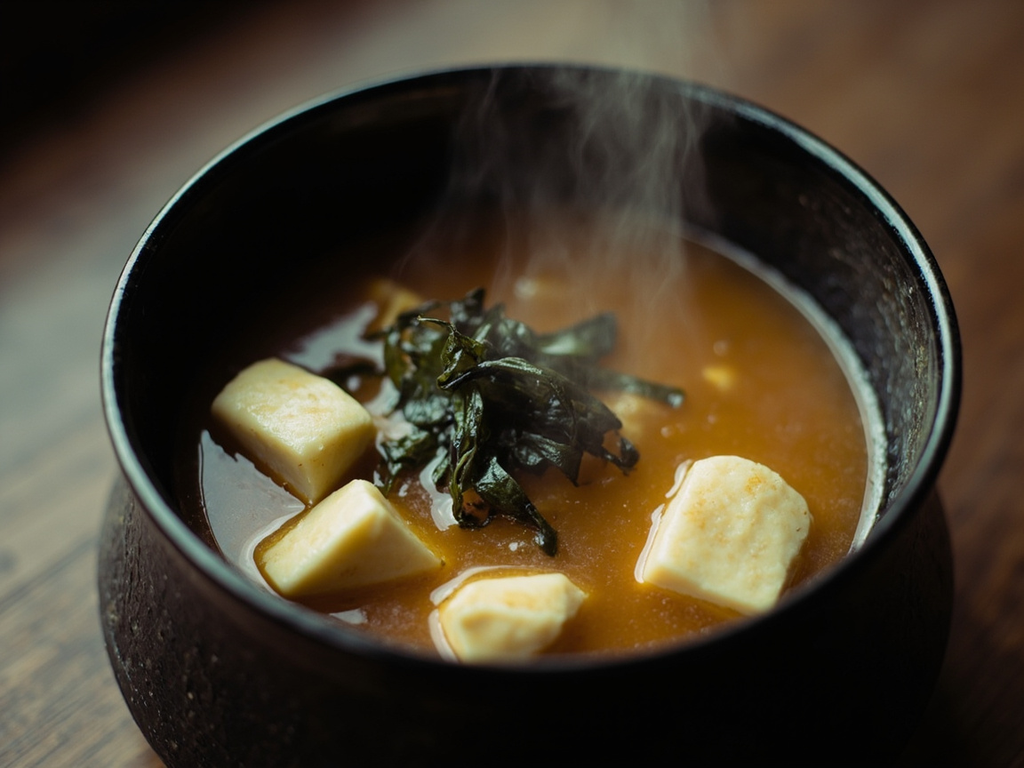
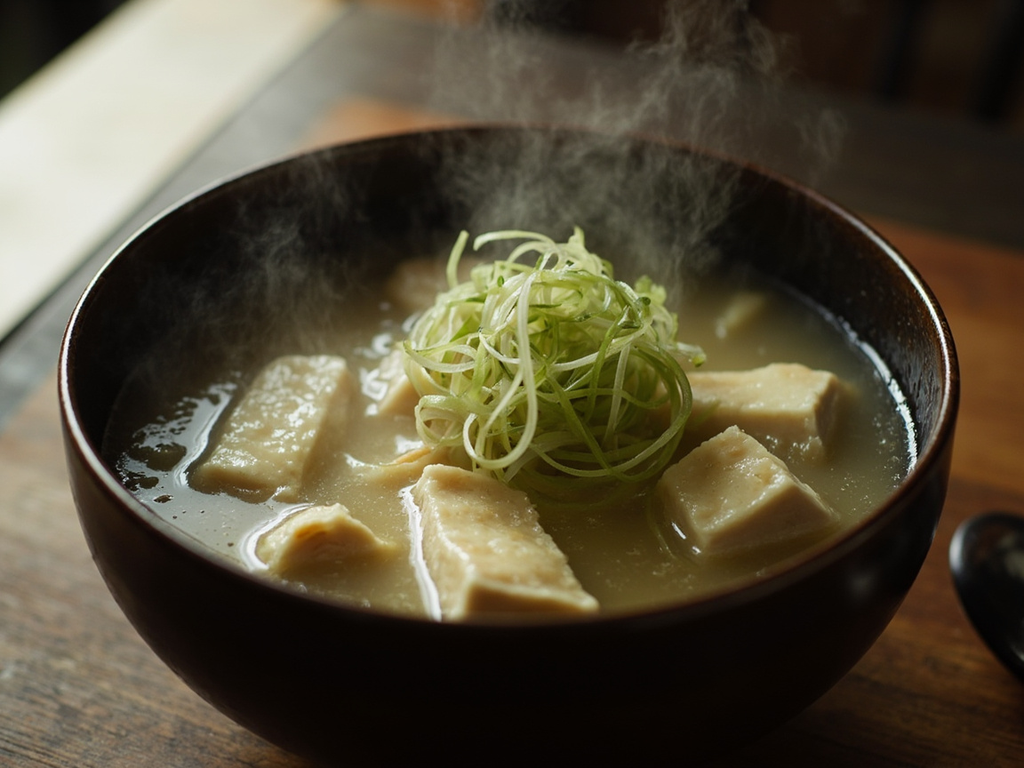
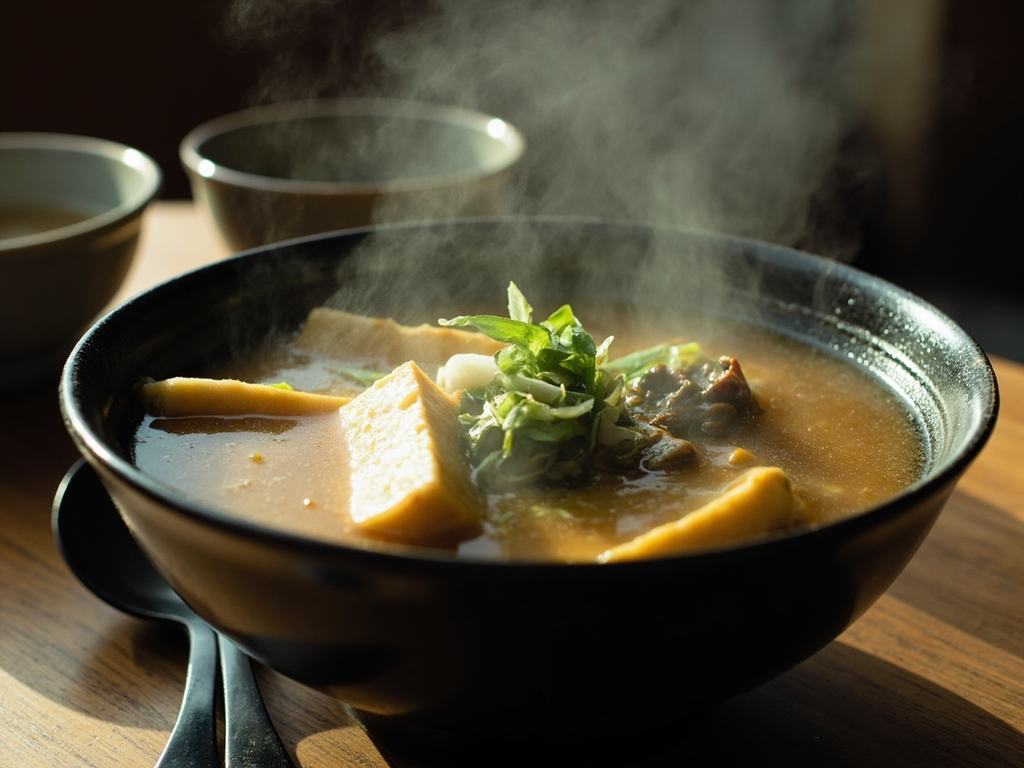
A broth of dashi (kombu seaweed and bonito flakes) enriched with a spoonful of miso paste, garnished with tofu and wakame. Comforting, salty, deeply umami: the bowl that opens every Japanese day.
At home in Miharu, the morning always began with the sound of my mother dissolving miso into the broth. There were seven of us children, so we needed little: a bit of seaweed, finely cut tofu, and that brown paste that smells of soybeans. I was taught one rule I never forgot, even later on glaciers: never let the soup boil once the miso is added, or its fragrance flees. I assure you, a steaming bowl is the strength of an entire morning.
- •Kombu (dried seaweed) — one piece (dashi base)
- •Katsuobushi (dried bonito flakes) — a handful (dashi umami)
- •Miso paste — by the ladle, to taste (fermented seasoning)
- •Tofu — one block (protein garnish)
- •Dried wakame — a pinch (vegetable garnish)
Morning Miso Soup (miso shiru)
A broth of dashi (kombu seaweed and bonito flakes) enriched with a spoonful of miso paste, garnished with tofu and wakame. Comforting, salty, deeply umami: the bowl that opens every Japanese day.
Why this dish? Tabei grew up in Miharu, Fukushima Prefecture, in a modest family of seven children. Miso soup, prepared each morning with dashi and a few garden vegetables, was the unchanging foundation of the post-war family table — the first warmth of the day before school and the early mountain hikes.
At home in Miharu, the morning always began with the sound of my mother dissolving miso into the broth. There were seven of us children, so we needed little: a bit of seaweed, finely cut tofu, and that brown paste that smells of soybeans. I was taught one rule I never forgot, even later on glaciers: never let the soup boil once the miso is added, or its fragrance flees. I assure you, a steaming bowl is the strength of an entire morning.
Ingredients (period version)
- Kombu (dried seaweed) — one piece (dashi base)
- Katsuobushi (dried bonito flakes) — a handful (dashi umami)
- Miso paste — by the ladle, to taste (fermented seasoning)
- Tofu — one block (protein garnish)
- Dried wakame — a pinch (vegetable garnish)
Ingredients
- Water — 800 ml (base)
- Kombu — 1 piece 10 cm square (dashi)
- Katsuobushi — 10 g (dashi)
- Miso paste — 3 tbsp (seasoning)
- Firm tofu — 150 g cubed (garnish)
- Dried wakame — 1 tsp (garnish)
- Chopped green onion — 1 stalk (finishing)
Method
- Soak kombu in cold water for 20 min, then heat gently without boiling; remove kombu just before boiling.
- Add katsuobushi, turn off heat, let steep 2 min then strain: this is the dashi.
- Rehydrate wakame, add it with tofu to the hot dashi.
- Off the heat, dissolve miso in a ladle of broth before incorporating (never boil after adding miso).
- Serve immediately, sprinkled with green onion.
How it was made : In rural Japan before and after the war, miso was often homemade, fermented in large jars to last the winter. Dashi was prepared from whatever was available; modest families sometimes used simple dried sardines (niboshi) instead of bonito.
The contemporary twist : Add enoki mushrooms and a drizzle of toasted sesame oil: a 'high-altitude miso' served warm in a thermos cup, as a nod to Tabei's bivouacs.
Junko Tabei · Charactorium