 flip
flipUmeboshi, Salted Pickled Plums (梅干し)
Umeboshi, Salted Pickled Plums (梅干し)
Why this dish? In every Japanese home, including those in Tokyo and Kamakura where Raichō lived, the jar of umeboshi spanned the seasons. These plums preserved in salt and red shiso sat at the heart of the bowl of white rice — the famous hinomaru bentō, white rice and red plum like the flag — and sustained long workdays and winters without refrigeration.
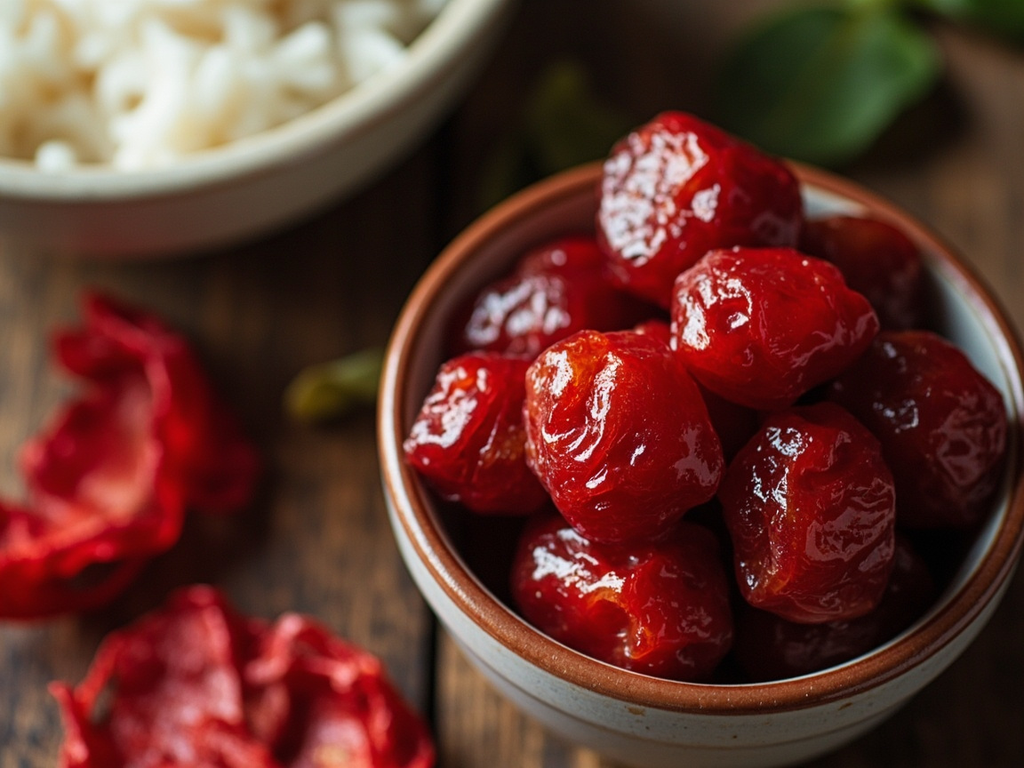
Green ume plums, salted then sun-dried, become intensely sour, salty, wrinkled, and a deep red thanks to shiso leaves. A tiny but brilliant bite, designed to last years and enliven a simple bowl of rice.
Do not be fooled by its small size: a single one of these plums perfumes an entire bowl of rice and keeps a body standing through summer heat. You salt the ume at the start of summer, let them release their juice, then expose them for three days in the full July sun — this is called the doyoboshi. The shiso leaves give them that fiery red and that fragrance. My grandmother kept plums twenty years old, and she said that a woman, like umeboshi, gains in character what she loses in roundness. I have long pondered those words.
- •Green ume plums — according to jar size (fruit to preserve)
- •Salt — about one-fifth the weight of plums (preservation)
- •Red shiso leaves — one bunch (color and fragrance)
Umeboshi, Salted Pickled Plums (梅干し)
Green ume plums, salted then sun-dried, become intensely sour, salty, wrinkled, and a deep red thanks to shiso leaves. A tiny but brilliant bite, designed to last years and enliven a simple bowl of rice.
Why this dish? In every Japanese home, including those in Tokyo and Kamakura where Raichō lived, the jar of umeboshi spanned the seasons. These plums preserved in salt and red shiso sat at the heart of the bowl of white rice — the famous hinomaru bentō, white rice and red plum like the flag — and sustained long workdays and winters without refrigeration.
Do not be fooled by its small size: a single one of these plums perfumes an entire bowl of rice and keeps a body standing through summer heat. You salt the ume at the start of summer, let them release their juice, then expose them for three days in the full July sun — this is called the doyoboshi. The shiso leaves give them that fiery red and that fragrance. My grandmother kept plums twenty years old, and she said that a woman, like umeboshi, gains in character what she loses in roundness. I have long pondered those words.
Ingredients (period version)
- Green ume plums — according to jar size (fruit to preserve)
- Salt — about one-fifth the weight of plums (preservation)
- Red shiso leaves — one bunch (color and fragrance)
Ingredients
- Green ume plums (or firm green apricots as substitute) — 1 kg (fruit to preserve)
- Sea salt — 180 g (18% of weight) (preservation)
- Red shiso leaves (akajiso) — 1 bunch (color and fragrance)
- Salt for shiso — 2 tbsp (to wilt leaves)
Method
- Wash ume, remove stems, dry gently.
- In a clean jar, alternate layers of plums and salt; place a weight on top and cover.
- Let sit for a few days: the plums release a juice (umezu) that should cover them.
- Salt and massage the shiso leaves to wilt them, discard the bitter juice, then add them to the jar — they tint everything red.
- In midsummer, during dry weather, spread the plums in the sun for 3 days (bring them in at night): this is the doyoboshi.
- Return to jar with shiso; umeboshi keep for months, even years, and mellow in flavor.
How it was made : Umeboshi has accompanied Japanese cuisine since the medieval period, first as a remedy and then as a universal household preserve. Very salty (15-20%), it kept without refrigeration and was thought to purify rice and aid digestion. The hot-season sun-drying (doyō) concentrates acidity and aromas.
The contemporary twist : Minced and mixed with a little honey, it becomes a lively paste to spread on cucumbers or whisk into a vinaigrette to wake up a contemporary salad.
Hiratsuka Raichō · Charactorium