 flip
flipAruhe tuki (Pounded fernroot patty)
Aruhe tuki (Pounded fernroot patty)
Why this dish? Fernroot (aruhe) was the staple food of warriors on campaign — compact, non-perishable, energy-rich. During Hone Heke's military campaigns against the British (1845-1846), his toa (warriors) carried dried and pounded aruhe as marching rations, from Kororāreka to the fortified pā of Ohaeawai and Ruapekapeka.
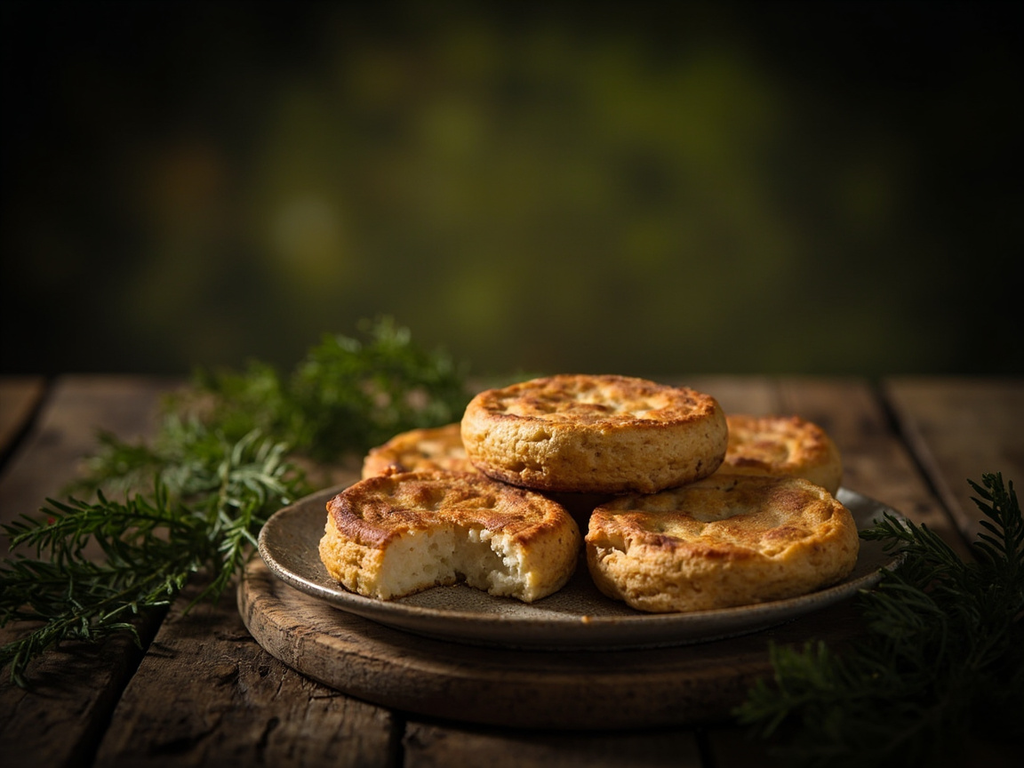
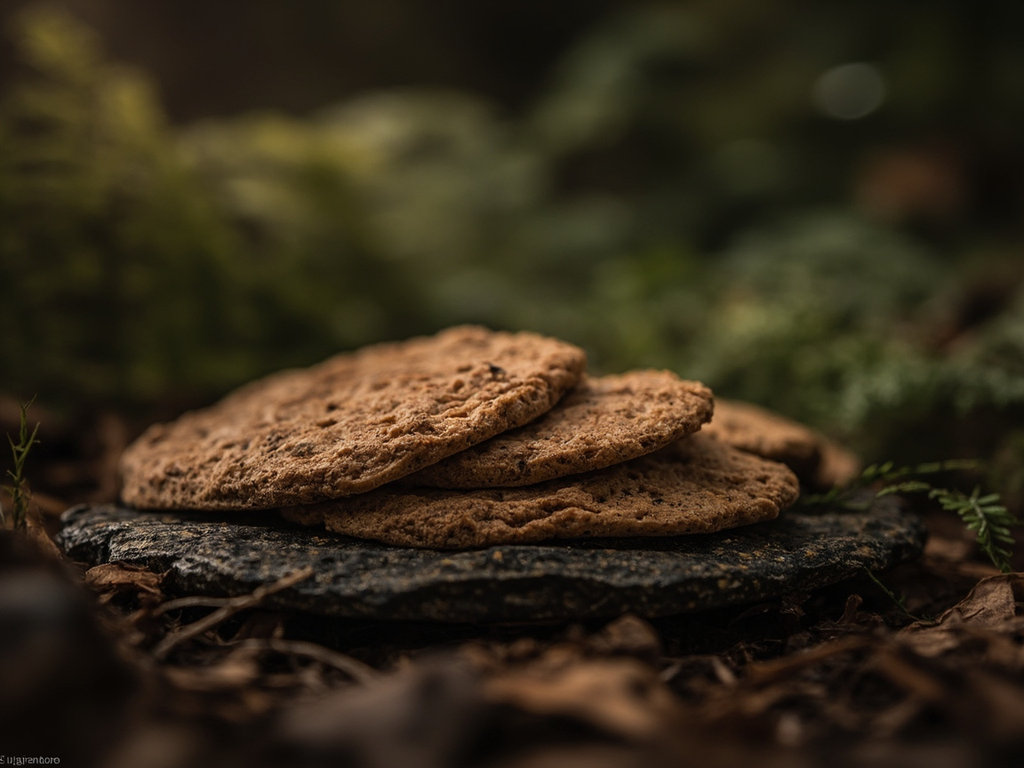
Edible fern rhizome (Pteridium esculentum) dried, roasted, then pounded into a compact paste, sometimes shaped into a patty. A subsistence food with an earthy, slightly bitter taste, aruhe was the ultimate survival food, consumed daily by Māori before kumara and potato dominated.
When we march toward the enemy pā, there is no hāngi, no fire that would betray our position to the red soldiers. Aruhe is the warrior's kai — we carry it at the belt, dry and hard. We grind it between two stones, chew slowly. It is not a chief's dish, no. But it is what keeps a man standing when he must fight. Our tūpuna lived on aruhe even before kumara. It is the root of this land, and as long as it grows, the Ngāpuhi will lack nothing.
- •Edible fern rhizomes (aruhe / bracken fern) — An armful of roots (Base)
- •Flat stone (for pounding) — One (Preparation tool)
Aruhe tuki (Pounded fernroot patty)
Edible fern rhizome (Pteridium esculentum) dried, roasted, then pounded into a compact paste, sometimes shaped into a patty. A subsistence food with an earthy, slightly bitter taste, aruhe was the ultimate survival food, consumed daily by Māori before kumara and potato dominated.
Why this dish? Fernroot (aruhe) was the staple food of warriors on campaign — compact, non-perishable, energy-rich. During Hone Heke's military campaigns against the British (1845-1846), his toa (warriors) carried dried and pounded aruhe as marching rations, from Kororāreka to the fortified pā of Ohaeawai and Ruapekapeka.
When we march toward the enemy pā, there is no hāngi, no fire that would betray our position to the red soldiers. Aruhe is the warrior's kai — we carry it at the belt, dry and hard. We grind it between two stones, chew slowly. It is not a chief's dish, no. But it is what keeps a man standing when he must fight. Our tūpuna lived on aruhe even before kumara. It is the root of this land, and as long as it grows, the Ngāpuhi will lack nothing.
Ingredients (period version)
- Edible fern rhizomes (aruhe / bracken fern) — An armful of roots (Base)
- Flat stone (for pounding) — One (Preparation tool)
Ingredients
- Fern starch or arrowroot — 200 g (Modern substitute for pounded aruhe)
- Buckwheat flour — 100 g (Complement for texture and earthy flavor)
- Warm water — 150 ml approx. (Binder)
- Salt — 1 pinch (Seasoning)
Method
- Mix the starch (arrowroot or fern starch if available) with the buckwheat flour and salt in a bowl.
- Add warm water gradually, kneading until a firm, homogeneous dough forms — neither sticky nor crumbly.
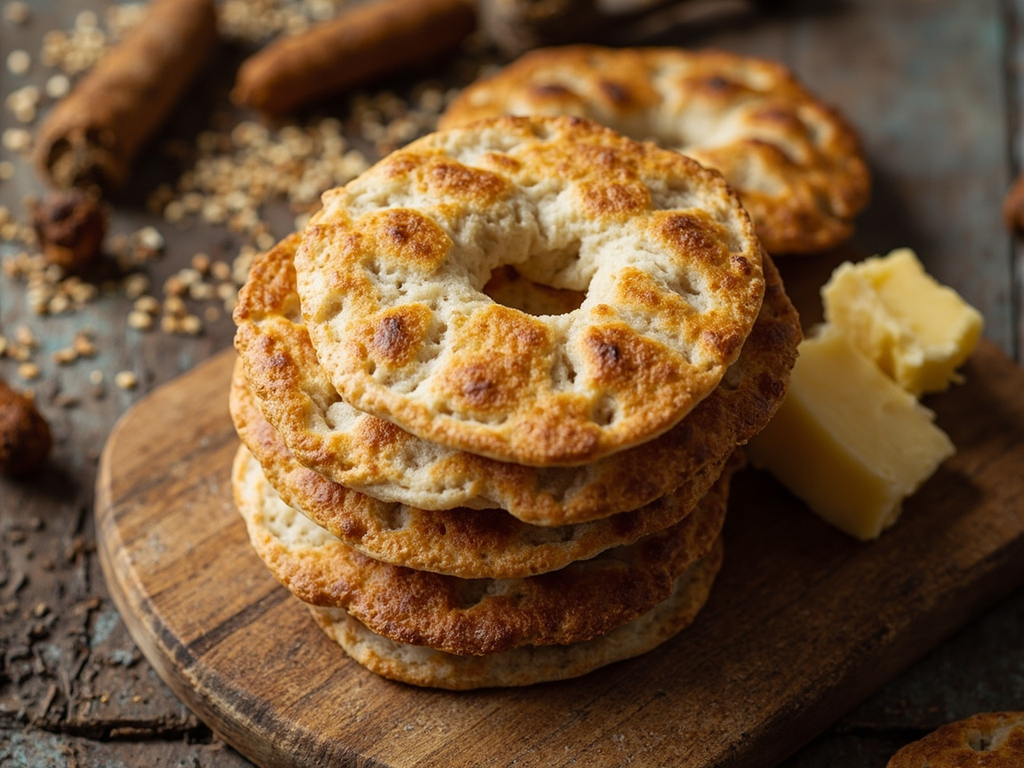
- Shape into patties about 1 cm thick and 8 cm in diameter.
- Heat a dry cast-iron pan (no fat) over medium heat.
- Cook the patties for 4-5 minutes on each side until golden and slightly crispy on the surface.
- Let cool: they harden as they cool, like the original marching rations.
How it was made : Aruhe (Pteridium esculentum) was the main staple of Māori before the arrival of kumara, and remained a common food in the 19th century, especially outside the tuber harvest season. The rhizomes were dug up, dried in the sun or over a fire, then pounded on a flat stone (pounding stone) to break the fibers and extract the starch. The result, chewed as is or shaped into patties, had a bitter, earthy flavor. Early Europeans (Cook, Polack, Colenso) describe this process in detail, noting that Māori preferred young, tender roots.
The contemporary twist : Serve with a drizzle of mānuka honey to soften the bitterness — a nod to contemporary New Zealand.
Sources : Colenso, William. “On the Vegetable Food of the Ancient New Zealanders”. Transactions of the New Zealand Institute, vol. 13, 1880. · Best, Elsdon. “Forest Lore of the Maori”. Dominion Museum Bulletin, no. 14, 1942. · Polack, Joel Samuel. New Zealand: Being a Narrative of Travels, vol. II. London, 1838.
Hone Heke · Charactorium