 flip
flipGenmai-meshi to miso-shiru — brown rice and miso soup
Genmai-meshi to miso-shiru — brown rice and miso soup
Why this dish? Rice and miso soup formed the daily meal of a samurai serving the Minamoto clan. Between archery and sword training, Tomoe drew from this bowl the energy for her warrior days.
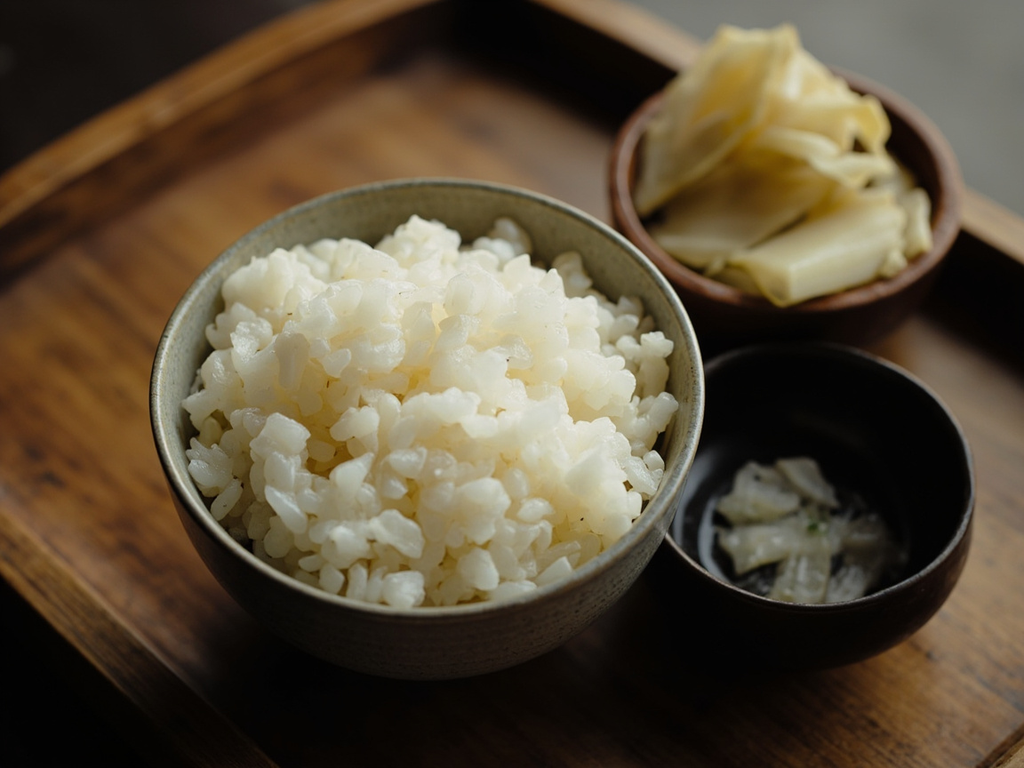
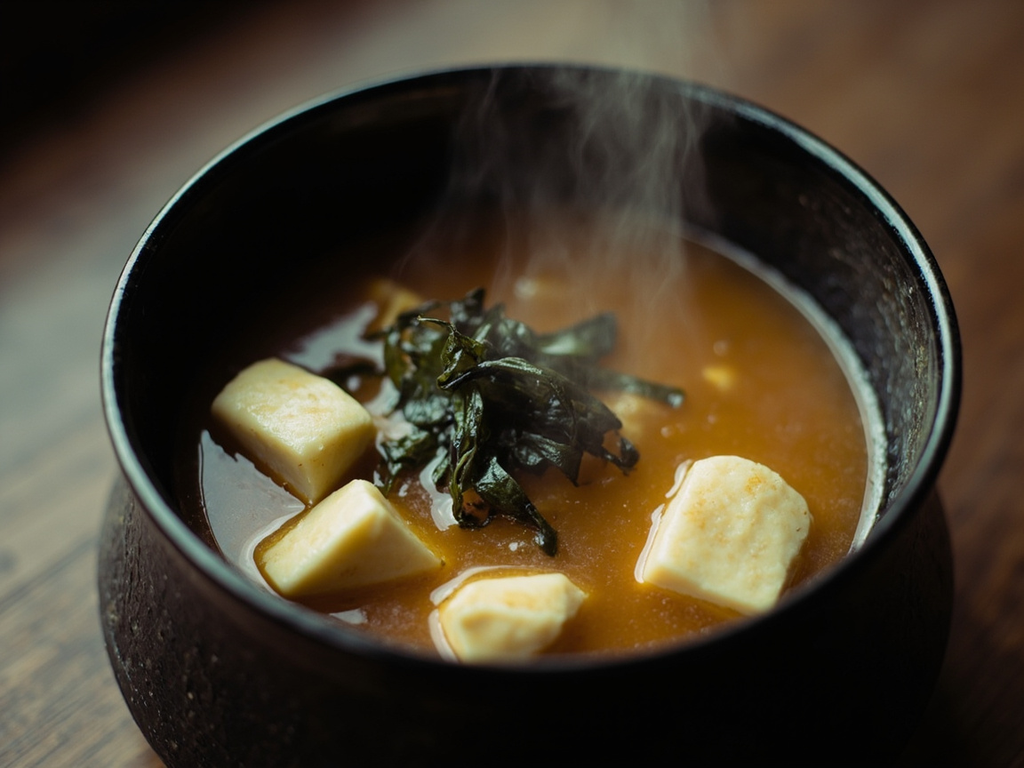
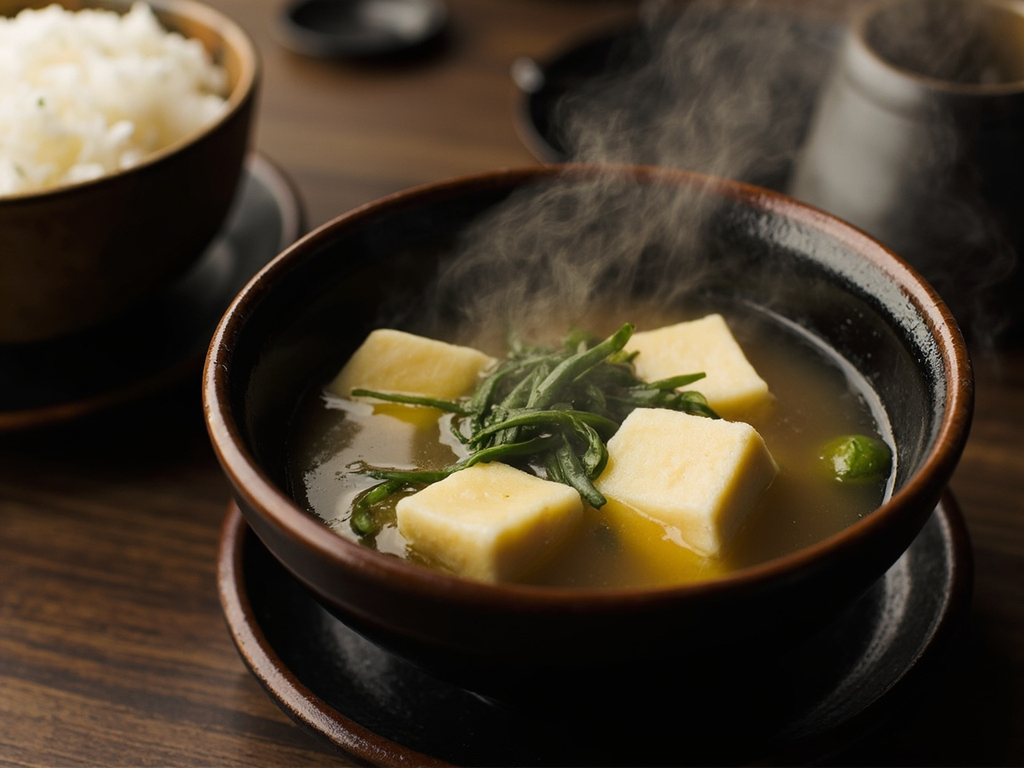
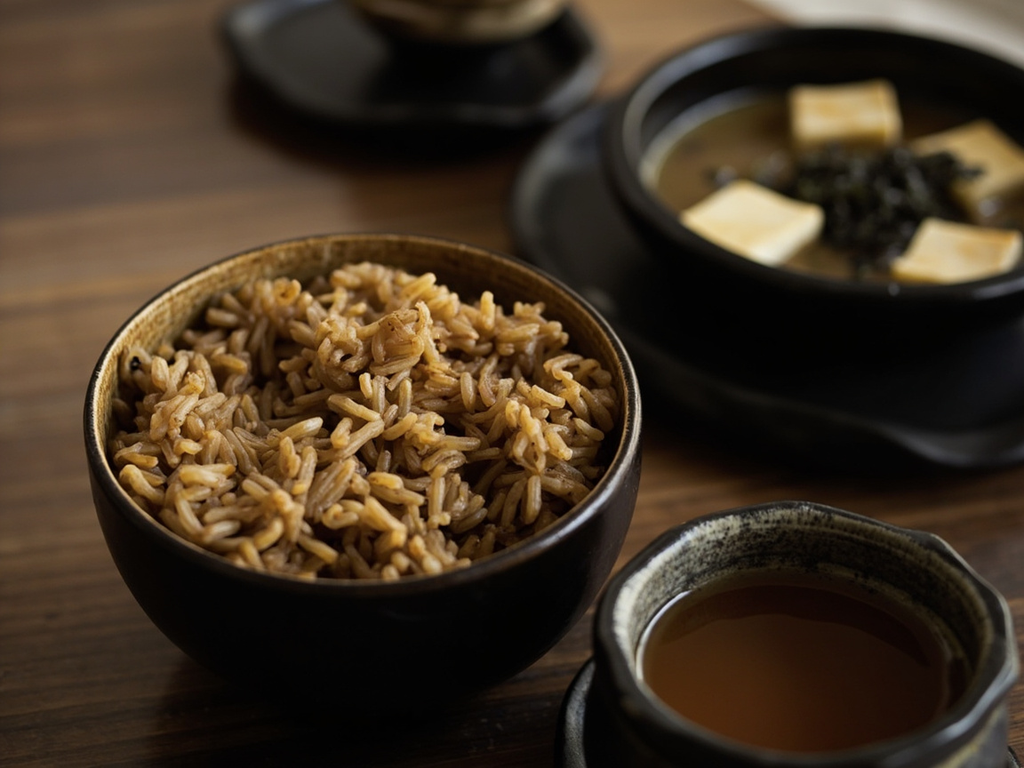
A bowl of steaming brown rice, firm and nourishing, served with a miso soup where wakame seaweed and tofu cubes float. Simple, comforting, it is the heart of medieval Japanese cuisine.
Approach, and do not be fooled by the simplicity of this bowl. Before the bow sings and the sword is drawn, it is this rice and this brown soup that keep a warrior's body standing. In my lord Yoshinaka's camp, I would pour the hishio into hot water at the last moment, never over a high flame, lest its spirit flee. Eat slowly, warrior: a belly filled with rice is worth more than a new suit of armor.
- •Brown rice (genmai) — two handfuls per mouth (staple of the meal)
- •Hishio (ancient miso paste) — one spoonful per bowl (seasoning, umami)
- •Dried wakame seaweed — a pinch (garnish, minerals)
- •Tofu (soybean curd) — one piece (protein)
- •Spring water — as needed (soup base)
Genmai-meshi to miso-shiru — brown rice and miso soup
A bowl of steaming brown rice, firm and nourishing, served with a miso soup where wakame seaweed and tofu cubes float. Simple, comforting, it is the heart of medieval Japanese cuisine.
Why this dish? Rice and miso soup formed the daily meal of a samurai serving the Minamoto clan. Between archery and sword training, Tomoe drew from this bowl the energy for her warrior days.
Approach, and do not be fooled by the simplicity of this bowl. Before the bow sings and the sword is drawn, it is this rice and this brown soup that keep a warrior's body standing. In my lord Yoshinaka's camp, I would pour the hishio into hot water at the last moment, never over a high flame, lest its spirit flee. Eat slowly, warrior: a belly filled with rice is worth more than a new suit of armor.
Ingredients (period version)
- Brown rice (genmai) — two handfuls per mouth (staple of the meal)
- Hishio (ancient miso paste) — one spoonful per bowl (seasoning, umami)
- Dried wakame seaweed — a pinch (garnish, minerals)
- Tofu (soybean curd) — one piece (protein)
- Spring water — as needed (soup base)
Ingredients
- Brown rice — 300 g (staple of the meal)
- Miso paste — 3 tbsp (seasoning, umami)
- Dried wakame seaweed — 5 g (garnish)
- Firm tofu — 200 g (protein)
- Water — 1 liter (soup base)
- Dashi (kombu seaweed broth) — 1 piece of kombu, 10 cm (umami base, optional)
Method
- Rinse the brown rice, cover with water and cook covered for 40 minutes until absorbed, then let rest for 10 minutes.
- Infuse the kombu in cold water, heat gently and remove the kombu just before boiling to obtain a clear dashi.
- Rehydrate the wakame in a little water for 5 minutes, cut the tofu into cubes.
- Off the high heat, dissolve the miso in a ladle of hot broth then stir it back in: NEVER boil the miso.
- Add tofu and wakame, reheat without boiling, serve the soup alongside the bowl of rice.
How it was made : In the Genpei era, brown (unpolished) rice was the staple; polished white rice remained a court luxury. Miso, inherited from fermentation techniques from the continent, was made at home or at the temple and was the main source of salt and flavor. Modern soy sauce (shōyu) did not yet exist.
The contemporary twist : Sprinkle with a few toasted sesame seeds and a shower of chopped green onion: the warrior's bowl in a photogenic version.
Tomoe Gozen · Charactorium