 flip
flipHoney-Glazed Roast Goose with Figs, at the Pharaoh's Table
Honey-Glazed Roast Goose with Figs, at the Pharaoh's Table
Why this dish? The goose was the animal of royal abundance par excellence—offered by the thousands to the temples of Amun that Horemheb worked to restore after the Akhenaten episode. As pharaoh restoring traditional cults, presiding over a banquet where a fat honey-glazed goose takes pride of place was to display the return of order and divine generosity.
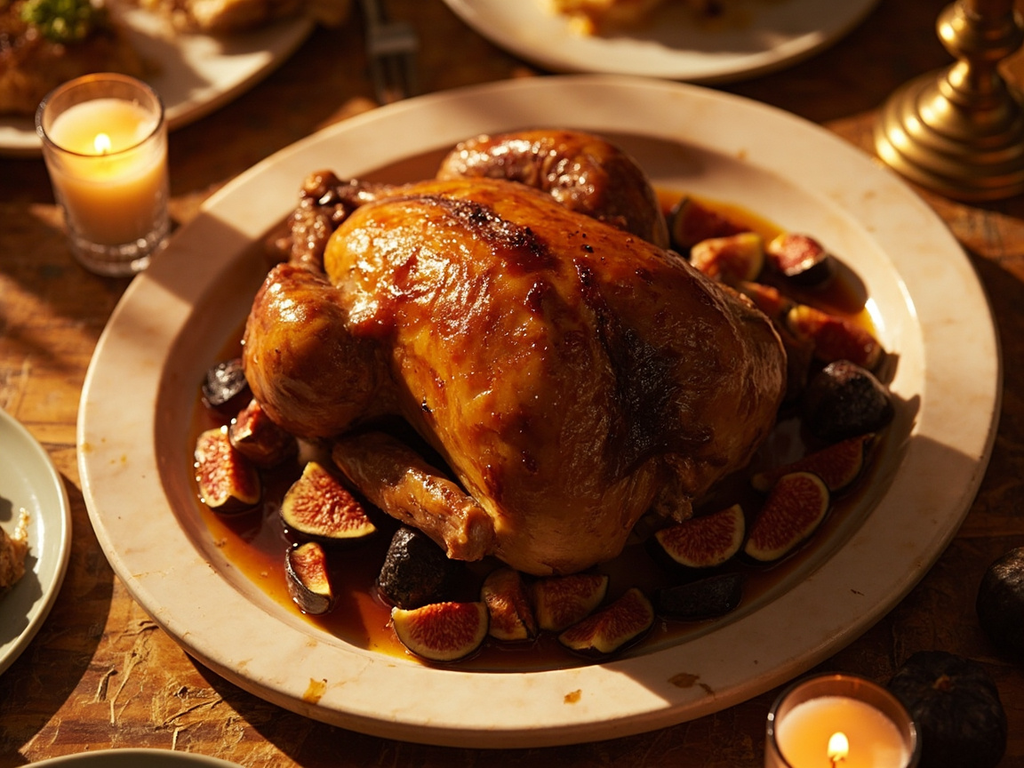
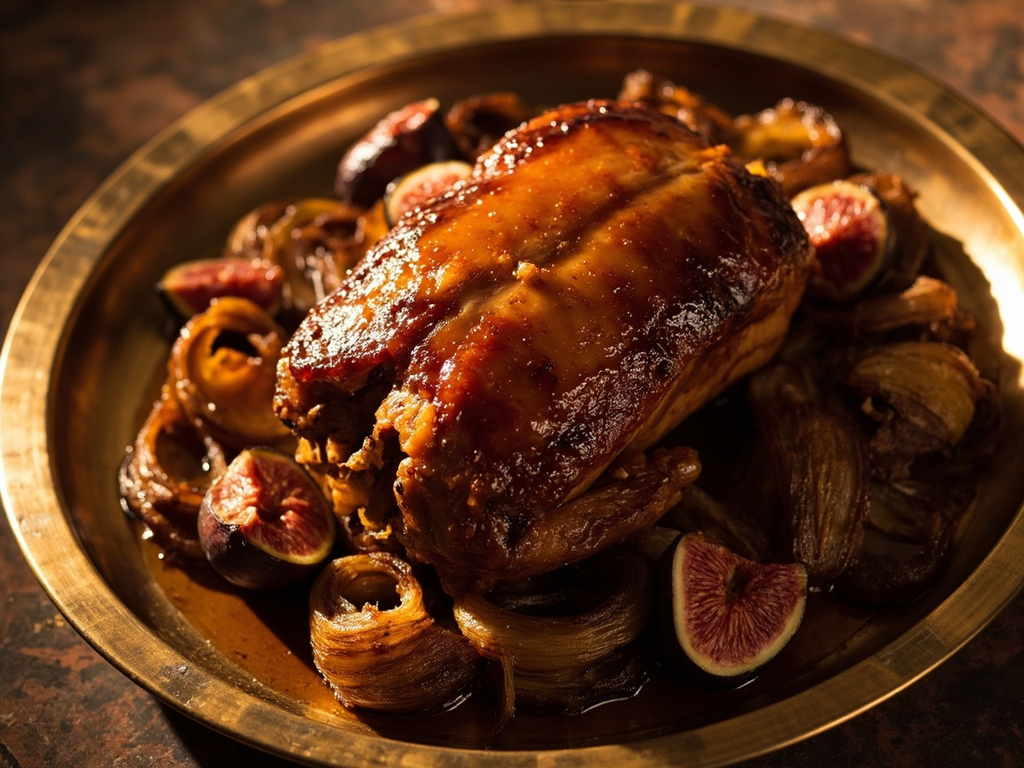
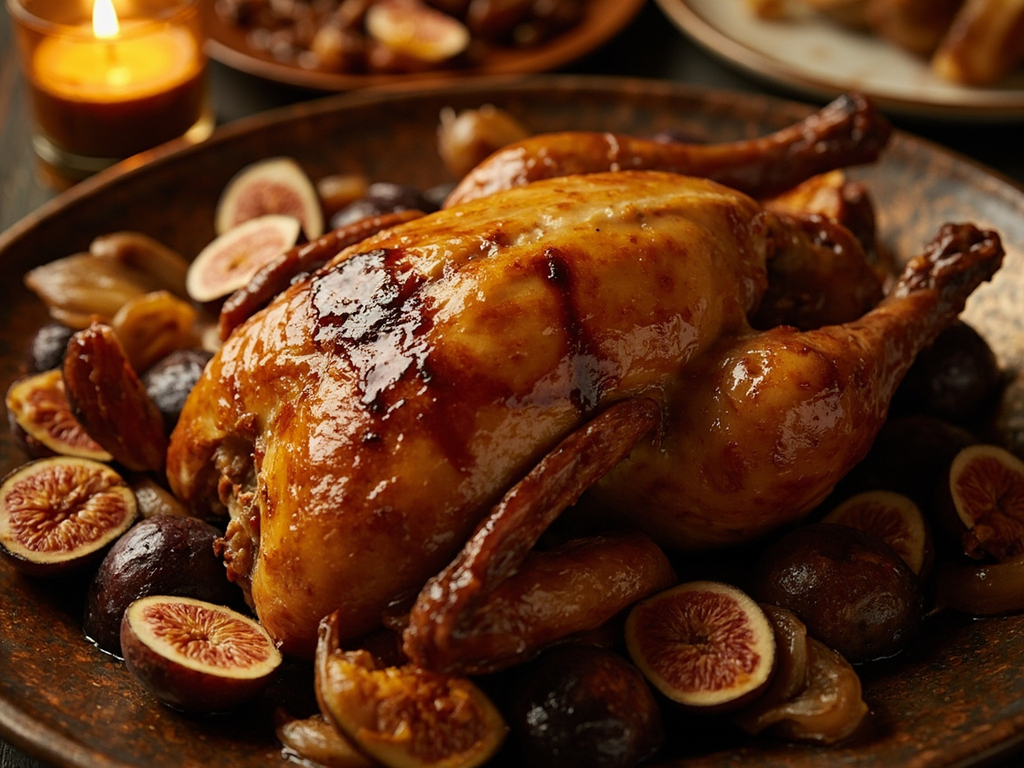
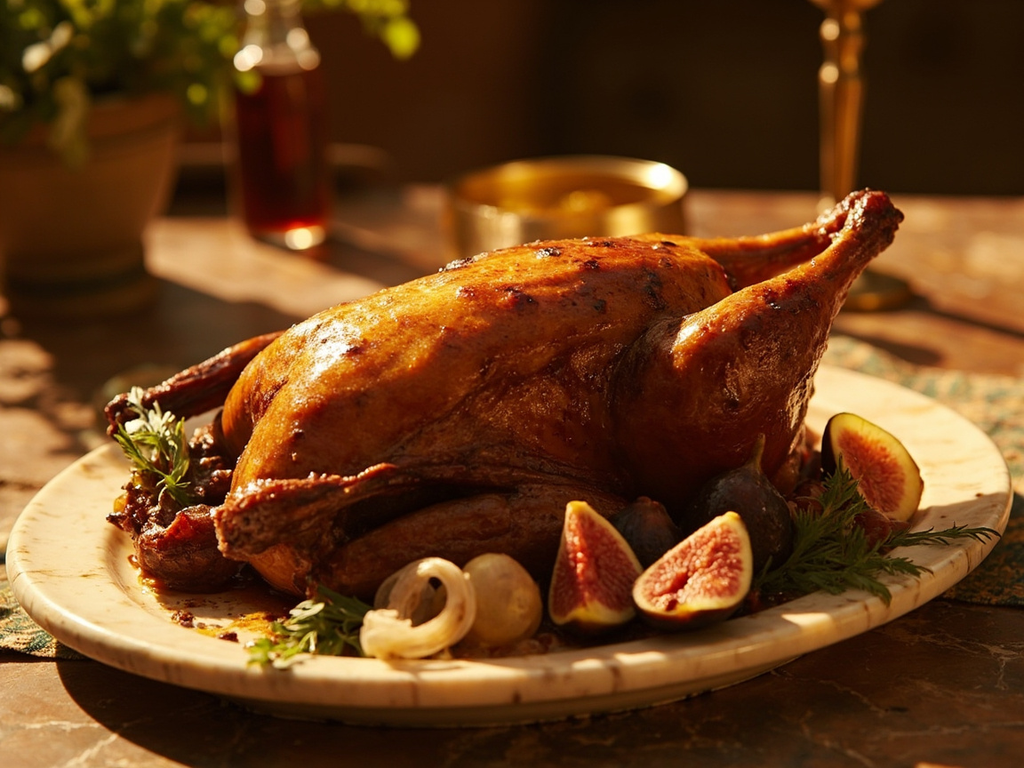
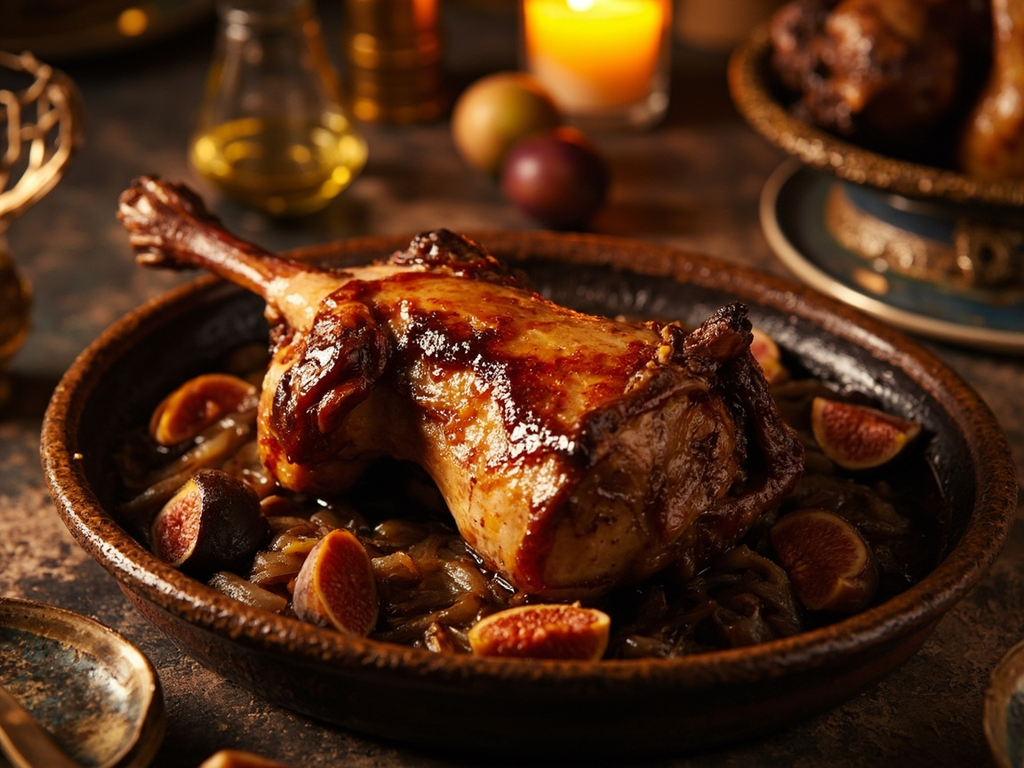
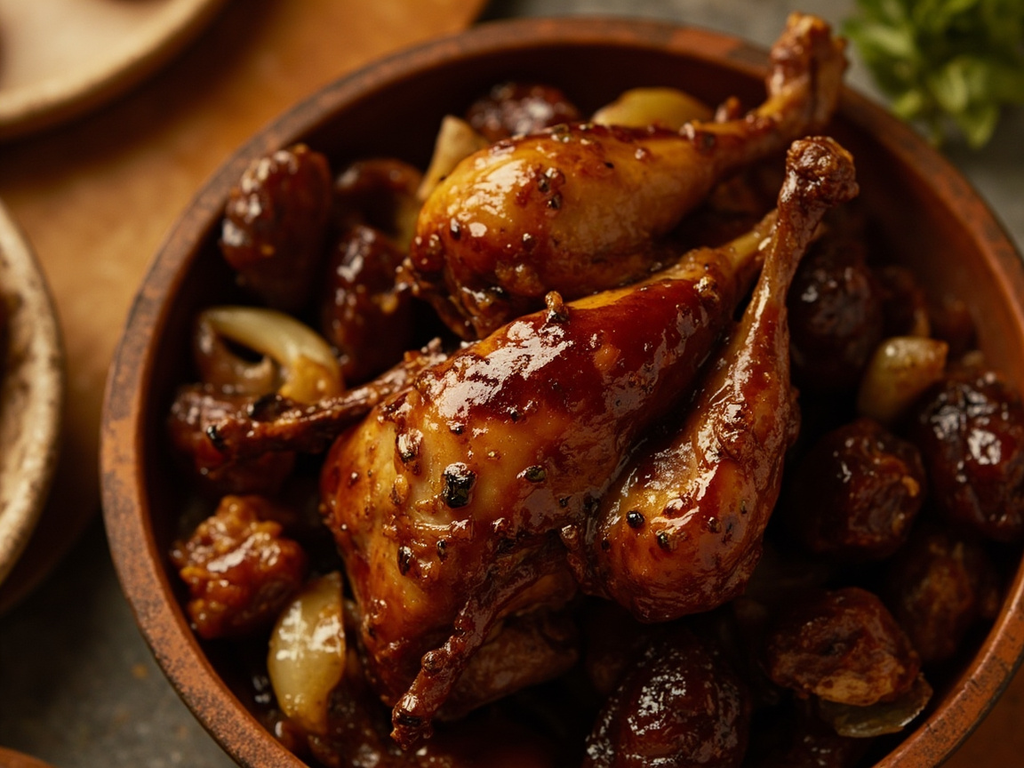
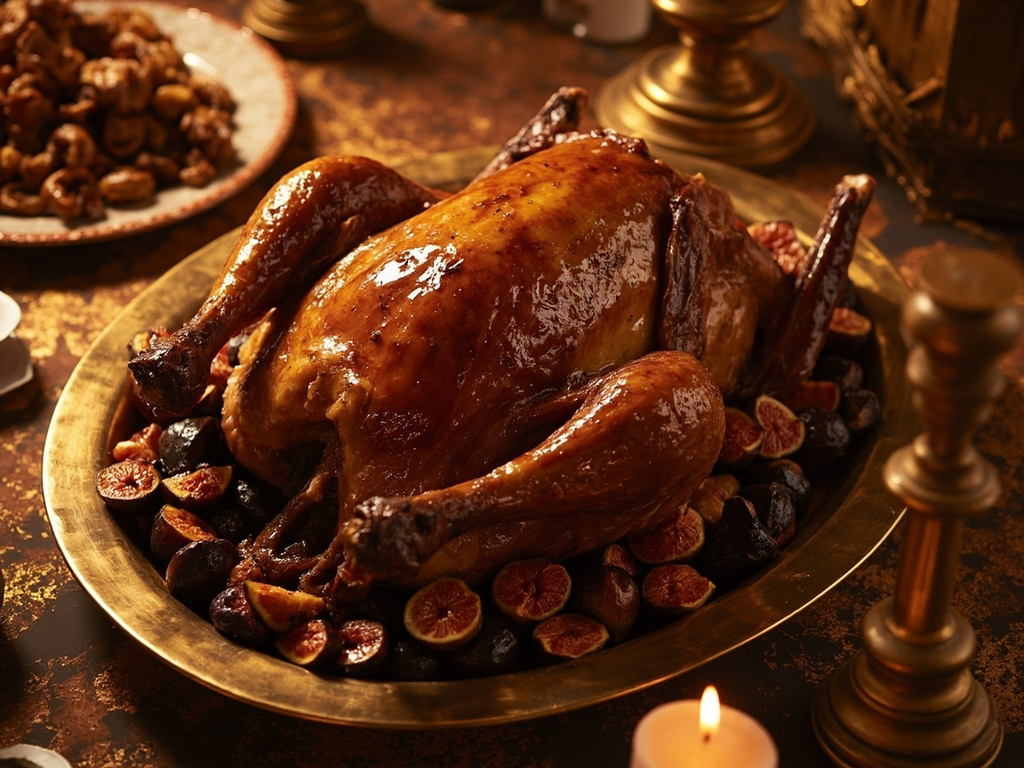
A slow-roasted goose, lacquered with dark honey perfumed with fig and wine, crispy skin and melting flesh. The showpiece dish of Theban banquets, painted on tomb walls.
Set the goose at the center of the table, shining like the gold of my treasury! I have restored to the gods the herds and fowl that the heretic let go up in smoke—and from this restored abundance, here is my table. Rub the skin with honey and Delta wine until it gleams like the disk of Amun at sunset. Eat with your fingers, without shame: a shared feast is *maat* returning to the Black Land.
- •Fat Delta goose — a fine piece (main meat)
- •Dark honey — a pot (glaze)
- •Fresh or dried figs — a handful (fruity sweetness)
- •Delta wine — a cup (deglazing)
- •Coriander and cumin seeds — to taste (spices)
- •Salt — as needed (seasoning)
Honey-Glazed Roast Goose with Figs, at the Pharaoh's Table
A slow-roasted goose, lacquered with dark honey perfumed with fig and wine, crispy skin and melting flesh. The showpiece dish of Theban banquets, painted on tomb walls.
Why this dish? The goose was the animal of royal abundance par excellence—offered by the thousands to the temples of Amun that Horemheb worked to restore after the Akhenaten episode. As pharaoh restoring traditional cults, presiding over a banquet where a fat honey-glazed goose takes pride of place was to display the return of order and divine generosity.
Set the goose at the center of the table, shining like the gold of my treasury! I have restored to the gods the herds and fowl that the heretic let go up in smoke—and from this restored abundance, here is my table. Rub the skin with honey and Delta wine until it gleams like the disk of Amun at sunset. Eat with your fingers, without shame: a shared feast is *maat* returning to the Black Land.
Ingredients (period version)
- Fat Delta goose — a fine piece (main meat)
- Dark honey — a pot (glaze)
- Fresh or dried figs — a handful (fruity sweetness)
- Delta wine — a cup (deglazing)
- Coriander and cumin seeds — to taste (spices)
- Salt — as needed (seasoning)
Ingredients
- Duck legs and breasts (or a small goose) — 1.5 kg (main meat)
- Chestnut or forest honey — 4 tbsp (glaze)
- Dried figs — 8 (fruity sweetness)
- Dry white wine — 150 ml (deglazing)
- Ground coriander and cumin — 1 tsp each (spices)
- Salt — 1 tsp (seasoning)
Method
- Rub the meat with salt, coriander, and cumin; let rest 1 hour.
- Simmer the chopped figs in wine and honey over low heat for 10 minutes, until a thick syrup forms.
- Roast in the oven at 160°C for 1 hour 30 minutes (duck), basting regularly with rendered fat.
- In the last 30 minutes, generously brush with the honey-fig glaze, increase to 200°C to caramelize the skin.
- Let rest 10 minutes, drizzle with remaining syrup, and serve whole.
How it was made : Egyptian tombs abound with scenes of force-feeding and roasting geese. They were cooked on spits over embers or roasted in ovens. Since honey was the only sweetener available, glazing meat with honey was a luxury reserved for great occasions and noble tables.
The contemporary twist : A touch of thyme flowers and a squeeze of lemon juice when serving—citrus that late Egypt eventually knew—awaken the sweetness of the glaze.
Sources : Catharine Roehrig, The Met—banquet scenes from the New Kingdom · Pierre Tallet, Histoire de la cuisine et de la gastronomie égyptiennes
Horemheb · Charactorium