 flip
flipBraised Lion's Head (狮子头, shīzitóu)
Braised Lion's Head (狮子头, shīzitóu)
Why this dish? The "lion's head" meatball is THE signature dish of Yangzhou and Jiangsu, Hou Yifan's home province. It is a dish of family reunions and festive banquets — the one brought out when a local girl returns with a world champion title.
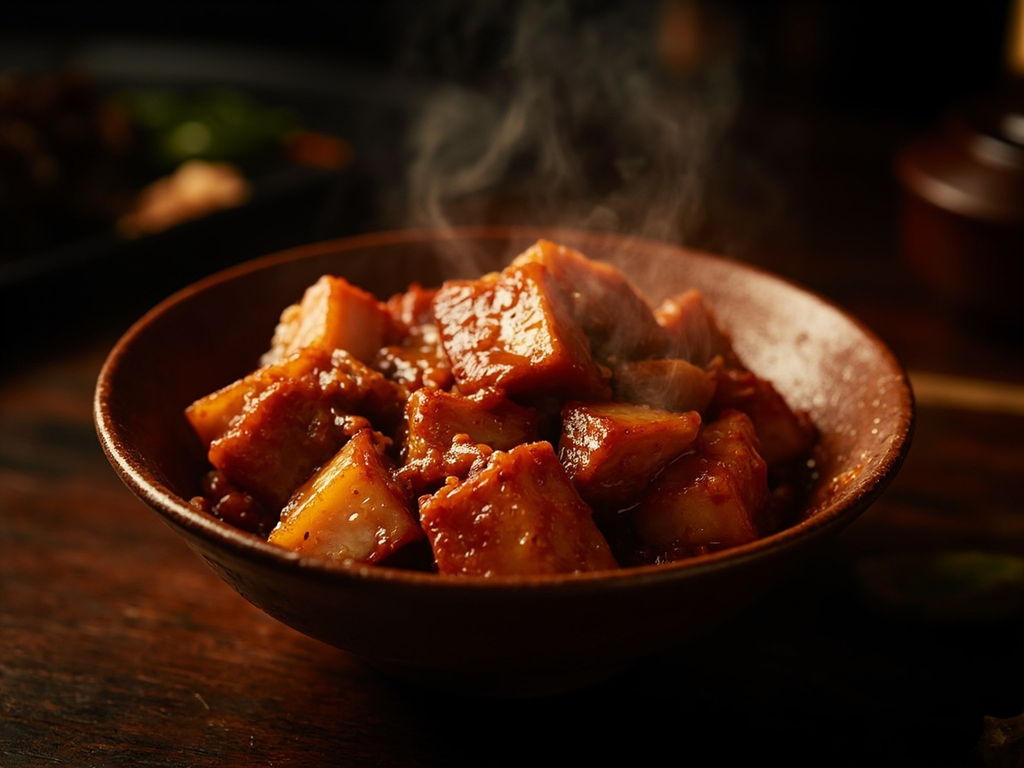
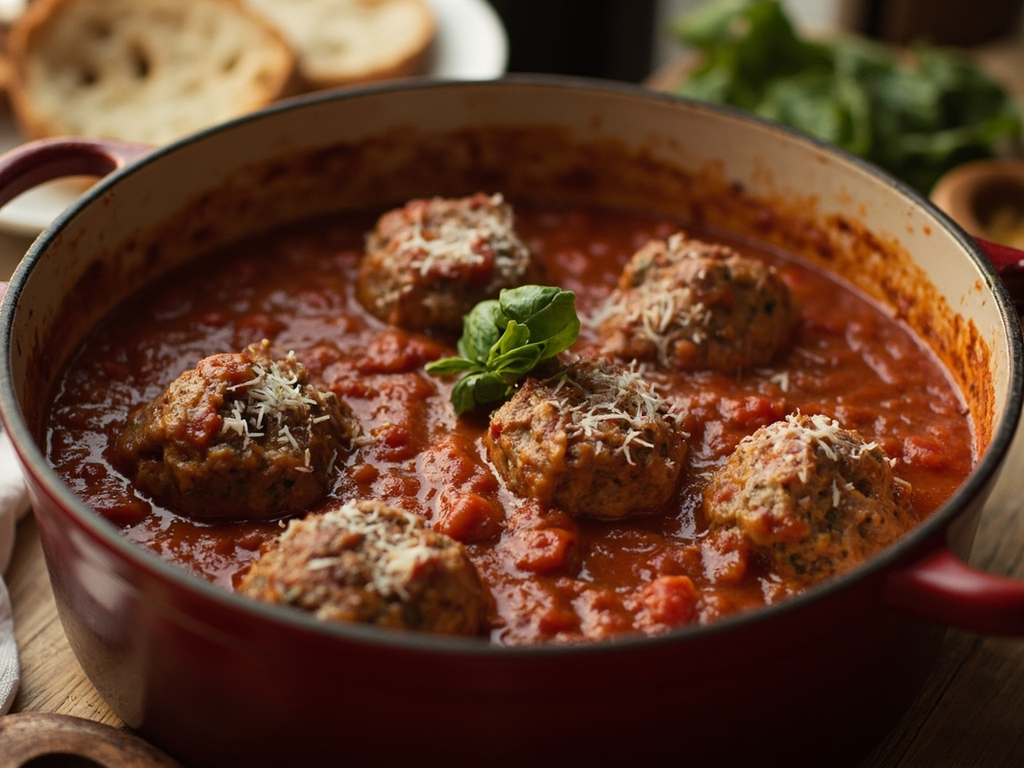
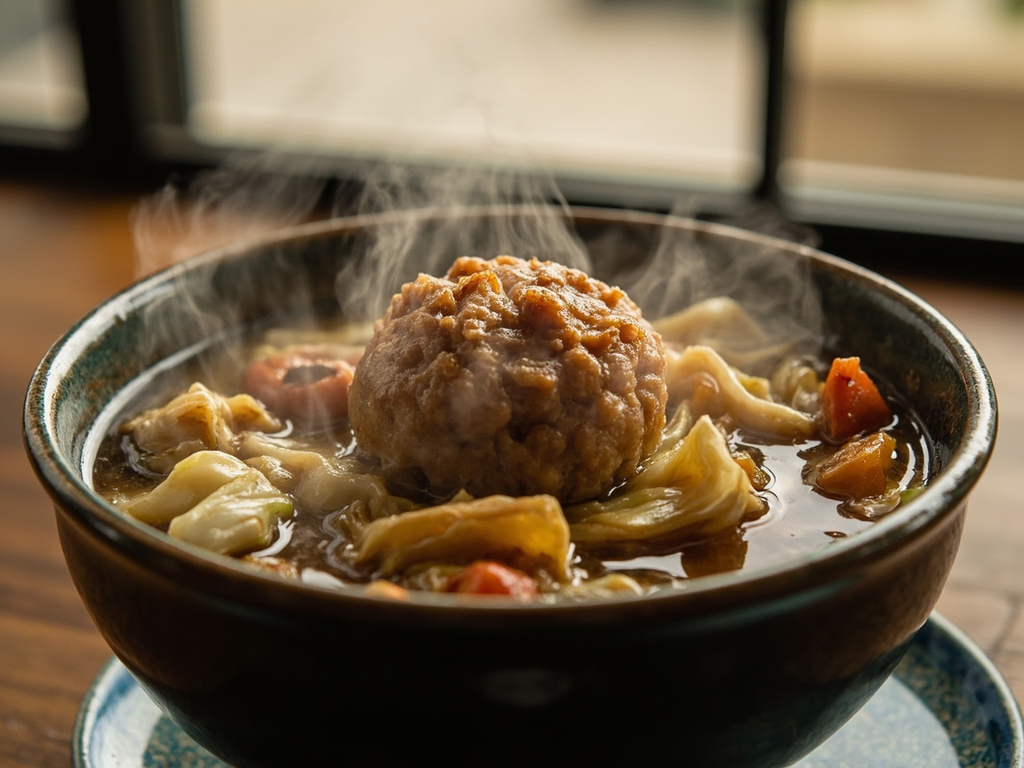
A large pork meatball chopped by hand (never a mixer!), airy and tender, slowly braised in a clear broth with napa cabbage. The name comes from its round shape and ruffled surface that evokes a lion's mane.
Back home in Xinghua, Jiangsu, we never mince meat by machine — we cut it by knife into tiny dice so it stays light and doesn't turn into paste. My grandmother used to say a good lion's head should wobble when you set it down, almost like a custard. It simmers for a long time over very low heat, until the cabbage softens around it. When I come home from a tournament, this dish is waiting for me: you need patience to get it right, just like winning a long game.
- •Pork shoulder (half lean, half fat) — a good piece (base of the meatball, chopped by knife)
- •Bamboo shoot or water chestnut — a handful (crunch and freshness inside)
- •Napa cabbage — a few leaves (braising bed)
- •Ginger and scallion — to taste (aroma, ginger water to lighten)
- •Shaoxing rice wine — a splash (remove meat odor)
- •Light soy sauce and sugar — measured (seasoning, roundness)
Braised Lion's Head (狮子头, shīzitóu)
A large pork meatball chopped by hand (never a mixer!), airy and tender, slowly braised in a clear broth with napa cabbage. The name comes from its round shape and ruffled surface that evokes a lion's mane.
Why this dish? The "lion's head" meatball is THE signature dish of Yangzhou and Jiangsu, Hou Yifan's home province. It is a dish of family reunions and festive banquets — the one brought out when a local girl returns with a world champion title.
Back home in Xinghua, Jiangsu, we never mince meat by machine — we cut it by knife into tiny dice so it stays light and doesn't turn into paste. My grandmother used to say a good lion's head should wobble when you set it down, almost like a custard. It simmers for a long time over very low heat, until the cabbage softens around it. When I come home from a tournament, this dish is waiting for me: you need patience to get it right, just like winning a long game.
Ingredients (period version)
- Pork shoulder (half lean, half fat) — a good piece (base of the meatball, chopped by knife)
- Bamboo shoot or water chestnut — a handful (crunch and freshness inside)
- Napa cabbage — a few leaves (braising bed)
- Ginger and scallion — to taste (aroma, ginger water to lighten)
- Shaoxing rice wine — a splash (remove meat odor)
- Light soy sauce and sugar — measured (seasoning, roundness)
Ingredients
- Pork shoulder (60% lean / 40% fat) — 500 g (meatballs, hand-chopped into small dice)
- Canned water chestnuts — 60 g, finely chopped (crunch)
- Napa cabbage — 1/2, separated into leaves (cooking bed)
- Ginger — 20 g (+ ginger water) (aroma and lightness)
- Chinese scallion — 3 stalks (aroma)
- Shaoxing wine — 2 tbsp (deodorize)
- Light soy sauce — 1.5 tbsp (salty umami)
- Sugar — 1 tsp (rounds out)
- Cornstarch — 1 tbsp (binds the meatball)
- Egg — 1 (binder and fluffiness)
Method
- Cut the pork by knife into very small dice, then chop roughly — we want texture, not paste.
- Mix with water chestnuts, ginger, scallion, egg, wine, soy sauce, sugar and cornstarch. Incorporate 3-4 tbsp cold ginger water, stirring always in the same direction: the mixture should swell and become airy.
- Shape into 4 large wet meatballs (orange-sized) between your palms.
- Sear them for 1 min in a little oil just to color, without hardening.
- Line a pot with cabbage leaves, place the meatballs on top, cover with light broth (water + 1 tbsp soy sauce). Cover and braise at a simmer for 60 to 90 min.
- Serve each lion's head on a bed of tender cabbage, drizzle with broth.
How it was made : The dish is attested as early as the Sui dynasty in Yangzhou according to local tradition, and remains a pillar of Huaiyang cuisine. In the past, cooked in earthenware jars by the hearth, the very slow braise was key: you didn't "cook" the meatball, you let it soften for hours.
The contemporary twist : For a tournament presentation, place the meatball on the cabbage like a centerpiece on a chessboard, and glaze with a reduced, shiny broth as a "winning move."
Hou Yifan · Charactorium